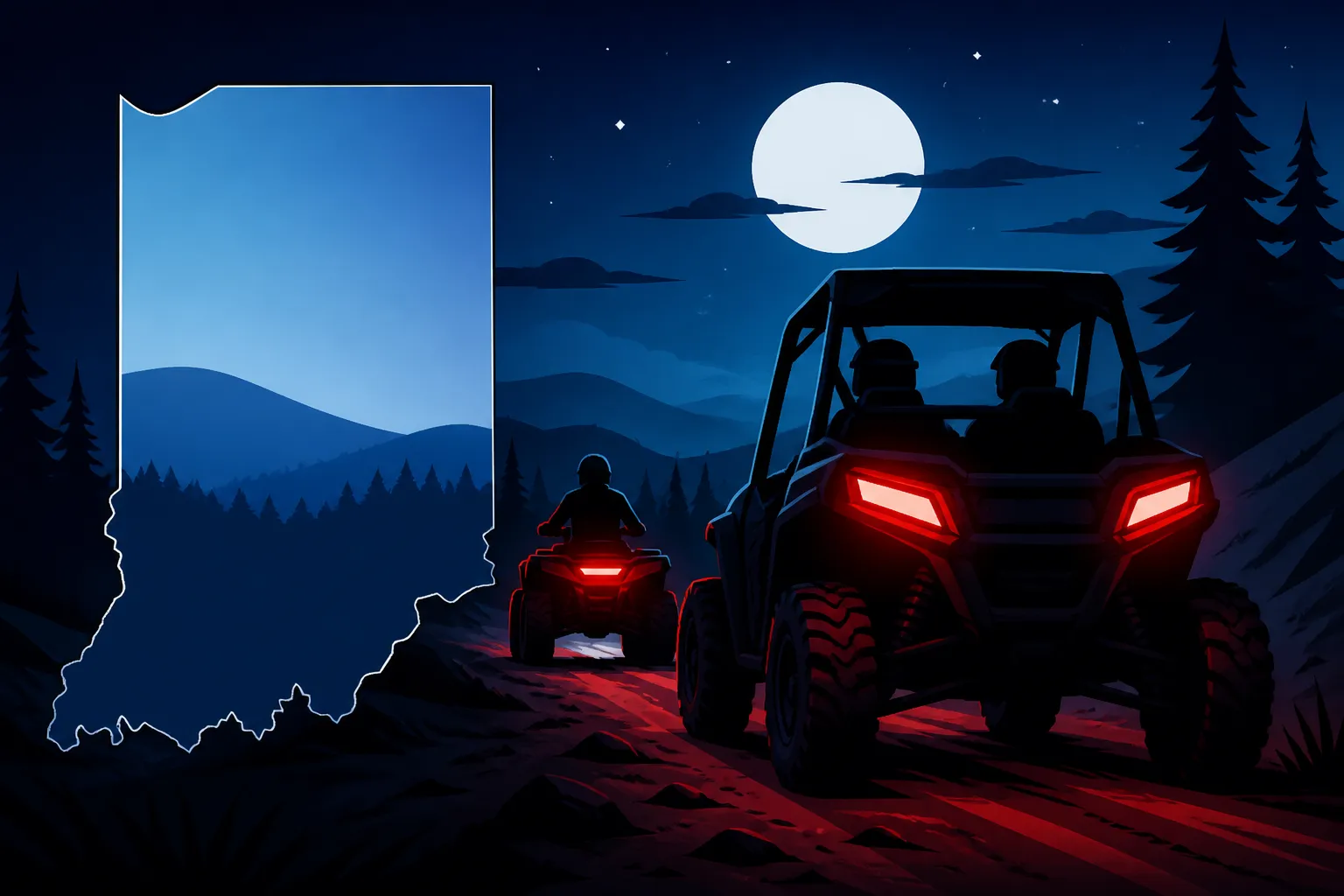
Two Taillights After Dark
When the sun dips below the horizon in Indiana, and you're thinking about taking your ATV or UTV for a spin on those county roads that permit it, a whole new set of rules comes into sharp focus. It’s not just about having some light; it's about having the right lights in the right places. Many riders mistakenly assume a single, weak taillight is enough, or they simply forget to check their lighting setup before venturing out. This guide is going to meticulously break down Indiana's specific mandate for two taillights after dark, ensuring you understand not only the letter of the law but also the spirit behind keeping everyone safe on shared roadways.
The Core Rule: Why Two Taillights Are Essential After Dark
Imagine you’re out for a ride as dusk settles, perhaps heading back from a long day on the trails or just moving your machine to a nearby friend's property. It’s easy to underestimate how quickly visibility drops. Suddenly, that single, small red light on the back of your quad or side-by-side isn't cutting it. Indiana law understands this critical safety gap, which is why it specifies that when you're operating your ORV on a county road after dark, you absolutely must have two functional taillights. This isn't an arbitrary rule; it's a fundamental safety measure designed to ensure your machine is seen clearly from a distance, giving other drivers ample time to react.
Understanding Indiana's Visibility Mandate
The requirement for two taillights isn't just about showing a red glow; it's about creating a clear, unmistakable presence on the road. A single taillight, especially on wider machines like many UTVs or even larger ATVs, can easily be obscured or misinterpreted by an oncoming vehicle or one approaching from behind. Think about it: a car or truck has two taillights, setting a standard for visibility and width perception. An ORV, particularly one not commonly expected on a public road, needs to meet or exceed this standard to prevent dangerous misjudgments. The law aims to eliminate ambiguity, making your machine as visible and predictable as possible to other road users, whether they are in a passenger car or another ORV.
This mandate acknowledges the inherent differences between ORVs and conventional road vehicles. ORVs often have a narrower wheelbase or sit lower to the ground, making them less conspicuous. By requiring dual taillights, Indiana is pushing for better visual cues for motorists, signaling not just "something is here" but also providing a better sense of the vehicle's width and position on the road. It's about reducing the chance of a collision, particularly during those tricky twilight hours or on unlit rural roads where visibility is already compromised. For your own safety and the safety of everyone else, this seemingly simple requirement is incredibly important and should be a non-negotiable part of your pre-ride checklist if you plan on being out after dark.
What Qualifies as an Approved Taillight
So, what exactly constitutes an "approved" taillight in the eyes of Indiana law? It’s not enough to just zip-tie a couple of battery-powered bicycle lights to your machine. The law generally expects a taillight to be permanently mounted, emit a steady red light, and be visible from a specific distance, usually at least 500 feet to the rear. This means factory-installed lights on newer machines often meet these criteria, but if you've got an older model, or if you've modified your machine, you need to scrutinize your setup carefully. These lights must be reliably powered, typically by the machine's electrical system, to ensure consistent illumination throughout your ride.
Aftermarket lights are a common solution for riders looking to upgrade or add more lights. When choosing, look for products that are designed for automotive or powersports use, which often come with compliance certifications (like DOT approval) for brightness and beam pattern. Some riders opt for brighter LED taillights, which not only draw less power but also offer superior visibility compared to older incandescent bulbs. Companies like SuperATV offer a range of lighting kits, from basic LED taillight replacements to comprehensive wiring harnesses and light bars that can incorporate proper rearward illumination. Whatever you choose, ensure they are securely fastened, properly wired, and positioned symmetrically on the rear of your machine to effectively communicate its presence and width to other drivers.
When the "After Dark" Rule Kicks In
The phrase "after dark" might sound a bit subjective, but legally, it has a precise meaning. In Indiana, "after dark" generally refers to the period between one-half hour after sunset and one-half hour before sunrise. This also includes any other time when there is not sufficient light to render clearly discernible persons and vehicles on the highway at a distance of 500 feet ahead. So, if a sudden downpour or heavy fog rolls in during the day, reducing visibility significantly, those "after dark" rules for lighting can suddenly apply, even if it's technically midday. It's not just about the clock; it's about actual visibility conditions.
This means you can’t just plan your ride around sunset and assume you’re in the clear. You need to be prepared for fluctuating conditions. Many experienced riders make it a habit to always ensure their ORV's lighting system is fully functional before any ride, regardless of the time of day, just in case conditions change unexpectedly. Imagine you're riding a county road near [Hancock County's Open County Roads] and suddenly a severe thunderstorm hits, plunging the area into near-darkness. Your two taillights, along with proper headlights, become immediately crucial. This proactive approach ensures you're never caught off guard and always in compliance with the law, keeping you and others safer on the road.
Beyond Taillights: Other Essential Lighting for Night Riding
While dual taillights are a specific requirement for the rear, safe and legal night riding involves a holistic approach to your ORV's illumination. You're not just trying to avoid being hit from behind; you also need to see where you're going and signal your intentions to others. This means your headlights, turn signals (if equipped and required by local ordinance), and any auxiliary lighting all play a role in making your nighttime road excursions both compliant and safe. Thinking of your lighting system as a complete package rather than isolated components is key.
Headlights: Illuminating Your Path Forward
Just as crucial as being seen from behind is your ability to see what's ahead of you. Indiana law requires at least one functional headlight on your ORV, emitting a white or amber light visible from a distance of at least 500 feet to the front. However, for practical and safety reasons, most modern ORVs come equipped with two headlights, and if you're venturing out after dark, having both functioning is highly advisable. A single headlight might technically meet the minimum legal requirement, but it offers a narrower field of vision and can be less effective at cutting through the darkness of unlit rural roads.
The quality and aiming of your headlights are also paramount. A dim, misaligned headlight is almost as bad as no headlight at all, as it won't properly illuminate hazards like potholes, fallen branches, or wildlife. Consider upgrading to brighter LED headlights if your stock lights are subpar. Many aftermarket options provide a much stronger, wider beam pattern, significantly enhancing your ability to spot obstacles and navigate safely. When riding in areas like [Vanderburgh's Eighteen-Year-Old Operator Rule] which might have more specific rules for night riding, ensuring your headlights are bright and properly aimed becomes even more important. Always take the time to check your headlights, ensuring they are clean, clear, and shining directly ahead without blinding oncoming traffic.
Auxiliary Lighting and Signal Indicators
Beyond the mandatory headlights and taillights, many riders choose to add auxiliary lighting for increased visibility or utility. While not always legally required for road use, well-placed auxiliary lights can be a great asset. This could include amber running lights on the front for better daytime visibility, or small LED floodlights for specific tasks off-road. However, it's crucial to understand that certain types of auxiliary lighting, particularly those that are excessively bright or colored (like blue or red forward-facing lights), may be illegal for use on public roads. Always check local ordinances to ensure your auxiliary lights comply with road use regulations.
For signaling your intentions, if your ORV is equipped with turn signals and you're riding on public roads, they must be fully functional and used appropriately. While Indiana doesn't universally mandate turn signals on all ORVs for road use, many counties that permit ORV road riding do require them, or at least require hand signals. For example, [Vanderburgh's Dual Light Rule at Night] might imply a need for comprehensive lighting. Even if not legally required, having functional turn signals significantly improves safety, clearly communicating your planned movements to other drivers. If your machine doesn't have them, consider adding a kit, or be prepared to use clear, unambiguous hand signals when turning or changing lanes.
Checking Your Machine Before You Roll Out
Preparing your machine for night riding on Indiana roads isn't something you can rush. It requires a systematic approach, ensuring every light, reflector, and related component is in top working order. Before you even think about putting the key in the ignition after sunset, you should conduct a thorough walk-around inspection. Start by turning on your headlights and taillights. Walk around your machine and confirm that both taillights are shining bright red and are clearly visible. Check your headlights for brightness and proper alignment. Don't forget any license plate lights if your ORV is subject to specific local requirements for such.
Beyond just the lights themselves, inspect the wiring. Loose connections, frayed wires, or corroded terminals can lead to intermittent failures, which are the last thing you want when navigating a dark road. If your machine has a battery, ensure it's fully charged to support your lighting system for the duration of your ride. Consider carrying spare bulbs (if applicable) and basic tools for minor repairs, especially if you're planning a longer trip. This pre-ride ritual isn't just about avoiding a ticket; it's about preserving your safety and the safety of everyone else sharing the road. A little time spent beforehand can prevent a lot of trouble later on.
Navigating Indiana's Roads at Night: Broader Considerations
Understanding the specific lighting rules is just one piece of the puzzle when it comes to riding your ORV on Indiana roads after dark. The ability to ride an ORV on public roads in Indiana is not universal; it's a patchwork of county-by-county permissions and specific state-level restrictions. Therefore, knowing where you can ride, what additional local rules might apply, and the potential consequences of non-compliance are equally critical for a safe and legal nighttime excursion. Always remember that privilege is not a right when it comes to ORV road use.
Where Night Riding Is Permitted (and Restricted)
Indiana law generally restricts ORVs from public roads, with some critical exceptions. The main exception is when a county or municipality passes an ordinance specifically opening certain roads to ORV use. This means you cannot just assume any county road is fair game. Before planning any road ride, especially after dark, you must verify if the specific county and road you intend to use are open to ORVs. Counties like [Hancock County's Open County Roads] or [Dearborn County's Section 70.04] have implemented their own ordinances, detailing where and when ORVs are permitted.
Even in counties that have opened roads, there are almost always restrictions. These often include speed limits, age requirements for operators, and designated hours of operation. Some counties might explicitly prohibit ORV use on their roads after dark, regardless of your lighting setup. State highways and limited-access highways are almost universally off-limits to ORVs, day or night. Always check the specific county ordinance for the area you plan to ride. A quick call to the county sheriff's department or checking the county's official website can save you a lot of trouble and potential fines. Being informed about these geographic and temporal restrictions is as important as having your lights in order.
Local Ordinances and Their Lighting Specifics
While state law sets the baseline for two taillights after dark, local county ordinances can and often do add further requirements. It's not uncommon for a county ordinance to specify additional lighting, reflective material, or even insurance requirements that go beyond state minimums. For instance, [Vanderburgh County's Marked Road Map] clearly designates which roads are open and includes specific stipulations, such as needing two headlights and two taillights after dark, and often specifies an insurance certificate. This shows how local rules can build upon, rather than replace, state mandates.
Some ordinances might even dictate the type of lights, such as requiring sealed beam units or certain brightness levels. Always read the specific ordinance for the county you're in, as failure to comply with local rules, even if you meet state minimums, can still result in a citation. These local variations highlight the need for due diligence. Don't rely on what you heard from a friend or what applies in a neighboring county. Your best bet is to review the exact language of the ordinance before you ride, especially if you're traveling to a new area. Being prepared means being informed about all applicable rules.
The Consequences of Non-Compliance
Operating an ORV on Indiana roads, especially after dark, without the proper lighting is not just a safety hazard; it's a legal liability. The consequences for non-compliance can range from a warning to significant fines, impoundment of your machine, and even legal action in the event of an accident. An ORV operated without proper lighting is considered a traffic infraction, which typically carries a fine, and depending on the severity and frequency, could escalate. For instance, [Vanderburgh's $75 First Fine] shows specific penalties that can be imposed.
Beyond the immediate legal repercussions, consider the ramifications of an accident. If you are involved in a collision while your ORV lacks the legally required two taillights after dark, you could be found at fault or partially at fault, even if another party contributed. This can impact insurance claims, personal injury lawsuits, and your overall financial well-being. Furthermore, if you've lent your machine to someone, you could also face liability. [Why an Indiana Owner Is Liable] explores this concept in more detail. Adhering to all lighting and registration requirements, such as having your [Indiana ORV Registration and Insurance Proof] on hand, is not just about following the rules; it's about protecting yourself, your passengers, and your investment.
Ensuring Your ORV Is Ready for Nighttime Road Use
Getting your ORV ready for legal and safe nighttime road use in Indiana is an ongoing responsibility, not a one-time fix. It involves smart upgrades, regular maintenance, and always being prepared. You want your machine to be a beacon of visibility, not a shadowy hazard, when you venture out after dark. This commitment to readiness not only keeps you compliant with the law but significantly boosts your safety margin.
Upgrading Your Lighting System for Safety and Compliance
If your stock ORV lighting feels inadequate or doesn't meet the two taillight requirement, upgrading is a smart move. Many factory lights, especially on older models, might be dim or lack the robust construction needed for consistent reliability. Aftermarket solutions offer a significant improvement in brightness, durability, and energy efficiency. Look for LED options, which consume less power from your battery and last much longer than traditional incandescent bulbs. A reputable brand like SuperATV, for example, offers various LED taillight assemblies, light bars, and complete wiring kits specifically designed for ORVs. These systems are often plug-and-play or come with detailed instructions, making installation manageable for most riders.
When considering upgrades, think about not just the rear, but also your front visibility. Upgrading to brighter LED headlights can dramatically improve your field of vision on unlit roads. Additionally, if your ORV doesn't have amber turn signals, installing an aftermarket kit can provide an extra layer of safety and compliance for certain county ordinances. Remember to ensure that any new lights are properly mounted and wired to your machine's electrical system, and always check that they function correctly before each night ride. Investing in quality lighting is investing in your safety and peace of mind when navigating Indiana's roads after sunset.
Pre-Ride Checks and Maintenance Tips
A thorough pre-ride check before any night excursion is non-negotiable. This isn't just a quick glance; it's a methodical inspection of all your lighting components. First, with your engine running or ignition on, activate all your lights: headlights (high and low beam), taillights, brake lights, and turn signals (if equipped). Walk around your ORV and visually confirm that every light is working, is bright, and is not obstructed by mud or debris. Pay particular attention to the two taillights, ensuring they are both equally illuminated and visible from a distance. If one is out, replace the bulb or check the wiring immediately.
Regular maintenance is also vital. Periodically inspect all wiring harnesses for any signs of fraying, cracking, or corrosion, especially in areas exposed to mud and water. Ensure all connections are tight. Clean your light lenses regularly, as a film of dirt can drastically reduce light output. If you frequently ride in dusty or muddy conditions, consider adding protective covers or even a light bar with a robust housing. Keeping your battery healthy is also critical, as a weak battery can lead to dim lights or complete failure. This consistent attention to detail will ensure your ORV's lighting system is always ready to perform, keeping you safe and compliant under Indiana's "after dark" rules.
Always Carry Proof of Compliance
Riding an ORV on public roads in Indiana means you might encounter law enforcement, especially if you're out after dark. An officer will likely check for registration, proof of ownership, and, of course, proper lighting. Beyond having your two taillights functioning, you should always carry your [Indiana ORV Registration and Insurance Proof] with you. This includes your physical registration certificate and proof of insurance, which some county ordinances, like those in Vanderburgh County, explicitly require for road use. Keeping these documents in a waterproof bag or container on your machine is a smart practice.
While not always required, having a copy of the specific county ordinance that permits ORV use on the roads you're traversing can be incredibly helpful. This is especially true if you're riding in an area where ORV road use is less common, and an officer might not be fully familiar with the local rules. While your working lights are the most visible sign of compliance, having your paperwork in order reinforces your adherence to all regulations. This proactive approach shows you're a responsible rider, which can go a long way if you're ever stopped for a roadside check.
| Lighting Component | State Requirement (Minimum) | Best Practice for Safety | Notes |
|---|---|---|---|
| Headlights | At least one, white/amber, visible 500ft forward | Two bright LEDs, properly aimed, visible 500ft+ | Critical for seeing hazards and being seen by oncoming traffic. |
| Taillights | Two, red, visible 500ft rear | Two bright LEDs, symmetrically placed, visible 500ft+ | Mandatory after dark or in low visibility for road use. |
| Brake Lights | Integrated with taillights, brighter when applied | Bright, immediate activation, clearly visible from rear | Crucial for signaling deceleration to following vehicles. |
| Turn Signals | Not universally mandated, but check local ordinance | Front amber, rear red/amber, clearly visible from 500ft | Highly recommended for clear communication on roads; may be county-mandated. |
| Reflectors | Rear red reflectors | Additional side and rear reflectors | Enhance visibility, especially if lights fail. |
| License Plate Light | Not universally mandated, but check local ordinance | White light illuminating plate after dark | Required if plate is issued and needs to be readable. |
Disclaimer
This article is for general informational purposes only and does not constitute professional advice. Laws, prices and regulations vary by location and change over time. Consult a qualified professional for guidance on your specific situation.