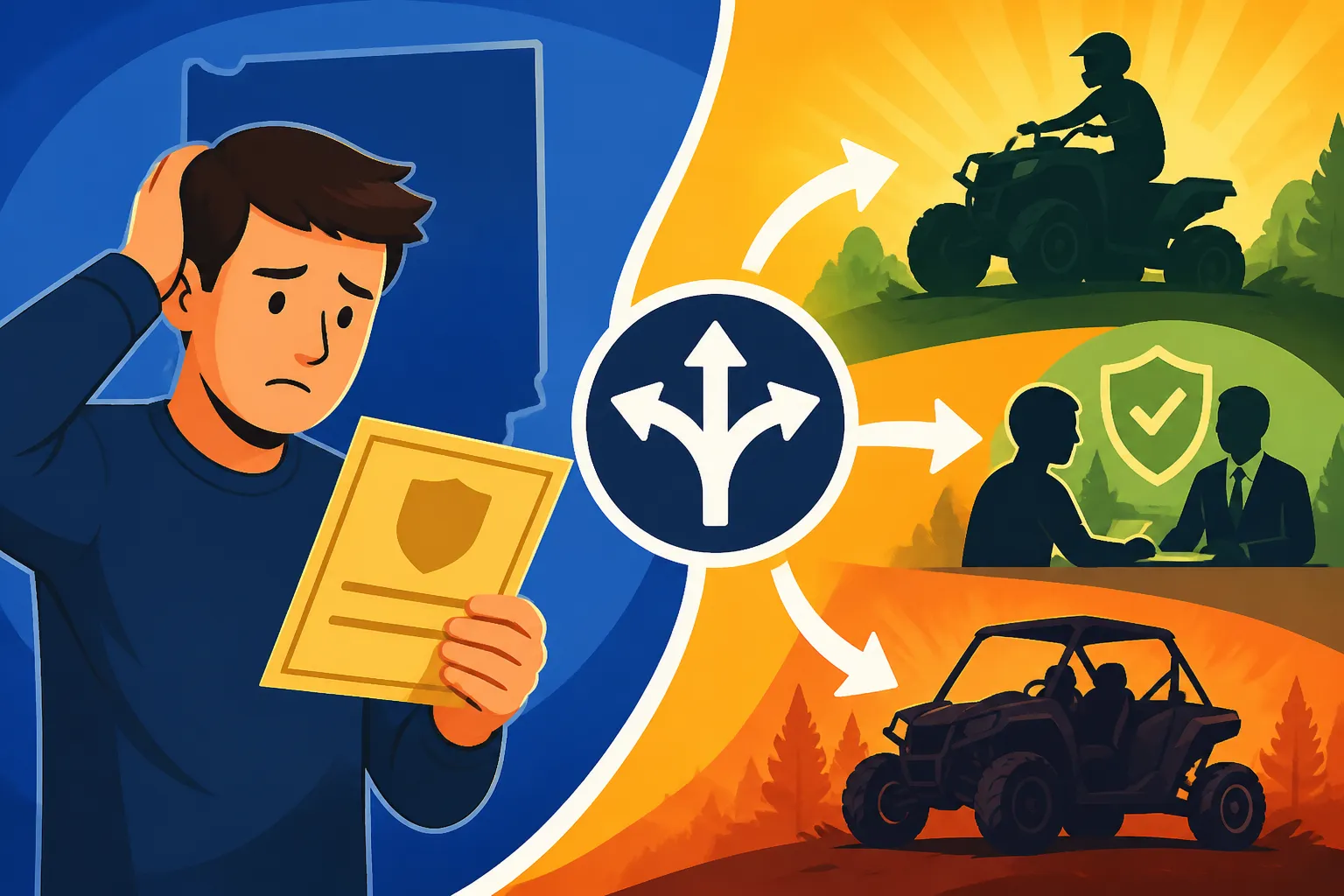
What Happens After a First Vanderburgh ORV Ticket
Nobody wants to see those flashing lights in their rearview mirror, especially when you're just trying to enjoy a ride on your ATV or UTV. Getting that first ORV ticket, particularly in a specific county like Vanderburgh, can feel incredibly frustrating and confusing. This guide is here to walk you through exactly what happens next, what your options are, and how you can avoid future run-ins with local ordinances.
Understanding Vanderburgh County's ORV Ordinances
Indiana's off-road vehicle (ORV) laws can sometimes feel like a patchwork quilt, with state-level regulations providing a general framework, but individual counties often adding their own specific rules. Vanderburgh County is one of those places that has taken the initiative to carve out its own path for ORV use, which means what might be acceptable in one part of Indiana could land you in hot water here. This local control often comes from a desire to balance recreation with public safety, but for riders, it means extra homework.
Why Vanderburgh Has Specific Rules
It's easy to assume that if you're registered and insured for state parks like Redbird or Interlake, you're good to go everywhere. But that's just not the case, and many riders find this out the hard way. Vanderburgh County, like several other Indiana counties, has opted to create its own local ordinances that dictate where and how ORVs can be operated on public roads and rights-of-way. This often means stricter age limits for operators, specific requirements for insurance, and rules around lighting, even when compared to the statewide minimums. These local rules are put in place by county commissioners or local governing bodies, often in response to community input or specific concerns about safety and noise. It creates a sometimes-baffling landscape where understanding your machine's compliance is only half the battle; knowing the local map is just as critical. Many riders wish there was one single, simple rulebook, but the reality is more complex. You can sometimes refer to the [Vanderburgh County's Marked Road Map] to understand designated riding areas.
Key Violations That Lead to a Ticket
A first ORV ticket in Vanderburgh County usually stems from a specific violation of these local ordinances. It's rarely for something obscure; more often than not, it's about being in the wrong place at the wrong time, or not meeting basic operational requirements. Common scenarios include riding on county roads that haven't been designated as open for ORVs – remember, in Indiana, roads are closed to ORVs by default unless explicitly opened by a local ordinance. Another frequent issue is operator age; Vanderburgh County has a strict [Vanderburgh's Eighteen-Year-Old Operator Rule] for operating an ORV on county roads.
Beyond location and age, insurance is a big one. While state parks require proof of financial responsibility, some county ordinances, including Vanderburgh's, explicitly demand that you carry an insurance certificate on your person while riding on open county roads. If you're pulled over and can't produce it, that's an automatic ticket. Lighting is another common problem, especially if you're riding after dusk. Vanderburgh, like most jurisdictions, has specific [Vanderburgh's Dual Light Rule at Night], requiring both headlights and taillights to be operational and visible. It's often the small details that trip riders up, turning a fun outing into an expensive lesson.
The Immediate Aftermath of Your First Ticket
So, you've received that ticket. Your heart is probably still pounding a bit, and you're wondering what to do next. It's a moment of truth, and how you handle it can determine whether this is a minor inconvenience or something that escalates. The most important thing is not to panic, but to act deliberately and with understanding.
The Ticket Itself: What to Expect
When a law enforcement officer hands you an ORV ticket in Vanderburgh County, it's typically issued as a civil infraction, though in some severe cases, or if other laws are broken, it could escalate to a misdemeanor. A civil infraction is similar to a speeding ticket; it doesn't generally result in points on your driver's license (unless you were operating a road-legal vehicle that requires one and you violated other traffic laws), nor does it usually come with the risk of jail time for a first offense. However, it does come with a monetary fine and an expectation to appear in court or pay the fine by a certain date. The ticket will usually list the specific Indiana Code section or local ordinance you violated, the date and time of the violation, and information about how to respond. It will also state the amount of the fine. For many first-time ORV infractions, the fine itself can be a shock, sometimes feeling disproportionate to the perceived "offense." Be sure to read every line carefully; it's your first step toward understanding your situation. A Class C ORV infraction in Indiana has a general cost associated with it, but local ordinances can sometimes specify a different amount, as seen in [What a Class C ORV Infraction Costs in Indiana].
Initial Steps and Decisions
Once you have the ticket in hand, you generally have two paths: pay the fine or contest it in court. Which route you choose depends on the specifics of your situation and your comfort level with the legal system.
If you choose to pay the fine, it's usually considered an admission of guilt, and the matter is closed. The ticket will specify the amount and the deadline for payment, often allowing you to pay online, by mail, or in person at the clerk's office. Many riders opt for this, especially if they know they were in violation or if the fine is relatively low. It's the quickest way to resolve the issue and move on.
However, if you believe you were unfairly ticketed, or if there was a misunderstanding of the ordinance, you have the right to contest it. This means pleading not guilty and requesting a court hearing. If you decide to go this route, it's absolutely crucial to gather any evidence you might have. This could include photos of the area, witness statements, or documents proving you met the requirements (like your insurance certificate, if that was the alleged violation). The court date will be listed on your ticket, and it's imperative that you appear. Failure to appear will almost certainly result in a default judgment against you, potentially higher fines, and possibly even a warrant for your arrest. It's a serious matter, and while it might seem daunting, contesting a ticket can sometimes lead to a dismissal or a reduction in the fine, especially if you can demonstrate due diligence or a legitimate misunderstanding.
| Action | Pros | Cons | Typical Outcome (First Offense) |
|---|---|---|---|
| Pay the Fine | Quick resolution, no court appearance, stress-free. | Admission of guilt, definite financial cost. | Fine paid, case closed. |
| Contest the Ticket | Opportunity to explain your side, potential dismissal/reduction, fair hearing. | Requires court appearance, time commitment, possible legal fees, still might lose. | Fine dismissed, reduced, or upheld. |
Long-Term Consequences and How to Navigate Them
A first ORV ticket in Vanderburgh County isn't usually the end of the world, but it's certainly a wake-up call. Understanding the broader implications and taking steps to prevent future incidents is key to continuing to enjoy your riding without unnecessary stress.
Financial Impact and Fines
The most immediate and obvious consequence of a first ORV ticket in Vanderburgh County is the financial hit. Local ordinances in Vanderburgh County often set specific fine amounts for violations. For a first offense, you might be looking at a set fine, such as the [Vanderburgh's $75 First Fine], as designated by the local ordinance. While this specific amount is set by the county, other penalties from state law can still apply, pushing the total cost higher. It might not sound like a huge sum, but when you factor in potential court costs if you contest the ticket and lose, or even administrative fees, the total can add up.
Beyond the initial fine, there might be other financial ripple effects. For instance, if the violation involved something like riding without proper insurance, your insurance provider might re-evaluate your policy at renewal time, potentially leading to higher premiums. While usually not a direct consequence of a first infraction, it's always a possibility down the line, especially if it indicates a pattern of non-compliance. It's a reminder that riding an ORV comes with responsibilities that can impact your wallet in multiple ways.
Impact on Your Riding Privileges and Future
For a first-time ORV infraction in Vanderburgh County, it's highly unlikely you'll face a suspension of your riding privileges or a significant impact on your driver's license (unless you committed a more serious offense like DUI, which is a different category of violation entirely). However, subsequent tickets are treated much more severely. Vanderburgh County, and Indiana as a whole, escalates penalties for repeat offenders. A second offense could lead to a substantially higher fine, and a third offense can become a Class B misdemeanor, carrying fines that can reach into the hundreds of dollars, plus potential court costs and other penalties. This means that while your first ticket is a warning, it's one you absolutely need to heed.
The real impact on your riding future isn't about immediate bans, but about the imperative to change your behavior and ensure you're compliant with all rules moving forward. This might mean making adjustments to your machine, like ensuring you have proper lighting or investing in accessories to secure your paperwork. You might want to explore heavy-duty utility boxes from a brand like SuperATV to keep your [Carrying an Insurance Certificate] and registration safe and dry, so you're never caught off-guard again. It's about learning from the experience and integrating better practices into your routine.
Preventing Future Tickets in Vanderburgh
Learning from a ticket is a critical part of being a responsible ORV owner. The best way to prevent future tickets in Vanderburgh County is to be proactively informed and prepared. Start by thoroughly reviewing the county's specific ORV ordinances. You can often find these on the Vanderburgh County government website. Pay close attention to designated riding areas, permissible hours, age restrictions, and equipment requirements. Understanding the nuances of the [Vanderburgh County's Marked Road Map] is vital, as it clearly delineates where you can and cannot ride. Familiarize yourself with [What a Red Road Means on Vanderburgh's ORV Map] (closed) versus [What a Blue Road Means on Vanderburgh's ORV Map] (open) on their maps, so there's no confusion when you're out on the trails or roads.
Ensure your machine is always compliant with all state and local requirements. This includes having proper working headlights and taillights, especially if you plan to ride during dawn, dusk, or nighttime hours, as per [Vanderburgh's Dual Light Rule at Night]. If your stock lights aren't cutting it, consider upgrading to brighter, more reliable LED options. Many riders find high-quality lighting kits from companies like SuperATV make a huge difference, not just for compliance but for safety as well. Always carry your proof of insurance and registration—a waterproof document holder or a small storage box from SuperATV secured to your machine can be a lifesaver here, preventing lost or damaged paperwork and ensuring you always have it ready when a conservation officer or sheriff's deputy asks for it. And of course, always adhere to age restrictions and never let an underage or unsupervised rider operate an ORV where it's not permitted, especially given [Vanderburgh's Eighteen-Year-Old Operator Rule]. This is especially true when riding [Riding Outside Evansville's Limits], where the county rules often differ from city boundaries.
Resources and Seeking Assistance
Navigating ORV regulations and dealing with tickets can be confusing, but you're not alone. There are resources available to help you understand the rules and, if necessary, address a citation. Knowing where to turn can save you a lot of time and frustration.
Where to Find Official Information
Your first stop for information should always be official sources. For specific Vanderburgh County ORV ordinances, the best place to start is the county's official government website. Look for departments related to ordinances, parks, or the sheriff's office. Many counties now publish their local laws online in an easily searchable format. This is precisely how you'd find detailed information about [How to Find an Indiana County ORV Ordinance].
For broader Indiana state ORV laws, the Indiana Department of Natural Resources (DNR) website is an invaluable resource. They provide comprehensive information on state registration, titling, and general operational rules that apply across the state, complementing the local ordinances. Law enforcement agencies, such as the local sheriff's department or the Indiana Conservation Officers, can also provide clarity on specific regulations, though it's always best to consult the written ordinances first. When you're considering an ORV accessory like a new windshield or a winch, make sure it adheres to local and state regulations; a reputable dealer or accessory manufacturer like SuperATV can sometimes provide insights into compliance for their products.
Legal Counsel and Advocacy
If you believe you were unjustly ticketed, or if the situation is more complex than a simple fine, seeking legal counsel might be a wise decision. An attorney specializing in traffic law or local ordinances can review the specifics of your ticket, advise you on your rights, and represent you in court if necessary. They can help you understand the nuances of the law, challenge evidence, or negotiate a reduced penalty. While it's an added expense, the cost of legal fees can sometimes be outweighed by the benefit of avoiding higher fines, preventing a mark on your record, or simply having peace of mind that your case is being handled correctly.
Remember, advocacy groups for off-road enthusiasts can also be a valuable resource. These organizations often work to promote responsible riding and sometimes have legal resources or can point you toward attorneys familiar with ORV laws in Indiana. They understand the frustrations riders face with complex regulations and are often a good source of community support and advice. Don't be afraid to reach out and explore all your options if you feel your ticket requires more than just a quick payment.
Disclaimer
This article is for general informational purposes only and does not constitute professional advice. Laws, prices and regulations vary by location and change over time. Consult a qualified professional for guidance on your specific situation.