Why You Cannot Cross a Limited-Access Highway
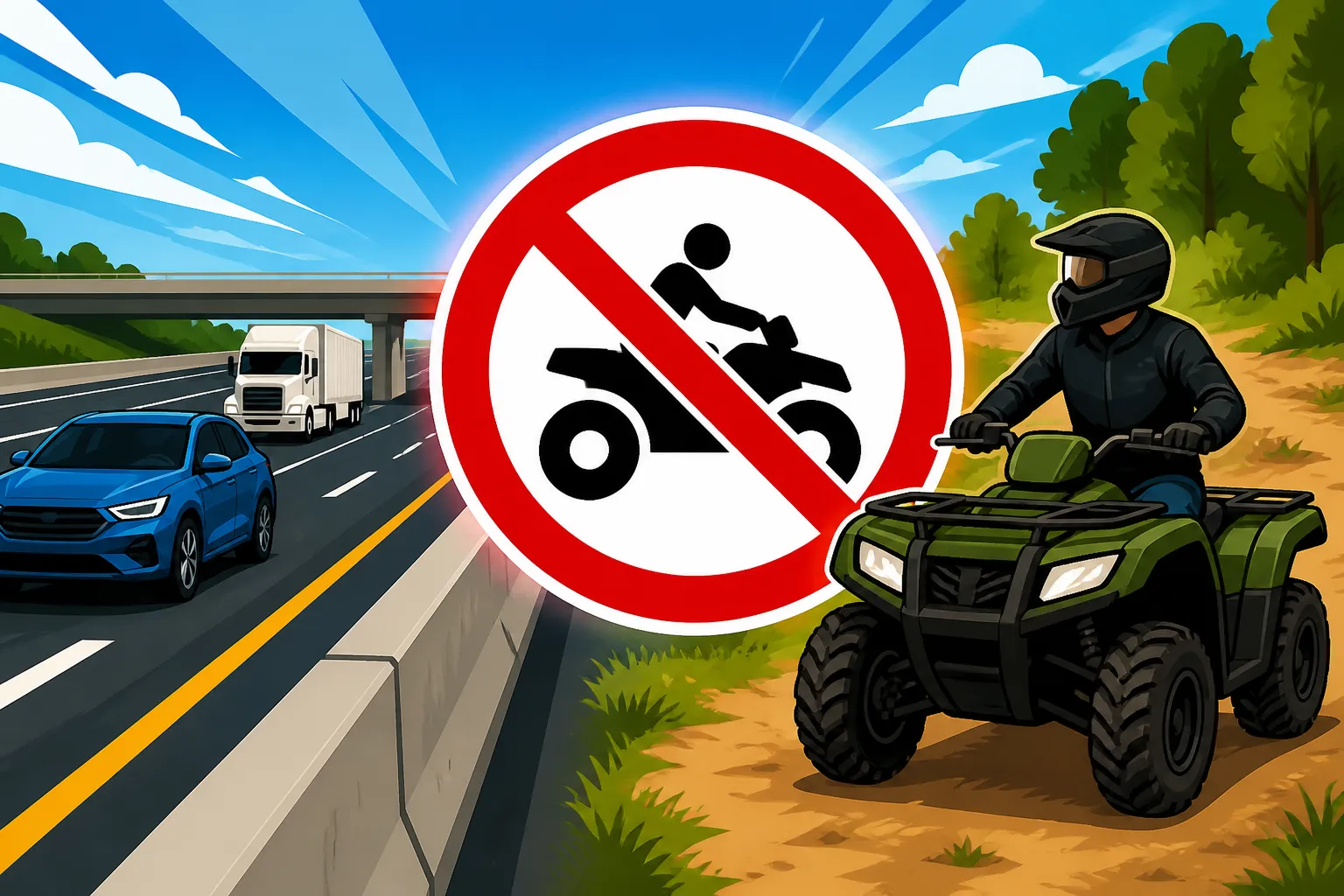
It's incredibly frustrating when you're out exploring Indiana's beautiful landscape on your ATV or UTV, cruising along a county road or heading to your favorite trail, only to hit a major highway that acts like an impassable barrier. You see the other side, just a few hundred yards away, and the thought "Can't I just quickly cross?" definitely pops into your head. This guide is here to break down exactly why traversing a limited-access highway on your off-road vehicle in Indiana is strictly prohibited and what you can do instead to keep your ride legal and safe.
Understanding Indiana's Off-Road Vehicle Definition and Road Rules
Before we dive into the specifics of why limited-access highways are a no-go, it’s helpful to understand how Indiana defines off-road vehicles (ORVs) and the general framework for their use on public roads. This foundation helps explain the rationale behind many of the restrictions you encounter as a rider. The state has a clear vision for where ORVs belong, and high-speed, multi-lane highways are definitely not part of that vision.
What Exactly is a Limited-Access Highway?
When we talk about a "limited-access highway," what does that actually mean for an ORV rider in Indiana? Essentially, these are roads designed for high-speed, uninterrupted traffic flow. Think of your major interstates like I-65, I-70, I-74, or I-69, or even some larger state routes that function similarly. They're characterized by features like multiple lanes of traffic, median barriers, grade separations (overpasses or underpasses) instead of at-grade intersections, and controlled entry and exit points (on-ramps and off-ramps). You won't find stop signs or traffic lights every few miles. The entire design is engineered for vehicles traveling at significant speeds, typically 55 mph or higher, without needing to stop or yield for cross-traffic.
The crucial part here is the "limited-access" aspect. This means that access to the highway is restricted to specific interchanges, rather than allowing any vehicle to enter or exit at any point along its length. For an ORV, which isn't designed to merge safely into 70 mph traffic or cross multiple lanes quickly, this design creates an insurmountable safety issue. There are no designated crossing points for slow-moving vehicles, and attempting to create one is extremely dangerous and illegal.
The Core Restriction: Why ORVs are Banned
So, why the absolute ban? It boils down to a few critical factors: safety, vehicle design, and legal intent. Indiana's laws are pretty unambiguous on this. Off-road vehicles, by their very nature and construction, are not built for sustained highway speeds. Their suspension, tires, and braking systems are optimized for challenging terrain, not smooth asphalt at high velocity. The lack of proper safety features like crumple zones, advanced airbags, or even enclosed cabs on many models makes them incredibly vulnerable in a collision with a passenger vehicle or a semi-truck.
Furthermore, these highways are designed for high throughput and continuous flow. Introducing a vehicle that operates at a significantly lower speed creates a dangerous impedance to traffic, leading to rapid deceleration requirements for other vehicles, increased risk of rear-end collisions, and general chaos. The legal framework surrounding ORV use in Indiana is built around ensuring the safety of all road users, and the risks associated with ORVs on limited-access highways are simply too great to permit. It's a clear-cut rule intended to prevent serious accidents and fatalities.
Exceptions and Misconceptions
When discussing ORV road use, sometimes people wonder if there are any special "exceptions" for limited-access highways, like emergency situations or very specific designated crossings. The short answer is: no, there are no exceptions for ORVs to travel on or cross limited-access highways in Indiana. This is a common misconception, perhaps stemming from rules that might apply to farm equipment on specific rural roads or construction vehicles in controlled zones, but those simply do not extend to recreational ORVs on interstates or similar major routes.
It’s crucial not to confuse limited-access highways with other types of public roads where ORVs might have limited access under certain conditions. For instance, some Indiana counties have passed ordinances to open certain county roads to ORV traffic, and in those specific areas, you might be able to ride legally, often with specific restrictions. You can learn more about this in [Indiana Counties That Allow ORVs on Roads]. However, this local discretion absolutely does not apply to limited-access highways. These major arteries remain universally prohibited territory for off-road vehicles.
The Dangers of Mixing ORVs with High-Speed Traffic
It really can't be stressed enough: the risks involved in attempting to operate an off-road vehicle on a limited-access highway are monumental. It's not just about getting a ticket; it's about putting your life, the lives of your passengers, and the lives of countless other motorists at severe risk. When you consider the physics of an ORV encountering a full-size vehicle at highway speeds, the outcome is almost invariably catastrophic for the ORV occupant.
Speed and Maneuverability Mismatch
Imagine trying to merge onto an interstate where traffic is flowing at 70 mph when your ORV's top speed might be 50-60 mph, and its acceleration is designed for traction on dirt, not rapid bursts on pavement. The speed differential alone is a recipe for disaster. Other drivers simply aren't expecting a slow-moving vehicle to be entering or crossing their path. This mismatch extends beyond just top speed; it also includes braking distance and maneuverability. ORVs generally have a higher center of gravity and knobby tires designed for grip on loose surfaces, which translates to longer braking distances and less stable handling on paved roads, especially at speed.
Furthermore, the steering and suspension systems on an ORV are optimized for rough terrain, not precise, high-speed control on asphalt. A sudden gust of wind, a small pothole, or an unexpected steering input that might be fine off-road could send an ORV swerving or even rolling on a highway. This fundamental design difference makes any attempt to blend with highway traffic inherently dangerous. SuperATV might offer fantastic accessories for enhancing your machine's off-road prowess, but none of those will change the core design limitations that make it unsuitable for interstate travel.
Visibility and Driver Awareness
Another critical danger stems from visibility. ORVs are generally smaller and sit lower than most passenger cars and trucks. On a busy highway, especially with semi-trucks and larger SUVs, an ORV can easily disappear into blind spots. Drivers of high-speed vehicles are not actively looking for ATVs or UTVs on the interstate. Their brains are conditioned to expect cars, trucks, and motorcycles, not off-road vehicles. This lack of expectation significantly increases the risk of a driver failing to see an ORV until it's too late.
Consider the dynamic conditions on a highway: multiple lanes, merging traffic, sudden lane changes, and the constant need for drivers to monitor various mirrors and blind spots. An ORV, particularly one moving at a slower speed, presents an unexpected visual challenge that dramatically increases the likelihood of a collision. Even with bright lights and flags, the sheer speed difference and the mental programming of other drivers make an ORV a highly vulnerable target on a limited-access highway.
Legal Ramifications and Penalties
Beyond the obvious safety risks, attempting to ride an ORV on a limited-access highway in Indiana carries serious legal consequences. This isn't just a minor infraction; it can be classified as a Class C infraction, or even more serious charges depending on the specific circumstances and any resulting dangers created. The penalties can include significant fines, court costs, and potentially even impoundment of your vehicle. You could be facing hundreds of dollars in fines, not to mention the potential for civil lawsuits if your actions cause an accident, even if you are not directly hit.
Conservation officers, state police, and local law enforcement are well aware of the rules concerning ORVs on public roads. They take these rules very seriously because of the high potential for severe injury or death. Getting caught operating an ORV on a limited-access highway is almost certainly going to result in a ticket, and it's a stark reminder of [Indiana Fines for Illegal ORV Road Use]. It's simply not worth the risk, both to your wallet and, more importantly, to your well-being.
Legitimate Road Crossing Alternatives for Indiana ORV Riders
While limited-access highways are completely off-limits, that doesn't mean ORV riders in Indiana are entirely confined to private land or dedicated trail systems. There are legal and safe ways to navigate certain public roads, and understanding these alternatives is key to responsible riding. The goal is always to find a crossing or path that is explicitly permitted and safe for your type of machine.
Utilizing Designated County Roads
This is perhaps the most viable alternative for many Indiana ORV enthusiasts looking to connect trails or access different riding areas. Indiana law allows individual counties to pass ordinances that open specific county roads to ORV traffic. This is not a blanket permission; it must be a deliberate act by the county. When a county does open roads, they typically designate specific routes, often rural or less traveled roads, and will have their own set of rules regarding speed limits, times of day, and required equipment.
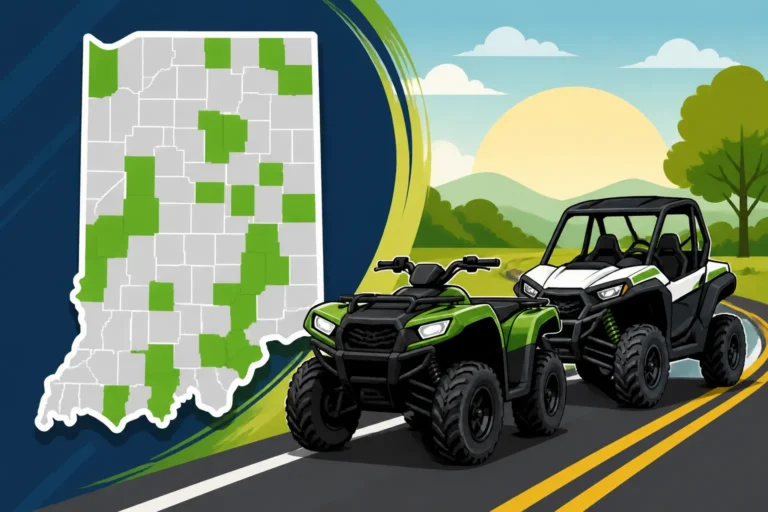
For example, you might find counties like Hancock County or Dearborn County that have enacted ordinances to permit ORV use on certain roads. You can find more information in articles like [How a County Highway Department Designates ORV Roads] or by checking with the county highway department directly. It’s crucial to research the specific county you plan to ride in, as rules can vary greatly. Always look for signage, check the county's official website, or call local authorities to confirm which roads are open and what requirements apply. This proactive approach ensures you're riding legally and safely on permitted routes.
The "Shoulder and Ditch" Exception (and its limits)
Indiana law does have a specific exception that allows ORVs to operate on the shoulder or in the ditch of a public highway, provided certain conditions are met. This is often misunderstood, so let’s clarify: this exception allows for movement alongside the road, not on the paved surface or across it at will. The intent is to allow ORV users to move from one point to another without using the main traffic lanes, typically in rural settings where roads connect trails or private property. You can read more about this in [The Shoulder and Ditch Exception in Indiana].
However, and this is a major point, this "shoulder and ditch" exception does not apply to limited-access highways. The physical design of limited-access highways with their controlled access points, high speeds, and lack of traditional shoulders or ditches suitable for ORV travel makes this exception entirely irrelevant. You cannot simply ride the shoulder of an interstate or attempt to traverse its ditch as a means of crossing. The primary danger of mixing slow-moving ORVs with high-speed traffic remains paramount, making such an attempt illegal and incredibly hazardous.
Trailering Your Machine Across
When all other options fail, or when you encounter a limited-access highway, the safest and only legal solution for crossing is to trailer your ORV. This might sound like an obvious answer, but it's often overlooked by riders who are just trying to get from Point A to Point B efficiently. If you need to get your machine from one side of an interstate to the other, or from one ORV-permitted road to another that's separated by a major highway, loading it onto a trailer and driving it across is the only permissible method.
This approach completely removes the ORV from the dangerous highway environment, ensuring both your safety and the safety of other motorists. While it might take a little more time and effort to find a suitable loading and unloading spot, it's a small price to pay for compliance with the law and peace of mind. Investing in a good trailer and secure tie-downs from a company like SuperATV is part of being a responsible ORV owner in Indiana, especially if your adventures frequently take you across different regions of the state.
General Road Rules for ORVs in Indiana
Even when you're on designated county roads or using the shoulder/ditch exception, there are still rules of the road that apply to ORVs in Indiana. These aren't just suggestions; they are legal requirements designed to ensure orderly and safe travel for everyone. Being familiar with these regulations will help you avoid citations and keep your riding experience positive.
Stopping and Yielding at Crossings
If you are on a county road that permits ORV use and you need to cross a different, non-limited-access road (like a state route or another county road), there are strict rules to follow. You must make a complete stop before entering or crossing any highway or roadway. This isn't a rolling stop; it's a full, deliberate halt. Then, you must yield the right-of-way to all other traffic on the highway. This means waiting until the path is absolutely clear and you can cross safely without interfering with approaching vehicles.
Furthermore, when crossing, you must do so at a right angle to the highway, meaning you cross directly across the lanes, not diagonally. This minimizes the time your ORV is in the path of other vehicles and makes your intentions clear. It's a precise maneuver that requires careful attention and good judgment. For more details on this, refer to [Crossing at Right Angles in Indiana] and [A Complete Stop Before an Indiana Crossing]. Always prioritize safety and caution when performing any road crossing.
Local Ordinances and Their Impact
As mentioned earlier, local ordinances play a huge role in determining where you can and cannot ride your ORV on public roads in Indiana. What's legal in one county might be completely illegal just across the county line. These ordinances can specify everything from the types of roads that are open, to the hours of operation, required safety equipment, and even minimum age limits for operators. This patchwork of rules can be confusing, but it’s the rider’s responsibility to know the local laws.
Before heading out for a ride that involves any public road use, always check the specific ordinances for the county you'll be in. Many counties publish these on their official websites, or you can contact the county clerk or highway department. Ignoring local rules can lead to fines and a bad experience, so staying informed is paramount. [Indiana Local Ordinances on ORV Riding] provides a great starting point for understanding how these rules function.
Required Equipment for Road Use
When ORVs are permitted on public roads in Indiana, even on designated county roads, they often come with specific equipment requirements to enhance visibility and safety. While an ORV might not need all the same features as a street-legal car, certain items are usually mandatory. This commonly includes headlights and taillights that are functional after dark, a brake light, and a muffler to control noise. Some ordinances might even require a flag or specific reflective materials.
It's also worth noting that in some situations, and depending on your machine type, safety gear like helmets might be required, especially for younger riders. For example, SuperATV might sell light bars and mirrors that are excellent for trail riding, but you need to ensure any added equipment meets the specific legal standards for road use in the particular Indiana county you're riding in. Always confirm these requirements before you venture onto any public road to ensure you're fully compliant and visible to others.
Indiana ORV Road Use at a Glance
To summarize the key distinctions for ORV road use in Indiana, especially concerning those challenging crossings, here's a quick reference. Remember, local ordinances can add further layers of rules, so always check the specific county you plan to ride in.
| Feature | Limited-Access Highways (Interstates, Major State Routes) | Designated County Roads (via Local Ordinance) | Other Public Roads (Shoulder/Ditch Exception) |
|---|---|---|---|
| Direct Travel/Crossing | Absolutely Prohibited | Permitted if specifically designated by county ordinance. Must follow local rules. | Not permitted for direct travel on the paved surface. Limited crossing rules apply. |
| Shoulder/Ditch Use | Prohibited and impractical | Permitted if within county ordinance rules or general state law applies. | Permitted for travel alongside the paved surface under specific state conditions. |
| Required Actions at Crossings | N/A | Complete stop, yield to all traffic, cross at right angles. | Complete stop, yield to all traffic, cross at right angles. |
| Primary Safety Concern | Extreme speed differential, high collision risk. | Adherence to local rules, driver awareness. | Visibility, potential for unexpected obstacles, speed of passing traffic. |
| Legal Status | Illegal, severe penalties likely. | Legal if compliant with specific county ordinance. | Legal if compliant with state law (shoulder/ditch conditions). |
| Safe Crossing Method | Trailer your ORV across. | Utilize designated ORV crossing points or specific roads. | Utilize designated crossing points or trailer if no legal crossing exists. |
Disclaimer
This article is for general informational purposes only and does not constitute professional advice. Laws, prices and regulations vary by location and change over time. Consult a qualified professional for guidance on your specific situation.