Riding a Ditch Beside a Hancock County Road
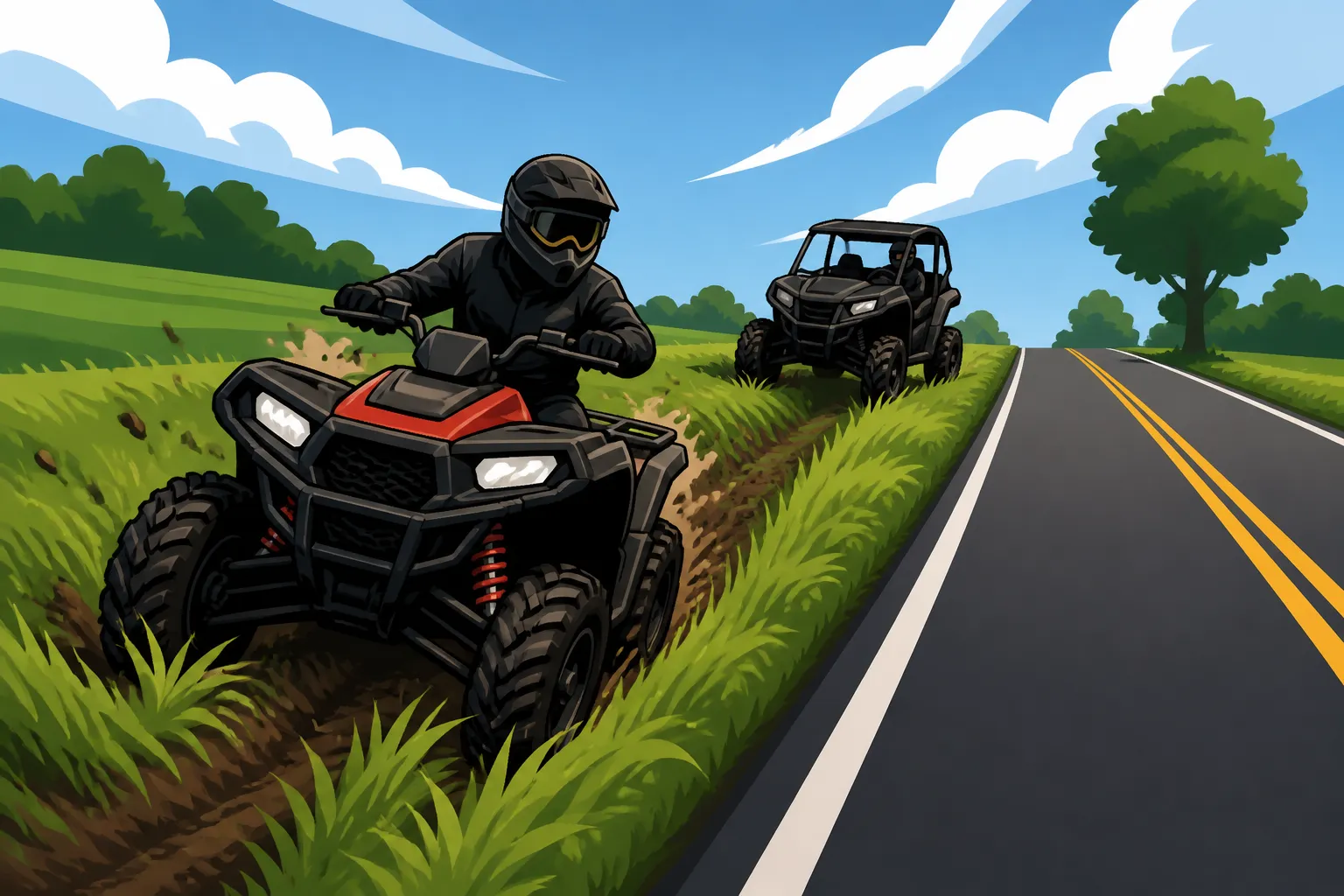
For many off-road vehicle enthusiasts in Indiana, the desire to connect trails, access private property, or simply explore without hauling your machine on a trailer can be a real struggle. The idea of riding your ATV or UTV in the ditch alongside a public road often comes up, especially in rural areas. This guide will dive deep into the specific regulations and practical considerations for riding a ditch beside a Hancock County road, clarifying what Indiana law permits and what could land you in hot water.
Understanding Indiana's General Ditch Riding Rules
Let's be honest, the thought of just hopping on your quad and riding it down the road to a buddy's house or a nearby field is tempting. But Indiana's laws are pretty clear that off-road vehicles (ORVs) generally aren't street legal. However, there are very specific exceptions, and the ditch is one of those nuanced areas that can cause a lot of confusion. It's not a free-for-all, but it's not always an absolute ban either.
The Shoulder and Ditch Exception in Indiana
At the state level, Indiana law provides a narrow allowance for ORVs to operate within the shoulder or ditch of a public highway. This isn't a license to joyride next to traffic; it's a very specific provision designed to allow owners to move their machines from one legal riding area to another, or to access property, where other options are unavailable. The key here is "exception." It means that while [Why Indiana Roads Are Closed by Default], the ditch sometimes offers a sliver of possibility. You're essentially being granted a limited privilege, not a right, to use this part of the road corridor. This exception is critical for riders who might need to cover a short distance between private land parcels or to get to a designated ORV route. It's a pragmatic recognition that sometimes, there's just no other way to get from point A to point B on your machine.
However, this exception comes with some pretty big strings attached. You can't just assume every ditch is fair game. The intent is not to allow continuous travel alongside roads for recreation, but rather for practical access. Think of it as a tool in your riding toolbox, to be used carefully and under specific circumstances, much like using a specialized recovery winch from SuperATV in a tricky spot—it's there when you need it, but you're not meant to rely on it for every mile of your journey.
Key State-Level Limitations and Considerations
Even when riding in the ditch or on the shoulder is allowed by the state, there are crucial limitations you absolutely must understand and adhere to. First and foremost, you must always yield to pedestrians and other traffic. This isn't your private trail; it's part of a public thoroughfare. The law also often specifies that you must stay as far to the right as practicable, away from the traveled portion of the highway. This means if there's a nice, wide, clear ditch, you should be in it, not hugging the asphalt.
Crucially, the ditch or shoulder must be of [Sufficient Width to Ride Away From Traffic]. If the ditch is narrow, overgrown, or full of obstructions, it may not be considered a safe or legal place to operate. You're not expected to create a hazardous situation for yourself or others by trying to squeeze through an impossibly tight space. Moreover, the state also dictates how you approach and [Crossing at Right Angles in Indiana] roads when necessary. This means no diagonal cuts across lanes; you stop, look both ways, and proceed straight across the road when clear, completing [A Complete Stop Before an Indiana Crossing]. And remember, limited-access highways, like interstates, are always off-limits for ORVs, even in the ditch. These are fundamental safety rules that are non-negotiable and apply statewide, regardless of local ordinances.
Navigating Hancock County's Specific ORV Ordinances
While state law sets the baseline, individual counties and municipalities in Indiana have the power to create their own ordinances regarding ORV use on public roads and rights-of-way. This is where things can get really tricky, because what's allowed in one county might be strictly forbidden in the next. Hancock County, like others, has the authority to open or close its roads to ORVs. Understanding their specific stance is paramount before you ever consider riding that ditch.
Hancock County's Open County Roads and Ditch Riding
Fortunately for riders in this area, [Riding Hancock County Roads] has become a possibility thanks to a county ordinance. This is a significant development for ORV owners, as it opens up new avenues for legal riding that aren't available everywhere in the state. When a county formally "opens" its roads to ORVs, it typically means that within the unincorporated areas of that county, you may operate your machine on the paved surface of designated county roads.
Now, how does this impact ditch riding? If Hancock County roads are open to ORVs, the need to rely solely on the state's ditch exception for movement might be reduced. You could potentially ride on the road itself. However, even with open roads, many riders still prefer the ditch when available. Why? Because it keeps them further away from vehicular traffic, often feels more like off-road riding, and can sometimes be a more direct route through brush or uneven terrain than staying on the paved surface. The county's ordinance permitting road use doesn't automatically negate the state's ditch allowance; rather, it often provides an additional, perhaps safer, option for travel. However, always double-check the specifics of the Hancock County ordinance to ensure there aren't any clauses that supersede or modify the state's ditch rules. It's about combining state-level permission with county-level openness.
When a Ditch May Not Be an Option in Hancock County
Even with progressive county ordinances, there are still situations where riding a ditch in Hancock County simply isn't feasible or legal. Just because a road is "open" doesn't mean every accompanying ditch is safe or suitable. For example, if you're approaching or within the corporate limits of towns like Greenfield, McCordsville, New Palestine, or Fortville, county ordinances typically yield to municipal rules, which are almost universally stricter and often prohibit ORVs on any public right-of-way, including ditches.
Beyond city limits, the physical characteristics of the ditch itself can be a barrier. Some county roads might have drainage ditches that are too deep, too narrow, or filled with water, rocks, or debris, making them impossible to navigate safely. Others might have no discernible ditch at all, transitioning directly from the road shoulder into private property. In such cases, attempting to ride where no safe or legal ditch exists could lead to trespassing charges or a citation for illegal road use. Imagine coming around a bend and finding the ditch suddenly drops off into a steep creek bed – that's not a riding opportunity, that's a hazard. Even if you've got robust aftermarket protection from SuperATV, like heavy-duty skid plates, attempting to ride through impassable terrain isn't smart. Always assess the actual physical conditions of the ditch before committing to riding it.
Practicalities and Safety for Ditch Riding
Riding an ORV, whether on a trail or in a ditch, carries inherent risks. When you add proximity to road traffic, those risks amplify significantly. Therefore, a focus on safety and responsible riding practices isn't just a recommendation; it's a necessity. You're not just riding for yourself; you're representing the entire ORV community, and any incident could jeopardize the privileges that counties like Hancock have granted.
Assessing the Ditch: Is It Safe and Suitable?
Before you drop your wheels into any ditch, a thorough assessment is absolutely crucial. Don't just assume it's clear sailing. What might look like a smooth, grassy path from a distance could hide a multitude of dangers. You need to scout ahead, if possible, or at least drive slowly and cautiously. Look out for hidden culverts, which can be massive drops or sudden obstructions. Drainage pipes, rocks, stumps, deep ruts from water erosion, or even discarded trash can all pose serious threats to your machine and your safety.
Consider the depth and width of the ditch. Is it stable, or is the ground soft and prone to trapping your wheels? Has there been recent rain that could turn a firm ditch into a mucky quagmire? Visibility is another huge factor. Can you clearly see ahead, and more importantly, can drivers on the road see you? If the ditch is heavily overgrown with tall weeds or brush, you become a hidden hazard. Always prioritize safety over convenience. If a ditch looks dodgy, turn back or find an alternative route, even if it means loading your machine back onto a trailer. Equipping your machine with durable components, like A-arm guards or rock sliders from SuperATV, can provide some protection against unexpected impacts, but prevention is always better than recovery.
Gear, Visibility, and Being a Responsible Rider
Riding safely in any environment means being properly equipped, and ditch riding is no exception. A helmet is non-negotiable, and in Indiana, [Indiana Helmet Law for ORV Riders] requires anyone under 18 to wear one on public land or rights-of-way, but it's smart for all riders. Bright, high-visibility clothing, like blaze orange or neon yellow, significantly increases your chances of being seen by drivers. Remember, they aren't expecting to see an ORV in the ditch, so anything you can do to stand out is a plus. Make eye contact with drivers whenever possible, especially when approaching intersections or driveways. Assume they haven't seen you.
Beyond personal gear, ensure your machine is in top condition. Are your lights working, even in broad daylight? Are your tires properly inflated for the varied terrain you might encounter, from pavement to soft earth? Always carry [Indiana Registration and Insurance Proof], as an officer might ask for it during a roadside stop. Furthermore, understand [Indiana Minimum Age to Ride an ORV] and [Indiana Rules for Carrying a Passenger] if you have others on board. Being a responsible rider means more than just following the law; it means exercising good judgment, being courteous to other road users, and being an ambassador for the ORV community. An officer checking [What an Indiana Officer Checks Roadside] will certainly appreciate a prepared and visible rider.
When Ditch Riding Isn't the Answer
While the ditch can sometimes be a legal and convenient option, it's not a universal solution for ORV travel. There will be times when the ditch isn't suitable, legal, or safe, and knowing when to seek alternatives is part of being a savvy and responsible rider. Pushing the limits or ignoring the rules can lead to serious consequences, both legally and physically.
Alternative Riding Options and Legal Road Crossings
If the ditch alongside a Hancock County road isn't an option for you, don't despair! Indiana offers several other avenues for legal ORV riding. Your best bet is always to seek out designated off-road parks or private land where you have explicit permission to ride. Places like Redbird SRA or Interlake SRA provide thousands of acres of dedicated trails, offering a much more enjoyable and unrestricted experience than a ditch. Many private off-road parks also cater to ORV enthusiasts.
If you absolutely must cross a road, remember the strict rules: always come to a complete stop, look both ways, and yield to all traffic before proceeding directly across the lanes, making sure to [Crossing at Right Angles in Indiana]. This is a quick movement, not an extended ride on the pavement. Sometimes, the only safe and legal way to transport your machine a significant distance is to load it onto a trailer. It might be less convenient, but it certainly beats a hefty fine or, worse, an accident. Exploring other options like [Indiana Rules for Riding Private Land] or [Indiana Rules for Riding a Farm Lane] can also provide safe and legal alternatives to public road corridors.
Consequences of Misunderstanding the Rules
Let's be blunt: ignorance of the law is not an excuse. If you're caught riding illegally in a ditch or on a road in Indiana, the penalties can be significant. [Indiana Fines for Illegal ORV Road Use] can range from hundreds of dollars for a first offense, quickly escalating for repeat violations. These aren't minor infractions; they can be Class C infractions, which carry substantial fines. Beyond the financial hit, you could face impoundment of your machine, and in severe cases, even more serious legal trouble, especially if an accident occurs or property is damaged.
Imagine trying to explain to a conservation officer why you thought a heavily overgrown, waterlogged ditch that bordered a residential area was perfectly fine for your side-by-side. The consequences aren't just about money; they're about public perception and the continued access for all ORV riders. Every illegal act on a public right-of-way chips away at the goodwill and efforts made by counties like Hancock to provide legal riding opportunities. Therefore, it's always better to err on the side of caution, understand the rules thoroughly, and if in doubt, choose a different path or seek clarification from local authorities.
| Aspect of Ditch Riding | Legal/Safe Considerations | Illegal/Unsafe Scenarios |
|---|---|---|
| Location | Within clear, wide ditch/shoulder; unincorporated county roads where allowed. | Within city limits; on limited-access highways; where no defined ditch exists. |
| Conditions | Ditch is wide, clear, stable, no obstructions; good visibility. | Ditch is narrow, deep, overgrown, waterlogged, hidden culverts; poor visibility. |
| Maneuver | Staying far right; crossing roads at right angles after a complete stop and yielding. | Riding on pavement; cutting diagonally across roads; failing to stop/yield. |
| Intent | Connecting legal riding areas; accessing private property. | Recreational cruising; avoiding trailer transport for long distances. |
| Rider Prep | Helmet (especially under 18), bright clothing, working lights, valid registration/proof. | No helmet, dark clothing, non-functioning lights, expired registration. |
| County Rules | Riding in Hancock County, which has opened its roads. | Riding in a county that explicitly prohibits ORVs on all public rights-of-way. |
Disclaimer
This article is for general informational purposes only and does not constitute professional advice. Laws, prices and regulations vary by location and change over time. Consult a qualified professional for guidance on your specific situation.