Blaze Orange at an Indiana Park
Planning an off-road ride during hunting season raises a practical question: should you wear blaze orange at an Indiana park, and is it required? The answer can depend on whether you are hunting, where you are riding, and what the park’s current rules say. Here’s how to make a safer plan without confusing hunting requirements with trail permits.
When Blaze Orange Matters at an Indiana Park
Blaze orange is meant to help people see you. It matters most when hunters may be in or near the area, particularly during a hunting season when firearms are used. An off-road park can sit within a wider landscape where hunting is allowed, or its trails and access roads may pass near places used by hunters. The exact situation varies by property and season.
A useful distinction is that riding an ORV and hunting are different activities. Orange requirements tied to hunting apply to hunters under the rules for the relevant season and location. Simply riding a trail does not, by itself, mean you are hunting. But that does not tell you whether a specific park has a separate clothing rule, whether nearby land is open to hunting, or whether temporary restrictions are in place.
| Situation | Practical approach |
|---|---|
| You are riding and not hunting | Check the park’s current rules and notices. Wear visible orange when hunting activity may be nearby. |
| You are hunting while using an ORV | Check the hunting rules for the season, property, and method of take. Orange may be required. |
| You are riding with children or a group | Use orange on each rider, and make sure it remains visible while seated on the machine. |
| A gate notice or park staff gives a specific instruction | Follow the current site instruction and ask staff if anything is unclear. |
Do not assume that every Indiana ORV park has the same orange rule. Properties may differ in their layout, nearby hunting access, seasonal operations, and posted conditions. Rules can also change, so check the property’s current information before you load up. The gate board is useful, but if you are unsure about a notice, contact the park directly. Reading the Gate Board Before You Unload and Calling a Park Office Before You Load can help you plan that check.
Blaze orange also does not replace the regular requirements for riding. It is separate from permits, registration, trail access, and safety equipment. Before heading out, confirm what your machine needs for the property and whether your planned route is open. Indiana’s Daily and Annual Trail Permits explains the permit side, while Indiana Trail Seasons and Conditions is relevant when seasonal access or trail conditions could affect your trip.
What to Check Before You Ride
Start by identifying the exact property, not just the general area. A private riding park, a state recreation area, and public land next to a trail system may have different rules. A rule that applies at one gate or on one parcel should not be assumed to apply everywhere nearby.
Before departure, check:
- The park’s current rules and notices. Look for clothing requirements, seasonal restrictions, hunting information, and temporary closures. If a rule is unclear, ask park staff rather than relying on an old post or a secondhand account.
- Whether hunting is allowed nearby. A riding area may be close to land with different access rules. Check the property information for hunting-season notices and boundaries, and stay on the marked routes.
- Whether your planned trail is open. A seasonal closure or trail change can affect where riders and other visitors are permitted to go. Do not ride around a gate or assume a closed route is open because it appears passable. See Indiana Trail Closures to Check First for a broader pre-ride checklist.
- Your permit and machine paperwork. Trail access requirements are separate from clothing. Review Do You Need a Permit for Indiana ORV Trails? and, if you are visiting from outside Indiana, Indiana Rules for a Visiting Rider.
- Any rules that apply if you will carry a firearm or hunt. Do not treat an ORV riding rule as a hunting rule. If hunting is part of the outing, check the applicable hunting requirements and property rules before bringing a firearm. Indiana Rules for Carrying a Firearm covers a related issue, but it does not replace the hunting rules for a particular season.
If you are riding during deer season, take the possibility of nearby hunting seriously even when the park does not say orange is mandatory for riders. Check the property’s own hunting information and any current notices. Indiana Rules for Riding in Deer Season is also relevant when planning a ride around seasonal hunting activity.
Do not use a map alone to decide that hunting cannot be nearby. Property boundaries, trail routes, and public access areas can meet in ways that are not obvious from a quick glance. Stay on designated trails, avoid entering land you do not have permission to use, and ask the property operator how to interpret any boundary or seasonal notice.
Choosing and Wearing Orange for Riding
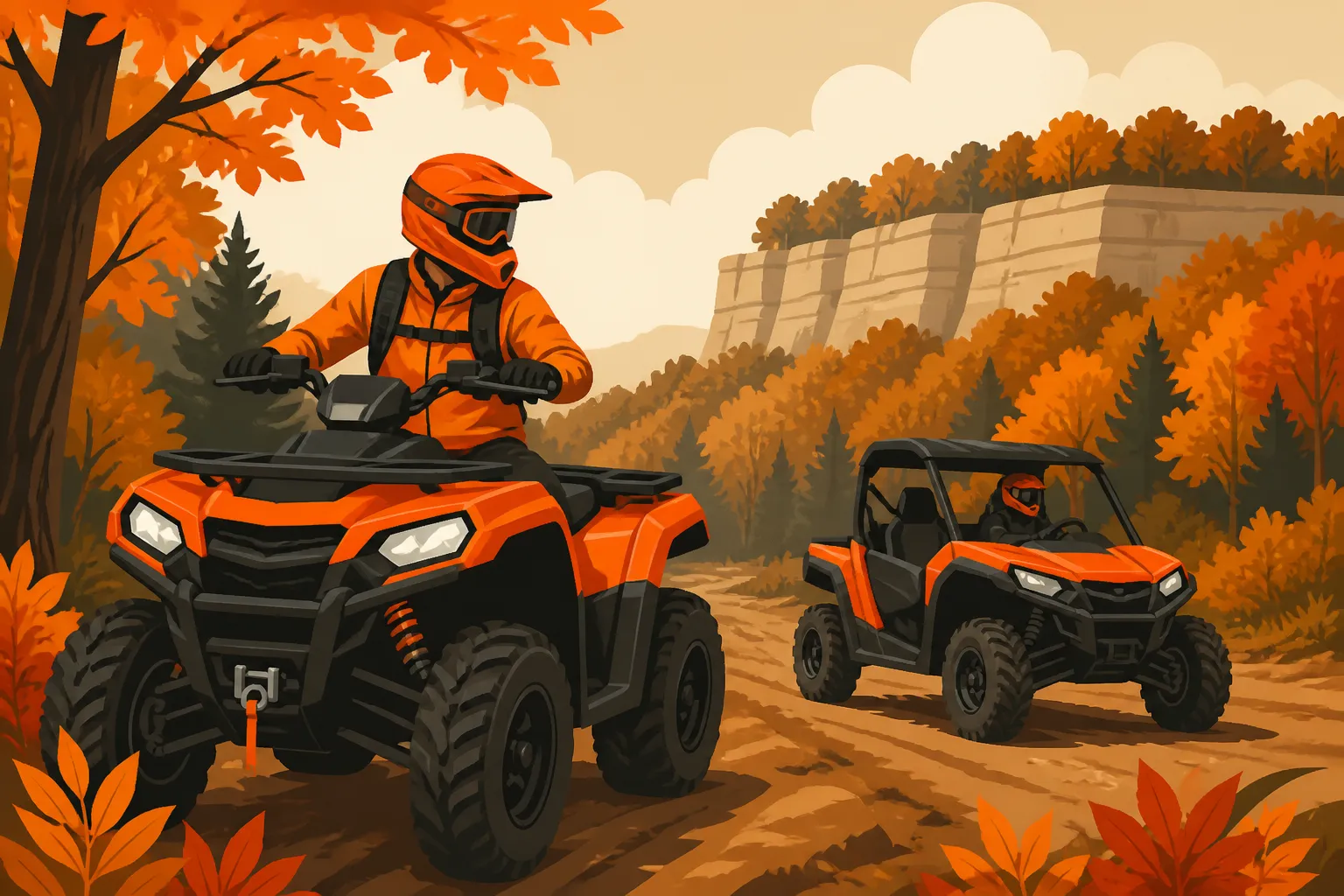
If you decide to wear blaze orange, choose something that stays visible while you are seated and moving. A vest or outer layer is often more useful than a small patch hidden by a backpack, jacket, or riding gear. A passenger should wear visible orange too; one rider’s clothing does not make the whole machine easy to spot.
The goal is visibility from more than one angle. Consider how the color looks when you are sitting on the machine, leaning forward, or stopped beside a trail. Avoid covering the orange with a dark pack or mud-splashed outer layer. If you carry a spare layer, keep it accessible so you can put it on before leaving the staging area.
A few practical choices can help:
- Wear orange on your upper body. It is easier for another person to see than a small item attached low on the machine.
- Keep the color exposed. Check that a jacket, hydration pack, or other gear does not hide most of it.
- Use a separate visible layer for each rider. This matters for passengers and children as well as the operator.
- Bring an extra layer. Weather and mud can make a light vest uncomfortable or dirty; a backup gives you another option.
- Choose gear that still fits safely. Orange clothing should not interfere with your helmet, eye protection, controls, or ability to move.
If you shop for a vest or other orange clothing at a sporting-goods store or through Amazon, check the item’s fit, coverage, and intended use. A small orange accessory may be convenient, but it may not provide much visibility when you are seated on a machine. Do not modify a helmet or add anything that compromises its fit, protective function, or visibility.
Orange is a visibility aid, not a substitute for attentive riding. Keep your speed appropriate for the trail and sight lines, use lights as required by the park, and be ready for other visitors around bends or at crossings. If you hear gunfire or encounter a hunter, stop in a safe place, remain on the designated route, and follow the property’s instructions. Do not approach or confront someone in the field.
For young riders, make visibility part of the pre-ride check. Confirm the orange layer is on before the group leaves the staging area, and check that it is still visible after helmets, jackets, and packs are in place. Orange gear does not replace age, supervision, or protective-equipment rules. For those requirements, see Indiana Helmet Rules at a State ORV Area.
A Simple Plan for Hunting Season
A little preparation can prevent confusion at the gate. First, confirm that the park is open and that your intended trails are available. Then check for current hunting-season notices and ask whether riders should take any additional precautions. If you are unsure whether orange is required, ask the property operator directly and follow the answer given for that location.
For a straightforward ride plan:
- Check the park’s current access and clothing rules.
- Confirm whether hunting is occurring on or near the property.
- Put visible orange on every rider if hunting activity may be nearby, unless the park gives different instructions.
- Keep to marked trails and observe closures.
- Carry any required permits and machine documents separately from your clothing and gear.
- Recheck notices at the entrance before unloading.
Wearing blaze orange is a sensible precaution when hunters may be nearby, even if a park does not identify it as a universal requirement for riders. But do not treat it as permission to enter a hunting area, ride a closed route, or ignore property boundaries. If the park has a specific rule, that rule controls your visit. If the information is uncertain, pause and confirm it with park staff rather than guessing.
Disclaimer
This article is for general informational purposes only and does not constitute professional advice. Laws, prices and regulations vary by location and change over time. Consult a qualified professional for guidance on your specific situation.