Where the Right-of-Way Ends
It's incredibly frustrating, isn't it? You've got your ATV or UTV all prepped for a ride, maybe you just need to get from one private field to another, or you're curious about a county road you've seen others on, but you're constantly worried about where you're actually allowed to be. That line between legal and illegal, between public right-of-way and private land, can feel incredibly blurry, leaving many riders scratching their heads and risking a hefty fine. This guide is here to unravel that mystery, helping you understand precisely where the right-of-way ends for your off-road machine in Indiana.
Indiana's "Road Closed by Default" Stance and Your ORV
Indiana has a pretty clear stance when it comes to off-road vehicles and public roads: they're generally off-limits unless explicitly stated otherwise. This can be a real head-scratcher for riders who just want to get from point A to point B without trespassing or breaking the law. It’s easy to get confused because the rules for cars and trucks are so different, and it feels like your machine, which is often heavier and more capable than a small car, should have some similar rights. But the reality is, ORVs are treated differently for a host of reasons, primarily safety and infrastructure preservation.
The General Rule: Why You Can't Just Ride Down Main Street
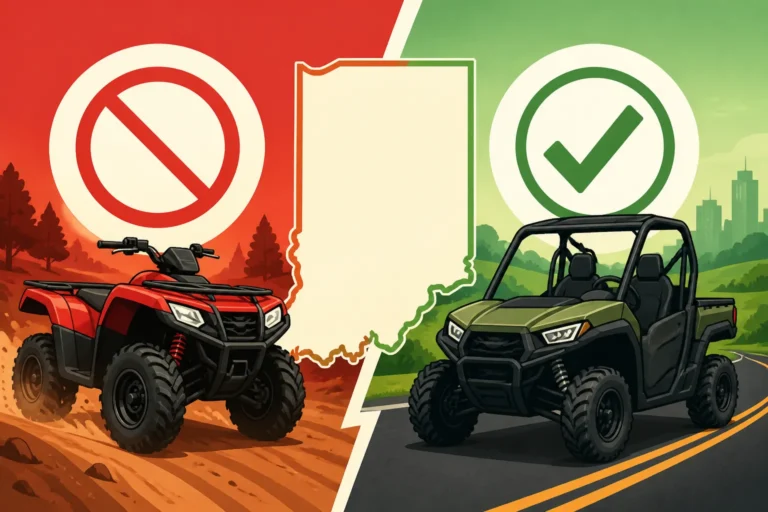
Imagine firing up your side-by-side and cruising down the main thoroughfare of a busy Indiana town. While it might sound convenient, it’s generally not permitted. The state's default position is that public highways, roads, and streets are closed to ORV operation. This means you can't just jump on a state road or even a local street and expect it to be legal. This rule is in place to protect riders, other motorists, and the road infrastructure itself. Off-road vehicles aren't designed for high-speed road travel, and their different handling characteristics can pose a risk in a traffic environment.
For a deeper dive into this fundamental rule, you might find our article [Why Indiana Roads Are Closed by Default] incredibly helpful. It really lays out the reasoning behind this statewide policy and addresses many of the common misconceptions riders have when they first start looking into road legality. This default rule is the foundation of everything else we'll discuss about the right-of-way – it's the starting point from which all exceptions and local allowances are measured.
What "Public Road" Really Means for Off-Roaders
When we talk about "public roads" in Indiana, it's not just the big, multi-lane highways. This term encompasses everything from state-maintained routes (like US or State Roads) down to county roads and even smaller township thoroughfares. If it’s maintained by a government entity and open for general vehicular traffic, it's considered a public road. The state mandates that these roads remain closed to ORVs unless a specific exception is made by law, or a local governmental unit, like a county, passes an ordinance to open certain roads within its jurisdiction.
This broad definition is often a point of frustration. Many riders live in rural areas where county roads are quiet and seem perfectly safe for an ORV. Yet, without specific local legislation, these roads fall under the same "closed by default" rule as a bustling state highway. Understanding this distinction is crucial to avoid unintended violations. It means you can't assume that just because a road is less traveled, it's fair game for your quad or UTV.
Deciphering the Right-of-Way: Beyond the Pavement
So, if you can't ride on the paved road, what about next to it? This is where the concept of "right-of-way" becomes incredibly important and often misunderstood. The right-of-way of a road is much broader than just the asphalt or gravel you drive on. It's a legal strip of land acquired by the government for transportation purposes, and it often extends quite a bit wider than you might think.
Understanding the Legal Limits of a Road
Legally speaking, a road's right-of-way isn't just the driving surface. It typically includes the shoulders, ditches, utility easements, and sometimes even a margin beyond that, up to a property line or fence. This entire strip is considered public land or under public easement, maintained by the relevant highway department. When you're looking at a road, don't just see the blacktop; visualize an invisible boundary line on either side, often 30, 50, or even 100 feet from the center of the road. That entire area is generally considered the road's right-of-way.
The challenge for ORV riders is that while this entire strip is part of the public right-of-way, it doesn't automatically mean you can ride your machine on all of it. The state's "closed by default" rule still applies to the driving surface, but Indiana law does provide specific exceptions for other parts of the right-of-way, particularly the shoulder and ditch. This nuance is where many riders get into trouble, as they might mistakenly assume the entire right-of-way is fair game.
Shoulders and Ditches: Your Narrow Window of Opportunity
Indiana law does provide a sliver of opportunity for ORV riders to operate within the right-of-way, specifically on the shoulder or in the ditch adjacent to a public highway. However, this isn't a free pass for joyriding. There are strict conditions you need to adhere to. The law generally permits operation on the shoulder or in the ditch if there is "sufficient width" to ride without interfering with vehicular traffic and if the operation is "for a reasonable distance."
What constitutes "sufficient width" and "reasonable distance" can feel a bit subjective, which is where the frustration often lies. A sheriff's deputy or conservation officer might interpret these terms differently than you do. It means you need to exercise extreme caution and good judgment. You're expected to stay as far away from the active traffic lanes as possible, and your purpose for being there shouldn't be to simply extend your trail ride. It’s typically intended for accessing private property, crossing a bridge, or moving from one section of trail to another. Our post on [The Shoulder and Ditch Exception in Indiana] offers a more detailed breakdown of these rules and what they entail for riders.
Visibility is also paramount when operating near any public roadway, even if you’re staying strictly to the shoulder or ditch. Many riders choose to upgrade their machines with enhanced lighting, like LED light bars or auxiliary lights, to ensure they are seen by other traffic. Companies like SuperATV offer a wide range of lighting solutions that can significantly improve your visibility, especially during dawn, dusk, or in inclement weather, which can add a layer of safety when navigating these narrow permissible zones. This proactive approach can make a significant difference in how safely you operate within the right-of-way boundaries.
Navigating Road Crossings and Private Property Lines
While prolonged riding on public roads is generally prohibited, the need to cross a road is often unavoidable for off-road enthusiasts. Whether you’re moving between fields, connecting to another trail, or just trying to get to a gas station, knowing the proper way to cross a public road is vital. Equally important is understanding where the public right-of-way ends and private property begins, to avoid accidental trespassing.
Crossing Roads: Brief but Crucial Interactions
Indiana law does allow ORV operators to cross public highways, but only under specific and carefully defined conditions. This isn't a casual affair; it's a brief, highly regulated maneuver designed to minimize risk to both the ORV operator and other traffic. When you approach a road you need to cross, you must first come to a complete stop. You then have to yield the right-of-way to all vehicular traffic on the highway. Once the path is clear and safe, you are permitted to cross the highway at a right angle, essentially going straight across the lanes of traffic.
The emphasis here is on safety and minimal interruption to traffic. You can't angle across, weave, or travel any distance on the road itself. It's a quick, direct crossing. This specific rule is a common focus for law enforcement, as improper crossings are dangerous. We have a dedicated article, [Crossing a Road on an ORV in Indiana], that dives much deeper into these requirements, offering practical advice and scenarios to help you understand them better. Remember, these crossings are a privilege, not a right, and they demand your full attention and adherence to the law.
When the Right-of-Way Abuts Private Land
One of the most common sources of confusion for riders is figuring out the exact line where the public road's right-of-way ends and private property begins. Sometimes, it’s clearly marked by a fence, a utility pole, or a property marker. Other times, especially in rural areas, the boundary can be much less obvious. The public right-of-way often extends beyond the paved or gravel surface to encompass areas used for drainage, utility lines, or even future road expansion. However, once you cross that invisible (or sometimes visible) line into private property, you need explicit permission from the landowner.
Failing to secure permission before riding on private land is trespassing, which carries its own set of legal consequences. It’s crucial to know your routes, understand property maps, and always err on the side of caution. If you’re unsure, don't ride there until you confirm it's either public land where ORVs are permitted, or you have direct permission from the property owner. Ignoring these boundaries can lead to fines, legal disputes, and a bad reputation for the entire ORV community. Our articles [Indiana Rules for Riding Private Land] and [Indiana Trespass Rules for Riders] provide comprehensive guidance on respecting property rights and avoiding legal trouble.
County Ordinances: Local Control Over the Right-of-Way
While the state law provides a general framework, individual Indiana counties have the authority to create their own ordinances regarding ORV use on county roads. This is where the definition of "where the right-of-way ends" can get even more localized and, frankly, a bit complicated. A county ordinance can change the game, allowing more expansive use of certain public roads than state law typically permits.
The Power of Local Laws to Open or Close Roads
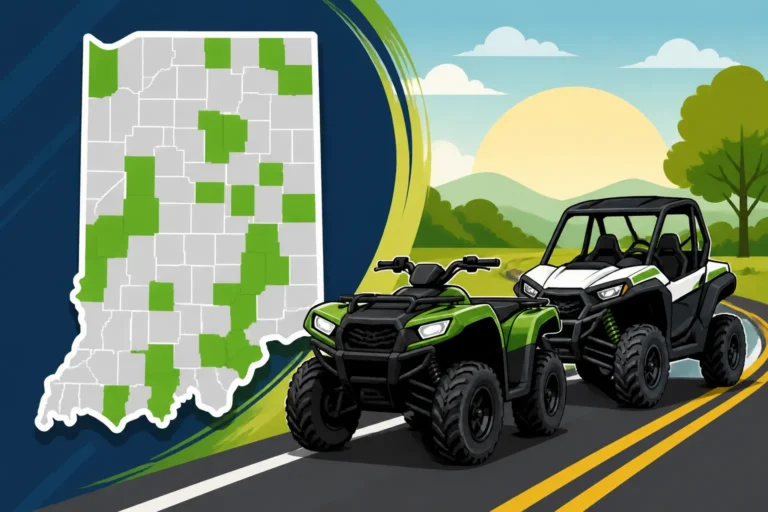
This local control is a big deal for riders. What's illegal on a county road in one part of Indiana could be perfectly legal a few counties over, thanks to a local ordinance. These ordinances are typically passed by county commissioners or councils and must explicitly designate which county roads, or sections thereof, are open to ORVs. They can also impose additional restrictions, such as speed limits, specific operating hours, or requirements for lighting and safety equipment.
It's important to stress that this local authority usually applies only to county-maintained roads and does not override state law on state highways or limited-access roads. So, even if your county has opened up some roads, you still can't just hop on a US highway. Understanding [How an Indiana County Opens Its Roads] is vital for any rider looking to legally expand their riding opportunities. These local laws are your best bet for increased road access, but they demand your due diligence in researching them. Our article [Indiana Local Ordinances on ORV Riding] can guide you on where to start looking.
Verifying Your Local Rules and Staying Compliant
Given the patchwork of local rules, it's absolutely essential to verify the specific ordinances for any county you plan to ride in. Don't rely on hearsay or what a buddy told you. The best approach is to visit the county's official website, look for their local government section, and search for "ORV ordinance" or "off-road vehicle rules." You can also contact the county sheriff's department or the county highway department directly for clarification. This diligence can save you from an [Indiana Fines for Illegal ORV Road Use] ticket.
To help illustrate the difference between state default rules and potential county modifications, let's look at a simple comparison:
| Scenario | Indiana Default State Law (No Ordinance) | Potential County Ordinance Impact |
|---|---|---|
| Paved Road Surface | Generally prohibited | May be allowed on designated county roads, with conditions |
| Shoulder/Ditch | Allowed if sufficient width, away from traffic, brief | May allow more expansive use, but check specific county requirements |
| Crossing a Road | Permitted with full stop, yield, 90-degree angle | Rules generally remain the same |
| Private Property | Requires landowner permission | Always requires landowner permission, regardless of county rules |
| Right-of-Way Boundary | Often extends beyond pavement to property line | Defines legal riding areas within its limits, on designated roads |
When riding on designated county roads, especially if there are specific requirements for lighting or turn signals, accessories can be a huge help. For instance, SuperATV offers various accessories like turn signal kits and mirrors that can help you meet local requirements and enhance your safety on these roads. Always check the specific wording of any county ordinance, as some might have unique requirements for vehicles operating on their designated ORV roads. Being proactive about understanding and complying with these localized rules means more enjoyable, worry-free riding for you and a more positive perception of ORV riders in the community.
Disclaimer
This article is for general informational purposes only and does not constitute professional advice. Laws, prices and regulations vary by location and change over time. Consult a qualified professional for guidance on your specific situation.