Sufficient Width to Ride Away From Traffic
There's nothing quite like the freedom of exploring Indiana's trails on your ATV or UTV, but that excitement can quickly turn to anxiety when you hit a stretch of road. One of the trickiest parts of navigating those county roads and shoulders is understanding the often-vague legal requirement for "sufficient width to ride away from traffic." It's not just about staying out of the main lanes; it’s about having enough room to truly operate safely, without becoming a hazard. This guide is here to break down exactly what that means for Indiana riders, giving you the clarity you need to enjoy your rides without the worry of an unexpected citation.
Understanding Indiana's "Sufficient Width" Mandate
Riding an off-road vehicle (ORV) on public roads in Indiana isn't a free-for-all. The state's laws are designed to balance the recreational desires of riders with the safety of all road users. When the law talks about having "sufficient width to ride away from traffic," it's not just legal jargon; it's a fundamental safety principle. It dictates how and where you can operate your machine on the fringes of the road, and it’s a rule that can feel incredibly subjective when you're out there in the real world.
The Core Definition and Its Ambiguity
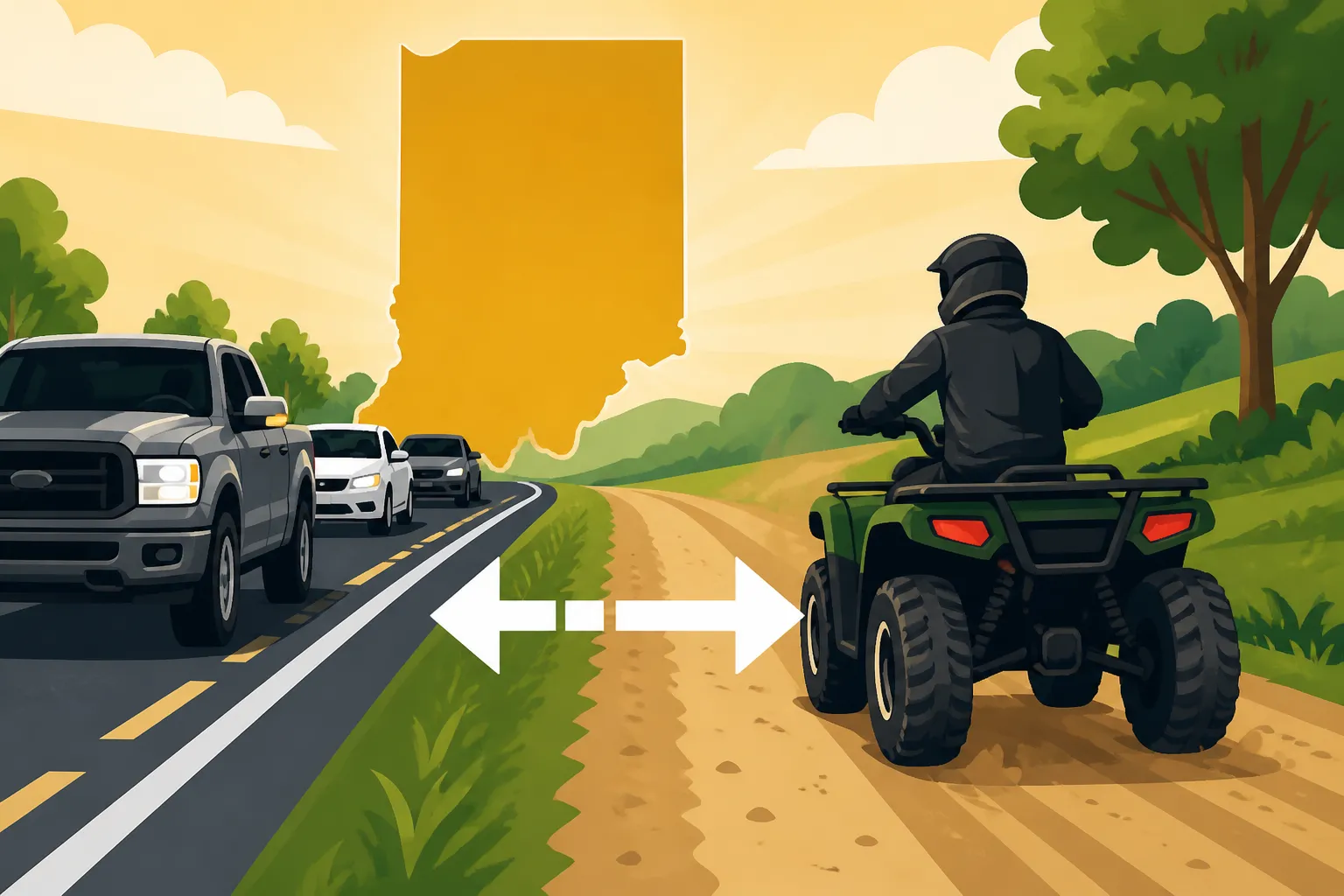
The phrase "sufficient width to ride away from traffic" directly addresses the need for ORV operators to maintain a safe separation from other vehicles. It means that if you're riding on an area like a shoulder or a ditch, there must be enough physical space for you to operate your machine without infringing on the paved roadway or creating a dangerous situation for oncoming cars, trucks, or even pedestrians. The challenge, of course, is that "sufficient" isn't a hard number. It’s not like the law says, "you need 10 feet of clear space." This ambiguity is precisely where many riders get into trouble, as what one person considers sufficient, another – especially a law enforcement officer – might not. It asks you, the rider, to make a judgment call in real-time about the conditions, your machine's size, and the flow of traffic. It's a heavy responsibility that requires constant vigilance.
Why the Law Prioritizes Separation
At its heart, this rule is all about preventing accidents. ORVs are not designed for road use in the same way cars are. They have different handling characteristics, top speeds, and braking capabilities, and they offer significantly less protection to the rider. Placing these machines in close proximity to larger, faster-moving vehicles on public roads is inherently risky. The law prioritizes separation to create a buffer zone, reducing the chances of a sideswipe, a rear-end collision, or an ORV being forced into an unsafe maneuver by passing traffic. It also acknowledges that drivers of traditional vehicles might not expect an ORV to be operating so close to the travel lanes, increasing the potential for misjudgment on their part. This separation is crucial for everyone's safety, not just the ORV rider.
Differentiating Shoulders, Ditches, and Right-of-Ways
To truly grasp the "sufficient width" rule, you need to understand the different parts of the road where an ORV might be permitted. Indiana law makes specific distinctions. A shoulder is the paved or unpaved area immediately adjacent to the travel lane, often used for emergency stops or disabled vehicles. A ditch is the sloped area beyond the shoulder, designed for drainage. The right-of-way is a broader term encompassing all land owned by the state or county for the road, including the pavement, shoulders, ditches, and sometimes beyond.
When considering "sufficient width," you're generally looking at riding on the shoulder or within the ditch area, as outlined in [Indiana Rules for Riding a Highway Shoulder] and [Indiana Rules for Riding a Ditch]. The "sufficient width" mandate means that even if you're on a designated shoulder, it must be wide enough for you to stay completely clear of the main traffic lanes. If the shoulder narrows, or if the ditch becomes too steep or obstructed, you might lose that "sufficient width" and therefore be in violation. It's not just about being off the pavement; it's about being far enough off it to ensure safety. This is particularly important on older rural roads where shoulders can be inconsistent or non-existent, making compliance challenging.
The Safety Imperative Behind the Rule
No one wants to see an accident, and the laws governing ORV use on public roads are primarily drafted with safety in mind. The "sufficient width" clause isn't meant to be an arbitrary hurdle for riders; it's a direct response to the inherent dangers of mixing off-road vehicles with conventional road traffic. Understanding these underlying safety concerns can help riders make better decisions on the fly and stay compliant.
Mitigating Collisions with Road Traffic
The most obvious safety concern is the potential for collisions. Imagine a narrow two-lane road with cars passing at 55 mph. If your UTV is hugging the very edge of the pavement, even if you're technically off the white line, a momentary lapse in attention from an oncoming driver, a gust of wind, or an unexpected pothole could easily lead to disaster. The rule of "sufficient width" is designed to create a buffer zone, giving both the ORV rider and other motorists more reaction time and space.
For instance, if you're on a county road with a thin gravel shoulder, and a large semi-truck passes, the wind sheer alone can be enough to pull or push an ORV, especially one not built for highway speeds. If there isn't enough room for you to safely drift a few feet without encroaching on the main lane or plunging into a deep ditch, then you haven't truly met the "sufficient width" standard. This is why careful judgment is key; you must always prioritize getting out of the way of faster, larger vehicles, which means having the physical space to do so. This is especially true for accessories that might extend past the original footprint of your vehicle. While a new set of wider A-arms or tires from a company like SuperATV can enhance your off-road capability, they also make your machine wider, meaning you need more "sufficient width" on the shoulder.
Protecting Pedestrians and Cyclists
It's easy to focus solely on cars and trucks, but roads are also shared by pedestrians and cyclists. While ORVs typically aren't permitted on sidewalks or dedicated bike paths, the shoulders and right-of-ways are sometimes used by people walking, running, or cycling. The "sufficient width" rule indirectly protects these vulnerable road users by ensuring that ORVs are operating far enough from them as well.
Consider a scenario where you're riding your dirt bike on an unpaved shoulder of a county road. If that shoulder is barely wide enough for your machine, and a jogger is approaching from the opposite direction, you suddenly have a conflict. Without enough room to safely move further away from the paved road, you might be forced into the path of the jogger or, worse, into the main traffic lane. The spirit of the law requires you to have enough room to avoid all traffic, which includes anyone else legitimately using the road's periphery. This means being able to safely pass or be passed by a cyclist or pedestrian without creating a danger.
The Role of Rider Responsibility
Ultimately, the onus for determining "sufficient width" rests squarely on the ORV operator. It’s not something a sign will tell you, or a painted line will mark. It demands active assessment of your surroundings: the road conditions, traffic volume, vehicle speeds, and the actual physical space available. A responsible rider will err on the side of caution, choosing to avoid stretches of road where the width is questionable or retreating to private property if the situation feels unsafe.
This also means understanding your machine's capabilities and limitations. A nimble dirt bike might find "sufficient width" where a wide side-by-side cannot. If you've modified your UTV with wider axles or larger tires, increasing its overall width, you need to be even more mindful of the space you require. Tools like side mirrors and high-quality lighting, perhaps from SuperATV, can improve your situational awareness, but they don't change the physical requirement for clear space. [Indiana Rules for Riding After Dark] and [Indiana Lighting Requirements for ORVs] both emphasize the need for visibility, which is a critical component of safe operation when navigating shoulders and ditches.
Where This Rule Comes Into Play on Indiana Roads
Understanding the concept of "sufficient width" is one thing, but knowing where it actually applies is another. Indiana has specific rules about which types of roads, and which parts of those roads, are permissible for ORV use. This means you won't encounter the "sufficient width" challenge on every street, but it's a critical consideration for many popular riding areas.
County Roads and Designated ORV Routes
The primary places you'll grapple with the "sufficient width" rule are on county roads that have been opened to ORV traffic, or on specific designated ORV routes. While Indiana generally prohibits ORVs from state highways and limited-access roads, [Indiana Counties That Allow ORVs on Roads] highlights how local counties can pass ordinances to open up their own road networks.
When a county opens its roads, it typically means ORVs are allowed to operate on the outermost portion of the roadway, often the shoulder or ditch, provided that "sufficient width" exists. This isn't a blanket permission to ride down the middle of the road. For example, a small, rural county road might have a wide, well-maintained gravel shoulder for miles, offering plenty of space. However, as that same road approaches a residential area or a bridge, the shoulder might disappear, or the ditch might become too narrow or obstructed. In these instances, what was once "sufficient width" can quickly vanish, making that section of road illegal to traverse by ORV. Riders need to be constantly aware of these transitions and be prepared to turn around or find an alternative route if the safe, legal space disappears.
The Shoulder and Ditch Exception in Indiana
The shoulder and ditch exception is where the "sufficient width" rule truly lives. Indiana law allows ORVs to operate on the shoulder or in the ditch of a public highway if there is "sufficient width to ride away from traffic." This is not an invitation to treat these areas as private trails. They are still part of the public right-of-way and are subject to traffic laws.
Imagine riding your quad down a long, straight stretch of country road. The paved surface is maybe 20 feet wide, but then there's a 10-foot-wide grassy shoulder, and beyond that, a shallow, clear ditch. In this scenario, you'd likely have "sufficient width" to ride in the ditch or on the grassy shoulder, well clear of any vehicle on the paved road. However, what if that ditch quickly deepens into a ravine, or the shoulder is suddenly blocked by a utility pole or a mailbox? The "sufficient width" is gone. You cannot then simply move into the paved lane because you've run out of space. You would need to either find another permissible area or discontinue riding on that road section. This continuous assessment is what the law demands, and it means that a road that is legal for an ORV for one mile might not be for the next 100 feet.
Crossing Roads: Brief Encounters with Traffic
The "sufficient width" rule also subtly applies even during brief road crossings. While [Indiana Rules for Crossing a Highway] allows ORVs to cross public highways at a right angle after coming to a complete stop and yielding to all traffic, this is a momentary entry into the main traffic flow. When you approach a crossing, you're expected to do so from an area where you've maintained "sufficient width" from traffic.
You can't ride down the main lane to set up your crossing. You must approach the crossing point from the shoulder or ditch, ensuring you have enough space to stop safely, look both ways, and then execute the crossing without impeding traffic more than absolutely necessary. Even for these short bursts of road interaction, the underlying principle of minimizing your presence in the main flow of traffic, enabled by having adequate space on the periphery, is paramount. Think of it as a momentary exception, not an extension, of where you can ride.
Practical Implications for Riders
Understanding the legal text is one thing, but applying it in the real world when you're out on a ride is another challenge entirely. The "sufficient width" rule has very tangible implications for how you plan your routes, operate your machine, and what gear you might choose to enhance safety. It’s about more than just avoiding a ticket; it's about making sure every ride is as safe as it is enjoyable.
Assessing Available Space on the Fly
One of the biggest practical implications for Indiana ORV riders is the constant need to assess available space in real-time. This isn't a "set it and forget it" kind of rule. As you ride along a county road, the shoulder might vary in width, composition, and clearance. You might encounter:
- Narrowing shoulders: A wide gravel shoulder could abruptly narrow to a strip of grass barely wider than your tires as it passes a driveway or a culvert.
- Obstructions: Mailboxes, utility poles, drainage grates, or even overgrown brush can suddenly eliminate "sufficient width."
- Varying terrain: A clear, flat ditch can quickly become a steep, muddy embankment that's unsafe to ride, even if it technically provides clearance from the paved road.
A responsible rider needs to be constantly scanning ahead, anticipating these changes. If you see a section where "sufficient width" is clearly going to disappear, you need to make a decision before you get there. Do you turn around? Is there an immediate, safe, and legal way to transition onto private land (with permission, of course)? Or is it simply best to avoid that road segment altogether? This proactive assessment is crucial for staying out of trouble and, more importantly, staying safe.
Machine Width and Its Impact
The physical dimensions of your ORV play a huge role in what constitutes "sufficient width." A standard utility ATV (often around 48 inches wide) will require less clear space than a modern sport UTV or side-by-side, which can easily be 64 inches or even 72 inches wide. If you own a wider machine, your options for finding "sufficient width" on narrow shoulders or in smaller ditches will be significantly more limited.
Consider a popular machine like a Polaris RZR XP 1000, which can be 64 inches wide. On a road with a 5-foot (60-inch) shoulder, that machine simply doesn't have "sufficient width" to stay truly clear of the main lane and still allow for any margin of error or maneuverability. Even on designated ORV routes in counties like Dearborn County or Vanderburgh County, riders with wider machines must be extra diligent. Before you even head out, you should measure your machine and mentally note what kind of space it genuinely needs. This might mean that while your friend's dirt bike can legally navigate a certain road, your wider UTV cannot. This difference is why [Indiana Rules for a Machine Over 2,000 Pounds] also carries implications, as these heavier, often wider machines naturally demand more safe operating room.
Equipping Your ORV for Road Sections
While no amount of aftermarket gear can create "sufficient width" where none exists, certain accessories can certainly enhance your safety and visibility when you are operating legally on the shoulder or ditch. Visibility is key. If you're riding in an area that allows ORVs on the shoulder, you need to be seen.
- Lighting: Upgraded headlights and taillights are vital, especially if you're riding near dawn, dusk, or on overcast days. Many riders opt for aftermarket LED light bars or cube lights from brands like SuperATV to ensure they are highly visible to oncoming and trailing traffic. [Indiana Lighting Requirements for ORVs] outlines the legal minimums, but going above and beyond those can be a smart move.
- Mirrors: Side mirrors are crucial for knowing what's coming up behind you. Many UTVs come with them, but dirt bikes and ATVs often don't, and they are essential for safely assessing traffic before merging or crossing.
- Flags: A tall safety flag can increase your visibility, particularly in areas with tall grass or undulating terrain that might obscure a low-profile ORV.
- Tires: While knobby off-road tires are great for the trails, they don't always handle well on hard-packed gravel shoulders or brief paved sections. Understand their limitations when transitioning between surfaces.
Equipping your ORV properly isn't just about trail performance; it's also about making yourself as safe and visible as possible when interacting with public roads, even on the periphery where "sufficient width" allows.
Navigating Enforcement and Avoiding Penalties
Let's be realistic: getting a ticket is no fun, and an ORV citation for improper road use can be particularly frustrating, especially if you thought you were doing everything right. Because "sufficient width" is somewhat subjective, understanding how law enforcement officers interpret and enforce this rule is vital for avoiding penalties and making informed decisions on the road.
What an Officer Looks For Roadside
When a law enforcement officer encounters an ORV on a public road in Indiana, they're looking for several key indicators to determine if you're violating the "sufficient width" rule. This isn't an exhaustive list, but it covers the common points of scrutiny:
- Proximity to Paved Lane: The most immediate concern is how close your tires or any part of your machine are to the actual paved or traveled portion of the road. If your machine is straddling the white line, or if your left tires are on the asphalt, that's a clear violation.
- Maneuverability: Can you safely and easily move further away from traffic if needed? If the shoulder ends in a steep drop-off, a fence, or thick brush, an officer might determine that you don't have "sufficient width" because you lack an escape route or space to adjust.
- Impeding Traffic: Are you causing other vehicles to slow down, swerve, or take evasive action because of your position? Even if you're technically off the pavement, if your presence is disrupting the flow of traffic, it suggests a lack of "sufficient width."
- Road Conditions: Officers will also consider the overall condition of the road, the time of day, and visibility. Riding on a narrow, muddy, or icy shoulder might be deemed insufficient if it compromises stability and the ability to maintain a safe distance.
As described in [What an Indiana Officer Checks Roadside], they're not just looking at your machine, but how it interacts with the entire road environment. They are trained to assess risk, and if your ORV's position presents a perceived risk, you're likely to get pulled over.
Common Mistakes That Lead to Citations
Many riders inadvertently receive citations for "insufficient width" due to common misjudgments or lack of awareness. Here are a few scenarios to consider:
- Underestimating Machine Width: As mentioned, wider UTVs take up more space. A rider accustomed to an ATV might accidentally put their side-by-side in a position that's too close to traffic for its wider stance. Always be aware of your machine's full width, especially with any aftermarket add-ons that might protrude.
- Ignoring Narrowing Shoulders: Failing to anticipate where a wide shoulder will suddenly constrict is a frequent mistake. Riding too fast to react to these changes can lead to either veering into the main lane or getting stuck in an unsafe spot.
- Assuming "Off Pavement" Means "Safe": Just because you're off the asphalt doesn't automatically mean you have "sufficient width." If the unpaved shoulder is only a few inches wide and drops off steeply into a ditch, it's not truly safe, and an officer will likely agree.
- Riding in a Group: When riding with friends, it's easy to focus on the rider in front of you and drift into unsafe areas. Group rides require extra diligence, especially if varying machine widths are involved.
- Using Road Shoulders as Trails: The law is clear: shoulders and ditches are for permitted travel, not for aggressive trail riding. Creating ruts, tearing up grass, or riding in a way that suggests recreational off-roading rather than transit will draw attention and potential citations.
Remember, [Indiana Fines for Illegal ORV Road Use] can be significant, so understanding and avoiding these pitfalls is in your best interest.
Appealing an Indiana ORV Citation
If you do receive a citation for not maintaining "sufficient width," you have the right to appeal it. While this guide cannot offer legal advice, here are some general considerations if you find yourself in that situation:
- Document Everything: Immediately after receiving the citation, if it's safe to do so, take photos or video of the location where you were stopped. Capture the width of the shoulder, the ditch, any obstructions, and the general road conditions. This visual evidence can be powerful.
- Note the Specifics: Write down the officer's exact wording, the time of day, weather conditions, traffic volume, and anything else relevant to your position on the road.
- Understand the Charge: Make sure you clearly understand the specific statute or ordinance you're accused of violating.
- Seek Legal Counsel: For any legal proceedings, consulting with an attorney experienced in traffic or vehicle law is highly recommended. They can advise you on the strength of your case and the best course of action.
While arguing the subjective nature of "sufficient width" can be challenging, compelling evidence and a clear explanation of your actions and assessment of the situation might lead to a more favorable outcome.
Planning Your Ride with "Sufficient Width" in Mind
When it comes to enjoying your ORV in Indiana, prevention is always better than correction. Thinking about "sufficient width" before you even hit the trails or county roads can save you a lot of headache, potential fines, and keep you safe. Strategic planning makes all the difference, transforming a potentially stressful road section into just another part of your adventure.
Pre-Ride Research and Route Selection
The first and most effective way to address the "sufficient width" challenge is through thorough pre-ride research and smart route selection. Don't just point your machine and go, especially if your route involves public roads.
- Study Maps: Use detailed online maps (like satellite view) or physical maps to scout your intended route. Look for areas where shoulders might narrow, where roads pass through towns, or where ditches become impassable. Pay attention to changes in terrain or areas that look particularly busy.
- Consult County Ordinances: If you plan to ride on county roads, be sure to check the specific ordinances for that county. As highlighted in [How an Indiana County Opens Its Roads], each county can set its own rules. Some might have more accommodating shoulders, while others might be notoriously tight. Some counties might even have maps of designated ORV roads, which can indicate where "sufficient width" is more likely to exist.
- Talk to Local Riders: One of the best resources is other ORV enthusiasts who regularly ride in the area. They can offer firsthand accounts of tricky road sections, known enforcement hotspots, and reliable routes that maintain adequate width.
- Factor in Your Machine: If you have a wide side-by-side, avoid routes known for very narrow shoulders. If you have a smaller dirt bike, you might have more flexibility, but the rule still applies.
By doing your homework, you can proactively avoid areas where "sufficient width" is likely to be an issue, making for a much smoother and more enjoyable ride.
Riding Solo vs. Group Considerations
Whether you ride solo or with a group also impacts how you approach the "sufficient width" rule.
- Solo Riding: When riding alone, you only have your own judgment to rely on. This can be empowering, but it also means there's no one else to spot a hazard you might miss or to help if you get into trouble. You must be extra vigilant and conservative in your assessment of road conditions and available space.
- Group Riding: Riding in a group presents its own set of challenges. It's easy for riders in the middle or back of a line to lose focus on the road conditions ahead, simply following the leader. However, the "sufficient width" rule applies to each individual machine. Just because the lead rider made it through a tight spot doesn't mean every machine behind them can, especially if there's a mix of ATVs and wider UTVs.
- Staggered Riding: Encourage staggered riding formations on shoulders to maximize individual space and visibility.
- Communication: Use hand signals or helmet communicators to alert riders to upcoming narrow sections or hazards.
- Designated Leader: Have an experienced rider lead who understands the local regulations and is skilled at identifying safe operating areas.
- Breaks: Take frequent breaks to regroup and discuss upcoming road sections.
Always ensure that every rider in your group is aware of the "sufficient width" requirement and is prepared to make independent, safe decisions, even if it means momentarily breaking from the group or turning around.
Enhancing Visibility and Safety Gear
Beyond machine modifications, your personal safety gear and the way you present yourself can significantly contribute to safe road interactions, even when you're diligently maintaining "sufficient width."
- High-Visibility Gear: Wearing bright, fluorescent colors (especially blaze orange or lime green) makes you stand out to other motorists. This is particularly important when riding on shoulders where you might blend into the background.
- Helmets: Of course, a DOT-approved helmet is essential for safety, and [Indiana Helmet Law for ORV Riders] outlines these requirements. A brightly colored helmet can also add to your overall visibility.
- Eye Protection: Dust, debris, and glare are magnified on shoulders and ditches. Proper eye protection is crucial for maintaining clear vision and safely assessing your surroundings.
- Staying Alert: This isn't gear, but it's paramount. Avoid distractions, stay focused on the road ahead and behind you, and be prepared to react quickly to changing traffic conditions or sudden changes in the "sufficient width" available.
- Hand Signals: Even if your ORV has turn signals, using clear hand signals can reinforce your intentions to other drivers, particularly when preparing to cross a road from the shoulder.
By combining careful route planning, responsible group dynamics, and enhanced visibility measures, you can dramatically reduce the risks associated with riding ORVs on Indiana's roads, ensuring that your adventures are memorable for all the right reasons.
Overview of Indiana ORV Road Riding Considerations
To help summarize some of these key considerations, here's a table outlining what to look for when assessing "sufficient width" and other related road riding rules in Indiana.
| Factor | Key Consideration | Impact on "Sufficient Width" | Relevant Law/Advice |
|---|---|---|---|
| Road Type | County roads vs. State roads/Interstates | Only county roads may be open; others are off-limits. | [Where Indiana Allows ORVs on Public Roads] |
| Shoulder Width | Actual physical space off pavement | Must allow safe operation clear of traffic. | [Indiana Rules for Riding a Highway Shoulder] |
| Ditch Conditions | Slope, depth, obstructions, stability | Must be safe and wide enough to stay out of traffic. | [Indiana Rules for Riding a Ditch] |
| Machine Width | ATV vs. wide UTV (e.g., SuperATV modified) | Wider machines require more actual clear space. | Practical: Measure your ORV. |
| Obstructions | Mailboxes, utility poles, culverts, dense brush | Reduces usable width, may eliminate "sufficient width". | Constant vigilance; pre-ride scouting. |
| Traffic Volume/Speed | High traffic/speed reduces safety margin | Demands more functional "sufficient width." | Avoid busy roads; ride during off-peak hours. |
| Visibility | Time of day, weather, ORV lighting, rider attire | Crucial for other drivers to see you. | [Indiana Lighting Requirements for ORVs], hi-vis gear. |
| Road Crossings | Must stop, yield, cross at right angles, from shoulder. | Approach from area of "sufficient width." | [Indiana Rules for Crossing a Highway] |
| County Ordinances | Specific local rules for ORV access | Defines where you can apply "sufficient width" rules. | [How to Find an Indiana County ORV Ordinance] |
| Enforcement | Officer's discretion on "sufficient" and safe operation. | Focus on clear separation and non-impedance. | [What an Indiana Officer Checks Roadside] |
This table isn't exhaustive, but it provides a quick reference to help you keep these critical factors in mind as you plan and execute your rides.
Disclaimer
This article is for general informational purposes only and does not constitute professional advice. Laws, prices and regulations vary by location and change over time. Consult a qualified professional for guidance on your specific situation.