Indiana Rules for Towing With a UTV
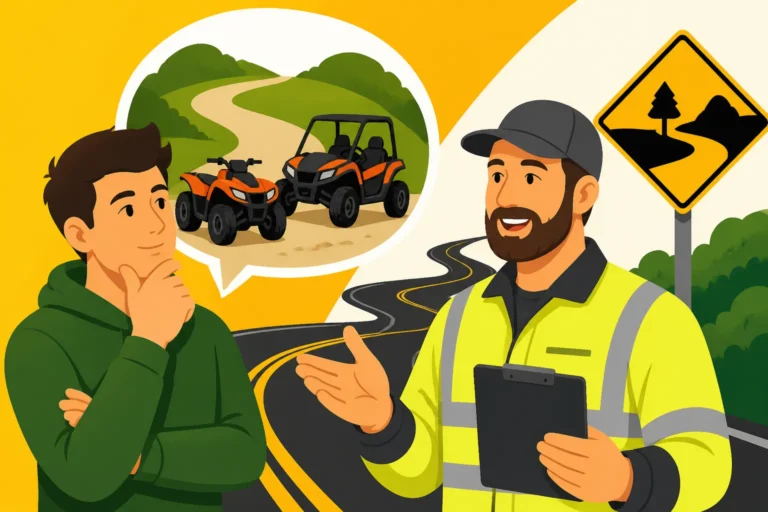
Let's be honest, the appeal of a UTV isn't just about hitting the trails; it's also about its incredible utility. You've got this powerful, versatile machine, and it feels completely natural to want to hitch up a trailer and move firewood, haul tools, or even help a friend with a small job. But when you start thinking about pulling that trailer on anything other than your own property in Indiana, things can get mighty confusing, mighty fast. This guide is here to untangle the complexities of towing with your UTV in Indiana, helping you understand where you can legally tow, what equipment you'll need, and how to avoid costly mistakes.
The Basics of UTV Towing in Indiana: What's Allowed and What's Not
It’s easy to look at a sturdy side-by-side, especially one tricked out with heavy-duty components from a company like SuperATV, and think it’s practically a mini-truck. And in many ways, it is! On your own property, these machines can be absolute workhorses, pulling everything from log splitters to livestock trailers with impressive capability. The trouble starts when you consider taking that same towing capacity onto public roads, because Indiana law draws a very sharp line between what’s permissible off the pavement and what isn’t.
Understanding Indiana's Definition of a UTV and its Use Cases
In Indiana, your UTV falls under the umbrella of an Off-Road Vehicle, or ORV. This is a crucial distinction because ORVs are not generally considered street-legal vehicles in the same way cars and trucks are. The state's definition, found in the Indiana Code, outlines what makes a machine an ORV, focusing on its design for off-highway use. This classification dictates everything from registration requirements to where you can legally operate it. Understanding [How Indiana Defines an Off-Road Vehicle] is the first step in comprehending the restrictions on towing.
Many UTV owners primarily use their machines for practical, off-road applications. Think of a farmer pulling a small implement through muddy fields, a hunter hauling out game, or a homeowner transporting landscaping materials across a large property. These are the scenarios where a UTV's robust engine, all-wheel drive, and impressive towing capacity truly shine. The regulations for these private-land uses are minimal, generally only requiring that you operate the machine safely and within its manufacturer's specifications.
However, the moment you even think about putting a tire on a public road while towing, the rulebook changes entirely. The law assumes a UTV's primary function is not public road travel, and this assumption carries over to anything it might be towing. It's a different legal landscape entirely, and it requires a shift in how you think about your machine's capabilities.
Private Property vs. Public Roads: The Fundamental Divide
This is perhaps the most critical distinction you need to understand. On private property, whether it's your own sprawling acreage, a friend's farm, or a designated private riding park, your UTV's towing capabilities are largely governed by common sense and manufacturer guidelines. You can pull hay wagons, utility trailers, or even recover stuck vehicles, provided you stay within the machine's limits and operate safely. The state isn't typically going to dictate the size of your trailer or the method of attachment when you're solely on private land. [Indiana Rules for Riding Private Land] offers a good overview of how private land operations differ.
The moment you venture onto a public road, street, or highway, even for a very short distance, your UTV (and anything it's towing) becomes subject to traffic laws and ORV-specific regulations. These rules are designed for highway safety, which is a very different beast than navigating a field or a trail. This includes local county roads, city streets, and certainly state highways. The intention behind the law is to keep vehicles designed for off-road use, which often lack standard safety features for highway speeds and conditions, off public thoroughfares.
This fundamental divide means that while your UTV might be a towing powerhouse on the farm, its ability to tow legally on public roads is severely curtailed, if not outright prohibited, in most situations. It's a hard pill to swallow for many utility-minded UTV owners, but it's the reality of Indiana law. Assuming "it's just a short distance" or "no one will notice" is a risky gamble that can lead to significant headaches.
Common Misconceptions About UTV Towing on Public Ways
One of the biggest misconceptions is that if your UTV is registered and has a valid [Indiana ORV Decal Explained], you're good to go anywhere, trailer and all. This is simply not true. An ORV registration primarily allows you to ride on designated public ORV trails and, in some cases, certain county roads. It does not magically transform your UTV into a road-legal tow vehicle. The purpose of registration is for off-road access and funding, not for highway use. [Registering an ORV in Indiana] does not grant you the same privileges as registering a truck.
Another common misunderstanding stems from the idea that if a county has opened its roads to ORVs, then all activities, including towing, are permitted. While some counties have indeed adopted ordinances allowing ORV use on certain public roads, these ordinances are almost always focused on the operation of the ORV itself, not on its towing capacity or the specifics of a towed trailer. Rarely do they explicitly address or permit heavy towing, and in the absence of such language, it's generally assumed to be prohibited or at least heavily restricted to ensure public safety. Always check the exact wording of any local ordinance you rely on, but assume the default is "no towing."
Finally, many owners overestimate the actual road-towing capabilities of their UTVs. While a UTV might have a significant towing capacity, this rating is typically for off-road conditions at low speeds. Road towing introduces factors like higher speeds, abrupt braking needs, other highway traffic, and the stress of continuous pavement travel. Even if it were legal, pushing a UTV's towing limits on a public road can be incredibly dangerous, not just for the operator but for other motorists. Your machine, even with heavy-duty components from SuperATV, is still designed with an off-road bias.
Navigating Public Roads with a UTV and a Trailer in Indiana
The dream of hitching up your utility trailer to your UTV and driving down the road to help a neighbor or transport materials often bumps up against the reality of Indiana's ORV laws. While your UTV might be perfectly capable of pulling a substantial load, the legal framework for doing so on public roads is extremely narrow. It's not just about the machine; it's about the entire setup and the context of its use.
Limited Road Access and Its Impact on Towing
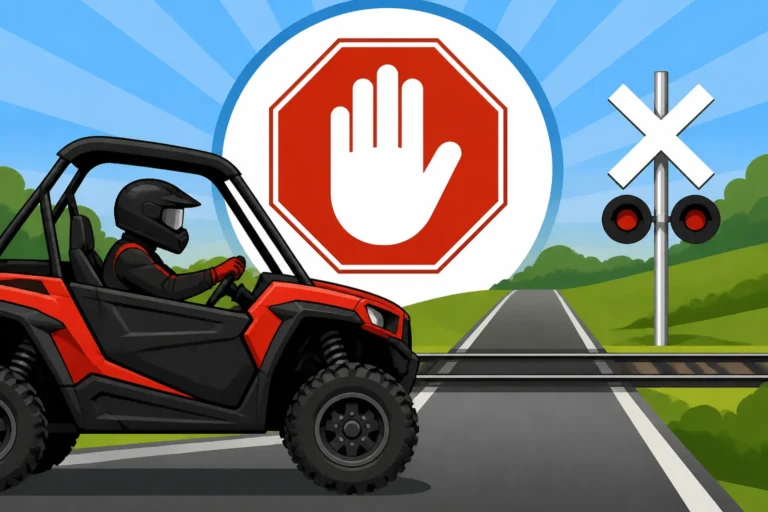
Indiana law is very clear: ORVs are generally prohibited from operating on public roads. There are a few very specific exceptions, and it's within these exceptions that any possibility of towing exists, albeit with severe limitations. One such exception is crossing a public road. You can usually [Crossing a Road on an ORV in Indiana] at a right angle, after coming to a complete stop and yielding to all traffic. In this quick, direct movement, it's generally understood that a small, appropriately sized trailer could be towed, but this is a far cry from cruising down the highway. The intent here is to allow access between private properties, not for general transportation.
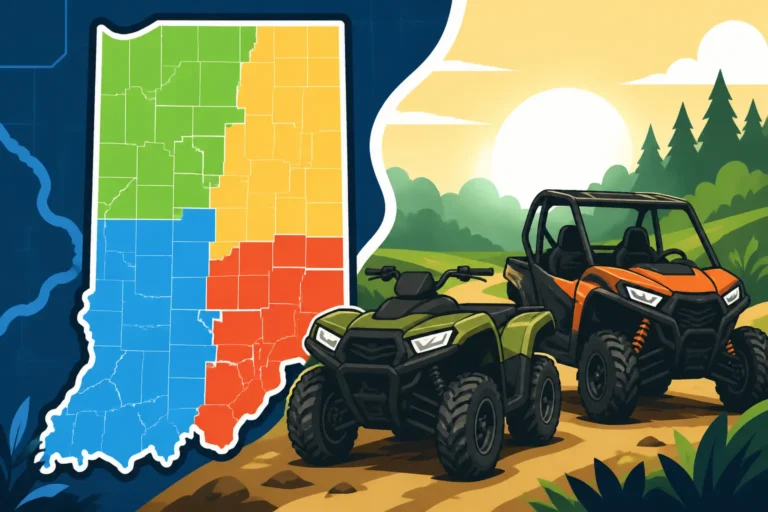
The other main exception comes from county ordinances. Some counties, recognizing the utility and popularity of ORVs, have opted to open specific roads within their jurisdiction to these machines. These are the rare instances where you might have legal permission to operate your UTV on a road for more than just a crossing. However, even in these cases, the ability to tow is usually implied rather than explicitly stated, and it's almost always understood to be light towing for utilitarian purposes, not heavy hauling. The key is that these are designated roads, not every road in the county. [Indiana Counties That Allow ORVs on Roads] vary widely in their approach.
If your ORV is on a public road in Indiana for any reason not covered by these exceptions, it's considered illegal operation. Adding a trailer to an already illegal situation only complicates matters, increasing potential fines and safety risks. This means that for the vast majority of public roads, the answer to "Can I tow with my UTV here?" is a resounding "No."
County Ordinances and Specific Towing Provisions
As mentioned, some counties in Indiana have taken steps to create limited access for ORVs on their public roads. This is a local decision, and it’s up to each county to [How an Indiana County Opens Its Roads]. The rules can differ greatly from one county to the next, covering everything from specific roads that are open to time-of-day restrictions, age requirements for operators, and even insurance mandates. The critical point here is that these ordinances are typically very specific about operating the ORV, and less so about towing with the ORV.
When reviewing a county ordinance, look for any language pertaining to "towed vehicles," "trailers," "weight limits," or "gross combined vehicle weight." It's rare to find explicit permission for substantial towing. More often, the focus is on getting the ORV itself from Point A to Point B on designated routes. For instance, [Vanderburgh County's Marked Road Map] clearly outlines which roads are open, but it's unlikely to detail regulations for heavy trailers pulled by UTVs. If an ordinance is silent on towing, it generally means it's either prohibited or severely restricted by implicit road safety laws.
Even if a county does allow ORVs on its roads, any towing operation would still need to comply with general traffic laws regarding trailers, such as having proper lighting, secure hitches, and safety chains. Failing to meet these basic safety requirements for a trailer, even if the UTV itself is legally on the road, could lead to citations. It's a complex web of rules, and the general principle is that if it's not explicitly allowed and safe, it's probably best to avoid it.
State Highways and Limited-Access Roads: A Strict No-Go
Let's make this crystal clear: Under absolutely no circumstances should you attempt to tow anything with your UTV on state highways, interstates, or other limited-access roads in Indiana. These roads are designed for high-speed vehicular traffic, and ORVs, regardless of their towing capacity, are fundamentally unsuitable for them. [Why Limited-Access Highways Stay Closed] to ORVs is a matter of safety for everyone on the road.
The risks associated with operating a UTV, especially one towing a load, on these types of roads are enormous. UTVs typically have lower top speeds, less robust braking systems compared to cars and trucks, and minimal protection in the event of a collision with a faster, heavier vehicle. Adding a trailer exacerbates these issues, significantly increasing stopping distances, reducing maneuverability, and potentially causing instability at higher speeds.
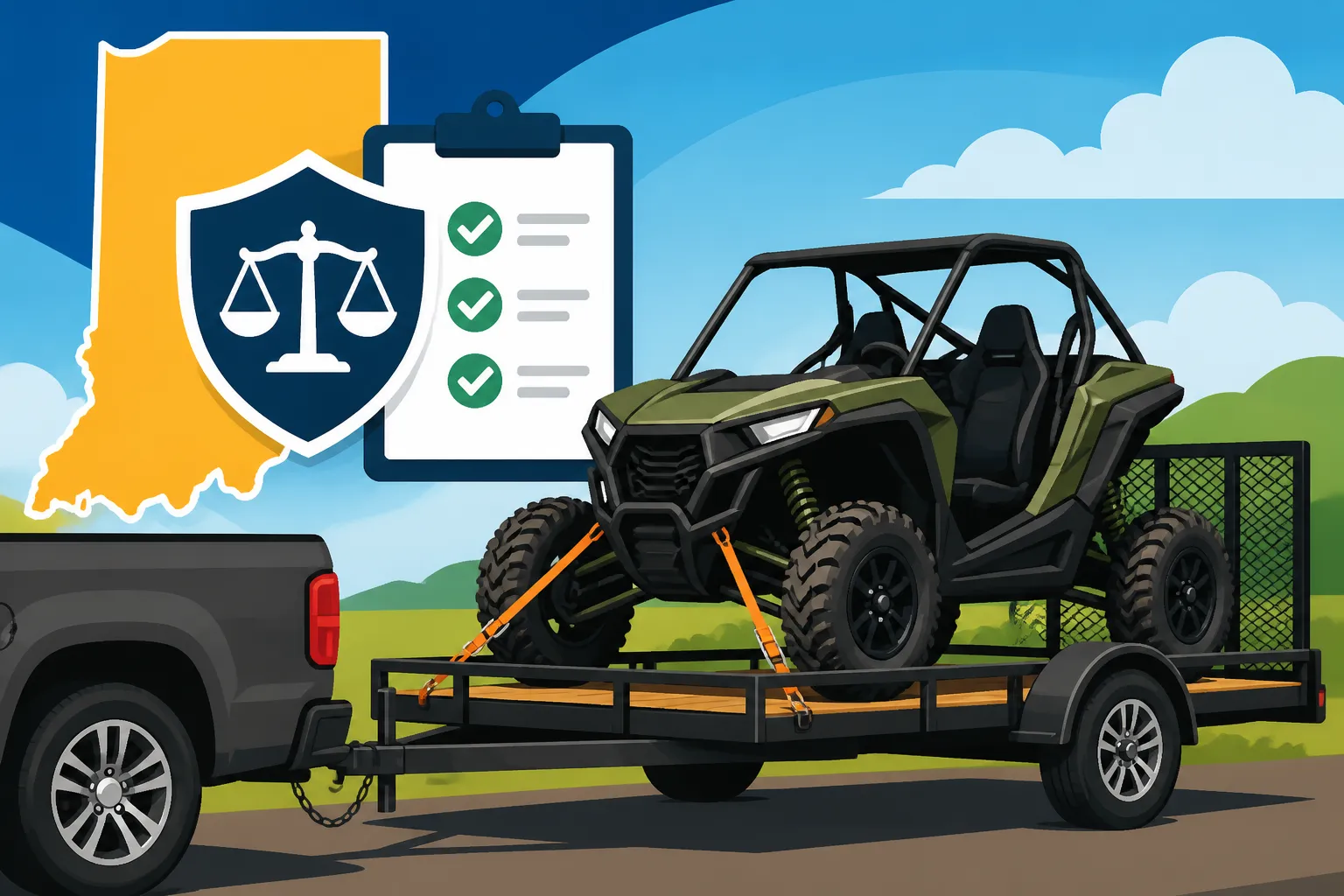
A state trooper or county sheriff will not hesitate to pull you over if they see a UTV, with or without a trailer, on a state highway or interstate. The fines will be substantial, and you could face serious charges depending on the specific circumstances and dangers created. Beyond the legal consequences, the risk to your safety and the safety of others is simply not worth it. For these types of roads, your UTV (and anything it's towing) needs to be securely loaded onto a conventional trailer towed by a road-legal truck or SUV.
Essential Equipment and Safety for Towing with a UTV
When it comes to towing, whether you're on your private land or, in those rare legal instances, on a designated county road, safety has to be your absolute top priority. UTVs are incredibly capable, but they have limits, and exceeding those limits, or failing to use proper equipment, can lead to serious accidents, damage to your machine, or even legal trouble.
Manufacturer Specifications and Safe Towing Capacity
The golden rule of towing with any vehicle, including a UTV, is to never exceed the manufacturer's recommended towing capacity and tongue weight. This information is crucial and can always be found in your UTV's owner's manual. The manufacturer has engineered your machine for specific loads and conditions, and ignoring these guidelines is a recipe for disaster. Pushing past these limits can strain your engine, transmission, and frame, leading to premature wear, breakdowns, or catastrophic failure.
Consider the terrain you'll be towing on. A UTV rated to pull 1,500 pounds on a flat, paved surface might only be able to safely handle half that amount on a steep, muddy hill or across uneven ground. The resistance from the terrain, the need for increased traction, and the demands on the braking system all reduce the effective towing capacity. Always factor in the conditions. If you're tackling particularly tough jobs, investing in heavy-duty components designed for serious utility work, perhaps from a reputable company like SuperATV, can provide extra peace of mind, but remember, they still operate within the UTV's original design limits.
It's also important to understand tongue weight. This is the downward force the trailer's tongue exerts on the hitch receiver of your UTV. Too much tongue weight can lift the front wheels of your UTV, making steering difficult and reducing front-wheel traction. Too little can lead to dangerous trailer sway, especially at speed. Your manual will specify an ideal range for tongue weight, usually a percentage of the total trailer weight. Aim to keep your load balanced to stay within this range for optimal stability and control.
Braking, Lighting, and Other Safety Gear
When you hitch up a trailer, you're not just adding weight; you're significantly altering your UTV's dynamics, especially its braking performance. A UTV's brakes are designed to stop the UTV itself, not necessarily the UTV plus a heavy trailer. Your stopping distance will increase dramatically, so anticipate your stops much earlier and apply brakes smoothly. For heavier loads, especially those approaching your UTV's maximum capacity, consider a trailer with its own braking system. This takes a lot of strain off your UTV's brakes and vastly improves safety.
If you plan on any public road use, even short crossings or on designated county roads, your trailer must have proper lighting. This typically includes working taillights, brake lights, and turn signals. These are standard legal requirements for any trailer towed on public roads, and your UTV must be capable of providing power to these lights. A wiring harness is usually required to connect your UTV's electrical system to the trailer's lights. [Indiana Lighting Requirements for ORVs] also apply to the ORV itself, and you want to make sure your signals are visible around your trailer.
Beyond lighting, other safety gear is non-negotiable. Safety chains are paramount; they provide a crucial backup in case your primary hitch connection fails. Ensure they are crossed under the trailer tongue to create a cradle and are securely attached to both the UTV and the trailer. A proper hitch pin and clip are also essential. Additionally, consider auxiliary mirrors if your trailer obstructs your view, allowing you to see traffic or obstacles behind you. Using a rear-view camera can also be a significant advantage, especially for backing up with a trailer.
Weight Distribution and Load Securement
The way you load your trailer can be just as important as the weight itself. Improper weight distribution can turn a manageable load into a dangerous one. As discussed with tongue weight, too much weight shifted to the front of the trailer can overload your UTV's hitch and potentially lighten the front wheels. Too much weight in the rear can cause the trailer to sway violently, especially if you hit a bump or make a sudden turn. Aim for about 10-15% of the total trailer weight to be on the tongue, ensuring the heaviest items are positioned over the trailer's axle(s).
Once the weight is distributed correctly, securing your load is the next critical step. Items that can shift, roll, or fall off your trailer pose a significant hazard to you and anyone around you. Use appropriate straps, chains, or tie-downs to secure all cargo. Make sure they are rated for the weight of your load and are tightened correctly. If you're hauling loose materials like gravel, mulch, or debris, cover it with a tarp to prevent anything from blowing out onto the road or trail.
Imagine hitting a bump on a trail and your improperly secured load shifts, causing the trailer to fishtail. Or, worse, an item falls off the trailer during a brief road crossing. These scenarios are not just inconvenient; they can lead to accidents, property damage, and severe injuries. Products like robust cargo racks and tie-down anchors, often available from brands like SuperATV, can greatly assist in securing your load effectively and safely, whether you're hauling tools to the back forty or camping gear to a remote spot. Take the time to secure your load properly every single time.
| Scenario | Legality of Towing | Key Considerations |
|---|---|---|
| Private Land (Farm, Trails) | Generally Permitted | Manufacturer limits, safe operation, terrain, load securement |
| Public Road Crossing | Permitted (briefly, carefully) | Cross at right angles, full stop, yield, proper lights/hitch |
| Designated County Road | Possible (check ordinance) | Explicit permission, general traffic laws, trailer lights |
| State Highway / Interstate | Strictly Prohibited | Absolutely no towing permitted, severe penalties |
Avoiding Fines and Ensuring Responsible UTV Towing in Indiana
Nobody wants to deal with a roadside stop, especially when you're just trying to get a job done. The consequences of illegal or unsafe towing with your UTV in Indiana can range from inconvenient fines to severe legal liabilities and even tragic accidents. Understanding these risks and proactively addressing them is key to responsible UTV ownership.
The Consequences of Illegal Towing on Public Roads
Operating an ORV on public roads where it's not explicitly permitted is already a Class C infraction in Indiana, which can carry significant fines. [Indiana Fines for an Unregistered ORV] and for illegal road use are substantial. Now, imagine adding a trailer to that scenario, especially one that might be oversized, improperly lit, or insecurely loaded. This compounds the issue significantly. Law enforcement could issue multiple citations: one for the illegal operation of the UTV itself, another for the trailer (if it fails to meet safety standards), and potentially more if the setup is deemed an immediate hazard.
Beyond the immediate fines, there's the much more serious issue of liability. If you're involved in an accident while illegally towing with your UTV on a public road, your insurance company might deny your claim entirely. Most ORV insurance policies are tailored for off-road use and typically exclude coverage for accidents that occur during illegal operation on public highways. This means you could be personally responsible for all damages, medical bills, and legal fees, which can quickly amount to hundreds of thousands of dollars. [Indiana ORV Insurance Requirement] outlines the need for insurance, but it won't cover illegal acts.
Consider a scenario: you're making a "quick hop" across a forbidden county road with a heavy, unlit trailer of firewood behind your UTV. An oncoming car doesn't see your setup in the dusk, and a collision occurs. Not only could you face severe personal injury, but you could also be held liable for property damage to the car, and medical expenses for its occupants. The legal and financial fallout from such an event can be devastating and truly highlight why state and local laws exist. [What an Indiana Officer Checks Roadside] will include everything from your ORV decal to your towing setup.
Prioritizing Private Land for Heavy Towing Tasks
Given the restrictive nature of Indiana's public road laws for UTVs, the safest and most legally sound approach for heavy towing tasks is to confine them to private property. This is where UTVs genuinely excel and where their utility is truly maximized without the legal complexities of public road operation. Whether it's moving feed, dragging brush, planting food plots, or hauling construction materials, your UTV is an invaluable tool on your own land.
Many farms, ranches, and large residential properties rely almost exclusively on their UTVs for these utility tasks. They often have dedicated utility trailers, manure spreaders, or small implements specifically designed to hitch up to a UTV. This allows owners to maximize their investment in their machine, leveraging its power and maneuverability for property maintenance, agriculture, and other work without fear of legal repercussions from public road authorities.
If you find yourself frequently needing to transport materials between properties or to public areas, the solution is not to risk illegally towing with your UTV. Instead, invest in a conventional trailer that can be towed by a road-legal truck or SUV. Load your UTV and its accompanying cargo onto that trailer, and transport everything legally and safely. This eliminates the risk and ensures you're complying with all state and local traffic laws.
Consulting Local Authorities and UTV Forums for Clarity
When you're unsure about the specifics of a local ordinance or a particular towing scenario, the best course of action is always to consult with the local authorities. Your county sheriff's department or the local police are the ultimate arbiters of the law in their jurisdiction. They can provide definitive answers regarding what is or isn't permitted on specific roads within their area. Don't rely on hearsay or what a friend of a friend told you. Call them directly and get clarity.
Connecting with other Indiana UTV enthusiasts can also be incredibly helpful. Online forums, local riding clubs, and community groups often have members who have navigated similar challenges and can offer practical advice and insights. While their experiences are not legal advice, they can illuminate common pitfalls, suggest safe practices, and point you towards resources you might not have considered. Just remember to always verify any legal information with official sources.
Ultimately, responsible UTV ownership in Indiana, especially when it comes to towing, means exercising caution and adhering to the law. The UTV is a phenomenal tool, but understanding its legal limitations on public roads is crucial for protecting yourself, your machine, and others. If you're going to tow, make sure you're doing it legally, safely, and within the machine's capabilities.
Disclaimer
This article is for general informational purposes only and does not constitute professional advice. Laws, prices and regulations vary by location and change over time. Consult a qualified professional for guidance on your specific situation.