Indiana Trails Good for Kids
Indiana rides with children can be memorable, but a trail that feels easy to an experienced adult may be stressful for a young or first-time rider. This guide explains how to choose a suitable Indiana riding area, judge trail difficulty, prepare for changing conditions, and plan a safer family outing without assuming every child or machine is ready for every route.
Choose an Indiana riding area that fits your family
Compare Redbird and Interlake before you load up
Redbird Off-Road State Recreation Area near Dugger and Interlake Off-Road State Recreation Area near Lynnville are two well-known public riding areas in southern Indiana. Both have varied terrain, so neither should be treated as one uniformly easy trail system. A child may be comfortable on a smoother, wider section and overwhelmed by a steep climb, deep rut, or muddy stretch just around the bend.
Before choosing a park, think about the youngest rider’s experience, the machine’s size, and whether an adult can stay close enough to help. A first outing does not need to cover a lot of ground. A short, calm ride with time to stop and reset can be a much better introduction than trying to reach a distant trail or complete a long loop.
Park layouts, open routes, conditions, and rules can change. Check the latest official park information and trail notices before setting out, then ask staff about areas that suit beginners and families. For a broader overview of destinations, see [Where to Ride an ORV in Indiana] and [Indiana's Two State ORV Areas Compared].
Use a park map and current conditions together
A map can help you understand where you are headed, but it cannot tell you exactly how a trail will feel to your child that day. Recent rain can make Indiana clay slick and rutted; dry weather can leave loose dust or uneven ground. A section that looked manageable on a map may be a poor choice if the surface has changed or the route is busier than expected.
Start with the park’s official trail map and any posted notices. If you use onX Offroad or another mapping tool, treat it as a planning aid rather than permission to ride every line shown. Confirm that the route is open, legal for your type of machine, and appropriate for the youngest rider in your group.
Before unloading, look over the map together and point out a simple route back to the staging area. Agree on a turnaround point, too. If the child is nervous, tired, or struggling to control the machine, turning back is a sensible decision—not a failed trip. For help evaluating surfaces and closures, read [Indiana Trail Maps From the DNR] and [Indiana Trail Conditions Before You Ride].
| Riding area | What families should consider | A practical first-trip approach |
|---|---|---|
| Redbird near Dugger | Terrain varies, and conditions can change after rain. Check current notices and ask about beginner-suitable routes. | Choose a short route, ride at the child’s pace, and leave time to return before fatigue sets in. |
| Interlake near Lynnville | The area has an extensive trail network, so route choice matters. Do not assume every trail suits a new rider. | Pick a manageable section using the current map, and agree on a turnaround point before riding. |
| Private riding park | Rules, access, trail types, and family requirements differ by property. | Contact the park or check its official information before traveling, especially with a youth rider. |
Match the trail to the child and machine
Judge difficulty by the hardest feature on the route
Trail labels can be useful, but they do not replace a realistic assessment of the child’s skills. Consider whether the rider can start, stop, turn, and maintain control without constant correction. Also consider how they react to noise, other vehicles, uneven ground, and the possibility of needing to wait while a group passes.
Pay attention to the whole route, not just its easiest stretch. A mostly smooth trail with one steep, narrow, or deeply rutted section may be a poor fit for a new rider. If you cannot confidently explain how the child will handle that obstacle, choose another route or ride it only with an adult positioned to help—where park rules and conditions make that appropriate.
Look for broad sightlines, room to stop safely, and a pace that allows the child to stay composed. Avoid pressuring a young rider to follow a faster adult or to attempt an obstacle because other riders have managed it. The [Indiana Trail Difficulty Ratings] and [Indiana Trails for Beginners] guides can help you think through route selection, but conditions on the ground still matter.
Make sure the machine is a comfortable fit
A machine that is too large or heavy for a child to control can make even a simple trail intimidating. The child should be able to reach the controls properly, use them reliably, and maintain a stable riding position. Before heading onto a trail, make sure they can practice starting, stopping, turning, and responding to basic instructions in a safe, permitted area.
For a side-by-side, check that the child is an allowed occupant, can sit correctly, and can use the required restraint. Do not assume that a passenger seat makes a child suitable for a rough route. A bump or sudden stop can be startling, and a young passenger may have trouble staying calm if the ride becomes uncomfortable.
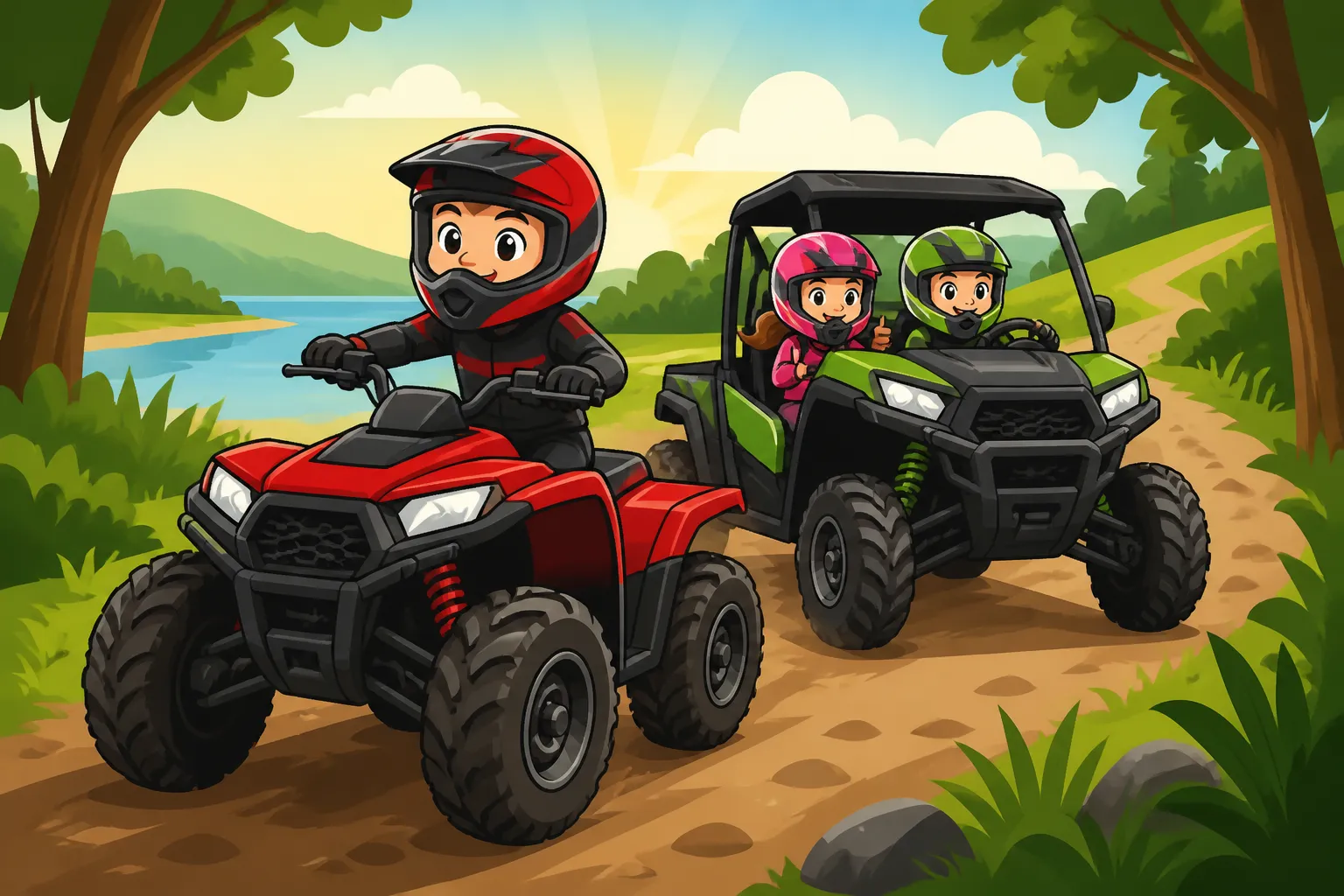
Keep the riding group’s pace aligned with the least experienced person. If adults want a more challenging route, split into groups only when there are enough capable adults to supervise safely and the park allows the plan. For more on taking children to a riding area, see [Riding With Children at an Indiana Park].
Prepare children for Indiana riding rules and safety
Check age, helmet, supervision, and vehicle rules
Rules can differ depending on where you ride and what type of machine is involved. Indiana public-land requirements are not automatically the same as rules at a private park, and a county-road ordinance is a separate issue from riding on a designated off-road trail. Confirm the rules for the exact location before you go.
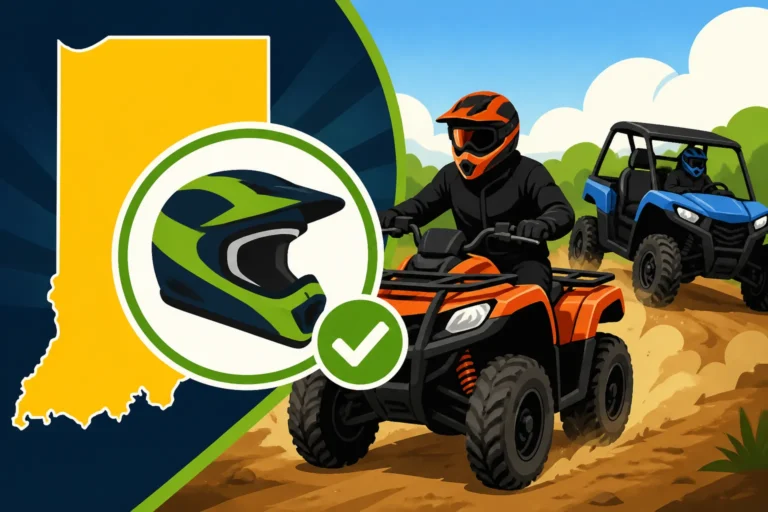
Do not rely on a child’s age alone to decide what is allowed. Check requirements for supervision, helmets, passenger seating, and any machine-specific restrictions. Make sure every rider has properly fitting protective gear and that the child understands they must stop when an adult signals. A helmet that shifts, pinches, or blocks the rider’s view is not a good fit for a day on the trail.
At public riding areas, review the current guidance for young riders and protective equipment before leaving home. These references can help you prepare: [Indiana State Park Rules for Riders Under 16] and [Indiana Helmet Rules at Redbird and Interlake]. At the park, read posted signs and ask staff if anything is unclear.
Set simple rules before the engine starts
Children do better when the expectations are short and consistent. Explain where they may ride, how far they may get from the supervising adult, what to do if they cannot see the group, and how to signal that they want to stop. Practice the signals before the ride begins rather than trying to explain them over engine noise.
Set a rule that nobody leaves the group or rides past the adult leading the route. Build in breaks, and take them before a child is exhausted or upset. A tired rider may make poor decisions, lose focus, or become less able to respond to changing terrain. Bring water and suitable clothing, and plan for weather shifts and muddy conditions.
Discuss what to do if the group gets separated. Depending on the park’s procedures, the safest response may be to stop in a safe place and wait rather than continuing alone. Keep a phone accessible, but do not assume you will have reliable reception everywhere. If you use onX Offroad to help orient the group, review the route before you ride and make sure adults know how to return to the staging area without depending on a child to navigate.
Plan a low-stress family ride
Build a short route with an easy exit
For a first visit, keep the plan deliberately modest. Arrive with enough time to check in, review posted notices, adjust helmets and gear, and let the child watch other riders before starting. That first stretch can help them get used to the sounds and surroundings without the pressure of immediately entering a difficult trail.
Choose a route with a clear way to turn back. Tell the child that changing the plan is always allowed. If the ground is slick, the trail is crowded, or the child is uncomfortable, head back while everyone still has energy. A short ride that ends on a positive note often makes a child more eager to try again than a long ride that ends with frustration.
Carry basic supplies appropriate to the trip, including water, snacks, a first-aid kit, and any tools or recovery items your group knows how to use safely. Keep the machine’s registration and required park documents available, and check the park’s rules about permits and entrance requirements before you leave. An app such as onX Offroad may help adults review a route, but follow official maps, signs, and closures whenever they differ.
Check the day’s conditions and be willing to change plans
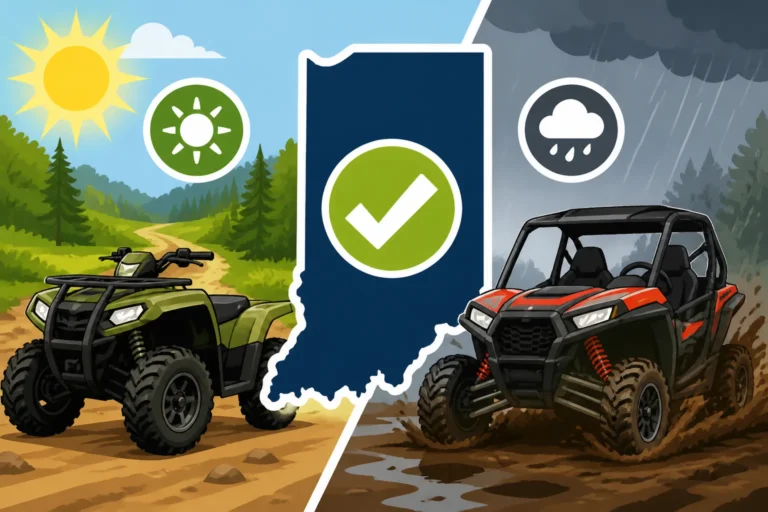
Rain can change the character of Indiana trails quickly. Clay that seemed firm earlier may become slick, while ruts and standing water can make a route harder for a small rider or less powerful machine. If recent weather has made conditions challenging, call the park or check its official updates before loading the trailer. A change of plans can save a long drive and an unpleasant day.
Once you arrive, reassess. Look at the trail surface near the staging area, notice how other vehicles are handling it, and check for closures or warnings. Do not let the time spent traveling convince you to ride a route that no longer seems suitable. If the park offers a choice of routes, ask staff what they recommend for a child’s experience level and your particular machine.
Keep the goal simple: a child should finish the ride feeling safe, heard, and ready to come back. You do not need to cover every trail or keep up with another family. Choosing a realistic route, following the location’s rules, and turning around when conditions or confidence change are all part of a successful Indiana ATV or UTV outing.
Disclaimer
This article is for general informational purposes only and does not constitute professional advice. Laws, prices and regulations vary by location and change over time. Consult a qualified professional for guidance on your specific situation.