Turning 16 and Riding Indiana Trails Unsupervised
Turning 16 can change who must supervise an Indiana rider on public ORV land, but it does not make every machine, trail, or road available without limits. If you are planning a teen’s first ride without an adult alongside, the important step is separating the age rule from helmet, permit, machine, and local access requirements. This guide explains what changes—and what does not.
What changes when a rider turns 16
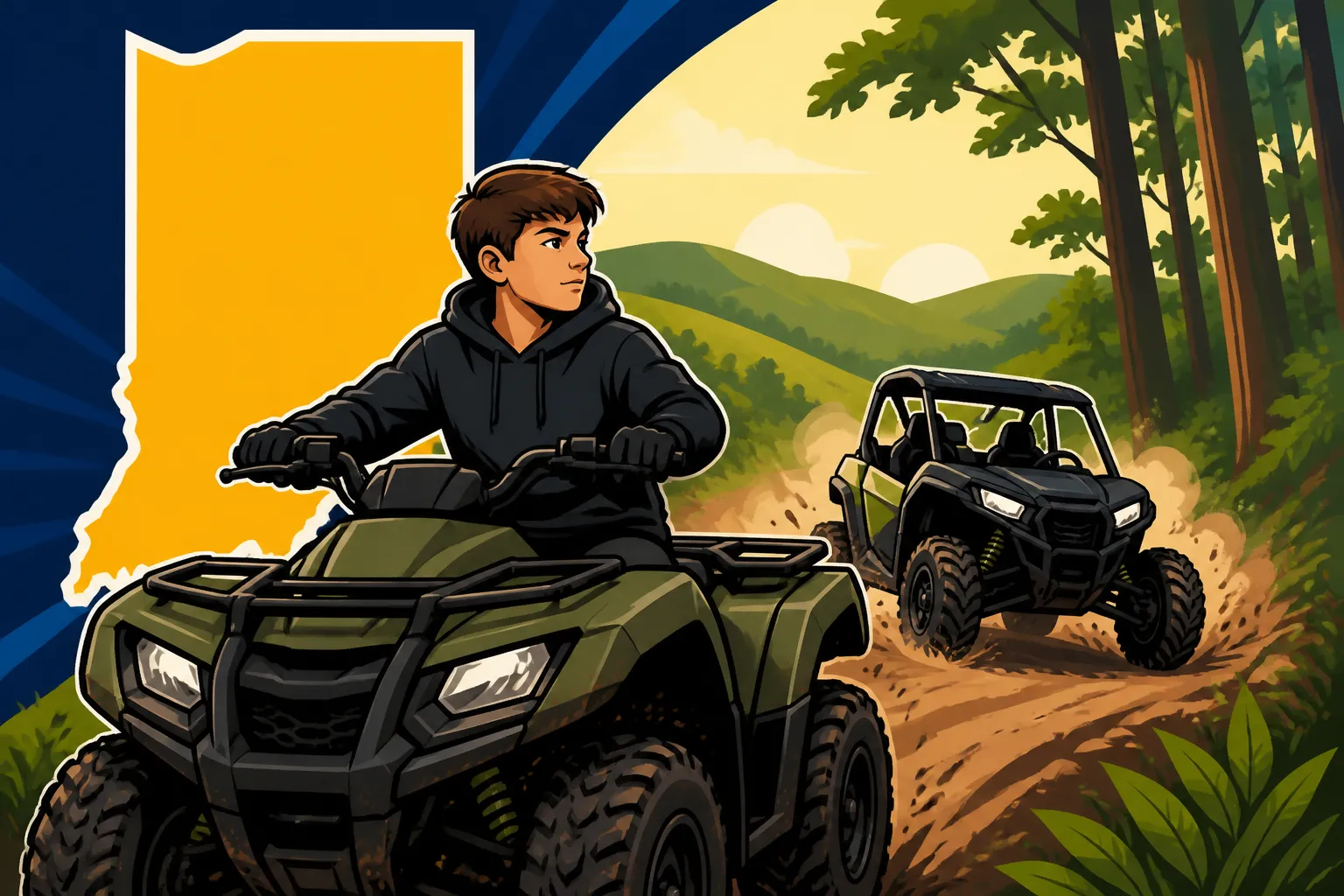
Indiana’s age-based supervision rule for riding on public land generally applies to riders under 16. Once a rider is 16, that particular requirement for direct parental supervision no longer applies. In practical terms, a 16-year-old may be able to ride a permitted machine on an open trail without a parent or guardian riding alongside, provided the rider meets the other rules for that place and machine.
That is a limited change, not a general declaration that a 16-year-old can ride anywhere or operate anything. The rider still needs to follow the rules for the property, machine, trail, and activity. A private park may set its own age or supervision conditions. A posted trail restriction still applies. A permit or registration requirement does not disappear when the rider has a birthday.
It also matters where the ride takes place. The age rule for public land is not the same thing as permission to ride across private property, use a county road, or travel on a state highway. A 16-year-old who may ride alone on a permitted off-road trail does not automatically have permission to ride an ORV on a public road. Road access depends on separate state and local rules.
| What to check | What turning 16 may change | What still needs attention |
|---|---|---|
| Direct supervision on public land | The under-16 supervision requirement generally ends | A site may have additional posted rules |
| Helmet use | Nothing about age 16 alone removes an under-18 requirement | Check the park’s current helmet rule and equipment conditions |
| Trail permit | Nothing | The machine may still need its own permit |
| Vehicle registration | Nothing | Registration and out-of-state rules still apply |
| Private property | Nothing automatic | Get the owner’s permission and follow site rules |
| Public-road riding | Nothing automatic | Confirm the road is open and meet applicable local requirements |
| Machine type | Nothing automatic | Age, size, and vehicle-class rules may differ |
If the rider is still 15, supervision remains important. Indiana’s rule for a younger rider is generally direct supervision by a parent or guardian on covered public land. Direct supervision is more than being somewhere in the park or waiting back at the truck. For the details, see Under Sixteen and Direct Parental Supervision and Indiana State Park Rules for Riders Under 16.
A family should not treat a birthday as a substitute for checking the property’s rules. The state rule is one part of the picture; an operator, event organizer, or private recreation area may have additional conditions. Before unloading, check the official site information and any signs or gate notices. If the rule is unclear, ask the property office rather than relying on what another rider remembers.
What still applies at 16
A 16-year-old is still a minor, and age-based requirements that apply to riders under 18 may continue to apply. At Indiana public riding areas, helmet requirements are a key example: turning 16 does not itself remove an under-18 helmet rule. Check the current rule for the specific property, including whether it specifies a helmet type or recognizes any limited exception for a particular vehicle configuration.
Do not assume an enclosed cab or roll cage automatically makes a helmet unnecessary. Rules can distinguish between vehicle types and occupant protection, and a manufacturer’s description of a machine is not a legal exemption. If the park has a helmet requirement, follow it unless an official rule clearly states that the rider and vehicle qualify for an exception. The broader state context is covered in Indiana Helmets at Redbird and Interlake.
A rider also needs to be able to handle the particular machine safely. Legal permission to ride alone does not establish that a teen is ready for a powerful ATV, a side-by-side, steep terrain, deep mud, or a trail shared with larger vehicles. A 16-year-old who is new to riding may benefit from an adult nearby even when the law no longer requires direct supervision. That is a family safety choice, not a legal requirement.
For a first solo ride, consider limiting the outing to a familiar, marked route and a machine the teen has already practiced on. Agree beforehand on where the rider may go, when to check in, and what to do if the machine stalls or the rider gets separated from the group. Carry a charged phone or another reliable way to contact the group, while recognizing that coverage may be limited in some riding areas.
A safety course can help with control, trail etiquette, and decision-making even when a course is not required for the planned ride. A rider who can operate a machine in an open field may still need practice with braking on a slope, turning on loose ground, avoiding an obstacle, or stopping safely when an oncoming vehicle appears. If the teen is learning on a new machine, start with low-speed practice in a legal, controlled area before heading onto a busy trail.
Equipment matters too. A properly fitting helmet is only one part of a practical setup. Eye protection, gloves, boots, long sleeves, and suitable riding pants can reduce exposure to debris and contact injuries. Check the machine before each ride, including brakes, tires, throttle return, lights where required, and the condition of the frame and controls.
If you shop through a marketplace such as Amazon for replacement gear, check the product details carefully rather than relying on a broad listing title. Look for a helmet that meets the applicable safety standard, confirm the correct size and fit, and check the manufacturer’s instructions. A low price or a “youth” label is not proof that a helmet is appropriate for a teen’s head or for the park’s rule.
Permits, registration, and out-of-state machines
Turning 16 does not change the permit status of the machine. When a site requires an ORV trail permit, the requirement generally attaches to the vehicle or its use, not to whether the rider is old enough to go without a parent. A teen taking over the controls of a family machine should not assume the machine is covered simply because an adult bought a permit for a different vehicle.
Indiana’s state riding areas may have permit rules that distinguish between resident and nonresident machines and between daily and annual use. Permits can also be separate from a park entrance fee. Check the site’s current official information before leaving home, and make sure the permit is valid for the machine you plan to ride. Indiana’s Daily and Annual Trail Permits explains the basic permit structure, while Does Every Machine in the Truck Need Its Own Permit? is useful when several vehicles are traveling together.
Registration is another separate question. A trail permit is not the same as the state registration decal that may be required for an ORV. Likewise, an Indiana BMV registration does not necessarily replace a DNR trail permit. A parent should confirm that the machine has the paperwork required for its use and location, rather than assuming one decal or document covers every requirement. For a general overview, see Indiana ORV Permits Explained and How Indiana ORV Registration Works.
Out-of-state visitors should pay particular attention to the difference between registration recognition and an Indiana trail permit. Indiana has a visitor rule for qualifying out-of-state machines, but that does not mean every vehicle is exempt from every Indiana requirement. The allowed period, the machine’s home-state status, and the riding location can matter. A 16-year-old visitor does not receive a separate or extended allowance just because the operator is a minor. Review Indiana’s Twenty-Day Visitor Rule and confirm the current requirements for the specific machine and trip.
Before a teen rides without an adult, do a quick paperwork check:
- Confirm the riding area is open to the machine and intended use.
- Check whether the machine needs an Indiana trail permit, and whether the permit is current.
- Confirm the machine’s registration status and any applicable out-of-state allowance.
- Keep required documents available to the rider or accompanying group, not only in a vehicle parked far from the trail.
- Check the official site notice for any seasonal closures, temporary restrictions, or event-specific conditions.
A phone photo of a document may be useful as a backup, but do not assume it replaces a required original or that a phone will have service at the riding area. Keep paperwork protected from water and mud, and make sure the teen knows where it is stored. Showing a Permit at an Indiana Gate offers more detail on having permit information ready.
Trail access is not road access
The most common misunderstanding after a teen turns 16 is treating permission to ride alone on an off-road trail as permission to ride on public roads. Those are different questions. A trail permit does not open a road, and the age rule for supervision does not decide which roads ORVs may use.
Indiana roads are not generally open to ORVs by default. Some counties may designate eligible roads under local rules, while other roads remain closed. Even where a county allows some road riding, the local ordinance and state requirements still govern. The rider must confirm that the specific road is open and that the machine and operator meet the relevant conditions. See Indiana Counties That Allow ORVs on Roads and How to Find an Indiana County ORV Ordinance.
A parent should also check whether the local rule sets an operator age or other condition for road use. A road ordinance can have requirements that do not apply to a trail inside a recreation area. The fact that a 16-year-old may legally ride an off-road trail without direct supervision does not mean the teen may use that same machine on a designated county road.
Road crossings deserve special caution. A marked trail may approach or cross a road, but that does not authorize riding along the road or turning onto an unmarked route. Follow the trail’s signs and crossing instructions, stop where required, and yield to road traffic. If the route is unclear, turn back or ask a park employee instead of trying to infer permission from tire tracks.
Private land is different again. A family member’s farm, a friend’s property, or leased ground is not automatically open for riding. Get permission from the landowner or the person authorized to grant it, and ask which routes and areas are allowed. A teen who is old enough to ride without public-land supervision still needs permission to be on private property. See Indiana Landowner Permission Rules for the separate access issue.
If you are planning a road ride, check the ordinance and official road map before the trip. Do not rely only on a local social media post or an old map shared by another rider. Road designations can be limited by location, and town boundaries can affect which rules apply. A route that is open in one part of a county may not remain open after it enters a city or reaches a state highway.
A practical plan for a first ride without a parent alongside
A teen’s first ride without an adult next to them does not have to be an all-day solo trip. A sensible transition can preserve independence while keeping the outing manageable. The aim is not to replace the legal rule with a stricter one; it is to give the young rider a clear plan for a new level of responsibility.
Start with a familiar riding area. Choose a site with clearly marked trails and an easy way to return to the staging area. Avoid making the first unsupervised outing a test of endurance, navigation, or machine recovery. If the park has maps or trail difficulty information, review it together before the rider leaves. A route with a simple loop and a known return point is easier to manage than a long ride through unfamiliar terrain.
Agree on boundaries. Decide which trails the teen may use, whether they may ride with a group, and when they must return or check in. If the rider is joining friends, know who is going, what machines they will operate, and how the group will respond if someone breaks down. “Stay on the trail” is helpful, but “use these marked routes and return to the staging lot by this time” is clearer.
Review a few stop-and-think situations before the trip:
- If the teen becomes separated from the group, stop in a safe place rather than riding faster to catch up.
- If the machine has a mechanical problem, move out of the trail where possible and contact the group.
- If the trail is blocked or closed, do not go around the barrier or create a new route.
- If another vehicle approaches on a narrow trail, slow down and make room where it is safe.
- If weather or trail conditions change, turn back rather than pushing through unfamiliar mud, water, or steep terrain.
Make sure the teen can explain how to shut off the machine, how to use the controls, and what to do after a minor rollover or a stalled engine. An adult should check that the rider can manage the machine’s weight and power without help. A rider who cannot safely move or control the vehicle at low speed is not ready for a solo trail outing, even if the legal age threshold has been reached.
For gear bought online, including through Amazon, compare the exact model and sizing information with the manufacturer’s guidance. Check that any helmet is correctly labeled and fits securely; a loose helmet can shift during a crash. Do not buy based only on a generic product image, and be cautious if the listing does not identify the maker or provide clear safety information. If the teen needs replacement goggles, gloves, or other gear, confirm that the item is designed for riding and fits well enough to stay in place.
A family can also make a short written checklist for the teen: helmet and other protective gear, permit and registration information, charged phone, water, route plan, and return time. A checklist is particularly useful when the adult who normally prepares the machine is not going on the ride. Keep it simple enough that the rider will actually use it.
If a park or event has rules that are stricter than the general age rule, follow the site’s conditions. Some organized rides, private parks, rentals, or special events may require a parent or guardian to sign a waiver or stay present. These are separate from the statewide question of whether a 16-year-old needs direct supervision on public land. If you are buying a teen’s replacement helmet or other gear through Amazon, the same rule applies: check the relevant safety and fit requirements rather than treating a retailer’s listing as confirmation that the gear meets the park’s rules.
What to verify before the teen rides independently
Before the trip, verify the essentials from official information for the specific location. Rules can differ between a state riding area, a private park, a county road, and private property. A quick call to the park office can resolve questions about age, helmet requirements, permit display, current trail openings, or machine restrictions.
Use this checklist:
- Age and supervision: Is the planned ride on public land covered by the under-16 supervision rule, and is the operator already 16?
- Site rules: Does the park or event impose an additional age, supervision, waiver, or equipment requirement?
- Helmet and protective gear: Does the rider meet the applicable helmet rule, and does the gear fit?
- Machine suitability: Is the vehicle allowed on the planned trail, and can the teen control it safely?
- Permit: Does the machine have the required trail permit for this site and use?
- Registration: Is the registration status correct, including any requirements for an out-of-state machine?
- Route: Are the intended trails open and clearly marked?
- Roads: Does the plan involve any public-road use, and have you checked the specific local rules?
- Communication: Does the teen know the route, return time, meeting place, and plan for a breakdown?
- Permission: If riding on private land, has the landowner clearly authorized this rider and route?
The safest interpretation is straightforward: turning 16 generally removes the under-16 direct-supervision requirement for covered public-land riding, but it does not erase other rules or make every ride appropriate. Confirm the current rules for the specific property, keep the machine’s permit and registration questions separate, and treat road access as its own issue. That gives a new 16-year-old more independence without confusing one age threshold with blanket permission.
Disclaimer
This article is for general informational purposes only and does not constitute professional advice. Laws, prices and regulations vary by location and change over time. Consult a qualified professional for guidance on your specific situation.