Riding Interlake in August Humidity
August at Interlake can turn a fun ride into a draining one: humid air, sweaty gear, and a machine working hard on dusty or muddy trails. A little planning makes a big difference. This guide covers what to check before heading to the Lynnville area, how to manage heat and changing trail conditions, and how to make a summer ride more comfortable and safer.
Why August Feels Different at Interlake
Expect heat and humidity to shape your ride
Interlake’s wooded trails, reclaimed mine terrain, open areas, and elevation changes make for a varied ride, but August humidity can make every climb feel more demanding. Even when the temperature seems manageable, damp air and limited airflow beneath a helmet or riding gear can leave you tired sooner than expected. The work adds up quickly if you’re riding slowly through rough ground, helping a companion, or stopping to recover a machine.
Humidity also makes it harder to cool down through sweat. You may not notice how much you’re overheating while moving, because the breeze can feel refreshing. Then you stop at a trail junction, and the warmth suddenly catches up with you. Pay attention to early signs such as unusual fatigue, headache, nausea, dizziness, cramps, or feeling confused. These are reasons to stop, get to shade, cool down, and take the situation seriously—not to push on to the next loop.
Plan your day around the conditions rather than trying to squeeze in the longest possible ride. A morning start can mean a more comfortable first stretch, while a shorter outing with real breaks may be more enjoyable than riding continuously through the hottest part of the day. Before loading up, check Indiana Trail Conditions Before You Ride and look for relevant park notices. Conditions can change after storms, and recent rainfall can affect traction, visibility, and the effort required to ride.
Understand the setting before choosing a route
Interlake is a large riding area near Lynnville, spanning parts of Pike and Warrick counties. Its scale is part of its appeal, but it also means you should not assume that every trail feels alike or that a quick ride back to the staging area will always be simple. Review Indiana’s 3,550-Acre Interlake and Interlake Across Pike and Warrick Counties as you plan. The useful takeaway is practical: know the general area you intend to cover, keep track of where you are, and allow enough time to return without rushing.
Start by identifying the entrance and staging area you plan to use. Check the park’s current information for access details, operating rules, closures, and any permit or entrance requirements that apply to your ride. Do not rely on an old memory of the park or assume a trail shown on a personal map is open. The official trail information and posted signs should guide your decisions on the ground.
A map app such as onX Offroad can be useful for orientation and for marking where you parked or where your group plans to regroup. Download or save map information before you lose reliable service, and learn how the map works before you’re deep into the trail network. Use it as a backup aid, not as permission to ride a closed route. For official map guidance, see Indiana Trail Maps From the DNR.
Preparing for Heat, Hydration, and Gear
Drink before you feel thirsty
On a humid ride, it’s easy to treat water as something you’ll deal with during the next stop. That approach can leave you playing catch-up, especially if the group is moving steadily or the trail is rough enough that you don’t want to reach for a bottle. Bring water where you can access it safely while stopped, and make drinking part of every planned break. Don’t wait until you feel parched.
The right amount depends on the person, the weather, the length and intensity of the ride, and any health considerations. Plan to carry enough for the outing, plus a sensible reserve in case the group is delayed. Keep water protected from mud and secured so it can’t shift or fall off. If you’re riding with children or someone who is new to the heat, make sure their breaks are planned rather than relying on them to speak up.
Water is important, but a long, sweaty day can involve more than thirst. Consider bringing food and appropriate electrolyte drinks or supplies, and follow any medical advice that applies to you. Avoid treating energy drinks or alcohol as substitutes for hydration. If someone develops concerning heat symptoms, get them off the machine and into a cooler, shaded place. Do not leave an impaired rider alone or assume they can safely ride themselves back.
Dress for protection without ignoring comfort
Protective gear matters even when the weather is sticky. A helmet, eye protection, gloves, boots, and suitable clothing help guard against impacts, debris, branches, and contact with hot or rough surfaces. Choosing gear that fits well and allows reasonable airflow can make a long August ride more comfortable, but comfort should not mean removing protection while riding. Check the rules that apply to your riding area, including Indiana Helmet Rules at a State ORV Area.
Wear gear that you can manage during breaks. For example, loosen or remove a dusty outer layer only after you are safely stopped, away from moving machines, and not at risk of exposure to branches or debris. Light-colored, breathable layers may feel more comfortable than heavy clothing in direct sun, while long sleeves can still help protect skin. Keep sunscreen, insect protection, and any personal medication accessible rather than buried under cargo.
A spare dry shirt can be welcome after a humid ride, particularly if you’ll be driving home or camping afterward. Pack a small towel and a sealed bag for wet or muddy clothing. These simple items won’t change the weather, but they can make the end of the day much less uncomfortable. If you’re deciding what else to bring, Camping at an Indiana State Recreation Area can help you think through the needs of an overnight trip.
| August riding concern | What to do before the ride | What to do on the trail |
|---|---|---|
| Heat and humidity | Start with a realistic ride plan and pack enough water | Take regular breaks in shade and watch for heat symptoms |
| Recent rain | Check notices and recent trail conditions | Slow down on slick ground and avoid closed or damaged routes |
| Weak cell service | Save maps and key information before leaving service | Stay with your group and use a known regrouping plan |
| Fatigue | Get adequate rest and avoid overloading the day | Stop before tiredness affects judgment or control |
| Mud and dust | Pack eye protection and gear you can secure safely | Increase following distance and keep visibility in mind |
Riding Safely When Conditions Change
Be ready for mud, dust, and changing traction
August does not guarantee dry trails. A storm can turn a firm section slick, leave puddles in low spots, or make a familiar climb feel very different. Reclaimed ground can be especially unpredictable: soil texture and drainage vary, and a surface that looks firm from the seat may be soft or slippery once your tires reach it. If the trail is muddy, slow down, avoid sudden steering or braking inputs, and leave room to adjust your line.
Do not ride around a closure or create a new path to avoid a puddle. That can damage the ground and widen the trail, and it may take your group into an area that is not intended for riding. Check Indiana Trails Closed After Rain and follow posted instructions if a route has been closed or restricted. If the conditions feel beyond your skill level or the machine’s ability, turn around at a safe location rather than treating the challenge as something to conquer.
Dust can be an issue on dry stretches, especially when several machines are riding together. Leave enough space that you can see and react to the rider ahead. If visibility drops, ease off and wait for the dust to settle rather than closing the gap. On wet sections, keep a similar margin for a different reason: stopping and steering may take more room than expected. Either way, riding close to a friend’s rear tires rarely saves meaningful time.
Keep your group together and your plan flexible
Before you set off, agree on a simple plan: where you are riding, where you will stop, what to do if someone falls behind, and how long the group intends to be out. Choose a regrouping point that everyone can identify. If a rider needs to stop, the group should stop in a safe place rather than splitting up and assuming the person can catch up.
Cell reception can be unreliable in parts of southern Indiana. Save information you may need before arriving and don’t make a phone call your only way to coordinate. The article Cell Dead Zones in Southern Indiana is a useful reminder to plan for gaps in service. onX Offroad may help you keep track of your position, but a phone can run low on battery, overheat, or become difficult to use with gloves. Keep it protected, carry a charging option if appropriate, and make sure someone else in the group understands the plan too.
Give other riders room and communicate clearly when you meet or pass. Slow down near staging areas, blind corners, trail intersections, and places where people may be stopped. Stay on the designated route, avoid splashing or crowding other groups, and follow posted park rules. Indiana Trail Etiquette on Shared Ground covers the shared-use habits that help keep a busy ride pleasant for everyone.
Planning a Comfortable Day at Interlake
Pack for the ride you are actually doing
It’s tempting to prepare for the most ambitious version of the day: every machine fueled, every loop attempted, and no time wasted. In August, a better plan is often the one with room to shorten the ride. Consider the experience and fitness of everyone coming, the capabilities of each machine, and the likely heat. A beginner or a young rider may need more breaks and a shorter route than an experienced adult, even if the trail looks manageable on a map.
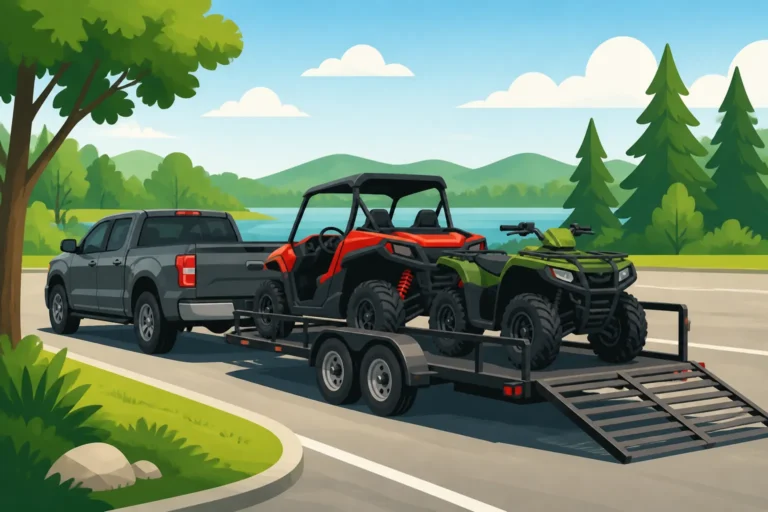
Before unloading, check that the machines are ready for the conditions. Look over tires, brakes, lights, cooling components, and any gear you depend on. Secure bags and water so they cannot shift into controls or fall onto the trail. Bring basic repair items suited to your machine and know how to use them. If you’re towing or hauling, check tie-downs and make sure muddy gear can be kept separate from the cab and personal items.
Pack a small, practical kit: water, food, first-aid supplies, sunscreen, insect repellent, a phone protected from dirt, and any needed medication. Add a paper or offline map if that helps your group navigate. onX Offroad can serve as one navigation aid, but it should be set up before the ride and used alongside posted information and a clear group plan. Leave room for extra supplies rather than filling every rack with optional equipment.
Decide when to turn around
A good ride is not measured by how many miles you cover. If someone is getting unusually tired, a machine is running poorly, or the trail is becoming more difficult than expected, change the plan. Take a break, choose a shorter return route if one is open and appropriate, or end the ride. Waiting until the group is exhausted or nearly out of daylight can turn a manageable problem into a stressful one.
Keep an eye on the time, especially if your group is unfamiliar with the park. Allow a buffer for breaks, slow travel, and small mechanical issues. If clouds build or rain begins, reassess traction and visibility rather than pressing on because you already planned a particular loop. Follow any closures or instructions from park staff, and never assume that a route remains available just because it was open on a previous visit.
After the ride, check everyone for signs of heat strain and take time to cool down before driving. Clean mud and debris from the machines when practical, and look for damage that might be easy to miss while tired. A quick post-ride check can catch a loose strap, packed radiator area, or leaking component before the next outing. If you’re planning another visit, note what worked: your start time, water supply, route choices, and where the group needed more rest. Those details make the next August ride easier to plan—and more enjoyable once you get back to the trails.
Disclaimer
This article is for general informational purposes only and does not constitute professional advice. Laws, prices and regulations vary by location and change over time. Consult a qualified professional for guidance on your specific situation.