What a Red Road Means on Vanderburgh’s ORV Map
When you're an ATV or UTV enthusiast in Indiana, the dream of hitting the open road with your machine can quickly turn into a bureaucratic maze, especially in counties that have taken the initiative to create their own specific ordinances. Vanderburgh County, home to Evansville, is one such place, and they've gone the extra mile to provide a color-coded map to guide riders. But what exactly does that ominous "red road" designation mean when you're planning your next adventure? This guide will dive deep into Vanderburgh's ORV map, helping you understand the rules, avoid fines, and find where you can legally ride.
Navigating Vanderburgh County's ORV Landscape
It's no secret that riding your off-road vehicle on public roads in Indiana can be a tricky business. The default state law leans towards keeping ORVs off most public thoroughfares, but it also provides a pathway for individual counties to pass ordinances that open up certain roads. This flexibility means that what's legal in one county might land you a hefty fine in another. It's a patchwork quilt of regulations that can feel overwhelming, and Vanderburgh County is a prime example of a local government trying to bring clarity to its residents and visitors.
Why Vanderburgh Needs Its Own Map
Imagine planning a weekend ride with your friends, only to discover halfway through your trip that you've accidentally strayed onto a prohibited road. It's a common frustration, and one that Vanderburgh County aimed to mitigate with its comprehensive ORV ordinance and accompanying map. The county recognized the growing popularity of off-road vehicles and the desire of residents to use them for more than just trail riding or farm work. By creating specific rules and a visual aid, they sought to carve out designated areas where ORVs could legally operate, while clearly defining where they absolutely could not. This proactive approach, while initially seeming complex, actually provides a clearer framework than counties with vague or non-existent ORV road policies. It's a direct response to the need for clear guidelines in an area where the state laws alone often leave too much room for interpretation. Understanding [How an Indiana County Opens Its Roads] is key to appreciating why Vanderburgh's approach is so specific.
The Purpose of the Color-Coded Map
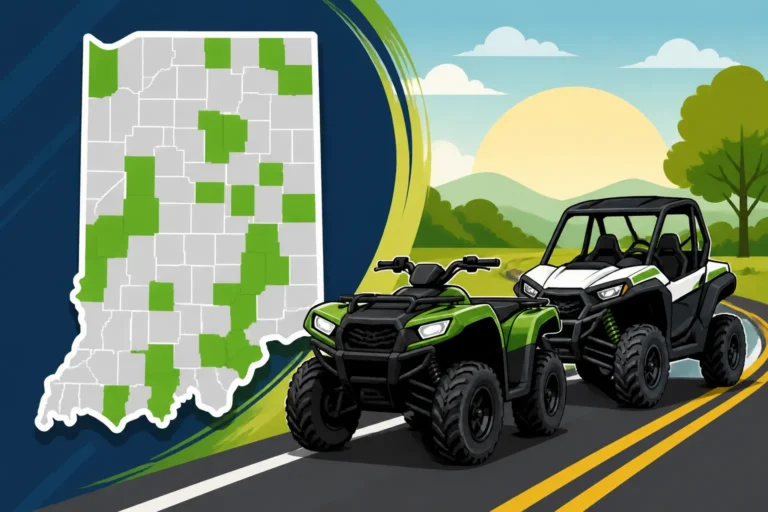
The color-coded map provided by Vanderburgh County is designed to be your indispensable guide to legal ORV operation on county roads. Think of it as your personal traffic light system for off-road vehicles. Instead of guessing or relying on hearsay, you have a definitive visual representation of where you're permitted to ride. The map typically uses different colors to differentiate between various types of roads or areas. Its primary purpose is to help riders avoid inadvertent violations by clearly marking the "go" and "no-go" zones. For example, understanding [What a Blue Road Means on Vanderburgh's ORV Map] is just as crucial as understanding the red ones. This visual tool becomes incredibly important when you're trying to plan a route that connects different riding areas or simply want to use your UTV for errands without breaking the law. It’s a commitment by the county to facilitate legal riding while still protecting areas where ORVs might pose a safety risk or nuisance. You can often find this map online through the county's official channels, making it accessible for pre-ride planning.
Decoding the Red Roads: What They Mean for Riders
Now, let's get down to the brass tacks: what does a red road truly signify on Vanderburgh County's ORV map? When you see a road colored red, it's not a suggestion or a warning; it's a firm prohibition. These are the zones where off-road vehicle operation is strictly forbidden, and riding your ATV or UTV on them will likely lead to a citation. It's crucial to take this designation seriously, as enforcement in these areas is typically stringent due to safety concerns and established local ordinances.
The Strict "No Go" Zones
A "red road" on Vanderburgh's ORV map means that particular stretch of pavement (or gravel) is absolutely off-limits to ATVs and UTVs. Period. These are the areas where the county has determined that ORV operation is either unsafe, impractical, or in conflict with other local regulations, often within populated areas. For instance, roads located within the corporate limits of cities like Evansville or towns like Darmstadt are almost universally marked red. The dense traffic, pedestrian activity, and general infrastructure of these urban and suburban environments are simply not conducive to safe ORV use, and the county has drawn a clear line here. You might also find that certain major arterial roads or those with higher speed limits fall into this category, even outside city limits. The rationale behind these "no-go" zones is primarily public safety – protecting both ORV operators and other motorists, cyclists, and pedestrians. This is why it's vital to study the map before you even start your engine. You don't want to get caught by surprise when navigating a new area, especially if you're [Riding Outside Evansville's Limits] and suddenly find yourself crossing into a prohibited zone.
Understanding the Boundaries of Closed Areas
It's not always just about riding on a red road; understanding the boundaries of these closed areas is equally important. Often, the transition from an open, "blue" road to a closed, "red" road can happen abruptly, especially when you cross into a city's corporate limits. For example, you might be legally riding on a county road, but the moment you cross the "Welcome to Evansville" sign, that road instantly becomes a red road. The map is designed to clearly delineate these boundaries, often showing the outline of municipalities as areas where ORVs are generally not permitted on any road. Furthermore, state highways and limited-access highways, regardless of whether they pass through a city or rural area, are almost always classified as red roads for ORV use. Indiana state law generally restricts ORVs from these types of roads anyway, so the county map simply reinforces that existing prohibition. Riders often wonder [Why Limited-Access Highways Stay Closed] to ORVs, and the answer typically boils down to high speeds and lack of appropriate infrastructure for ORV traffic. Always pay attention to your surroundings and cross-reference with the map to know exactly when you're entering or exiting a restricted zone. This careful planning can prevent a simple cruise from turning into a legal headache.
The Consequences of Riding on a Red Road
Ignoring the red designations on Vanderburgh County's ORV map isn't just a minor oversight; it can lead to significant headaches, both legally and financially. The county's ordinance comes with teeth, and local law enforcement is empowered to enforce these rules. Understanding the potential repercussions can be a powerful motivator to always ride within the designated "blue" zones. No one wants a fun day of riding to end with a costly ticket or, worse, an accident.
Penalties and Infractions in Vanderburgh County
Riding on a red road in Vanderburgh County constitutes a violation of a local ordinance, which typically carries specific penalties. While exact figures can vary and you should always check the most current local regulations, initial fines for a first offense are often set at a specific amount. For instance, [Vanderburgh's $75 First Fine] is a common starting point, which can be a significant hit to your wallet. Subsequent violations could lead to even higher penalties, as the county aims to deter repeat offenders. It's not uncommon for jurisdictions to implement escalating fines for multiple infractions. In some cases, repeated disregard for the rules might even lead to your machine being impounded, adding towing and storage fees to your already growing list of expenses. These penalties are designed to deter illegal riding and encourage compliance with the county's efforts to safely integrate ORVs into the local road network. Always prioritize checking the map and knowing the rules over taking a shortcut on a prohibited road, because [What Happens After a First Vanderburgh ORV Ticket] can be a costly lesson.
Safety and Legal Liability
Beyond the fines, riding on red roads presents serious safety and legal liability risks. Roads marked red are often those with higher traffic volumes, faster speeds, or more complex intersections that are simply not designed with ORV safety in mind. ATVs and UTVs, while incredibly capable off-road, handle differently on pavement than traditional vehicles, and their smaller size can make them less visible to other drivers. This significantly increases the risk of an accident. Should an accident occur on a prohibited road, the legal consequences can be severe. Your insurance policy might not cover incidents that happen while operating your vehicle illegally, leaving you personally responsible for damages, medical bills, and potential lawsuits. Remember, [Why an Indiana Owner Is Liable] for the actions of their machine, especially if it's being operated outside legal parameters. While high-quality protective gear from brands like SuperATV can help reduce injury severity, it won't absolve you of legal responsibility if you're on a road where you shouldn't be. The safest and most responsible course of action is to stick to the designated blue routes, where the county has deemed ORV operation to be permissible.
Finding Your Freedom: Navigating Open Roads in Vanderburgh
While the red roads represent limitations, the good news is that Vanderburgh County has opened up many roads for ORV use. The key to enjoying your machine on public thoroughfares in this area is to understand where these open routes are and to adhere strictly to the rules that come with them. By doing so, you can explore the county confidently and legally. Brands like SuperATV offer accessories that make riding the county roads more comfortable and safe, from proper lighting to rearview mirrors and durable storage solutions.
Locating the "Blue Roads"
The flip side of the red roads are the "blue roads" – these are the segments of county roads where ORV operation is permitted under the Vanderburgh County ordinance. These routes are typically found in more rural or less congested areas, away from the hustle and bustle of city centers. When you consult [Vanderburgh's Color-Coded Map], look for the blue lines; these represent your pathways for legal road riding. It's vital to always refer to the most current version of the map, as ordinances can occasionally be updated or modified. Planning your route in advance using this map can save you a lot of trouble and ensure your ride is enjoyable and stress-free. Don't just assume a road is open because it's rural; always verify its status on the official county map. Many riders find it helpful to download the map to their phone or even print out relevant sections before heading out, especially if cell service might be spotty in certain areas. This preparation is a small effort for a big payoff in peace of mind.
Essential Rules for Riding in Vanderburgh County
Even on the designated blue roads, there are specific rules that all ORV operators must follow to remain compliant with Vanderburgh County's ordinance. These aren't just suggestions; they are legal requirements designed to ensure safety for everyone on the road.
Here are some of the key requirements:
- Age Restriction: Operators must be at least 18 years old to ride an ORV on county roads. [Why Road Riding Starts at Eighteen in Indiana] This is a crucial rule that ensures only experienced adult riders are operating these machines in shared traffic environments.
- Insurance: You must carry proof of financial responsibility (insurance) for your ORV. [Vanderburgh's Insurance Certificate Requirement] This is non-negotiable and provides crucial protection in case of an accident. Always have your insurance card readily available. [Carrying an Insurance Certificate] is a good habit.
- Lighting: If you plan to ride after dark, your ORV must be equipped with at least two functional headlights and two taillights. [Vanderburgh's Dual Light Rule at Night] Visibility is paramount for night riding, and ensuring your lighting system is up to par, perhaps with an aftermarket kit from SuperATV for enhanced brightness, is a must.
- Decal and Registration: Your ORV must be properly registered with the Indiana Bureau of Motor Vehicles (BMV) and display a current registration decal. While this is a state requirement, it's enforced on county roads. Make sure your [Indiana ORV Decal Placement] is correct and visible on the forward half of your machine.
- Equipment: While the county ordinance might not specifically detail every piece of equipment, it's implied that your machine should be in good working order with functional brakes, tires, and steering. Regular maintenance is key for safety.
- Traffic Laws: Remember, when you're on a county road, you're expected to obey all standard traffic laws, just like any other vehicle. This includes speed limits, stop signs, yielding, and signaling. Don't assume ORV rules override basic road rules.
- Helmet Use: While Indiana has specific helmet laws for riders under 18 or on public lands, it's always a good idea to wear a DOT-approved helmet for your own safety, even if the county doesn't explicitly mandate it for adults on its roads. Prioritizing safety through proper gear is always recommended.
Adhering to these rules isn't just about avoiding a ticket; it's about being a responsible rider and contributing to the safe coexistence of ORVs and other vehicles on Vanderburgh County's roads. Always carry your [Indiana Registration and Insurance Proof] with you, as an officer may check it during a roadside stop.
Vanderburgh County ORV Rules Summary
To help you keep track of Vanderburgh County's specific requirements, here’s a quick summary of the key rules you need to know:
| Rule Category | Requirement | Notes |
|---|---|---|
| Road Eligibility | Only on "Blue Roads" as designated on the official Vanderburgh County ORV map. Avoid "Red Roads" strictly. | Red roads are generally within city limits (e.g., Evansville, Darmstadt) or major state routes. Always check the latest map version. For example, [Why Evansville and Darmstadt Stay Closed]. |
| Operator Age | Must be 18 years of age or older. | No exceptions for younger riders on county roads. This means a driver's license alone isn't enough; you must meet the age requirement for ORV road use. |
| Insurance | Proof of financial responsibility (insurance) required. | Carry your insurance card. Failure to have insurance can lead to additional penalties and significant personal liability. |
| Lighting | Two headlights and two taillights required for riding after dark. | Ensure all lights are fully functional and visible. Consider using SuperATV's high-quality lighting upgrades for improved visibility during dusk or night rides. |
| Registration/Decal | Valid Indiana BMV registration and decal must be displayed. | This is a state requirement, enforced by the county. Ensure the decal is properly affixed to the forward half of your machine. [Where the Indiana Decal Mounts] for reference. |
| General Conduct | Obey all standard traffic laws, speed limits, and road signs. | Treat your ORV like any other vehicle on the road. Avoid reckless driving or operating under the influence, which can lead to serious legal consequences under [Indiana DUI Rules for ORV Riders]. |
| Penalties | Fines start at $75 for a first offense; escalate for repeat violations. | Machine impoundment possible for repeat offenses. Adhering to rules is critical to avoid legal trouble. [What a Class C ORV Infraction Costs in Indiana] can give you a broader understanding of the financial stakes. |
By understanding and respecting these guidelines, you can safely and legally enjoy your ATV or UTV on Vanderburgh County's approved road network, ensuring a positive experience for yourself and the community. Always ride responsibly and prioritize safety.
Disclaimer
This article is for general informational purposes only and does not constitute professional advice. Laws, prices and regulations vary by location and change over time. Consult a qualified professional for guidance on your specific situation.