Indiana Rules for a Machine Over 2,000 Pounds
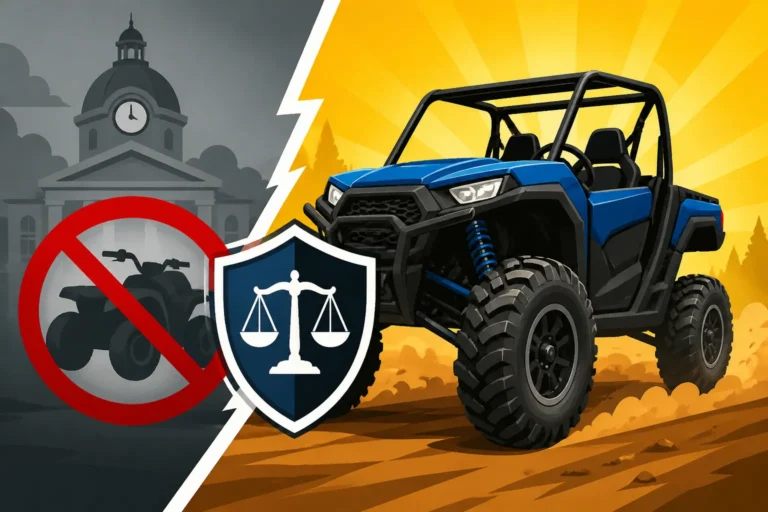
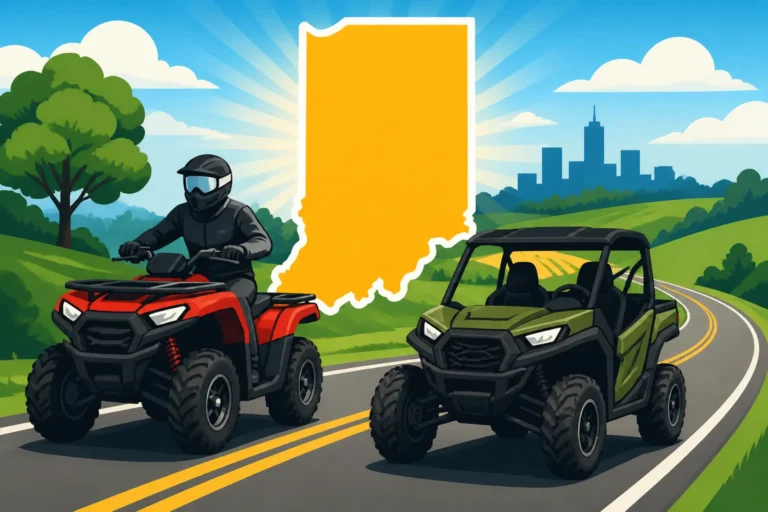
Many of us who love our ATVs and UTVs eventually find ourselves scratching our heads about what's truly legal when it comes to riding on Indiana's public roads. This confusion only intensifies when you own one of the larger, heavier machines – a side-by-side packed with gear, a four-seater UTV, or even some of the beefier ATVs can easily tip the scales. It's frustrating to invest in a powerful machine only to feel restricted by unclear regulations. This guide is here to shed some light on the specific Indiana rules for off-road vehicles that weigh over 2,000 pounds, helping you understand where you stand and how to stay on the right side of the law.
The Weighty Issue: What 2,000 Pounds Means for Your Indiana ORV
It's easy to assume that if you've registered your ATV or UTV with the Indiana Bureau of Motor Vehicles (BMV) and have your decal, you're good to go on certain roads, especially in counties that have opened them up. However, the legal landscape for off-road vehicles (ORVs) in Indiana isn't a single, flat plain; it's got hills and valleys, and one of the biggest "hills" is the weight of your machine. For many UTV owners, in particular, hitting that 2,000-pound mark is not just a possibility, it's a reality right off the showroom floor, or after a few key accessory additions.
Defining "Off-Road Vehicle" and the Weight Threshold
First, let's get down to basics. Indiana law defines an "off-road vehicle" quite broadly. It generally includes motor-driven, off-highway vehicles that are not otherwise registered by the BMV, such as ATVs, UTVs, and dirt bikes. The crucial part here for larger machines is that they are still considered ORVs even if they are large and heavy. The fact that a UTV might be wide, powerful, and weigh as much as a small car doesn't automatically reclassify it into something else for road use purposes under the general ORV statutes. It just means its ORV status, combined with its weight, brings additional considerations. For a deeper dive, check out [How Indiana Defines an Off-Road Vehicle].
Consider a modern side-by-side, especially a four-seater or one with a robust cage and extensive modifications. Add a winch, heavy-duty bumpers, a full cab enclosure, and perhaps some aftermarket suspension components – maybe even some beefy upgrades from a company like SuperATV – and you're easily cruising past the 2,000-pound mark. The state's general rules for ORVs are often drafted with lighter, more agile machines in mind, which creates a bit of a gray area and a lot of confusion for owners of these larger vehicles. It's not that your heavy machine isn't an ORV; it's that its heaviness impacts the permissions associated with that ORV classification when it comes to shared public spaces.
Why This Weight Limit Exists on Public Roads
So, why does Indiana put so much emphasis on this 2,000-pound limit when it comes to ORV road access? It primarily boils down to infrastructure, safety, and legislative intent. Historically, ORVs were seen as smaller, lighter machines used for recreation in specific off-road environments. As UTVs grew in size and popularity, legislators had to grapple with how these bigger vehicles fit into existing road frameworks, which were designed for traditional highway vehicles.
Think about the wear and tear on paved roads. Heavier vehicles, especially those with aggressive off-road tires, can cause more damage to road surfaces, shoulders, and culverts than lighter machines. Beyond infrastructure, there are significant safety concerns. A large, heavy UTV, while perhaps having seatbelts and a roll cage, still handles very differently from a car or truck on pavement. Its center of gravity, braking distance, and acceleration characteristics are optimized for off-road conditions, not necessarily for sharing high-speed roadways with conventional traffic. This difference in design and intended use is a major reason why the state has been cautious about opening roads to all ORVs indiscriminately. It's a fundamental distinction that separates your capable UTV from, say, a golf cart or a low-speed vehicle, each of which has its own very specific set of road rules. To understand these distinctions better, you might want to look at [Indiana Golf Cart Street Rules] and [Indiana Low-Speed Vehicle Rules].
Road Access Realities for Heavier Machines in Indiana
Navigating Indiana's road access laws with an ORV is already complex, but when your machine pushes past that 2,000-pound threshold, it adds another layer of scrutiny and limitation. The general rule of thumb in Indiana is that public roads are off-limits for ORVs, and while there are exceptions, they are often narrowly defined and don't automatically extend to every machine, especially the heavier ones. Many owners feel this is unfair, especially when their UTV is incredibly stable and well-equipped, perhaps even with heavy-duty components from SuperATV that make it feel perfectly capable on a paved surface. However, the law isn't always about perceived capability; it's about classification and safety regulations.
The General Prohibition: Why Heavier ORVs Face Stricter Road Rules
Let's be clear: [Why Indiana Roads Are Closed by Default] to ORVs is the starting point for any discussion about road riding. This means that unless a specific exception or local ordinance explicitly permits it, your ORV – regardless of weight – should not be on a public road. For heavier machines, this default prohibition often feels even more restrictive. While a lightweight dirt bike might briefly cross a quiet road without much notice, a large, loud UTV weighing over a ton is far more conspicuous and is likely to attract attention from law enforcement if it's operating outside the permitted areas.
The stricter reality for heavier ORVs stems from that core legislative intent mentioned earlier. When the laws were crafted, the expectation was not that large, multi-passenger utility vehicles would be traversing public thoroughfares alongside cars and trucks. The sheer size and mass of these machines, combined with their off-road design, means that their presence on roads raises more concerns about traffic flow, sightlines, and the general safety of other motorists. It's a tough pill to swallow when you've invested in a powerful, versatile machine, but understanding this underlying philosophy is key to interpreting the regulations.
County Ordinances and the Weight Factor
Indiana state law does allow counties to pass ordinances that open certain county roads to ORV use. This is where things get really localized and, frankly, quite confusing. You'd think that if a county opens its roads, it applies to all registered ORVs, right? Not necessarily. While a county can open roads, there's a specific limitation: [Why Indiana Limits What a County May Demand]. A county cannot demand things like a special driver's license for an ORV or impose specific weight caps below 2,000 pounds that would contradict state law.
However, this doesn't mean that a heavier machine automatically gains road access just because a county has an ordinance. The state's overarching definitions and limitations on ORV road use still apply. The 2,000-pound figure isn't an arbitrary line that, once crossed, prohibits your machine; rather, it often signifies that your machine is more likely to fall into the category of larger ORVs that the state views with greater caution on public roads. While a county cannot prohibit an ORV solely because it's over 2,000 pounds if it otherwise meets the criteria for road use defined by the state and the local ordinance, the state itself has significant limits on what "ORV road use" even means for any machine, especially those that begin to resemble larger vehicles. This is a subtle legal distinction, and it often comes down to how a local officer interprets the overall ORV statute in conjunction with a county ordinance. Always consult specific county ordinances where you plan to ride, as outlined in [Indiana Counties That Allow ORVs on Roads], but remember the state's baseline restrictions on ORVs on roads remain paramount, regardless of weight.
Limited Exceptions and Navigating Permitted Road Use
Even with the general prohibitions and the weight considerations, there are still some very specific situations where an ORV, including those over 2,000 pounds, might find itself legally on an Indiana public road. These aren't widespread permissions for general joyriding, but rather targeted exceptions for specific tasks or transit. It's crucial for owners of larger UTVs to understand these nuances, as misinterpreting them could lead to significant fines.
The Shoulder and Ditch Exception – Does Weight Play a Role Here?
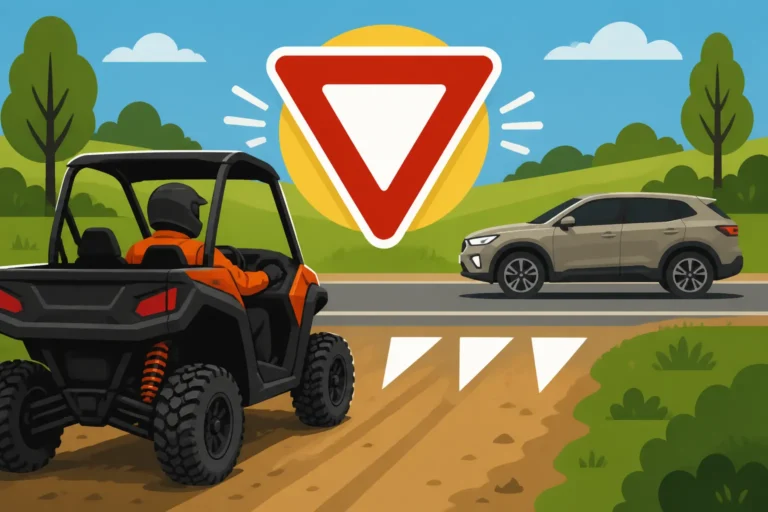
One of the most commonly cited exceptions for ORV road use in Indiana involves riding on the shoulder or in the ditch of a public highway, and crossing roads. [The Shoulder and Ditch Exception in Indiana] allows for very limited travel in these areas, primarily for accessing private property, hunting areas, or moving between trails. When it comes to crossing a road, the rules are very strict: you must come to a complete stop, yield to all traffic, and cross at a right angle to the road. [Crossing a Road on an ORV in Indiana] details these requirements.
Does your machine's weight matter here? Indirectly, yes. While the law doesn't explicitly state that a 2,000+ pound machine cannot use the shoulder or ditch, practicality and safety are major factors. A wider, heavier UTV is much more difficult to maneuver safely on a narrow, uneven shoulder or within a ditch, especially if it's deep or overgrown. The risk of rolling, getting stuck, or interfering with traffic is significantly higher with a larger machine. Furthermore, if you've added substantial modifications, perhaps an aggressive lift kit and oversized tires from SuperATV, your machine's footprint is even larger, making legal and safe shoulder use even more challenging. The spirit of this exception is for minimal, necessary transit, not for extended travel on the road's periphery, and a larger machine makes that spirit harder to uphold in practice.
Special Circumstances: Farming, Hunting, and Emergency Use
Indiana law provides specific exemptions for ORVs used in certain functional capacities, and these typically apply regardless of the machine's weight. For example, ORVs used for agricultural purposes on a farm are generally permitted to operate on public highways adjacent to their farm property for limited distances. This allows farmers to move equipment, check fences, or access different fields without needing to trailer their machines for short hops. You can find more information on this in [Indiana Registration for a Farm Machine]. Similarly, ORVs might be used by law enforcement, emergency services, or utility companies in specific, authorized capacities.
However, it's vital to understand that these are very narrow, use-specific exemptions. Owning a large UTV that could be used for farming doesn't mean you can drive it down the road for recreation. The exemption applies to the activity, not just the type of vehicle. If you're using your heavy machine to haul firewood on your own property, that's fine. If you then decide to take it on the road to pick up groceries because it's "heavy-duty" like a farm vehicle, that's where you run into trouble. These exemptions are not a loophole for general road access for your heavier machine.
How Aftermarket Upgrades Might Not Change Your Road Status
Many ORV enthusiasts, especially those with larger UTVs, invest heavily in aftermarket upgrades. Whether it's a lift kit, wider a-arms, heavy-duty axles, or specialized tires from a reputable brand like SuperATV, these modifications significantly enhance a machine's performance, durability, and capability off-road. They can make your UTV feel like an unstoppable force, capable of tackling any terrain or even holding its own on a paved road.
However, it's a common misconception that these upgrades somehow alter the legal status of your ORV for road use. Adding a windshield, turn signals, or even a horn doesn't magically transform an ORV over 2,000 pounds into a street-legal vehicle if it doesn't meet the fundamental requirements of a street-legal vehicle category (like a low-speed vehicle or an actual car). An ORV, even one equipped for extreme trails with the best components, is still legally an ORV in Indiana's eyes when it comes to road use. The state laws are generally concerned with the type and classification of the vehicle, not necessarily its accessories, no matter how robust or street-friendly they appear. Always remember that capability and legality are two very different things when it comes to your ORV and Indiana's roads.
Staying Compliant and Avoiding Penalties
The prospect of getting pulled over and facing fines can certainly cast a shadow over the fun of riding, especially when you're trying to do the right thing with a powerful, heavy machine. For owners of ORVs over 2,000 pounds in Indiana, understanding the nuances of road use isn't just about avoiding trouble; it's about being a responsible enthusiast. The reality is that law enforcement officers are trained to recognize unregistered or illegally operated vehicles, and a large UTV on a public road, especially one that doesn't fit the clear exceptions, will almost certainly draw their attention.
Understanding Enforcement and Potential Fines
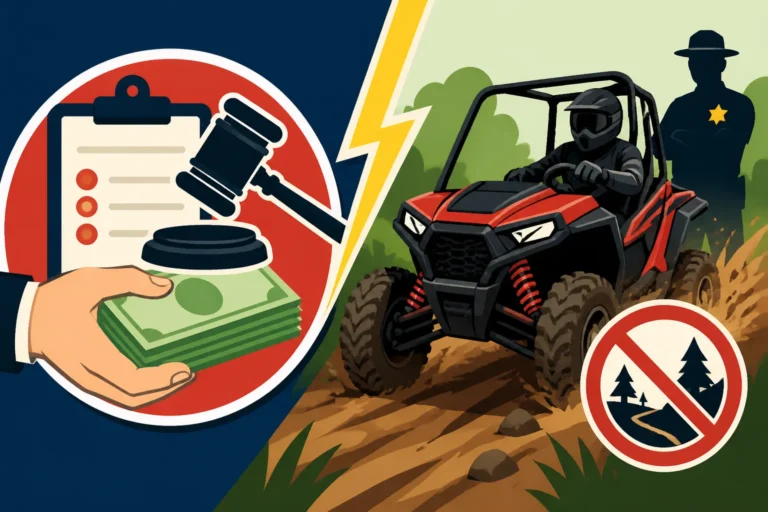
If you're caught operating your ORV, particularly a heavier one, illegally on an Indiana public road, the consequences can range from inconvenient to quite costly. Generally, an illegal ORV operation on a public highway or right-of-way can be classified as a Class C ORV infraction. [What a Class C ORV Infraction Costs in Indiana] can be hundreds of dollars, and that's just the starting point. Depending on the specific circumstances, such as reckless operation, damage to property, or causing an accident, the penalties can escalate significantly.
When an Indiana officer pulls you over, they'll be checking for a few key things. This isn't just about your registration decal; they'll look at the machine itself. They'll assess if it's an ORV, if it's on a permitted road, and if you're operating it within any allowed exceptions. [What an Indiana Officer Checks Roadside] covers this in more detail. For a machine over 2,000 pounds, its sheer size makes it stand out, meaning it's harder to fly under the radar. Officers are aware that many larger UTVs don't fit neatly into existing road use categories, and they're often specifically looking for compliance with ORV statutes.
Best Practices for Heavier ORV Owners
So, what's an owner of a powerful, heavy ORV to do to stay on the right side of the law? Here are some best practices that prioritize both legal compliance and safety:
-
Know Your Local Ordinances (and the State Law): Always research the specific county ordinances for any area where you plan to ride. Even if a county has "opened" its roads, understand which roads are open and what conditions apply. Crucially, always remember that county ordinances operate within the framework of state law, and state law generally restricts ORVs on roads, especially larger ones. Don't assume an open county road means carte blanche for your heavy UTV. For an overarching perspective, consider [Are ATVs Street Legal in Indiana?].
-
Use a Trailer for Transit: The safest and most legally compliant way to transport your ORV, especially one over 2,000 pounds, to a designated riding area is on a trailer. Even if your UTV is equipped with robust aftermarket components from SuperATV that make it feel sturdy on pavement, trailering it ensures you're not risking fines or accidents on public roads. This applies to getting from your home to the trailhead, or between different trail systems.
-
Understand the "Why": Internalize that the regulations are often about safety for all road users and the preservation of public infrastructure, not about limiting your fun specifically. This mindset can help you make more informed decisions about when and where to ride.
-
Carry Your Paperwork: Always have your ORV registration certificate, any required permits, and proof of insurance with you when you ride. While these documents don't automatically grant road access, they are essential for proving legal ownership and registration when requested by an officer.
-
Educate Yourself and Others: Stay informed about changes in Indiana's ORV laws. Share accurate information with fellow riders. The more everyone understands the rules, the better the reputation of the ORV community, and the safer the riding environment for all.
Remember, owning a machine over 2,000 pounds means you have a powerful, capable off-road vehicle. The goal is to enjoy that power responsibly and legally, primarily in the environments for which it was designed.
| Characteristic | ORV Under 2,000 lbs (e.g., smaller ATV) | ORV Over 2,000 lbs (e.g., large UTV) | Golf Cart / Low-Speed Vehicle | Standard Passenger Vehicle |
|---|---|---|---|---|
| Primary Intended Use | Off-road recreation, utility | Off-road recreation, utility | Short-distance transport | Highway travel |
| Default Road Status | Closed, with limited exceptions | Closed, with limited exceptions | Closed, with specific local opt-in | Open |
| County Ordinance Impact | Can open roads with state limits | Can open roads with state limits | Specific rules for local areas | N/A |
| Shoulder/Ditch Use | Allowed with restrictions | Allowed with restrictions | Generally not applicable | Not permitted |
| Farm Use Exception | Yes, with conditions | Yes, with conditions | No | N/A |
| Registration Required | Yes (BMV) | Yes (BMV) | Often not titled/registered | Yes (BMV) |
Disclaimer
This article is for general informational purposes only and does not constitute professional advice. Laws, prices and regulations vary by location and change over time. Consult a qualified professional for guidance on your specific situation.