Indiana Lighting Requirements for ORVs
It's a common dilemma for Indiana ORV owners: you want to hit the trails early or late, or maybe you're fortunate enough to live in a county that allows some road access, but you're constantly second-guessing if your machine's lighting is up to snuff. The rules can feel like a maze, especially with different requirements for public roads versus private land or dedicated parks. This guide will shine a light on Indiana's specific lighting requirements for your ATV or UTV, helping you understand what you need to see and, more importantly, be seen, safely and legally, wherever your ride takes you across the Hoosier State.
Navigating Indiana's General ORV Lighting Rules
Understanding the fundamental lighting rules for off-road vehicles in Indiana is crucial, whether you're tearing up a dusty trail or just moving your machine across a field. These rules are designed first and foremost for safety, ensuring that you can navigate challenging terrain and that others, be they fellow riders, pedestrians, or even wildlife, can spot you. It's not just about legal compliance; it's about protecting yourself and those around you.
Why Lighting Matters Beyond Sunset
Many riders associate lights solely with nighttime operation, but that's a narrow view, especially in Indiana. Think about those overcast, foggy autumn mornings when the sun is barely peeking through, or late afternoons in dense woods where shadows deepen quickly. Even during what seems like broad daylight, poor visibility conditions can arise unexpectedly. Rain showers can reduce visibility dramatically, as can kicking up a lot of dust on a dry trail. Your lights aren't just for seeing where you're going; they're vital for making sure other riders, hikers, or even local farm equipment operators see you. This proactive visibility can prevent countless close calls and accidents, ensuring everyone shares the trails safely.
The Basic Requirements: Headlights, Taillights, and Reflectors
When it comes to the bare minimum, Indiana law is fairly clear on what your ORV needs. Every ATV, UTV, or dirt bike operating in the state must have at least one working headlight and one working taillight. These aren't suggestions; they're non-negotiable safety features. The headlight, of course, illuminates the path ahead, helping you identify obstacles, dips, and turns. The taillight is equally critical, serving as a beacon for anyone approaching from behind, especially when riding in groups or in areas where visibility might be compromised. Beyond active lights, your machine should also be equipped with reflectors, typically red ones on the rear and amber ones on the sides. These passive safety devices catch and bounce back light from other sources, providing an additional layer of visibility even if your active lights are off or fail. These fundamental components form the backbone of Indiana's ORV visibility standards.
When the Rules Kick In: Dawn, Dusk, and Poor Visibility
Indiana law specifies that your ORV's lights must be on during certain periods and conditions. Generally, this means from sunset to sunrise. However, the requirement extends beyond just those specific hours. If you're riding anytime when there isn't sufficient natural light to clearly see persons or vehicles at a distance of 500 feet, your lights need to be illuminated. This includes foggy conditions, heavy rain, or even just riding in deeply shaded areas of a forest trail during the day. It's a broad definition that puts the onus on the rider to assess visibility. A good rule of thumb is: if you're questioning whether you need your lights on, then you probably do. It's always better to err on the side of caution and flip them on, ensuring you're seen and seeing clearly.
Specific Lighting Requirements for Road Riding in Indiana
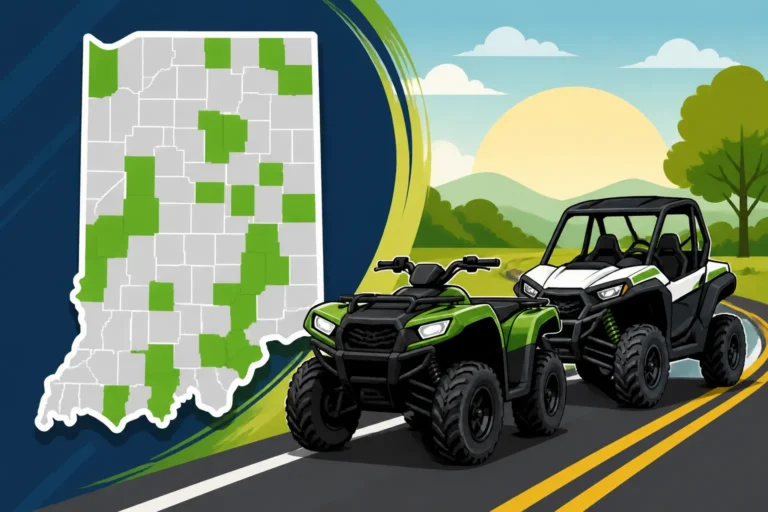
Riding an ORV on public roads in Indiana is generally restricted, but there are exceptions, particularly on designated county roads. If you're lucky enough to live in a county that has opened some of its roads to ORVs, like some parts of Vanderburgh County, you'll find that the lighting requirements become much more stringent than for off-road-only use. This is because you're now sharing space with cars, trucks, and other conventional vehicles, and safety on these shared thoroughfares demands a higher standard of visibility and signaling capabilities. You can learn more about [Indiana Rules for Riding a County Road] elsewhere on our site.
The "Two Headlights, Two Taillights" Mandate for County Roads
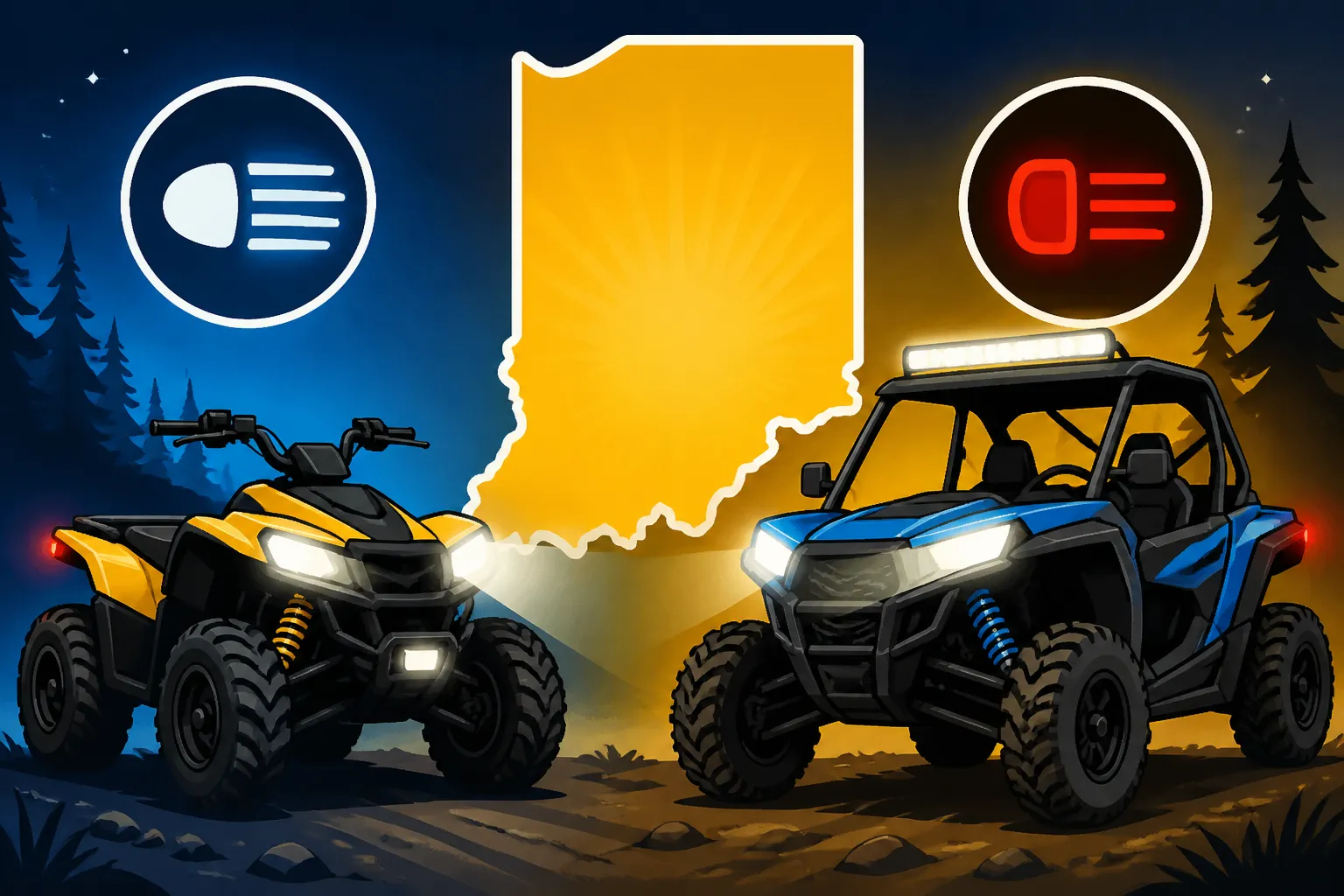
For ORVs operating on public roads where allowed, Indiana law often mirrors the requirements for other motor vehicles. This means your machine must be equipped with two functional headlights and two functional taillights. This is a significant upgrade from the single headlight/taillight minimum for purely off-road use. The additional lights provide redundancy and a broader, more unmistakable visual signature to oncoming and trailing traffic. Imagine you're riding a gravel road outside a small town, and a pickup truck is coming around a bend. Two headlights make you much easier to distinguish and gauge distance than a single light. Similarly, two taillights create a wider profile, helping drivers behind you to better perceive your machine's presence. Counties that have opened their roads, such as Vanderburgh, often explicitly state these dual lighting requirements in their local ordinances, sometimes alongside rules about [Indiana Rules for Riding After Dark]. Ensuring your machine meets these specifications is non-negotiable for legal road use. Many aftermarket companies, like SuperATV, offer kits to help upgrade your machine to meet these dual lighting standards.
Brake Lights and Turn Signals: Are They Required?
This is where things can get a little more nuanced and often depends on the specific county ordinance or the interpretation of general vehicle code when applied to ORVs on public roads. While not always explicitly stated for all ORVs in all road-riding scenarios, if you intend to regularly operate your machine on designated county roads, having functional brake lights and turn signals is highly recommended, and in some jurisdictions, it's an absolute necessity.
A brake light, clearly visible when you apply your brakes, is a critical safety feature that alerts drivers behind you to your deceleration. Without it, the risk of a rear-end collision increases dramatically. Turn signals, likewise, allow you to communicate your intentions to other drivers, whether you're turning onto a side road or changing lanes (if applicable and legal). While some ordinances might simply state "lighting sufficient for highway use," the spirit of that law almost certainly includes signaling your stops and turns. Given the variety of local ordinances, it's wise to check your specific county's rules. If they don't explicitly require them, many riders choose to install them anyway for enhanced safety. Companies such as SuperATV provide comprehensive turn signal and horn kits that integrate seamlessly into most ORV models, making the upgrade process straightforward. Don't forget that these often need to be visible from the front and rear, and bright enough to be seen in daylight.
The Importance of Aim and Brightness
Having the right number of lights is only part of the equation; their performance is equally vital, especially when sharing roads with other vehicles. Your headlights, for instance, need to be properly aimed. If they're pointing too high, you risk blinding oncoming drivers, which is not only dangerous but also illegal. If they're aimed too low, your visibility of the road ahead will be severely compromised.
Brightness is another key factor. While you want your lights to be powerful enough to cut through darkness or adverse weather, excessively bright lights can also be a hazard to others. There are often regulations, either explicit or implied through general vehicle code, about the maximum luminous intensity allowed for headlights. It’s a balance between seeing clearly and not creating a hazard. Similarly, taillights need to be bright enough to be easily seen from a distance, particularly in bright sunlight or at night, but not so dazzling that they cause discomfort for trailing drivers. When selecting aftermarket lighting, keep these considerations in mind. A well-adjusted lighting system ensures you are safe and courteous on the road.
Auxiliary Lighting and Off-Road Trail Use
While baseline lighting covers the legal requirements, many ORV enthusiasts know that the stock setup often leaves a lot to be desired, especially when pushing the limits on challenging trails. This is where auxiliary lighting comes into play, transforming your machine into a beacon of light that pierces the darkest nights. However, with great power comes great responsibility, and understanding the nuances of these powerful light sources is crucial for both safety and trail etiquette.
Light Bars and Pod Lights: Enhancing Trail Visibility
For serious off-road adventurers, light bars and pod lights are practically standard equipment. These powerful LED setups dramatically increase your field of vision, turning pitch-black trails into well-lit highways. Imagine navigating a rocky climb in the dead of night at [Redbird Off-Road State Recreation Area]; a quality light bar illuminates every crevice and boulder, revealing hazards you'd miss with standard headlights. Pod lights, often smaller and more focused, are excellent for illuminating specific areas, like rock crawling obstacles directly in front of your tires or providing side-lighting in tight wooded sections.
The sheer variety of these lights is staggering, from flood beams that spread light wide to spot beams that project it far down the trail. Many riders opt for a combination, using a wide light bar for general illumination and a set of focused pod lights for detail. When choosing these, consider their IP rating for dust and water resistance – you'll want something that can handle Indiana's mud and rain. Brands like SuperATV offer a wide array of robust and high-performance light bars and pod lights specifically designed for the rigorous demands of ORV use. While these are invaluable for trail safety, remember that their intensity means they are typically not legal for use on public roads and should be covered or switched off when transitioning between trail and public access points.
When Too Much Light Can Be a Problem
It might sound counterintuitive, but there absolutely can be such a thing as "too much light," especially if it's not managed properly. While a powerful light bar is a boon on a dark, remote trail, imagine a scenario at [Interlake Off-Road State Recreation Area] where you crest a hill and suddenly face another rider head-on. If your high-powered auxiliary lights are blasting away, you can momentarily blind them, creating a dangerous situation. This is a common courtesy issue on shared trails. Many experienced riders will dim or turn off their auxiliary lights when they see another machine approaching, relying on their standard headlights.
Furthermore, some parks or private riding areas might have rules about light pollution or maximum brightness, especially if they are near residential areas or wildlife habitats. Using excessively bright lights in these sensitive zones can be disruptive. It's about being a responsible rider: use the right amount of light for the situation, and always be mindful of how your lighting affects others sharing the environment.
Reflective Gear and Machine Visibility
Beyond the powered lights on your machine, don't underestimate the power of passive visibility. Reflective gear, both on your machine and on yourself, can significantly enhance safety, especially in low-light conditions or if your primary lighting system were to fail. For your ORV, adding reflective tape to strategic points on the frame, fenders, or even your helmet can make a huge difference. Think about the side of your UTV, which might be less visible from certain angles, or the rear of your quad if your taillight is obscured by mud.
For yourself, wearing a reflective vest or clothing with reflective elements is a smart move, particularly if you ever need to dismount your machine on or near a trail after dark. Many riding jackets and helmets come with integrated reflective materials, but you can also add stick-on elements or wear a standalone vest. Even if you have all your lights working perfectly, these reflective additions provide an extra layer of conspicuity, catching light from other machines or even passing vehicles if you're near a road. This is especially important for [Indiana Rules for a Passenger Under 18], as their smaller size might make them harder to spot.
Consequences of Non-Compliance and Best Practices
Ignoring Indiana's ORV lighting requirements isn't just a minor oversight; it can lead to serious consequences, ranging from fines to increased accident risk. As an ORV owner, it's your responsibility to ensure your machine is always properly equipped for the conditions and location you're riding in. Staying informed and proactive about your machine's lighting system is a cornerstone of safe and legal ORV operation in the Hoosier State.
Fines and Penalties for Inadequate Lighting
Riding an ORV in Indiana without the legally required lighting, especially during hours of darkness or poor visibility, can land you in hot water. A conservation officer, sheriff's deputy, or state trooper can issue a citation. The specific penalties can vary, but generally, operating an ORV in violation of lighting requirements could result in a Class C ORV infraction. This isn't just a slap on the wrist; these infractions carry a monetary fine, and repeat offenses can lead to escalating penalties.
For instance, if you're pulled over on a designated county road because your ORV only has one headlight when two are required, you're not just risking a ticket; you're also seen as a hazard. Law enforcement prioritizes public safety, and inadequate lighting directly compromises that. Beyond the initial fine, you might also be required to fix the issue, which means more time and money out of your pocket. It's much cheaper and less stressful to ensure your lights are in working order before you head out. You can find more information about [Indiana Fines for an Unregistered ORV] and other related penalties to understand the full scope of enforcement.
Pre-Ride Checks and Maintenance for Your Lighting System
The best way to avoid penalties and ensure safety is through diligent pre-ride checks and regular maintenance. Before every ride, especially if you anticipate being out after dark or in challenging conditions, quickly walk around your ORV and confirm all your lights are functioning.
Here's a quick checklist:
- Headlights: Are both (if applicable) working and properly aimed? Are the lenses clean?
- Taillights: Are they both working and visible?
- Brake Lights: Do they illuminate when you apply the brakes? Have someone stand behind you to check.
- Turn Signals (if installed): Do they blink correctly, both front and rear, on both sides?
- Reflectors: Are they clean and intact?
Beyond these immediate checks, regular maintenance is key. Check wiring for corrosion or damage, especially after riding through mud or water. Replace burnt-out bulbs promptly. Keep light lenses clean of mud, dirt, and scratches, as grime can drastically reduce light output. A little preventative care goes a long way in keeping your ORV visible and legal.
Upgrading Your ORV's Lighting: Options and Considerations
Whether you're looking to meet road-legal standards or simply want better visibility on the trails, upgrading your ORV's lighting is a worthwhile investment. The aftermarket is brimming with options, from brighter LED replacement bulbs for your stock housings to complete auxiliary lighting kits.
When considering upgrades, think about your primary riding environment. If you're spending a lot of time on designated county roads, focus on street-legal upgrades like dual headlights, dual taillights, and robust turn signal/brake light kits. Many of these kits, including those from manufacturers like SuperATV, are designed for easy installation and come with all necessary wiring. If trail riding is your main game, powerful LED light bars, spot pods, and floodlights can transform your night riding experience. Consider the power draw of new lights and ensure your ORV's electrical system can handle the load without straining the battery or alternator. Investing in quality components will provide better durability and reliability, holding up to the vibrations, impacts, and weather conditions inherent to off-road riding.
Indiana ORV Lighting Requirements: A Quick Reference
To help you keep track of the key differences in lighting requirements, here's a handy table outlining the general expectations for off-road trail riding versus designated county road use in Indiana.
| Feature | Off-Road Trail Riding (Minimum) | Designated County Road Use (Often Required) | Notes |
|---|---|---|---|
| Headlights | At least 1 | At least 2 | Must be on from sunset to sunrise or in poor visibility conditions. |
| Taillights | At least 1 | At least 2 | Must be visible from the rear. |
| Brake Lights | Not always explicitly required | Highly Recommended / Often Required | Essential for signaling deceleration to other road users. |
| Turn Signals | Not always explicitly required | Highly Recommended / Often Required | Critical for communicating turns and lane changes. |
| Reflectors | Rear red, side amber | Rear red, side amber | Passive safety; always required and should be clean. |
| Auxiliary Lights | Common for enhanced visibility | Generally prohibited / Must be covered | Great for trails, but often too bright for public roads. |
| Aim & Brightness | Focus on trail illumination | Crucial for road safety, avoid blinding | Headlights must be aimed correctly; brightness can be regulated. |
This table provides a general overview, but always remember that local ordinances, especially for county road use, can have specific details. It's always a good idea to consult the relevant county statutes or [Indiana Local Ordinances on ORV Riding] for the most precise information before you head out.
Disclaimer
This article is for general informational purposes only and does not constitute professional advice. Laws, prices and regulations vary by location and change over time. Consult a qualified professional for guidance on your specific situation.