Indiana Rules for Riding After Dark
There’s something truly magical about riding your ATV or UTV after the sun dips below the horizon, with the hum of your engine and the beam of your headlights cutting through the Indiana night. But let's be real, it's not as simple as just flipping a switch. Navigating Indiana's nuanced rules for riding after dark can feel like finding your way through a dense forest without a map, leaving many riders confused about where, when, and how they can legally enjoy their machines. This guide will shine a light on everything you need to know about Indiana's specific requirements, from basic lighting to local ordinances, helping you ride safely and legally once the stars come out.
Indiana's Statewide Lighting Requirements for ORVs After Dark
When you're out on your off-road vehicle in Indiana, especially when there's a chance you might encounter any public right-of-way, understanding the basic lighting requirements is absolutely crucial. This isn't just about being seen; it's about adhering to the law and keeping everyone safe, whether you're briefly crossing a county road or navigating a shoulder after dusk. Indiana has some clear expectations for your machine's illumination, and it's vital to have these systems in tip-top shape.
Essential Headlights and Taillights
At a fundamental level, Indiana law specifies that any ORV operating on or crossing a public highway, shoulder, or right-of-way between sunset and sunrise, or at any time when visibility is limited to less than 500 feet, must be equipped with at least one headlight and one taillight. Your headlight needs to emit a white light and be visible from a distance of 500 feet to the front. The taillight, on the other hand, must emit a red light and be visible from 500 feet to the rear. This isn't just a suggestion; it's a legal requirement that protects you and others on the road.
Think about those moments when you might be trailing your buddies at dusk, or perhaps you're just finishing up a long day of work on the farm and need to move your quad across a county lane. These are the exact scenarios where proper lighting transitions from a convenience to a necessity. Without adequate and functional lighting, you're not only putting yourself at risk but also inviting potential legal trouble. [Indiana Lighting Requirements for ORVs] details these regulations further, emphasizing that these lights need to be operational at all times during these low-light conditions.
Reflective Materials and Additional Visibility Aids
While not explicitly mandated for all night riding scenarios, having additional reflective materials on your ORV is a smart move. Although state law primarily focuses on active lights, anything that enhances your visibility is a bonus. This could include reflective tape on the sides of your machine, on your helmet, or even on your riding gear. Remember, the goal is to be seen, and in the low-light conditions of an Indiana evening, every bit of visibility helps.
Beyond basic lights, many riders consider adding auxiliary lighting. This could be a powerful LED light bar mounted on the front of your UTV, or additional floodlights for better peripheral vision. While these aren't required by law for road crossings, they significantly improve your ability to see hazards and can make your night rides much safer, especially on private trails where the terrain can be unpredictable. You might even look into robust aftermarket options, perhaps from a brand like SuperATV, which offers a wide range of lighting solutions designed specifically for the rugged demands of off-road riding, often exceeding standard requirements.
Navigating Local Ordinances: County Rules for Night Riding
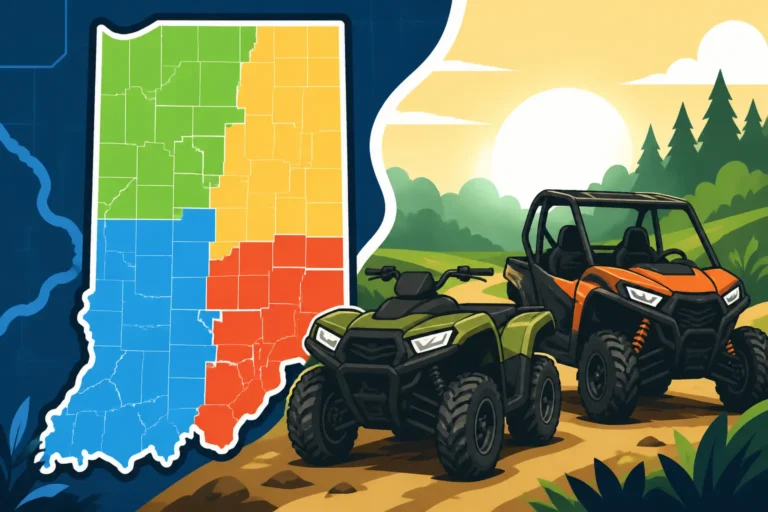
Indiana's approach to ORV road use is often hyper-local, with counties and even some municipalities having the authority to open certain roads to off-road vehicles. This means that while the state sets baseline lighting requirements, individual counties might introduce additional rules, especially concerning night riding on their designated ORV roads. It's not enough to know the state law; you absolutely have to dig into the local ordinances if you plan to ride public roads after dark.
Specific County Requirements for Night Operation
Several Indiana counties have embraced the idea of allowing ORVs on certain public roads, but they often come with their own set of stipulations. For instance, Vanderburgh County, a pioneer in opening roads to ORVs, has very specific requirements for operating after dark. Their ordinance often stipulates that machines must be equipped with two headlights and two taillights when operating on designated county roads between sunset and sunrise. This doubles the standard state requirement, which typically asks for at least one of each.
Imagine you're planning a trip down to southern Indiana, perhaps to ride some of the scenic routes around Vanderburgh or Brown County. You’ve done your homework on where you can ride during the day, but if your plans include evening rides, you need to verify these details. Missing a crucial lighting requirement, like the need for a second taillight, could lead to a citation. [Indiana Rules for Riding a County Road] provides a deeper dive into the complexities of these local rules, underscoring the importance of checking each county's specific code. Always remember, just because a county allows ORVs on its roads doesn't mean it's a free-for-all after dark.
The Importance of Checking Local Ordinances
The patchwork nature of Indiana's ORV laws means that what's legal in one county might not be in another. Before you trailer your machine to a new riding area, particularly if you intend to ride on any public roads after dark, you must consult that county's specific ORV ordinance. This isn't just about lighting; it can also cover things like speed limits, helmet requirements for certain age groups, or even specific routes designated for night use.
A common frustration for riders is this very inconsistency. You might have your machine perfectly set up for night riding according to state law, only to find out that Vanderburgh County wants an extra taillight, or Brown County has a different set of rules entirely. It’s essential to look up the local ordinance for the area you plan to ride. Often, these details are available on the county's website or through their highway department. Ignorance of the law is never an excuse, and a simple check beforehand can save you from a costly [Indiana Fines for Illegal ORV Road Use] ticket, especially when dealing with stricter night riding regulations.
After-Dark Riding on Private Land and Dedicated ORV Parks
While state and local laws dictate much of what you can do on public roads, the rules can shift significantly when you're on private land or within a dedicated off-road park. Here, the focus often moves from strict legal mandates to park-specific rules and, more importantly, common-sense safety practices.
Park-Specific Night Riding Rules
Indiana is home to some fantastic ORV parks, like Redbird Off-Road State Recreation Area and Interlake Off-Road State Recreation Area. These parks provide expansive terrains perfect for ATVs and UTVs. While they operate under DNR regulations, their rules regarding night riding are typically less restrictive than public road laws, focusing more on safety within the park environment. Most parks require functional headlights and taillights for night operation, primarily to ensure you can see where you're going and that other riders can see you. However, they might not enforce the "two headlight, two taillight" rule that some counties do.
For example, if you're planning an evening ride at [Redbird Off-Road State Recreation Area] or [Interlake Off-Road State Recreation Area], you’ll definitely need working lights. While there might not be a Conservation Officer checking for specific lumen output, they will expect your lights to be on and functional. This is where those aftermarket upgrades really shine. High-power LED light bars, often from reputable manufacturers like SuperATV, can transform your night riding experience on park trails, allowing you to spot obstacles, dips, and turns much sooner, which can be a huge safety advantage. The parks are about enjoyment, but safety remains paramount.
Private Property and Implied Consent
When you're riding on your own private property, or on land where you have explicit permission from the landowner, the legal requirements for lighting are typically minimal, if not non-existent. However, this doesn't mean you should forgo lights after dark. Common sense and personal safety should always be your guide. Even on familiar terrain, darkness introduces new hazards – downed branches, unexpected ruts, or wildlife can appear out of nowhere.
If you ride frequently after dusk on private land, investing in robust lighting is highly recommended. Not only does it make your ride safer, but it also extends your riding hours. Many farmers, for instance, use their UTVs late into the evening during harvest or planting seasons, relying on powerful lighting to navigate fields and farm lanes. While there's no law requiring a DOT-approved headlight on your own back forty, good lighting simply makes sense.
Enhancing Your Night Ride: Safety Gear and Best Practices
Riding an ORV after dark is an entirely different experience than daytime riding. The reduced visibility, altered depth perception, and the presence of unseen obstacles demand extra caution and preparation. Beyond the legal requirements, embracing best practices and appropriate safety gear can make all the difference between a thrilling adventure and a regrettable incident.
Essential Safety Gear for Night Riding
When the sun goes down, your reliance on good gear goes way up. First and foremost, a proper helmet is non-negotiable, whether it's daytime or night. [Indiana Helmet Law for ORV Riders] emphasizes this, especially for younger riders, but it's a critical piece of safety equipment for everyone. Beyond the helmet, consider clear or tinted goggles that can be easily swapped for clear ones once it gets dark, ensuring optimal vision. Some riders even opt for helmets with integrated LED lights for an extra layer of visibility and hands-free illumination.
Additionally, bright, reflective clothing can significantly increase your visibility to other riders and any potential vehicle traffic, even with your machine's lights on. While your ORV should be illuminated, reflective strips on your jacket, pants, or backpack create an additional, passive safety measure. Carry a powerful flashlight or headlamp with fresh batteries as a backup, in case your machine's lights fail or you need to dismount and inspect something.
Tips for Safer Night Riding
Beyond the gear, adopting specific riding techniques for the dark is crucial.
- Slow Down: This is probably the most important tip. Your reaction time is naturally slower in the dark because you can't see hazards as far in advance. Reduce your speed, especially on unfamiliar trails or areas.
- Scan for Hazards: Your eyes should constantly be scanning, not just directly ahead, but side to side, looking for shadows that might indicate ruts, rocks, or wildlife. Animal encounters are far more common after dark.
- Ride with Others: Never ride alone at night if possible. Having a riding buddy or a group enhances safety in case of a breakdown or accident. Their lights also provide extra illumination.
- Know Your Terrain: Try to stick to trails and areas you are familiar with during the day. Navigating new, complex terrain in the dark significantly increases risk.
- Maintain Your Lights: Before every night ride, do a quick check of all your lights – headlights, taillights, and any auxiliary lights. Ensure they are clean, functioning, and properly aimed.
- Carry Communication: Make sure you have a fully charged cell phone or, in areas with poor signal, a satellite communication device. Getting stuck in the dark without a way to call for help is a stressful situation no one wants to be in.
- Consider Upgrades: If you frequently ride at night, consider upgrading your stock lighting. Products like those offered by SuperATV, with their robust LED light bars and pods, can dramatically improve your field of vision and overall safety. They often provide a much wider and brighter beam pattern than standard factory lights, which is invaluable when navigating tight trails or open fields in total darkness.
Following these guidelines will not only help you stay on the right side of Indiana law but, more importantly, ensure you have a safe and enjoyable time exploring the trails and country roads after the sun has set. Remember, preparedness is your best friend when riding in low-light conditions.
| Scenario | Minimum Headlights | Minimum Taillights | Reflectors Recommended? | Additional Notes |
|---|---|---|---|---|
| State-wide (Public Road Crossing/Shoulder) | 1 White | 1 Red | Highly Recommended | Visible 500 ft. Must be on between sunset & sunrise. |
| Designated County Road (e.g., Vanderburgh) | 2 White | 2 Red | Yes | Check specific county ordinance, may exceed state minimums. |
| Dedicated ORV Park (e.g., Redbird, Interlake) | 1+ White | 1+ Red | Recommended | Park rules generally focus on functional visibility. |
| Private Property | 0 (Legally) | 0 (Legally) | Recommended | Safety highly advised; lights prevent accidents. |
Disclaimer
This article is for general informational purposes only and does not constitute professional advice. Laws, prices and regulations vary by location and change over time. Consult a qualified professional for guidance on your specific situation.