Vanderburgh’s Dual Light Rule at Night
Riding your ATV or UTV after dark in Indiana can be an amazing experience, but it comes with a unique set of challenges, especially when you venture into counties with specific local ordinances. One common frustration for riders is trying to navigate these often-confusing local rules, like Vanderburgh County's strict "dual light" requirement for night operation. It’s not just about having a light; it’s about having the right kind and number of lights to stay safe and legal. This guide will walk you through Vanderburgh County's specific dual light rule for night riding, explain why it's in place, and offer practical advice to ensure your machine is properly equipped and you're riding safely and legally after the sun sets.
Navigating Vanderburgh County's Unique Night Riding Rules
Vanderburgh County, unlike many other areas in Indiana, has taken a proactive approach to regulating off-road vehicle (ORV) use on its designated county roads. While the state of Indiana provides a general framework for ORV operation, local jurisdictions like Vanderburgh have the authority to implement more stringent rules, particularly when it comes to public safety and nighttime visibility. This means what might be acceptable in one Indiana county could land you a ticket in Vanderburgh.
Understanding the "Dual Light" Mandate
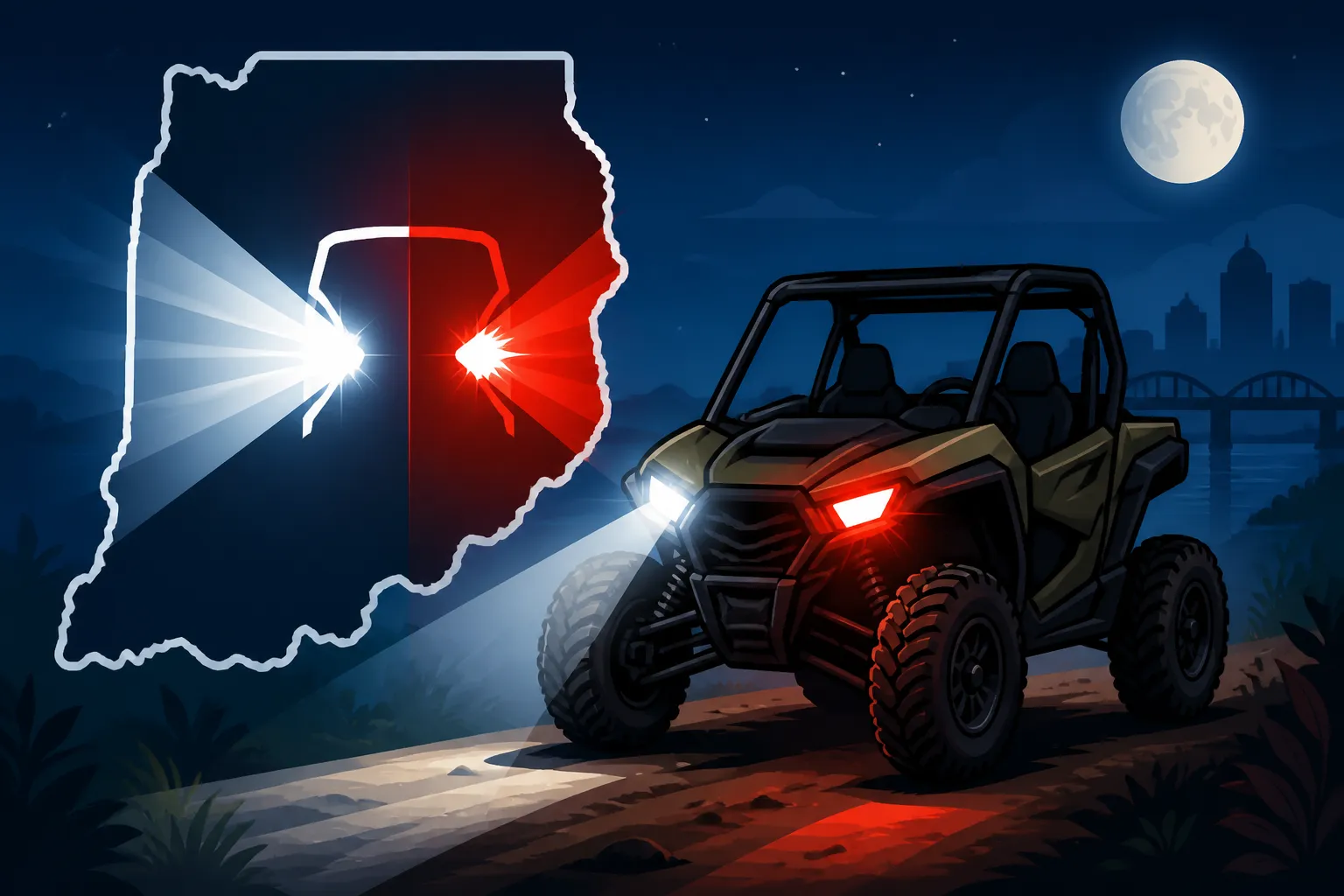
The "dual light" rule in Vanderburgh County is pretty straightforward in its intent: if you're riding your ORV on a county road after dark, your machine must be equipped with two working headlights. It's not enough to have a single, bright center light or just auxiliary lights. The ordinance specifically calls for dual headlights, meaning two distinct, forward-facing illumination sources designed to act as primary headlights. This isn't just a suggestion; it's a mandatory requirement aimed at significantly increasing your visibility to other drivers and helping you better perceive the road ahead.
Think about the conditions you might encounter: unlit rural roads, winding paths, or areas with sudden dips and rises. A single headlight, no matter how powerful, creates a narrower field of vision, making it harder to spot wildlife, pedestrians, or unexpected obstacles. Two headlights, properly aimed, provide a wider, more comprehensive spread of light, reducing blind spots and giving you more time to react. This mandate directly addresses the inherent dangers of limited visibility that come with night riding on roads shared with traditional vehicles.
The Rationale Behind Local Ordinances
It’s easy to feel frustrated by varying local rules when you just want to enjoy your ride, but these ordinances are often born out of specific local concerns and conditions. Vanderburgh County, like many populous areas, deals with a mix of rural roads and suburban interfaces where ORVs might be present. The "dual light" rule, alongside other specific requirements like [Vanderburgh's Eighteen-Year-Old Operator Rule] and [Vanderburgh's Insurance Certificate Requirement], reflects a desire to enhance safety for all road users, not just ORV operators.
Local authorities weigh factors such as traffic density, road design, historical accident data, and community feedback when crafting these rules. For instance, if there's been an increase in nighttime incidents involving ORVs with insufficient lighting, a rule like the dual light mandate becomes a common-sense safety measure. These ordinances fill gaps where state law might be less specific, allowing counties to tailor regulations to their unique environments and protect their residents. It’s a balancing act between providing recreational opportunities and ensuring public welfare.
Broader Nighttime Visibility Requirements
While the "dual light" rule specifically addresses forward illumination, Vanderburgh County's ordinance, and general safe riding practices, extend to other aspects of nighttime visibility. It's not just about what you can see, but what others can see of you. This means ensuring your ORV has working taillights, brake lights, and adequate reflectors. After all, if you’re riding at night, you’re likely sharing the road with vehicles coming from all directions.
Beyond the lights on your machine, consider your personal visibility. Wearing reflective gear, such as vests or strips on your helmet and clothing, can make a huge difference, especially on darker roads where your ORV's lights might not be enough to grab a driver's attention from a distance. Some riders even add reflective tape to their machines for extra passive visibility. Think of it as a holistic approach to being seen. It's about presenting a clear, unmistakable presence to anyone else on the road, regardless of their angle of approach.
Essential Lighting Upgrades for Vanderburgh County Compliance
Meeting Vanderburgh County's dual light rule, and generally making your ORV safer for night riding, might mean looking beyond your machine's factory-installed lighting. Stock lights are often designed for basic off-road trail use, not necessarily for shared road environments after dark. The good news is there's a huge market for aftermarket lighting solutions that can significantly improve your visibility and compliance.
Choosing the Right Headlights for Your ORV
When it comes to selecting headlights, you have a few primary options, each with its own benefits. Traditional halogen bulbs are common, but they tend to be less bright and draw more power. For optimal performance and compliance with a dual light mandate, many riders opt for LED (Light Emitting Diode) headlights. LEDs offer superior brightness, a crisper, whiter light that mimics daylight, and are much more energy-efficient, putting less strain on your ORV's electrical system. They also typically have a longer lifespan, meaning less frequent bulb replacements.
When evaluating LED headlights, look at the lumen output (how much light they produce) and the beam pattern. You'll want a pattern that provides a good spread for peripheral vision but also a strong central beam for distance. Companies like SuperATV offer a range of aftermarket LED headlights designed to integrate seamlessly with various ORV models, providing not only brighter illumination but also a durable, weather-resistant build. When choosing, ensure the lights are designed for automotive use and can withstand the vibrations and elements of ORV riding.
Integrating Auxiliary Lighting for Enhanced Safety
While the dual light rule specifies headlights, supplementing them with auxiliary lighting can provide an additional layer of safety and visibility. Light bars and cube lights, for example, can be mounted to your roll cage, bumper, or roof to cast a wider flood of light or a more focused spot beam. These are excellent for filling in dark areas that even dual headlights might miss, especially when navigating turns or uneven terrain. While they might not count as the primary headlights for the dual light rule, they certainly enhance your overall ability to see and be seen.
Many riders find that a combination of robust LED headlights and a well-placed LED light bar from a brand like SuperATV provides the perfect setup for both road compliance and aggressive off-road night riding. When installing auxiliary lights, always consider their aiming; you want them to illuminate the path without blinding oncoming traffic, especially on county roads. Some auxiliary lights come with different lens options, allowing you to choose between flood, spot, or a combination beam pattern to best suit your riding style and the conditions you expect to encounter.
Ensuring Taillight and Rear Visibility
Forward illumination is critical, but rear visibility is equally important. Vanderburgh County's ordinance implies that if you're riding at night, all standard vehicle lighting, including taillights and brake lights, must be fully operational. Your taillights serve as a constant indicator of your presence to anyone approaching from behind, while your brake lights signal deceleration. It's not just about meeting the letter of the law; it's about preventing rear-end collisions, which can be particularly dangerous for ORV riders.
Regularly check that all your rear lights are clean and functioning. Mud, dust, and debris can quickly obscure them, significantly reducing their effectiveness. Consider upgrading to brighter LED taillights if your stock ones are dim, as they offer quicker illumination and are often more visible in varying conditions. Additionally, ensure any required rear reflectors are intact and clean. Even if your machine has bright lights, a passive reflector can catch light from other vehicles, offering a backup visibility measure should your electrical system fail.
General Indiana Night Riding Laws Beyond Vanderburgh
While Vanderburgh County has its specific nuances, it's crucial to understand the broader Indiana state laws that apply to ORV operation, especially after dark. Many riders travel between counties or might not always stick to designated roads, so being aware of the general regulations is paramount for safe and legal riding throughout the state. [Indiana Fines for an Unregistered ORV] are universal, but what about night riding specifics?
State-Level Lighting Requirements (or lack thereof)
Indiana's state law on ORV lighting is often less prescriptive than local ordinances. Generally, state regulations emphasize that ORVs operated after sunset or before sunrise, or in conditions of limited visibility (like fog or heavy rain), must have at least one headlight and one taillight illuminated. The key here is "at least one." This is where local rules, like Vanderburgh's dual light mandate, can add extra requirements. So, while one headlight might technically meet state minimums, it won't suffice in Vanderburgh.
This difference highlights the importance of checking local ordinances wherever you plan to ride. The state sets a baseline for safety, but counties and even cities can impose additional rules based on their specific needs and concerns. It's a common point of confusion and frustration for ORV owners, but ultimately, the local rule supersedes the state minimum if it's more restrictive. Always assume the most stringent rule applies when in doubt.
Helmet and Other Safety Gear at Night
Regardless of whether you're in Vanderburgh County or any other part of Indiana, certain safety gear is non-negotiable, especially after dark. The [Indiana Helmet Law for Riders Under 18] is a prime example: any ORV operator or passenger under the age of 18 must wear a DOT-approved helmet. This rule applies everywhere, including on private property, and is even more critical when riding at night when visibility is reduced and reaction times might be slower.
Beyond helmets, eye protection is crucial. Dust, bugs, branches, and even the glare from oncoming lights can impair your vision. Goggles or a full-face helmet visor are essential. For night riding, clear lenses are a must. Consider gloves for better grip and protection, and sturdy boots that cover your ankles. As mentioned before, reflective clothing can significantly enhance your personal visibility, making you stand out even more to other drivers. Don's forget a decent jacket, even in summer, as temperatures can drop quickly after dark, and you'll want protection from the wind.
Operating Under the Influence Rules for ORVs
This cannot be stressed enough: the rules regarding operating a vehicle under the influence apply just as strictly to ORVs as they do to cars and trucks. [Indiana DUI Rules for ORV Riders] are clear: operating an ORV while intoxicated is illegal and carries severe penalties, including fines, license suspension, and even jail time. The dangers are amplified at night when visibility is poor and hazards are harder to spot.
Even a small amount of alcohol can impair your judgment, coordination, and reaction time—all critical faculties for safely operating an ORV, especially in challenging conditions. The risks extend beyond just legal repercussions; riding impaired significantly increases your chances of an accident, endangering yourself, your passengers, and anyone else on the road or trail. Always ride sober, and ensure anyone you're riding with adheres to the same standard. It's a fundamental aspect of responsible ORV ownership and operation. [Indiana Open Container Rules on an ORV] are also in effect, so keep that in mind.
Practical Steps for Safe Night Riding in Vanderburgh
Getting ready for a night ride in Vanderburgh County involves more than just flipping on your lights. It requires thorough preparation, an understanding of the local landscape, and carrying the right gear. Don't underestimate the difference these practical steps can make in ensuring a safe and enjoyable experience.
Pre-Ride Checks and Maintenance
Before you even think about hitting the county roads at night, a comprehensive pre-ride check of your ORV is absolutely essential. Start with your lighting system:
- Headlights: Are both functioning brightly? Are they clean? Are they aimed correctly to illuminate the road without blinding others?
- Taillights and Brake Lights: Do they light up clearly? Do your brake lights activate when you press the brake pedal?
- Auxiliary Lights: If you have them, are they working and properly aimed?
- Wiring: Give a quick visual inspection to ensure no wires are loose, frayed, or exposed.
- Battery: Night riding draws more power. Is your battery charged and in good health?
Beyond lights, check your tires, brakes, fluid levels, and overall mechanical condition. A breakdown at night, especially in a rural area, can quickly turn a fun outing into a frustrating or even dangerous situation. Proactive maintenance from a brand like SuperATV ensures that all your components are ready for the demands of nighttime operation.
Understanding Vanderburgh's Designated ORV Roads
Knowing where you can legally ride at night in Vanderburgh County is just as important as knowing how to equip your machine. Vanderburgh has a [Vanderburgh County's Marked Road Map] that designates which roads are open to ORV traffic. These maps often use color coding (like [What a Red Road Means on Vanderburgh's ORV Map] vs. [What a Blue Road Means on Vanderburgh's ORV Map]) to indicate restrictions or permissible routes. It’s crucial to study this map before you head out, especially if you're planning a night ride.
Remember that [Why Evansville and Darmstadt Stay Closed]: incorporated city limits and certain densely populated areas are typically off-limits for ORVs, even if they're within Vanderburgh County. Sticking to the designated county roads is not only a matter of legality but also safety, as these routes are generally chosen for their suitability for ORV traffic and typically have lower speed limits or less heavy traffic than major thoroughfares. Riding off these designated roads, even inadvertently at night, could lead to citations or even dangerous encounters.
What to Carry During a Night Ride
Being prepared means more than just a functioning ORV. When riding at night, having a few essential items can make a big difference:
- Documentation: Always carry your ORV registration (BMV decal certificate), proof of insurance (which may be required by local ordinances like Vanderburgh's), and your driver's license. [What an Indiana Officer Checks Roadside] often includes these items.
- Emergency Kit: A basic first-aid kit, a small tool kit for minor repairs, a tire repair kit, and a small air compressor are invaluable.
- Communication: A fully charged cell phone is a must. Be aware that some rural areas might have [Cell Dead Zones in Southern Indiana], so consider informing someone of your route and estimated return time.
- Extra Light Sources: Even with dual headlights, carrying a powerful flashlight or headlamp can be a lifesaver if you need to make a roadside repair or check your machine.
- Water and Snacks: Even on a short ride, staying hydrated and having some energy bars can prevent fatigue.
Having these items on hand prepares you for unexpected situations and allows you to address minor issues without being stranded in the dark.
Consequences of Non-Compliance and What to Expect
Ignoring local ordinances, particularly those related to safety and visibility like Vanderburgh County's dual light rule, can have serious consequences. It's not just about potentially getting a ticket; it's about risking your safety and the safety of others. Understanding these ramifications can help underscore the importance of proper preparation and compliance.
Fines and Penalties for Lighting Violations
Operating an ORV without the required lighting in Vanderburgh County can result in a citation. [Vanderburgh's $75 First Fine] is a typical starting point for violations of their local ORV ordinance. However, it's important to remember that penalties can escalate. Repeated offenses, or violations combined with other infractions (like reckless driving or operating in an unauthorized area), can lead to significantly higher fines.
In Indiana, many ORV violations are classified as Class C ORV infractions, which can carry penalties of up to $500, not including court costs. So, while a first lighting ticket might be modest, don't assume it will stay that way. The goal of enforcement is not just to punish, but to deter unsafe behavior and ensure compliance, ultimately preventing accidents. If an officer determines your machine is unsafe due to inadequate lighting, they might even prohibit you from continuing your ride until the issue is rectified.
Interaction with Law Enforcement
If you're riding at night on county roads, especially in an area with specific ordinances like Vanderburgh, expect that law enforcement officers may conduct roadside stops to ensure compliance. A typical interaction might involve an officer checking your registration, insurance, driver's license, and, pertinent to this discussion, your machine's lighting. They'll be looking to confirm you have two functioning headlights, adequate taillights, and potentially other safety gear like helmets (especially for minors).
Cooperation is key during these stops. Present your documentation promptly and answer any questions respectfully. If you're compliant, the interaction will likely be brief. If you're found to be in violation, the officer will explain the infraction and issue a citation. Arguing or being uncooperative will not typically change the outcome and can sometimes lead to additional charges. Remember, officers are there to enforce the rules designed for public safety.
Insurance Implications of Unsafe Equipment
Beyond fines and legal troubles, operating an ORV with non-compliant equipment, like insufficient lighting, can have significant implications for your insurance coverage. Most ORV insurance policies require that your machine be operated in a safe and legal manner. If you're involved in an accident at night and it's determined that your inadequate lighting contributed to the incident—for example, if another driver didn't see you because you only had one headlight in a "dual light" zone—your insurance provider might deny or limit coverage.
This could leave you personally liable for damages to your machine, other vehicles, property, or even medical expenses for injuries. The cost of a few aftermarket lights pales in comparison to the potential financial burden of an uncovered accident. Always ensure your machine is legally equipped for the specific riding environment and time of day to protect both yourself and your financial well-being. Check your policy to understand what it covers, especially when riding on public roads.
ORV Lighting Options Comparison for Night Riding in Indiana
| Feature | Stock Halogen Lights | Aftermarket LED Headlights | Auxiliary LED Light Bars / Pods | Reflective Gear (Vest, Tape) |
|---|---|---|---|---|
| Primary Use | Basic trail riding, general use | Primary road & trail illumination | Supplemental lighting, off-road | Passive visibility, personal safety |
| Vanderburgh Dual Light Compliance | May not meet dual output/brightness | Typically fully compliant | Not primary headlights, but helps | Enhances rider visibility |
| Brightness (Lumens) | Moderate | High to Very High | Very High (flood/spot) | N/A (reflects existing light) |
| Energy Consumption | High | Low | Moderate to High | N/A |
| Lifespan | Short to Moderate | Long | Long | Very Long |
| Durability | Moderate | High (shock/weather resistant) | High (shock/weather resistant) | Moderate (fabric, adhesive) |
| Visibility for Others | Fair | Excellent (crisp, white light) | Excellent (can be very intense) | Excellent (when hit by light) |
| Cost | Low (replacement bulbs) | Moderate to High (initial investment) | Moderate to High | Low |
| Installation | Often plug-and-play | Can be plug-and-play or minor wiring | Requires wiring & mounting | Easy (wear/stick on) |
| Pros | Inexpensive, simple | Bright, efficient, durable, legal | Powerful, versatile, fills gaps | Always on, no power needed, crucial |
| Cons | Dim, hot, less durable, high draw | Higher initial cost | Can blind others if not aimed correctly | Only works when light hits it |
Disclaimer
This article is for general informational purposes only and does not constitute professional advice. Laws, prices and regulations vary by location and change over time. Consult a qualified professional for guidance on your specific situation.