Why an Indiana County Cannot Cap Weight Below 2,000 Pounds
It’s a tale as old as time for Indiana off-road vehicle (ORV) enthusiasts: you get your machine registered, you’re ready to hit some trails, and then you start hearing whispers about local road access. The moment you start digging into county ordinances, your head can start spinning. One county says one thing, the next says another, and suddenly, you're not sure if your trusty side-by-side is even allowed to cross a paved road, let alone cruise down a designated county lane. It’s incredibly frustrating when you’re just trying to enjoy your machine responsibly, only to be met with a confusing maze of rules that seem to change every few miles. This guide is here to shed some light on one specific, often misunderstood aspect of Indiana ORV road access: why state law prevents counties from capping your machine’s weight below 2,000 pounds. We'll explore the state's role, the reasons behind this threshold, and what this means for you as an ORV owner navigating Indiana's diverse road network.
The Frustration of Local Road Access for ORVs
Let's be honest, trying to figure out where you can and can't ride your ATV or UTV on public roads in Indiana can feel like trying to solve a Rubik's Cube blindfolded. Many riders just want to be able to get from point A to point B without having to trailer their machine everywhere, or maybe connect a few trails that are just a short hop down a county road. But the reality on the ground is often far more complicated, leading to a lot of confusion and, frankly, a lot of unnecessary headaches for dedicated riders.
The Patchwork of County Rules
One of the biggest pain points for Indiana ORV owners is the sheer inconsistency of local rules. You might be perfectly legal to ride a certain type of road in one county, only to cross into the next one and find yourself in violation of a completely different set of regulations. This isn’t just an inconvenience; it can be downright stressful. Imagine planning a weekend trip, researching the rules for your destination county, only to find out halfway through your journey that an adjacent county you need to pass through has entirely different restrictions you weren't aware of. It makes spontaneous rides nearly impossible and forces riders to become amateur legal scholars just to avoid a hefty fine or, worse, having their machine impounded.
This patchwork creates an environment where good intentions can easily lead to unintentional infractions. You want to follow the rules, but when the rules are unclear, contradictory, or constantly shifting from one jurisdiction to another, it becomes incredibly difficult. Riders often express feeling targeted or misunderstood because the regulations don't seem to account for the practical realities of ORV ownership and use. It’s not about wanting to break the law; it’s about wanting clear, consistent guidelines that allow for safe and responsible enjoyment of our machines without fear of arbitrary enforcement.
Why Owners Eye Local Roads
So, why is road access such a big deal for ORV owners in the first place? It really boils down to convenience, connectivity, and sometimes, even supporting local businesses. For many, their ORV isn't just a recreational toy; it's a utility vehicle used on their property, or a way to access hunting or fishing spots that are just off the beaten path. Being able to legally drive a short distance on a county road can eliminate the need for an expensive truck and trailer setup, saving time, fuel, and wear and tear on your tow vehicle.
Consider a scenario where you live just a mile or two down a gravel road from a designated ORV trail system. Without road access, that short distance becomes a logistical challenge, requiring you to load your machine onto a trailer, drive the mile, unload, and then reverse the process later. It’s inefficient and detracts from the pure enjoyment of riding. Furthermore, allowing ORVs on certain county roads can boost local economies. Riders might use those roads to access gas stations, restaurants, or small shops in nearby towns, injecting money into communities that often rely on tourism and outdoor recreation. It creates a more integrated and user-friendly experience, making the sport more accessible and enjoyable for everyone involved. For a deeper dive into the specifics of where you might be able to ride, you might find [Indiana Counties That Allow ORVs on Roads] particularly helpful.
Indiana State Law: Setting the Baseline for ORV Regulation
When it comes to the rules governing off-road vehicles, it's crucial to understand the hierarchy of laws. While local counties certainly have a role in regulating ORV use within their borders, they aren't entirely free to make up any rule they wish. Indiana state law provides a foundational framework, and in many instances, it 'preempts' or overrides local ordinances, especially when those local rules try to restrict something the state has already permitted or specifically addressed. This state-level guidance is what helps prevent local governments from imposing overly restrictive rules, like arbitrarily low weight limits on your ORV.
The State's Role in ORV Definitions
The State of Indiana plays a fundamental role in defining exactly what an "off-road vehicle" is in the first place. This definition isn't just some dry legal jargon; it's the bedrock upon which all other regulations, both state and local, are built. Without a clear, statewide definition, every county could decide for itself what constitutes an ORV, leading to even more chaos and inconsistency than we already see. The state's definition typically covers machines designed for off-highway use, including ATVs (all-terrain vehicles), UTVs (utility terrain vehicles or side-by-sides), and dirt bikes, amongst others. Understanding [How Indiana Defines an Off-Road Vehicle] is absolutely critical because it dictates which machines are subject to ORV specific laws, and subsequently, which are affected by weight restrictions and other regulations.
This statewide definition ensures a degree of uniformity across Indiana. It means that whether you're riding in the northern part of the state or down in the southern hills, the fundamental classification of your machine remains consistent. This consistency is vital for manufacturers, dealers, and owners alike, as it provides a common language for discussing and regulating these vehicles. It prevents a situation where a side-by-side might be considered an ORV in one county but something entirely different in another, which would be an administrative and practical nightmare for everyone involved.
Preemption and the 2,000-Pound Threshold
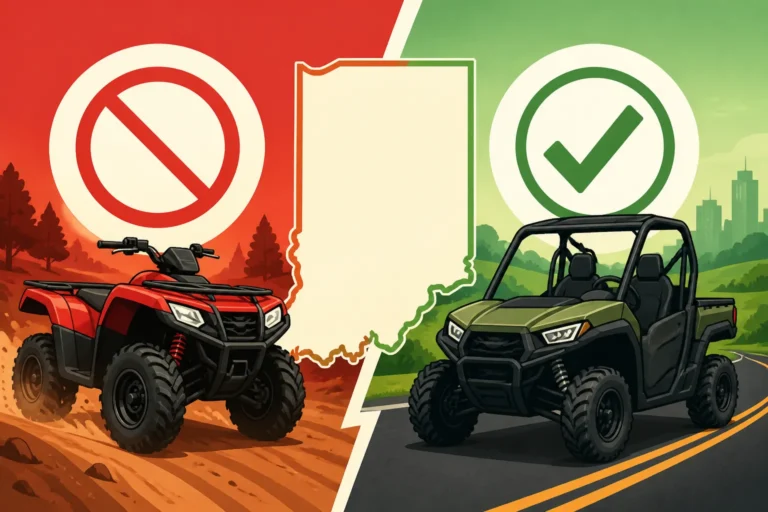
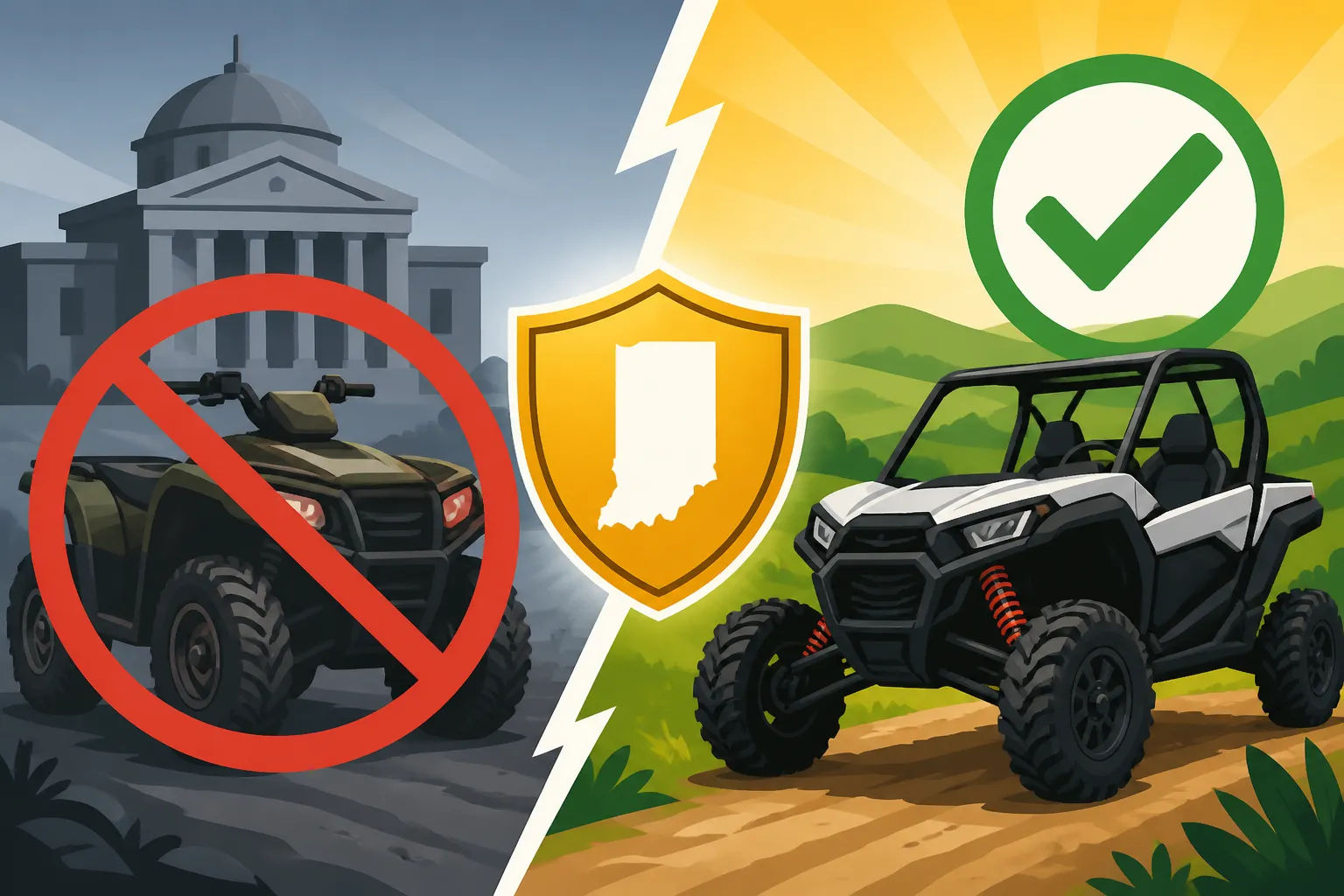
This brings us to the core issue: state preemption, particularly concerning the 2,000-pound weight threshold. Indiana state law specifically includes provisions that prevent local government units, like counties, from enacting ordinances that would impose a weight limit on ORVs below 2,000 pounds when those vehicles are being operated on designated county roads. This means that while a county can decide if and where ORVs are allowed on their roads, they cannot, by law, tell you that your 1,500-pound UTV is too heavy for a road they've already opened to ORV traffic. The legislature specifically stepped in to create this limit to prevent overly restrictive local interpretations that could effectively ban many common ORVs from public access. For a deeper understanding of this specific legislative protection, you'll want to review [Why Your County Cannot Cap Weight Below 2,000 Pounds].
The concept of preemption is powerful. It essentially means that the state has determined a minimum standard or a maximum restriction, and local governments cannot pass laws that are more restrictive than what the state allows. In this case, the 2,000-pound floor is designed to protect ORV owners from counties that might try to limit ORV access through indirect means, such as setting an unrealistically low weight cap. This state-mandated minimum weight ensures that a significant portion of the ORV population, including many popular side-by-sides and larger ATVs, retains the potential for legal road access wherever a county decides to open its roads. It provides a crucial layer of protection for riders against arbitrary local restrictions.
Understanding the "Why" Behind the 2,000-Pound Limit
You might wonder why Indiana specifically landed on 2,000 pounds as the magic number for local weight limits. It's rarely arbitrary when laws are set at the state level; there's usually a careful consideration of various factors, aiming to strike a balance between different interests. For ORV regulations, this often involves safety, practicality, and ensuring that a broad range of machines can be legally operated without undue burden on owners or local governments. The 2,000-pound threshold is a reflection of these considerations, particularly in acknowledging the evolution of ORV design and usage.
Balancing Safety and Accessibility
One of the primary reasons for the 2,000-pound limit is to balance road safety with accessibility for a wide array of ORVs. On one hand, the state has a vested interest in ensuring that vehicles operating on public roads, even county roads designated for ORVs, meet certain baseline safety criteria. Extremely heavy or oversized vehicles could pose different challenges to road infrastructure or present unique safety concerns. However, the state also recognizes that many modern ORVs, particularly side-by-sides, are substantial machines designed for a variety of tasks, from recreation to utility.
By setting the limit at 2,000 pounds, Indiana aims to accommodate the vast majority of commonly available ORVs while still allowing local entities to address truly oversized or specialized equipment if they feel it's necessary for safety on specific road types. It prevents a county from making a blanket rule that would exclude most UTVs, for example, under the guise of safety, when in reality, many of these machines are perfectly capable of safe operation on low-speed county roads. This balancing act ensures that recreational opportunities aren't unnecessarily curtailed, and that the practical utility of these machines isn't overlooked by overly zealous local regulations. Many popular machines on the market today, especially those equipped with accessories from companies like SuperATV, can push their weight towards or even slightly above this threshold when fully loaded, making this state protection even more vital.
Protecting Common ORV Designs
Another significant factor in the 2,000-pound limit is the evolution and popularity of modern ORV designs, particularly multi-passenger utility terrain vehicles (UTVs), often called side-by-sides. These machines have become incredibly versatile, offering seating for two, four, or even six passengers, along with cargo beds, towing capabilities, and often more robust construction than traditional single-rider ATVs. Naturally, all these features add weight. A base model, two-seater UTV might weigh 1,200 to 1,500 pounds dry. Once you add a full tank of gas, a driver, a passenger, and some gear in the cargo bed – not to mention common modifications like a winch, upgraded tires, a roof, or a SuperATV lift kit – you can easily be looking at a machine weighing 1,800 to 2,000 pounds or more.
If a county were allowed to set a weight limit of, say, 1,000 or 1,200 pounds, it would effectively ban nearly all modern UTVs from their roads, even if those roads were otherwise designated for ORV use. This would disenfranchise a huge segment of the ORV community. The state's 2,000-pound threshold acknowledges the reality of today's ORV market, ensuring that popular and widely used machines remain eligible for road access wherever local ordinances permit. It’s a pragmatic approach that prevents local regulations from becoming outdated or impractical in the face of current vehicle designs and consumer preferences. This protection is a significant benefit for anyone who owns a modern side-by-side and wishes to utilize it on approved public roads.
What a County Can Regulate Regarding ORV Road Use
While it's important to understand what Indiana state law prevents counties from doing (like capping ORV weight below 2,000 pounds), it's equally important to know what counties can legitimately regulate. Local governments still retain significant authority over their road networks, and this includes setting rules for how off-road vehicles can be used on them. This ensures that while riders have some protections, local communities can still manage public safety, infrastructure, and local quality of life concerns.
Designated Roads and Time Restrictions
One of the primary powers retained by Indiana counties is the ability to designate which specific county roads, if any, are open to ORV traffic. This isn't a free-for-all; counties are not required to open all their roads to ORVs. Instead, they typically go through a process of evaluating their road network, considering factors like traffic volume, road conditions, residential areas, and safety. They might designate certain rural roads, gravel roads, or specific segments as permissible for ORV use, while keeping busier or more densely populated areas closed.
In addition to specific road designations, counties can also impose time-of-day restrictions. For instance, an ordinance might allow ORV use only during daylight hours, or prohibit it during late night and early morning hours to reduce noise disturbances in residential areas. These restrictions are often a compromise, allowing some level of access while addressing concerns from local residents. Understanding [How a County Highway Department Designates ORV Roads] is key to knowing where you can legally ride, and these designations are usually clearly outlined in the county's official ordinance. Always check for signs, maps, or official publications from the county highway department or sheriff's office.
Equipment, Licensing, and Insurance Requirements
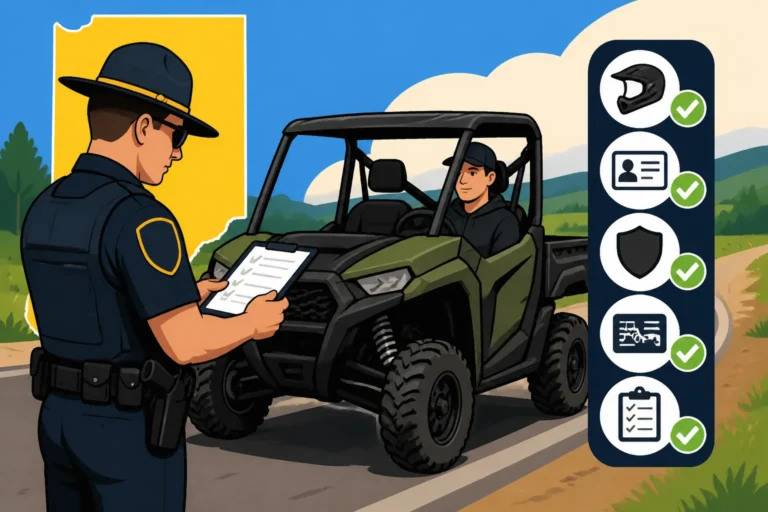
Beyond designating roads and setting time limits, counties also have the authority to establish requirements for the ORVs themselves and their operators. This typically includes mandates for specific safety equipment, operator licensing, and proof of insurance. For example, a county ordinance might stipulate that all ORVs operating on designated roads must have working headlights, taillights, brake lights, and turn signals, even if the state law doesn't explicitly require all of these for off-road use. They might also require a rear-view mirror or a horn, equipment that enhances safety when sharing roads with other vehicles.
Regarding operators, while Indiana state law does not require a driver's license to operate an ORV off-road, a county can certainly mandate that anyone operating an ORV on a public road within their jurisdiction hold a valid driver's license. Similarly, even though Indiana generally doesn't require ORV insurance for off-road use, a county can make it a condition for road access. For example, some counties, like Vanderburgh County, explicitly require proof of insurance to operate an ORV on their designated roads. It's crucial to understand these local requirements, as they directly impact your readiness to ride. For more details on these specific areas, you might want to look into [Indiana Driver's License Rules for ORVs] and [Indiana ORV Insurance Requirement] to ensure you're fully compliant before heading out.
| Category | What a County Cannot Regulate (Below 2,000 lbs) | What a County Can Regulate |
|---|---|---|
| Vehicle Weight | Impose a weight limit under 2,000 pounds | Designate specific roads for ORV use |
| Vehicle Type | Ban machines that fit state ORV definition | Require specific safety equipment (lights, mirrors, etc.) |
| Operator Age | Demand operators be over 18 if state allows less | Mandate a valid driver's license for road use |
| Insurance | Ban ORVs for lack of state-required insurance | Require proof of liability insurance for road use |
| Registration/Decal | Impose additional registration requirements | Set time-of-day restrictions for ORV operation |
| Helmet Use | Override state helmet laws for minors | Require helmets for all riders on designated roads (local decision within state law) |
Navigating Local Ordinances as an ORV Owner
It’s clear that owning and operating an ORV on designated county roads in Indiana requires more than just knowing how to handle your machine. It demands a proactive approach to understanding and adhering to the various rules and regulations that vary from one locale to the next. The good news is that with a bit of effort, you can arm yourself with the knowledge needed to ride legally and responsibly, and even become an advocate for the ORV community.
Researching Your Local County's Rules
The absolute first step for any ORV owner considering riding on local roads is to thoroughly research the specific ordinances in the county you plan to ride in. Do not assume that what applies in one county will apply in another. This due diligence can save you from fines, legal trouble, and a lot of frustration. The most reliable place to start your search is the county government's official website. Many counties publish their ordinances online, often under sections related to the sheriff's department, highway department, or county commissioners. Look for terms like "off-road vehicle ordinance," "ATV regulations," or "UTV rules."
If you can't find clear information online, don't hesitate to reach out directly. A phone call to the county clerk's office, the county highway department, or even the non-emergency line of the local sheriff's department can often provide the answers you need or direct you to the right source. Remember, these officials are often there to help clarify the rules. Additionally, joining local ORV clubs or online forums can be incredibly beneficial. Experienced local riders often have a wealth of knowledge about specific county ordinances and can point you to resources you might otherwise miss. Remember, a great starting point for this crucial research is [How to Find an Indiana County ORV Ordinance]. Don't forget to check if there are any special requirements for your specific machine, especially if it's a larger UTV equipped with accessories from a company like SuperATV.
Advocating for Responsible ORV Access
Beyond simply following the rules, there's a significant opportunity for ORV owners to become advocates for responsible access. If you believe your county could benefit from more clearly defined or expanded ORV road access, don't just sit back and hope things change. Local government officials are typically responsive to their constituents, especially when presented with well-reasoned arguments and clear proposals. This means attending county commissioner meetings, contacting your county council members, or even organizing with other local riders.
When advocating, focus on the positive impacts. Highlight how responsible ORV use can boost local tourism and economy, provide valuable utility for farmers and landowners, and offer healthy outdoor recreation for families. Emphasize your commitment to safety, environmental responsibility, and adherence to all regulations. If you can present solutions, such as proposing specific road segments that would work well for ORV traffic or offering to help post signage, your arguments will be much stronger. Remember, collective action often makes the biggest difference. Joining or forming a local ORV club can amplify your voice and demonstrate a unified commitment to responsible riding. By showing up, speaking out, and engaging constructively, you can help shape a future where ORV enthusiasts have clear, safe, and legal access to Indiana’s beautiful county roads.
Disclaimer
This article is for general informational purposes only and does not constitute professional advice. Laws, prices and regulations vary by location and change over time. Consult a qualified professional for guidance on your specific situation.