Indiana Counties That Opened Their Roads
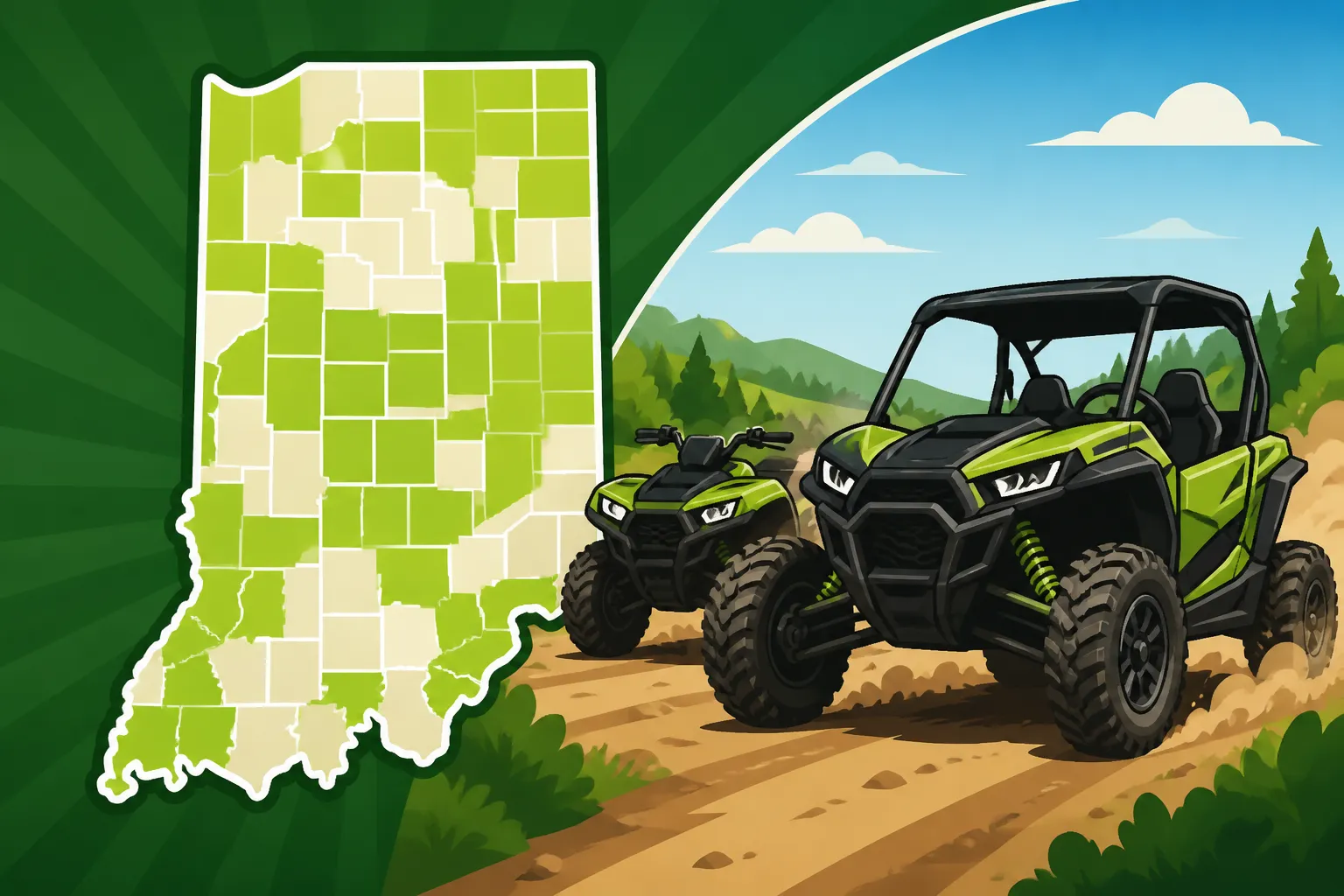
For any off-road vehicle (ORV) enthusiast in Indiana, one of the biggest headaches is figuring out where you can actually ride your ATV or UTV outside of designated trails. The default stance in our state has long been a firm "no" to ORVs on public roads, which can be incredibly frustrating when all you want to do is get to a trailhead, run a quick errand, or connect two pieces of property. This guide is here to shed some light on that murky situation, explaining not only why most roads are closed but, more importantly, which Indiana counties have taken the proactive step to open their roads to our beloved machines, and what you need to know to ride legally and safely within their borders.
The Default Rule: Why Indiana Roads Are Generally Closed to ORVs
It's a common misconception that if a road isn't explicitly marked as closed, it must be open. But when it comes to off-road vehicles in Indiana, the opposite is true. Unless a specific local ordinance says otherwise, your ATV or UTV is generally not permitted on public roads. This can feel like a real bummer, especially when you see similar vehicles cruising down roads in other states, or even on private property next to a public road here. The state's stance is rooted in a fundamental classification of these vehicles and a concern for public safety, which can often leave riders feeling misunderstood and limited.
The Legal Framework Behind the Ban
Indiana law defines off-road vehicles as machines primarily designed for off-highway use. This classification is key to understanding why they're generally excluded from paved roads, gravel roads, and even shoulders. Lawmakers, when crafting these definitions, typically focus on attributes like tire type, suspension travel, and lack of certain safety features common in street-legal vehicles (like turn signals, specific lighting, and safety glass). From a legislative perspective, these differences raise concerns about how ORVs interact with traditional traffic, particularly at higher speeds or in congested areas. The initial intent was to keep these powerful, agile machines in their natural habitat: the trails and private lands they were built for. This foundational legal perspective is the reason why counties have to go through a specific process to deviate from this default. It’s not just an arbitrary rule; it's deeply embedded in how the state categorizes and regulates vehicle types. If you've ever wondered why you can't just hop on the road, it boils down to this initial legal classification that sets ORVs apart from cars and trucks.
Understanding Limited-Access Highways
When we talk about public roads, it’s crucial to understand that there are different classifications. One particularly strict category is "limited-access highways." Think of major interstates, toll roads, and some divided state highways. These are designed for high-speed, uninterrupted traffic flow, and they are absolutely off-limits to ORVs, no matter what county you're in. There's no local ordinance or special permit that will allow you to ride your ATV or UTV on these types of roads. The dangers are simply too great, both for ORV operators and for other motorists traveling at much higher speeds. These highways often have specific entry and exit points, are typically multi-lane, and lack the shoulders or slow-speed designations that might make ORV travel even marginally safer. It's a hard and fast rule, and it's something every rider needs to keep firmly in mind: [Why You Cannot Cross a Limited-Access Highway]. Attempting to ride on or even cross these roads can lead to severe penalties and, more importantly, put lives at serious risk.
The Shoulder and Ditch Exception in Indiana
Now, there’s an important nuance to this "closed by default" rule that often confuses riders: the "shoulder and ditch" exception. Indiana law does allow ORVs to operate on the shoulder or within the ditch line of a public highway, provided certain conditions are met. This isn't a carte blanche to cruise down the road, but rather a specific allowance for limited use. You must be riding at a safe speed, as far to the right as possible, and not impeding regular traffic. This exception is primarily intended for scenarios like accessing adjacent property, moving between fields, or reaching a specific point where you can then enter private land or a designated trail. It's a small window of opportunity, but it’s conditional and not a loophole for general road riding. Understanding this distinction is key, because while it offers some flexibility, it doesn't mean the road itself is open for your enjoyment. It’s about careful, considerate movement along the very edge of the roadway, not becoming part of the flow of traffic. For more details on this, check out [The Shoulder and Ditch Exception in Indiana].
How Counties Gain the Authority to Open Roads
Given the state's default "no" stance, it takes a deliberate and often lengthy process for individual counties to open their roads to ORV traffic. This isn't something that happens overnight or on a whim; it requires local leadership to recognize the potential benefits to their community, weigh the safety concerns, and then navigate a specific legislative path. Riders often express frustration that this isn't a statewide initiative, but the beauty (and sometimes the challenge) of Indiana law is that it grants local governments a degree of autonomy to address the unique needs and desires of their constituents.
The Role of Local Ordinances
The key mechanism for opening county roads is through a local ordinance. This is a formal law passed by the county commissioners or council, specifically outlining where and under what conditions ORVs are permitted. It's not just a casual decision; it's a legally binding document that carries the weight of law within that county's jurisdiction. These ordinances typically stipulate everything from permitted road types (e.g., all county roads, only gravel roads, or specific designated routes) to operational rules, such as speed limits, hours of operation, and required safety equipment. The process usually involves public hearings, allowing residents, law enforcement, and ORV enthusiasts to voice their opinions and concerns. This community input is vital in shaping an ordinance that balances recreational access with public safety. Without such an ordinance, the state's default rules remain in effect, keeping those roads closed.
Steps a County Must Take
So, what does it take for a county to actually open its roads? It's a multi-step process. First, there's usually a local push, perhaps from a group of riders, landowners, or businesses seeing the economic benefit of increased ORV tourism. Then, the idea has to gain traction with county commissioners or the county council. This often involves research into other counties' experiences, impact studies on road wear, and discussions with local law enforcement about enforceability. Once a proposal is drafted, it moves through public meetings, allowing for feedback and amendments. Finally, if approved, the ordinance is formally adopted. But it doesn't stop there. The county then often needs to designate which roads are open, which might involve signage, maps, and clear communication to residents and visitors. They might even specify particular speed limits or times of day when ORVs are permitted. It’s a comprehensive undertaking, demonstrating a real commitment from local government to integrate ORV use responsibly. For a general overview of this process, you might find [How an Indiana County Opens Its Roads] helpful.
Limitations on County Authority
While counties have the power to open their roads, that power isn't absolute. State law places certain limitations on what a local ordinance can demand or prohibit. For example, a county cannot generally require an ORV operator to possess a specific ORV-specific license beyond what's already required for vehicle operation on public roads (i.e., a standard driver's license if required). They also can't cap machine weight below 2,000 pounds, ensuring that a broader range of UTVs and larger ATVs aren't arbitrarily excluded. Furthermore, as mentioned earlier, counties absolutely cannot open limited-access highways. Their authority is primarily over their own county roads and is always subservient to overriding state and federal laws. These limitations are in place to prevent a patchwork of overly restrictive or contradictory rules that would make it impossible for riders to navigate county lines. It ensures a baseline level of consistency, even as counties tailor regulations to their specific local environments.
Hancock County: A Pioneer in Road Access
Hancock County stands out as one of the earlier adopters in Indiana to embrace a more ORV-friendly approach to its county roads. Nestled just east of Indianapolis, it's a county that understands the appeal of rural living and the recreational opportunities it provides. Their move to open certain roads was a welcome development for many riders who previously faced significant hurdles simply getting their machines from one point to another without trailering. It's a testament to local initiative, showing how a community can proactively address the needs of its residents and visitors while still prioritizing safety.
Navigating Hancock County's Designated Roads
In Hancock County, the general understanding is that most county roads outside of municipal limits are open to ORVs, unless specifically posted otherwise. This is a significant shift from the state's default rule. Instead of having to find a map of designated open roads, riders can typically assume access, which simplifies planning immensely. However, it's critical to understand that this typically excludes state highways (like US 40, State Road 9, etc.) that pass through the county, as these fall under state, not county, jurisdiction. When you're cruising down a gravel or secondary paved county road in Hancock, you're likely legal, but always keep an eye out for signs. It's about being aware of your surroundings and understanding that the "county road" designation is key. This open approach provides incredible flexibility for residents who use their machines for both work and recreation, allowing them to connect farm fields or simply enjoy a scenic ride through the countryside without the constant worry of trespassing.
Specific Rules and Requirements for Riders
Hancock County's ordinance, like most, comes with specific stipulations that riders must adhere to. While the general accessibility is fantastic, it's not a free-for-all. Key rules often include:
- Speed Limits: ORVs are typically required to adhere to the posted speed limits for the road, but often with an additional, lower ORV-specific cap (e.g., 35 mph or less), regardless of the higher posted car speed limit. Always assume slower is safer and check the specific ordinance.
- Operating Hours: Some counties restrict ORV operation to daylight hours. Check Hancock's current ordinance for specifics, as night riding often requires enhanced lighting and raises additional safety concerns.
- Equipment: Your ORV must be equipped with essential safety features, including working headlights, taillights, brake lights, and a horn. While not explicitly part of the county ordinance, it’s always a good idea to ensure your machine is in top condition. If you’re looking for robust lighting solutions, products from SuperATV are often a popular choice among riders looking to upgrade for both trail and occasional road use, ensuring maximum visibility for you and other road users.
- Operator Age and Licensing: Generally, operators must possess a valid driver's license to operate an ORV on county roads. Age restrictions also typically apply, often mirroring state laws for motorized vehicle operation on public ways. It's crucial to ensure every rider in your group is compliant before hitting the road.
What to Expect When Riding in Hancock
Riding in Hancock County on its open roads can be a fantastic experience, offering a unique blend of rural charm and accessibility. You might encounter a mix of vehicle types, from tractors to cars, so defensive driving is always a must. Expect gravel roads that can be dusty in dry conditions and muddy after rain, requiring proper tires and careful handling. Paved county roads will be smoother but still require vigilance for unexpected turns or driveways. The community is generally accustomed to seeing ORVs, but courtesy and respect are paramount. Slow down around homes, yield to other traffic, and avoid kicking up excessive dust. The goal is to be a good neighbor and ensure this privilege continues for all riders. Keep your [Indiana ORV Registration and Insurance Proof] handy, as law enforcement may conduct roadside checks, just like they would for any other vehicle.
Dearborn County: Embracing ORV-Friendly Routes
Heading southeast into Indiana, Dearborn County presents another example of a community that has thoughtfully opened its roads to off-road vehicles. This county, known for its scenic Ohio River views and rolling hills, recognized the potential for ORVs to enhance both recreation and local access. Their approach, codified in specific sections of their local ordinance, provides a clear framework for riders to enjoy the county's rural beauty from the seat of their ATV or UTV.
Dearborn County's Section 70.04 Explained
Dearborn County's provisions for ORV use on public roads are often found within specific sections of their local code, such as "Section 70.04" (the exact number might vary over time, so always double-check the current ordinance). This section typically outlines the legislative intent, which often includes promoting recreation, assisting agricultural operations, and providing access to public and private lands. It then delineates which roads are open – generally, all county roads outside of incorporated city and town limits, unless otherwise posted. This is a broad allowance that simplifies navigation for riders. The ordinance will explicitly state that state highways and limited-access roads remain off-limits, reinforcing the state's overarching regulations. Understanding the spirit and letter of Section 70.04 is essential for any rider planning to explore Dearborn County.
Operator and Machine Requirements in Dearborn
To ride legally in Dearborn County, operators and their machines must meet certain criteria, which are standard across many ORV-friendly counties:
- Operator Age and License: Typically, operators must be at least 18 years old and possess a valid driver's license. This aligns with safety concerns about younger, less experienced operators mixing with conventional road traffic.
- Machine Requirements: Your ATV or UTV must be equipped with essential road-going safety features. This includes:
- Working headlights (at least one, often two for UTVs, for visibility at all times).
- Taillights and brake lights.
- A rearview mirror.
- A functional horn.
- A muffler to limit noise.
- Fenders or mud flaps to prevent debris from being thrown.
- The ORV must also display a valid [Indiana ORV Decal Placement] and be registered with the state, ensuring it's recognized as a legal vehicle.
- Insurance: Proof of liability insurance is a non-negotiable requirement. This protects you and others in the event of an accident. While specific limits aren't stated here, you'll want to ensure you meet or exceed state minimums. For options, you can research various providers that offer [Indiana ORV Insurance Requirement].
These requirements ensure that machines are adequately visible and controllable, and that operators are accountable, aligning with the safety standards of any vehicle on public roads.
Where ORVs Are Permitted to Ride
In Dearborn County, the general rule is that ORVs are permitted on all county roads within the unincorporated areas. This means you can typically traverse gravel roads, paved two-lane county roads, and connect to various points of interest as long as you stay off state and federal highways. This wide-ranging access is a major draw for riders, allowing for extended scenic loops and practical transportation. However, it's important to differentiate between "county roads" and roads within city or town limits, such as Lawrenceburg, Aurora, or Greendale. These municipalities often have their own separate ordinances, and most typically prohibit ORVs on their streets unless specifically designated. Always consult local signage and the specific county ordinance to confirm where you can and cannot ride. When you're considering a longer ride or bringing multiple machines, remember that each machine needs its own valid [Indiana ORV Trail Permit Cost] if you're also planning to hit state-operated trails, even if you are just using county roads for access.
Vanderburgh County: A Detailed Look at Their Ordinance
Vanderburgh County, located in the far southwest corner of Indiana and home to Evansville, has one of the more comprehensive and detailed ordinances regarding ORV road use. Recognizing the growing popularity of these vehicles, the county commissioners enacted specific regulations to manage ORV traffic on its roads. This ordinance is a great example of how a county can open roads while simultaneously implementing robust safety measures and clear guidelines, often depicted with a color-coded map to help riders visualize permissible areas.
Understanding Vanderburgh's Color-Coded Map
Vanderburgh County is unique in its use of a color-coded map to designate ORV-friendly roads. This visual tool is incredibly helpful for riders, as it explicitly shows which county roads are open and which remain closed.
- Green or Blue Roads: These typically represent designated ORV routes. These are the roads where you can legally operate your ATV or UTV. These routes are usually carefully chosen to minimize conflict with high-traffic areas and to connect rural parts of the county. For instance, [What a Blue Road Means on Vanderburgh's ORV Map] might indicate certain permissible routes.
- Red Roads: These signify county roads where ORV operation is not permitted. These might be roads with higher traffic volumes, those near residential areas where noise is a concern, or connecting points to state highways. [What a Red Road Means on Vanderburgh's ORV Map] is a clear signal to avoid those routes.
This visual system removes much of the guesswork, but it places the responsibility squarely on the rider to consult the map before heading out. Relying on an outdated map or simply assuming could lead to a citation. It's an excellent example of a county trying to make it as clear as possible for riders to comply.
Operator Age and Insurance Requirements
Vanderburgh County has quite specific requirements for operators and machines:
- Operator Age: Unlike some other counties, Vanderburgh typically mandates that an ORV operator must be at least 18 years old to ride on designated county roads. This is a stricter age requirement than for operating some other motorized vehicles on private land and emphasizes the county's focus on mature, experienced operators sharing public roads.
- Driver's License: Operators must possess a valid driver's license. This ensures a basic level of driving competency and accountability.
- Insurance: Vanderburgh County's ordinance requires operators to carry proof of liability insurance. This isn't just a recommendation; it's a legal mandate. This means you need to have a current insurance certificate on your person (or in your machine) that meets the state's minimum liability coverage. This protects you financially in the event of an accident and demonstrates responsible ownership. You need to ensure your policy specifically covers ORV operation on public roads, as some policies might only cover off-road use. If you're looking for competitive rates, it's worth checking with multiple providers to find the [Cheapest ATV Insurance in Indiana] that meets Vanderburgh's specific requirements.
These stringent requirements highlight Vanderburgh County's commitment to safety and responsibility for all road users.
Lighting and Passenger Rules
Beyond age and insurance, Vanderburgh County's ordinance includes specific rules about machine equipment and passenger limits, particularly for night riding:
- Lighting: If you plan to ride after dark (and the ordinance permits it, which often comes with restricted hours), your ORV must be equipped with two functional headlights and two taillights. This goes beyond the basic "one headlight, one taillight" common for motorcycles or even some ATVs and is intended to make your wider UTV or quad as visible as possible to other motorists. These lights must be illuminated whenever the ORV is in operation on county roads. Ensuring your lighting system is robust is crucial, and upgrading to brighter, more durable lights, perhaps from SuperATV, can significantly enhance safety and compliance.
- Passengers: The ordinance will specify how many passengers an ORV can carry, and crucially, where they must sit. Typically, passengers are only allowed if the machine is designed by the manufacturer to carry more than one person and they must be secured in seats with appropriate seat belts, if the machine is so equipped. For children, additional rules usually apply, often mirroring [Indiana's Helmet Law for Riders Under 18]. No riding on fenders, laps, or in positions not intended for seating.
- Seat Belts: If your ORV (especially a UTV or side-by-side) is equipped with seat belts, all occupants must wear them while the vehicle is in motion on county roads. This is a fundamental safety measure for all street-legal vehicles and applies equally to ORVs in Vanderburgh.
These detailed rules demonstrate a commitment to making ORV use on roads as safe as possible for everyone involved.
Penalties for Non-Compliance
Breaking Vanderburgh County's ORV ordinance isn't just a slap on the wrist. Non-compliance can lead to fines and other legal consequences. The county typically outlines a graduated penalty system:
- First Offense: A first violation might result in a specific fine, such as [What Happens After a First Vanderburgh ORV Ticket], which could be substantial. This is often treated as a Class C infraction, carrying a monetary penalty.
- Subsequent Offenses: Repeated violations will typically result in escalating fines and potentially more severe penalties. A second or third offense could see fines increase significantly, reaching hundreds of dollars, and possibly even leading to impoundment of the vehicle. For example, [What a Class C ORV Infraction Costs in Indiana] generally implies a fine, but repeated offenses can quickly add up.
- Owner Liability: It's also important to remember that the owner of the ORV can be held liable for violations, even if they weren't the one operating the machine at the time. This emphasizes the importance of lending your ORV only to responsible, knowledgeable riders who understand and will adhere to local laws.
These penalties serve as a deterrent, ensuring that riders take the rules seriously and contribute to a safe environment for everyone on Vanderburgh's roads.
Brown County's Emerging ORV Ordinance
Brown County, famous for its picturesque landscapes, state park, and vibrant arts community, has recently been exploring or implementing its own ORV ordinance. For years, riders in Brown County have largely been restricted to private land or trailering to dedicated ORV parks. The move to open county roads, even partially, marks a significant shift and reflects a growing trend across Indiana to consider how ORVs can be integrated into rural transportation and recreation.
The Evolution of Brown County's Rules
Historically, Brown County, with its narrow, winding roads and dense forests, has been cautious about ORV road use. However, local discussions often arise from residents needing to access remote properties, farmers moving between fields, or the desire to boost tourism by connecting local businesses with ORV enthusiasts. The process of creating an ordinance involves careful consideration of the county's unique terrain, traffic patterns, and the desire to preserve the tranquil, natural environment for which Brown County is known. Draft ordinances typically undergo extensive public review and input, allowing residents and stakeholders to voice concerns about noise, safety, and environmental impact. The adoption of [Brown County's 2024 ORV Ordinance], or a similar one, signals a careful balancing act, attempting to accommodate ORV riders while protecting the community's character and safety.
Key Provisions for Riders
While specific details of Brown County's ordinance will need to be checked directly with the county government, it's safe to assume it will include provisions common to other open counties, adapted for Brown County's specific context:
- Designated Roads: It's highly probable that Brown County will opt for designated ORV roads rather than a blanket opening of all county roads. This allows them to route traffic away from particularly sensitive areas, high-density residential zones, or dangerous intersections. Maps showing these designated routes will be crucial for riders.
- Operational Hours and Speed Limits: Given the county's winding roads and focus on quiet enjoyment, strict operational hours (likely daylight only) and conservative speed limits are to be expected. These rules are designed to minimize conflict with other road users and preserve the peace.
- Equipment and Registration: All ORVs will undoubtedly need to be properly registered with the state, display a valid decal, and be equipped with standard safety features (lights, horn, mirrors). [Registering an ORV in Indiana] is a prerequisite for any road use.
- Operator Requirements: Expect age and licensing requirements similar to other counties, ensuring that only responsible, licensed adults operate machines on public ways.
Adhering to these provisions will be essential for riders looking to enjoy Brown County's scenic routes legally.
Staying Informed About Brown County Access
For anyone planning to ride in Brown County, staying informed about the current ordinance is paramount. Local laws can change, and interpretations can evolve.
- Official County Website: The best source of information will be the Brown County government's official website, specifically sections pertaining to county ordinances or public safety. Look for downloadable maps or detailed text of the ORV ordinance.
- Local Authorities: Don't hesitate to call the Brown County Sheriff's Department or the County Highway Department for clarification on specific rules or road designations. They are the frontline enforcers and can provide accurate, up-to-date information.
- Local Rider Groups: Online forums or local ORV clubs often share information and updates on local ordinances. However, always cross-reference information with official sources to ensure accuracy.
Being proactive about your research will save you potential headaches and fines, ensuring a pleasant and legal riding experience in Brown County's beautiful landscape. The rules for [Riding a Quad Kept at a Brown County Cabin] might differ from simply passing through, so checking the specifics is always advised.
General Requirements for Street-Legal ORV Use in Open Counties
While specific ordinances vary from county to county, there are common threads that run through most regulations concerning ORV use on public roads in Indiana. These general requirements are designed to ensure a basic level of safety, accountability, and compatibility with other road users. Meeting these standards is not just about avoiding a ticket; it's about being a responsible member of the riding community and ensuring the continued privilege of road access.
Essential Safety Gear and Machine Equipment
Before you even think about hitting a county road, your ORV needs to be properly equipped. This often means going beyond what's required for solely off-road riding:
- Lighting: Your machine must have working headlights, taillights, and brake lights. For night riding, some counties, like Vanderburgh, might require two of each. Ensure they are bright and fully functional. A good set of aftermarket lights, perhaps LED bars or pods from SuperATV, can significantly improve your visibility and safety, especially on dusty roads or at dusk.
- Mirrors: At least one rearview mirror is typically required, allowing you to see traffic behind you.
- Horn: A functioning horn is essential for alerting other drivers or pedestrians to your presence.
- Muffler/Spark Arrester: To minimize noise pollution and prevent wildfires, your exhaust system must include a working muffler and a U.S. Forest Service-approved spark arrester.
- Fenders/Mud Flaps: These are often required to prevent rocks, mud, and debris from being thrown up by your tires, protecting other vehicles and pedestrians.
- Seat Belts (for UTVs): If your UTV is equipped with seat belts, all occupants must wear them.
- Helmets: While not always mandated for adults inside enclosed UTVs, [Indiana's Helmet Law for Riders Under 18] is strict, requiring helmets for all ORV riders under 18, regardless of where they are riding (public land or designated county roads). This includes passengers. Even for adults, wearing a helmet is always a smart choice for safety.
Always do a quick pre-ride check to make sure all your lights, horn, and brakes are working perfectly before you head out.
Insurance and Registration Proof
These two items are non-negotiable for ORV road use in any open county:
- Indiana ORV Registration: Your ATV or UTV must be properly registered with the Indiana Bureau of Motor Vehicles (BMV). This involves paying a fee and obtaining a registration decal and certificate. The decal must be affixed to the forward half of your machine, clearly visible. You will need to show this if pulled over. For details on how to register, see [How Indiana ORV Registration Works].
- Proof of Insurance: You must carry proof of liability insurance. This is a crucial safety net for everyone. This could be a physical card or digital proof on your phone. Ensure your policy covers ORV operation on public roads, as some off-road-only policies might not. This protects you in case of an accident where you are at fault, covering damages or injuries to other parties.
These requirements ensure that all machines on county roads are legally recognized and that operators are financially responsible in the event of an incident. Keep your [Riding Without Your Registration Certificate in Your Pocket] and insurance details readily accessible.
Operator Age and Licensing Considerations
The human element is just as important as the machine itself. Most open counties have specific rules about who can operate an ORV on their roads:
- Valid Driver's License: Almost universally, any person operating an ORV on an open county road in Indiana must possess a valid driver's license. This means they've passed a driving test and are generally deemed competent to operate a motor vehicle. This is distinct from permits or licenses required solely for off-road trails.
- Minimum Age: While the state allows supervised riders under 18 on private property or designated trails, for public road use, most county ordinances set a minimum age of 16 or 18. This ensures that operators have more maturity and experience before mixing with regular road traffic. For instance, [Why Road Riding Starts at Eighteen in Indiana] is a common rationale in some counties.
- Supervision for Minors: Even in counties that might allow a 16-year-old with a driver's license to operate an ORV on open roads, strict supervision rules apply for younger riders on any public land or designated trail. Always refer to [Indiana Rules for a Rider Under 14] or [Indiana Supervision Rules for Minors] for comprehensive details on state-level requirements that might still apply.
Understanding and adhering to these operator requirements is vital for both legal compliance and the safety of the rider and others on the road.
Navigating Open Roads Safely and Responsibly
Riding your ATV or UTV on designated county roads is a fantastic privilege that many riders fought hard to secure. With that privilege comes a significant responsibility to operate your machine safely, courteously, and in full compliance with local laws. It's not just about avoiding a ticket; it's about being a good ambassador for the ORV community and ensuring that these road access opportunities continue for everyone.
Yielding, Stopping, and Crossing Etiquette
When you're sharing the road with cars, trucks, and even farm equipment, a clear understanding of traffic etiquette and safety protocols is essential:
- Yield to Other Traffic: Always assume other vehicles have the right-of-way. Be prepared to yield to cars, trucks, bicycles, and pedestrians. Your ORV might be an unfamiliar sight to some drivers, so err on the side of caution.
- Complete Stops: Come to a complete stop at all stop signs and traffic lights, just like any other vehicle. This might seem obvious, but sometimes the excitement of riding can make us forget basic road rules.
- Crossing Highways: If you need to cross a state highway or a major thoroughfare that is not an open ORV road, you must do so at a right angle, after coming to a complete stop, and only when the path is clear in both directions. Never attempt to cross a limited-access highway. [Crossing a Road on an ORV in Indiana] details these crucial steps. Make your intentions clear and move efficiently and directly across.
- Signaling: While many ORVs lack turn signals, use hand signals if appropriate and always make eye contact with other drivers if possible, especially at intersections or when making turns.
These simple rules of the road help prevent accidents and foster a sense of shared responsibility.
Respecting Private Property and Local Residents
The privilege of riding on county roads can be quickly jeopardized if riders don't show respect for the local community and private landowners:
- Stay on Designated Roads: Never venture off the marked county roads onto private property unless you have explicit permission from the landowner. Trespassing is a serious offense and can quickly turn public opinion against ORV access.
- Noise Awareness: Be mindful of your machine's noise levels, especially when passing through residential areas or near homes. While your machine might have a legal muffler, excessive revving or aggressive driving can be disruptive.
- Dust Control: On gravel roads, slow down when passing homes or other vehicles to minimize kicking up excessive dust.
- Litter: Pack out everything you pack in. Leaving trash behind is disrespectful and reflects poorly on the entire ORV community.
- Courtesy: A simple wave to a passing motorist or a friendly nod to a resident goes a long way in building goodwill. Remember, you are a representative of all ORV riders when you're on public roads.
Being a good neighbor ensures that the positive relationship between riders and residents continues, reinforcing the decision of counties to open their roads. If you're on a multi-day trip, be sure to budget for [Indiana ORV Fuel Costs for a Season] and ensure you have enough to last your entire ride, avoiding any unplanned stops that might infringe on private property.
Checking Conditions and Local Announcements
Finally, before and during your ride, always be aware of your surroundings and any potential changes:
- Weather Conditions: Heavy rain can turn gravel roads into muddy, slick hazards, and can also impact visibility. Always check the forecast and consider how recent weather might affect road conditions.
- Local Road Work: County roads can undergo maintenance or construction. Be on the lookout for signs of road closures, detours, or construction zones, and obey all instructions from workers.
- Hunting Season: If riding during hunting season, especially in rural areas, consider wearing blaze orange for increased visibility, even if not explicitly required by the county ordinance. This extra precaution can significantly enhance your safety. [Blaze Orange on an Indiana November Ride] is a great safety measure.
- Ordinance Changes: Local ordinances can change over time. Before planning a major trip, particularly to a county you haven't visited in a while, double-check the current county ordinance to ensure you have the most up-to-date information.
By staying vigilant and informed, you can enjoy your ride on Indiana's open county roads safely and responsibly, contributing to a positive future for ORV access in the state. If you find yourself needing to transport your machine to an open county, check out [Trailering an ORV Across Indiana] for tips on how to do so safely and legally.
County ORV Road Use Comparison
To help you visualize the differences and similarities between counties that have opened their roads, here's a comparative table. Please note that specific details can change, so always verify with the respective county's current ordinance.
| Feature | Hancock County | Dearborn County | Vanderburgh County | Brown County (Proposed/New) |
|---|---|---|---|---|
| Status | Most county roads open | Most county roads open | Designated roads open (map-based) | Likely designated roads (evolving) |
| Road Types | All county roads (unincorp.) | All county roads (unincorp.) | Specific paved/gravel county roads | Specific paved/gravel county roads |
| Operator Age | Generally 16+ w/ DL (check) | Generally 18+ w/ DL | 18+ w/ valid DL | Likely 18+ w/ valid DL |
| Driver's License | Required | Required | Required | Required |
| Insurance | Recommended (State req. if road) | Required | Required | Required (State req. if road) |
| Lighting (Night) | Standard (check ordinance) | Standard (check ordinance) | Two headlights, two taillights | Likely enhanced requirements |
| Passengers | Manufacturer seating | Manufacturer seating | Manufacturer seating, seat belts if equip. | Manufacturer seating |
| Helmet (Under 18) | Required by state law | Required by state law | Required by state law | Required by state law |
| Speed Limit | Posted, often specific ORV cap | Posted, often specific ORV cap | Posted, often specific ORV cap | Posted, often specific ORV cap |
| Map/Designation | General "open" rule | General "open" rule | Color-coded map | Expected designated route map |
| Special Notes | East of Indy, rural feel | Southeast, Ohio River region | Near Evansville, very detailed rules | Scenic, tourism-focused |
Disclaimer
This article is for general informational purposes only and does not constitute professional advice. Laws, prices and regulations vary by location and change over time. Consult a qualified professional for guidance on your specific situation.