Riding an Indiana Highway Right-of-Way
Navigating Indiana's roadways on your ATV or UTV can feel like walking a tightrope – one wrong move and you could be facing fines, or worse, putting yourself and others in danger. It's incredibly frustrating when you just want to get from one section of your property to another, or reach a nearby trail, but the rules surrounding riding on a highway right-of-way are murky. This guide is here to untangle the complexities, clearly outlining where you can and cannot ride your off-road vehicle in Indiana's road rights-of-way, and what you need to know to stay legal and safe.
Understanding Indiana's Default Road Closure for ORVs
Let's be real: Indiana isn't exactly a free-for-all when it comes to riding ATVs and UTVs on public roads. Many riders, especially those new to the state or those coming from areas with more lenient laws, often assume they can just zip down a county road to get to a friend's house or access a field. The reality, unfortunately, is quite different and can lead to some real headaches if you're not careful. The default stance in Indiana is that off-road vehicles (ORVs) are not street legal. This foundational rule is crucial to understand before you even think about putting tires on pavement or even the shoulder next to it.
This default closure isn't meant to be punitive; it's rooted in safety and the design of these vehicles. ATVs and UTVs are built for rugged terrain, not for the speed, traffic, and unforgiving surfaces of public highways. They often lack the specific safety features, signaling, and protection required for road use, making them a significant hazard in a traffic environment. Imagine the frustration of needing to move your machine just a short distance, only to realize the law restricts what seems like a simple, common-sense maneuver. That's a feeling many Indiana ORV owners know all too well.
Why Indiana Roads Are Closed by Default
The primary reason Indiana roads are closed by default to ORVs is safety. These machines, while incredibly capable off-road, simply aren't designed for the rigors of highway traffic. They often have solid rear axles, which can make them unstable at higher speeds or when making sharp turns on hard surfaces. Their tires are typically low-pressure, knobby designs perfect for gripping dirt and mud, but terrible for traction and stability on asphalt or concrete, especially when wet. Furthermore, the typical ORV lacks features common in street-legal vehicles, such as turn signals, brake lights that meet highway standards, and rearview mirrors that provide adequate visibility in traffic. The weight distribution and suspension, optimized for absorbing bumps on trails, can feel jarring and unpredictable on smooth pavement.
Think about it from a motorist's perspective: an ATV or UTV popping out onto a busy road can be unexpected and difficult to judge in terms of speed and maneuverability. The risk of serious accidents involving cars and ORVs is significantly higher than ORV-on-ORV incidents on trails. This isn't about the state trying to spoil your fun; it's about mitigating genuine risks on shared public infrastructure. This default also simplifies enforcement for law enforcement officers; without specific exceptions, the rule is clear: no ORVs on the road. This can be a bitter pill to swallow when a designated riding area is just a mile down the road, and you're forced to trailer your machine for such a short distance.
Are ATVs Street Legal in Indiana? The Short Answer
The short answer, as frustrating as it might be for many enthusiasts, is a resounding "no" for the vast majority of Indiana's public roads. While there are nuanced exceptions and situations we'll delve into, you generally cannot operate your ATV or UTV on paved public roads in Indiana. This means no cruising down Main Street, no taking the scenic route on a state highway, and no using them for quick errands to the corner store, even if you’re riding something with a great suspension and robust lights from a brand like SuperATV. These machines are purpose-built for off-road adventures, and that's where Indiana generally wants them to stay.
This can be a major point of confusion and frustration, especially for riders who own side-by-sides that often look more "vehicle-like" than traditional ATVs. You might see golf carts or low-speed vehicles (LSVs) on certain roads and wonder why your UTV, which feels much more substantial and safe, can't do the same. The distinction often comes down to specific classifications, speed capabilities, and safety equipment mandates that ORVs simply don't meet by default. While there's always advocacy for change, for now, the rule is clear: assume your ATV or UTV is not street legal unless you have explicit confirmation otherwise for a specific road segment.
The Concept of a Highway Right-of-Way in Indiana
When we talk about "riding a highway right-of-way" in Indiana, we're not just talking about the paved surface where cars drive. The right-of-way is a much broader concept, encompassing more than just the asphalt or concrete. It's the entire strip of land that the public agency (like INDOT for state highways or a county highway department for county roads) has the legal right to use for transportation purposes. This typically extends beyond the edge of the paved road, often including the shoulder, the ditch line, and even some of the adjacent grassy area before private property truly begins. Understanding these different components is key to grasping the exceptions for ORV use.
Many riders mistakenly believe that if they stay off the main travel lanes, they're automatically in the clear. However, merely being within the broader right-of-way doesn't give you carte blanche. Each part of the right-of-way has its own set of rules and limitations for ORVs, and these can vary significantly. What's permissible on a gravel shoulder might be strictly prohibited in the adjacent ditch, and vice-versa, depending on local ordinances and the specific circumstances. This level of detail can feel overwhelming, but it's essential for avoiding citations and ensuring safety.
Where the Right-of-Way Ends
Determining exactly where the right-of-way ends can feel like a guessing game, especially in rural areas where there aren't always clear markers. Generally, the right-of-way extends a certain distance from the center line of the road, encompassing the pavement, shoulders, ditches, and any utility easements. This distance isn't uniform; it can vary based on the type of road (e.g., a state highway will typically have a wider right-of-way than a small county road) and how the land was originally acquired for public use. Sometimes, property pins, fence lines, or utility poles can offer clues, but these aren't always definitive indicators of the legal boundary.
For the average ORV rider, trying to pinpoint the exact legal boundary of a right-of-way on every road they encounter is impractical. The most important takeaway is that the right-of-way is wider than just the road itself. This means that even if you're riding on what appears to be a grassy area alongside the road, you might still be within the public right-of-way and subject to its restrictions. When in doubt, it's always safer to assume a wider right-of-way than a narrower one, and to be absolutely certain you have permission if you're entering what you believe is private land adjacent to the road. This ambiguity is one of the many reasons why Indiana's ORV laws can be so confusing for owners.
The Shoulder and Ditch Exception in Indiana
This is where things get a little more nuanced and offer a glimmer of hope for ORV riders needing to travel short distances. Indiana law does provide a very limited exception allowing ORVs to operate within the shoulder or ditch of a public highway, but under strict conditions. This isn't a blanket permission to joyride; it's designed for necessary travel, typically to access property or designated riding areas, and to cross a highway. The key here is "necessary" and "limited." You can't just decide the shoulder is a fun trail to ride. The shoulder is the paved or unpaved area immediately adjacent to the main travel lanes, while the ditch is typically the lower-lying area designed for drainage.
The rules for using these areas are critical to observe. You must be riding at a safe speed, which generally means slow, and you must operate in a way that doesn't impede traffic or endanger anyone. Importantly, this exception does not apply to limited-access highways like interstates or certain state roads, where ORV operation is strictly prohibited even on the shoulder or in the ditch. Furthermore, even if you're on a county road, local ordinances can sometimes supersede or further restrict these state-level exceptions. So, while the shoulder and ditch can offer a legal pathway, it's a tightrope walk that requires constant awareness of both state law and local rules. Remember, even if you’re using heavy-duty equipment like SuperATV winches or suspension kits, they won’t save you from a traffic citation.
Specific Exceptions for Right-of-Way Riding
While the general rule is "no ORVs on roads," Indiana does carve out a few very specific, highly regulated exceptions that permit ORV use within the right-of-way. These exceptions are critical for ORV owners who live in rural areas or need to access trails or private property that are bisected by public roads. It's important to understand that these are exceptions to the rule, not an invitation to treat public roads as an extension of the trail system. Each exception comes with its own set of conditions and responsibilities.
These exceptions often reflect a practical need to accommodate agricultural communities and landowners, who might need to move machinery between fields. They are not, however, loopholes for recreational cruising. The spirit of these laws is to facilitate essential movement, not to expand recreational riding options on public asphalt. This distinction is vital for every rider to understand, as misinterpreting these exceptions can lead to significant legal trouble and safety hazards.
Indiana Rules for Riding a Highway Shoulder
Riding on the highway shoulder in Indiana is one of those limited exceptions that often causes confusion. It's permitted under specific circumstances, but it's far from a free pass. The law allows you to operate an ORV on the shoulder of a county road or state highway (excluding limited-access highways) if you're doing so "only to gain access to or egress from your private property or an area where ORV operation is permitted." This means you can't just be riding for fun. You must have a legitimate reason, like getting to your land or a designated trail. The travel needs to be as direct and short as reasonably possible.
When riding the shoulder, safety is paramount. You must operate your ORV at the slowest reasonable speed and always be mindful of other traffic. This means being prepared to stop or yield to vehicles, pedestrians, or cyclists who might also be using the shoulder or entering/exiting the roadway. The shoulder isn't a separate lane; it's a temporary transit area. Any modifications to your ORV for increased visibility, like additional lighting or flags, can be beneficial, though not always legally required for shoulder use. It's also crucial to remember that what constitutes a "shoulder" can vary greatly, from a wide, stable gravel path to a narrow, eroded strip of grass. Always assess the conditions carefully.
Indiana Rules for Riding a Ditch
Similar to the shoulder, operating an ORV in the ditch of a public highway right-of-way is another specific exception, again not applicable to limited-access highways. The rules are generally aligned with shoulder use: it must be for the purpose of gaining access to or egress from private property or an authorized riding area. This isn't an invitation to create your own mudding path in the drainage ditch. The emphasis remains on necessary, direct, and safe travel.
Riding in a ditch comes with its own unique set of hazards. Ditches are often uneven, can contain hidden obstacles, and may be prone to flooding or excessive mud, especially after rain. These conditions can easily lead to rollovers or getting stuck. Moreover, operating in a ditch might make you less visible to motorists on the main road, increasing the risk of an accident at intersections or driveways. Always proceed with extreme caution, keep your speed very low, and be aware of your surroundings, particularly for culverts, fences, or changes in terrain. While the law permits it, good judgment and safety should always be your top priority.
Indiana Rules for Crossing a Highway
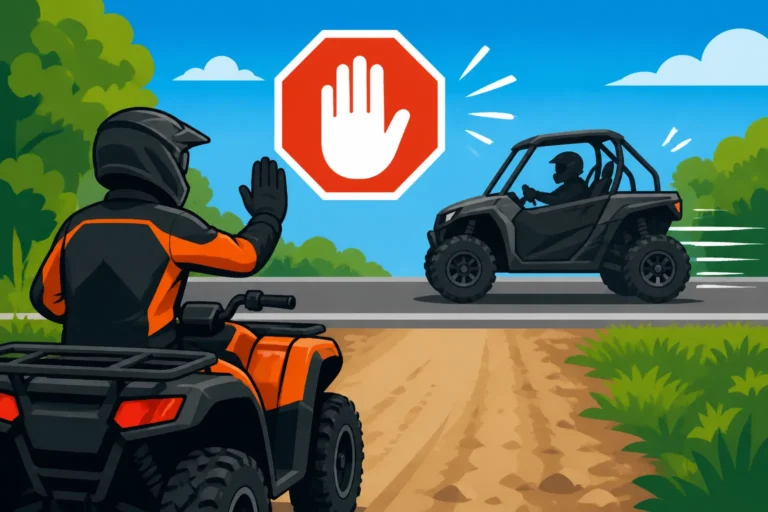
This is perhaps the most common and often misunderstood exception. You can cross a public highway in Indiana on your ORV, but it comes with stringent rules designed to minimize risk to yourself and other motorists. The law requires you to make a complete stop before crossing. This isn't a rolling stop; it's a full halt, as if you were at a stop sign. This ensures you have ample time to check for traffic in both directions.
Furthermore, you must cross the highway at right angles to the flow of traffic. This means going straight across, not diagonally or at an angle that prolongs your time in the travel lanes. You must yield to all oncoming traffic, only proceeding when it is safe to do so and your crossing will not impede or endanger other vehicles. Think of it like crossing train tracks: stop, look, listen, and proceed only when clear. This exception is for moving from one side of a road to the other, not for riding along the road. Disregarding these rules is not only illegal but extremely dangerous. [Crossing a Road on an ORV in Indiana] details these regulations even further.
| Right-of-Way Action | Legality (General) | Key Conditions | Safety Considerations |
|---|---|---|---|
| Riding Paved Lane | Generally Illegal | Only if specifically designated by local ordinance (rare) | High risk of collision, lack of visibility, unstable vehicle performance on pavement. |
| Riding Shoulder | Limited Exception | For access to property/permitted areas; safe, slow speed; non-limited-access highways. | Be visible, watch for road debris, be ready to yield to traffic and pedestrians. |
| Riding Ditch | Limited Exception | For access to property/permitted areas; safe, slow speed; non-limited-access highways. | Uneven terrain, hidden obstacles, poor visibility from main road, risk of getting stuck. |
| Crossing Highway | Permitted | Complete stop, cross at right angles, yield to all traffic, only when safe. | Judge traffic speed/distance accurately, execute quickly, ensure clear line of sight. |
| Limited-Access Hwy | Always Illegal | No exceptions for ORVs, even on shoulders or ditches. | Extreme danger due to high-speed traffic, no safe recovery options. |
County and Local Ordinances: A Game Changer
Here's where Indiana's ORV laws get really interesting, and frankly, a bit confusing. While the state law sets the default "no ORVs on roads" rule and outlines limited exceptions for shoulders, ditches, and crossings, individual counties and even some municipalities have the power to enact their own ordinances. These local ordinances can either open up certain public roads to ORV use or, in some cases, further restrict it beyond state law. This means that what's legal in one county might be illegal just a few miles down the road in another. It's a patchwork quilt of regulations, and it's the rider's responsibility to know the rules for the specific area they're riding in.
This local control is both a blessing and a curse. On one hand, it allows communities to tailor ORV access to their unique needs and demographics, potentially opening up new riding opportunities. On the other hand, it creates a situation where you can't assume consistency. You might drive through three counties on your way to a trail park, and each one could have different rules for road access. This is why just relying on general knowledge isn't enough; you need to do your homework for every riding destination. [Indiana Counties That Allow ORVs on Roads] is a good place to start your research.
How an Indiana County Opens Its Roads
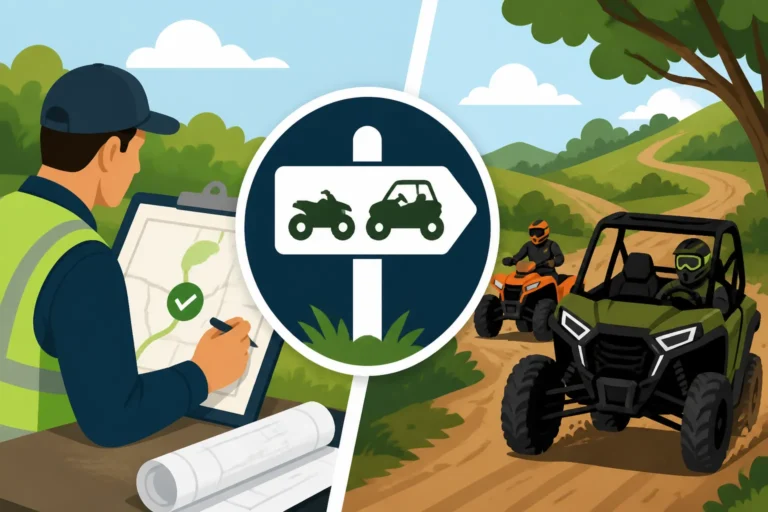
The process for an Indiana county to open its roads to ORVs typically involves the county's legislative body (the County Commissioners or County Council) passing a specific ordinance. This isn't a casual decision; it usually follows public hearings, community input, and careful consideration of safety, infrastructure, and local sentiment. Once an ordinance is passed, it will often designate specific county roads or areas where ORVs are permitted. These designations might be marked with signage, but it's not always guaranteed, so looking up the ordinance itself is crucial.
Counties have the authority to set their own conditions for ORV use on these designated roads. This can include anything from speed limits, hours of operation, requirements for specific safety equipment (like helmets or insurance), age restrictions for operators, or even restrictions on the type of ORV. For instance, some ordinances might only allow UTVs, while others might include ATVs. It's not uncommon for counties to limit ORV access to certain road types (e.g., gravel roads only) or within specific unincorporated areas, explicitly excluding riding within city or town limits. If you're planning to ride county roads, your first step should always be to search for that county's specific ORV ordinance online or contact their highway department or sheriff's office.
What a Local ORV Ordinance Is Not Allowed to Require
While counties have significant power to regulate ORV use on their roads, there are limits to what they can legally require. State law ensures a baseline of consistency and prevents counties from imposing overly burdensome or conflicting regulations. For example, a county ordinance generally cannot require an ORV operator to have a specific driver's license beyond what's already required by state law (though age restrictions for operation are common). They also typically cannot demand that an ORV be registered with the county itself, as state registration through the BMV is the standard. [How Indiana ORV Registration Works] is a core state requirement.
Furthermore, state law often sets minimum or maximum standards that local ordinances cannot override. For instance, a county generally cannot demand that an ORV carry specific insurance if state law does not mandate it (though some counties, like Vanderburgh, might recommend it or have special provisions). They also cannot prohibit ORVs over a certain weight if that weight is below the state's own threshold for what defines an ORV, or what is allowed on public land. It's a delicate balance between local control and state preemption. If you're ever in doubt about a specific requirement in a local ordinance, it's wise to consult the county attorney's office or a legal professional familiar with Indiana's ORV statutes.
Specific County Examples and Their Rules
Let's look at a few examples to illustrate the variability you might encounter with local ordinances.
Hancock County: Located just east of Indianapolis, Hancock County has explicitly opened some of its roads to ORVs. Their ordinance outlines specific rules, such as requiring operators to be licensed drivers, carrying proof of liability insurance, and adhering to designated speed limits. They often emphasize riding in a safe and responsible manner, and some roads may be designated while others are not. You can't just assume all county roads are open; you need to know which ones. [Riding Hancock County Roads] will offer deeper insights.
Vanderburgh County: Down in the southwest corner of the state, Vanderburgh County, which includes Evansville, has a highly detailed ORV ordinance. They provide a color-coded map designating which county roads are open to ORVs (blue roads) and which are closed (red roads). Their rules are strict: operators must be at least 18 years old, possess a valid driver's license, carry proof of insurance, and have specific lighting requirements for night riding (two headlights and two taillights). The ordinance even specifies fines for violations, starting at a minimum amount for a first offense. This is a perfect example of a county taking a very structured approach. [Reading Vanderburgh's Color-Coded Map] illustrates this complexity.
Dearborn County: In southeastern Indiana, Dearborn County also has an ordinance addressing ORV use on its county roads. Similar to others, it generally outlines permitted roads, speed restrictions, and safety requirements. Many of these ordinances stem from a desire to safely integrate ORV use for both recreational and practical purposes in rural communities, while still protecting public safety on shared roadways. These examples highlight why checking local rules is non-negotiable before you hit any county road.
Safety Considerations and Equipment for Road-Adjacent Riding
Riding any ORV carries inherent risks, but those risks are significantly amplified when you're operating near or within a public highway right-of-way. Even if you're legally on the shoulder or in a ditch, you're in close proximity to high-speed traffic, unpredictable drivers, and harder, less forgiving surfaces than typical trails. This isn't just about avoiding a ticket; it's about staying alive and preventing serious injury to yourself, your passengers, and others. Therefore, prioritizing safety through cautious operation and appropriate equipment is absolutely paramount.
Many riders invest heavily in performance upgrades for their machines, but when it comes to road-adjacent riding, safety modifications should be at the top of your list. This means thinking about how visible you are, how well you can see, and what protection you have in case of an accident. Don't let the excitement of riding overshadow the very real dangers that exist when you're sharing space, even indirectly, with cars and trucks.
Enhancing Visibility for Other Motorists
Being seen is half the battle when you're operating an ORV near traffic. Your machine, especially an ATV, is much smaller than a typical car or truck, making it easy to miss, especially in adverse weather conditions, at dawn or dusk, or around curves.
- Lighting: Ensure all factory lights (headlights, taillights, brake lights) are in perfect working order. Consider adding auxiliary LED lights, especially to the front and rear, to make your presence undeniable. LED light bars from brands like SuperATV can provide excellent forward illumination but can also be used effectively for increasing front-facing visibility during the day. Some riders even add amber strobes or flashing lights, particularly on the rear, to grab attention without being distracting.
- Reflective Materials: Apply reflective tape to your helmet, the front and rear of your machine, and even your riding gear. Bright, contrasting colors for your vehicle and apparel also significantly improve daytime visibility.
- Flags: A tall, brightly colored safety flag, mounted securely to the highest point of your ORV, can dramatically increase your visibility, especially when cresting hills or emerging from ditches where your machine might otherwise be obscured.
- Mirrors: While not always strictly required for off-road use, adding rearview mirrors to your ORV (especially a UTV) is crucial for road-adjacent riding. They allow you to monitor traffic approaching from behind without constantly turning your head, which can be unstable on an ORV. Good quality, vibration-resistant mirrors are a smart investment.
Remember, you might be following all the rules, but not every driver is paying 100% attention. Do everything you can to make yourself impossible to miss.
Indiana Helmet Law for ORV Riders
Indiana's helmet law is straightforward and applies regardless of whether you're on a trail, private property, or, crucially, within a highway right-of-way. Any operator or passenger of an ORV who is less than 18 years old must wear a U.S. Department of Transportation (DOT) compliant helmet. This isn't just a suggestion; it's a legal requirement designed to protect young riders. Even if you're just riding across a two-lane county road on the shoulder, if a minor is with you or operating the machine, they need that helmet.
While adults (18 and older) are not legally mandated to wear a helmet when operating an ORVs, it is highly recommended. Helmets significantly reduce the risk of severe head injuries in the event of an accident, which, as we've discussed, is a higher risk when near public roads. Don't rely on the "it won't happen to me" mentality. A DOT-approved helmet could be the difference between a minor bump and a life-altering injury. Consider your own safety and set a good example for younger riders. [Indiana Helmet Law for ORV Riders] provides a comprehensive overview.
Other Essential Safety Gear
Beyond helmets and visibility enhancements, a few other pieces of gear can make a significant difference in your safety when operating an ORV near roads:
- Eye Protection: Goggles or a full-face helmet visor are essential to protect your eyes from dust, debris, insects, and wind. On roads, the speed of passing vehicles can kick up small stones or other objects.
- Protective Clothing: Long sleeves and pants, gloves, and sturdy over-the-ankle boots offer protection against scrapes, abrasions, and impacts. While a t-shirt and shorts might be comfortable on a hot day, they offer almost no protection if you go down.
- First Aid Kit: Always carry a basic first aid kit. Accidents can happen quickly, and having supplies for minor cuts or scrapes, or even to stabilize a more serious injury until help arrives, is invaluable.
- Communication Device: A fully charged cell phone is a must for emergencies. Be aware that some rural areas in Indiana have limited cell service, so plan accordingly.
- Vehicle Condition: Before every ride, especially if you're going to be near roads, do a quick check of your ORV. Ensure your brakes are working, tires are properly inflated (for the terrain you expect), and all controls are functioning correctly. A mechanical failure at speed, or near traffic, can have catastrophic consequences. This is also where quality aftermarket parts can come in handy. For example, upgrading to robust control arms or reliable axles can contribute to a machine's overall dependability, which is crucial when operating near roads where failure isn't an option.
Penalties for Illegal Right-of-Way Use
Ignoring Indiana's ORV laws regarding public road and right-of-way use is not just a polite suggestion; it carries real legal and financial consequences. The state takes these regulations seriously, primarily for public safety. Many riders mistakenly believe that getting caught is just a slap on the wrist, but the penalties can be significant, ranging from hefty fines to potential impoundment of your machine, and even legal liability in the event of an accident.
It's a frustrating situation when you feel the laws are too restrictive, but ignorance of the law is never an excuse. Law enforcement officers, particularly conservation officers and county deputies, are generally well-versed in ORV statutes and are trained to enforce them. They're not out to ruin your day, but they are obligated to uphold the safety regulations put in place by the state and local governments.
Indiana Fines for Illegal ORV Road Use
Operating an ORV illegally on an Indiana highway right-of-way typically falls under a Class C infraction. What does a "Class C infraction" mean in practical terms? It means you're looking at a base fine, plus court costs and administrative fees, which can quickly add up. While the exact fine amount can vary depending on the specific violation, the county, and the discretion of the issuing officer or court, a single Class C infraction can result in fines reaching up to several hundred dollars.
Beyond the initial fine, there can be additional costs. If your machine is unregistered or lacks the required decal, that's another set of fines. If you're operating without a helmet when required, or if you're underage, those are separate violations. These can stack up quickly, turning a quick, unauthorized ride into a very expensive lesson. And it’s not just about the money; a citation on your record can sometimes have other implications, depending on its severity. [Indiana Fines for Illegal ORV Road Use] explores these costs in detail.
Consequences Beyond Monetary Fines
The penalties for illegal ORV road use extend beyond just cash out of your wallet.
- Vehicle Impoundment: In some cases, particularly for repeat offenses or egregious violations, law enforcement has the authority to impound your ORV. Recovering an impounded vehicle involves additional towing and storage fees, which can escalate rapidly, adding hundreds, if not thousands, of dollars to your overall expense. It's also a major logistical hassle.
- Liability in Accidents: This is perhaps the most serious consequence. If you're operating your ORV illegally on a public road or right-of-way and are involved in an accident, your liability can be substantial. Your personal insurance policy (car, homeowner's) might deny coverage if you were operating the vehicle unlawfully. This means you could be personally responsible for damages to other vehicles, medical bills for injured parties, and even legal fees. Being deemed at fault in an accident while operating illegally can lead to devastating financial ruin. [Indiana ORV Insurance Requirements] are crucial to understand for all types of riding.
- Loss of Privileges: Depending on the nature of the offense, there could be consequences related to your driver's license or future ORV registration, though this is less common for minor infractions.
- Owner Liability: It's important to note that Indiana law holds the owner of an ORV responsible for its lawful operation. If you lend your machine to someone who then operates it illegally on a road and gets a ticket, you, as the owner, could also face penalties or liability. This is particularly relevant if a minor is involved.
The bottom line: the cost of a quick, illegal ride on a highway right-of-way far outweighs the convenience. Always prioritize legal and safe operation.
What is Not a Right-of-Way: Places to Absolutely Avoid
Understanding where you can ride is only half the battle; knowing where you absolutely cannot ride is equally, if not more, important. The "right-of-way" is a specific legal concept, and many areas that might seem like they fall under this umbrella simply do not, or they have explicit prohibitions against ORV use. Venturing into these forbidden zones, even accidentally, can lead to serious legal trouble, fines, and put you in incredibly dangerous situations. Don't make assumptions about open spaces or what "looks like a trail"; always verify.
This isn't just about avoiding a ticket; it's about respecting private property, protecting sensitive environmental areas, and, most critically, staying safe from hazards that aren't present on designated ORV trails. The allure of an open field or a tempting dirt path can be strong, but the consequences of trespassing or riding in prohibited public areas are severe.
Why Limited-Access Highways Stay Closed
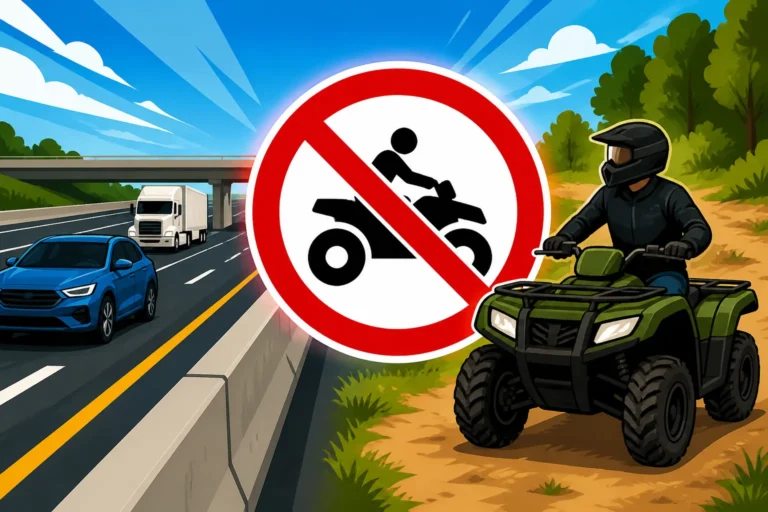
Limited-access highways, like interstates (I-65, I-70, I-74, I-69, etc.) and certain major state highways, are perhaps the most critical "no-go" zones for ORVs. There are absolutely no exceptions for ORV operation on these roads, their shoulders, ditches, or even their median areas. Period. The reasons are self-evident:
- High Speeds: Traffic on limited-access highways travels at extremely high speeds, far exceeding the design capabilities and safe operating speeds of any ATV or UTV.
- Traffic Volume: These roads carry immense volumes of traffic, creating an incredibly dangerous environment for smaller, slower, and less visible ORVs.
- Lack of Egress Points: By design, limited-access highways have very few entry and exit points, meaning if you find yourself on one, you're stuck for a potentially long, dangerous stretch.
- Infrastructure Design: Shoulders and ditches on limited-access highways are not designed for ORV travel; they are safety zones for breakdowns or emergency personnel.
Trying to ride an ORV on an interstate is not just illegal; it is profoundly reckless and puts your life and the lives of countless motorists at extreme risk. If you somehow end up on one, the safest action is to immediately pull over to the furthest shoulder, activate any hazard lights, and call for assistance. Don't try to drive off.
Parking Lots Closed to Indiana Machines
Many riders assume that parking lots, especially those of private businesses or shopping centers, are fair game for ORV use, especially if they're just passing through. This is a dangerous assumption. Unless explicitly posted otherwise, parking lots are generally considered private property, even if publicly accessible, and ORV operation is prohibited without the owner's permission.
While an ORV might not technically be a "street-legal" vehicle, the rules of private property still apply. Business owners have the right to restrict vehicle types on their lots, and many will not tolerate ORVs due to concerns about noise, damage to pavement, safety risks to pedestrians, or insurance liability. A quick spin through a grocery store parking lot could lead to a trespassing citation from local police or, if an accident occurs, significant legal woes. Always assume "no" unless you have explicit permission.
Riding a Rail Trail Closed to Machines
Indiana is home to a growing network of beautiful rail trails, popular with cyclists, walkers, and runners. These former railroad corridors have been converted into multi-use paths. It's easy to look at a wide, flat, gravel rail trail and think, "This would be perfect for my UTV!" However, the vast majority of Indiana's rail trails are explicitly closed to motorized vehicles, including ATVs and UTVs.
These trails are typically managed by the Department of Natural Resources (DNR) or local park departments, and their rules are clearly posted at trailheads. Violating these rules can lead to fines for illegal operation, trespassing, and potentially even damage to the trail surface, which motorized vehicles are not designed for. Always check the signage or the managing agency's website before assuming a trail is open to ORVs. Stick to designated ORV parks like Redbird or Interlake for your trail riding adventures.
The Future of Indiana ORV Road Access
The current state of Indiana's ORV laws regarding road access is undeniably complex and, for many riders, frustratingly restrictive. The patchwork of state statutes and varying local ordinances can make it feel like you need a legal degree just to plan a simple ride. However, the conversation around ORV road access is not static. As the popularity of ATVs and UTVs continues to grow, and as more communities recognize the economic and recreational benefits of these vehicles, there is ongoing advocacy and discussion about potential changes.
It's important to temper expectations, as legislative change is often slow and requires careful consideration of safety, environmental impact, and public opinion. But understanding the current landscape and participating in the conversation can help shape the future of ORV riding in Indiana.
Ongoing Advocacy for Expanded Road Access
Several groups and individuals are actively advocating for more permissive ORV road access in Indiana. These efforts often highlight the economic benefits that ORV tourism can bring to rural communities, drawing parallels with states like Michigan or Tennessee that have extensive ORV-friendly road networks. Arguments often center on:
- Economic Development: Enabling ORVs on more county roads can connect towns to trail systems, encouraging riders to visit local businesses, hotels, and restaurants.
- Landowner Access: Easing restrictions could make it easier for landowners to access their property without having to trailer their machines for short distances on lightly traveled roads.
- Consistency: Advocates often push for more statewide consistency, or at least clearer guidelines, to reduce the confusion caused by the current county-by-county variation.
- Safety Features: Modern UTVs, in particular, come equipped with many safety features that rival those of low-speed vehicles, leading some to argue they are safe for certain road types under specific conditions. Many of these machines, especially when upgraded with components from a company like SuperATV, have robust roll cages, advanced braking systems, and increasingly sophisticated lighting, making them very different from early ATVs.
These advocacy efforts typically involve lobbying state legislators, working with county commissioners, and raising public awareness about the responsible use of ORVs. However, any proposed changes will inevitably face scrutiny regarding public safety, environmental concerns, and potential conflicts with other road users.
The Role of Responsible Riding in Future Decisions
Ultimately, the future of ORV road access in Indiana, whether through state legislative changes or more county ordinances, will largely depend on the perceived responsibility of the ORV community. Negative perceptions stemming from reckless riding, excessive noise, environmental damage, or disrespect for private property can quickly derail any efforts to expand access.
This means every rider has a role to play:
- Adhere to Current Laws: Even if you disagree with a law, follow it. Operating within current regulations demonstrates respect for the legal framework and helps build a positive image for the ORV community.
- Prioritize Safety: Always ride safely, especially near roads. Wear appropriate gear, maintain your machine, and be considerate of other road users. Every safe, responsible ride is a step towards better public perception.
- Respect Private Property: Always get explicit permission before riding on private land. Trespassing is a major reason for negative views of ORV riders.
- Minimize Environmental Impact: Stay on designated trails, avoid creating new ruts, and pack out everything you pack in.
- Engage Constructively: If you want to see changes, get involved with local ORV clubs or advocacy groups. Participate in public hearings, write to your representatives, and express your views constructively.
By collectively demonstrating a commitment to responsible and respectful riding, the ORV community can build the trust necessary to expand access in Indiana, potentially leading to a more rider-friendly landscape in the years to come.
Disclaimer
This article is for general informational purposes only and does not constitute professional advice. Laws, prices and regulations vary by location and change over time. Consult a qualified professional for guidance on your specific situation.