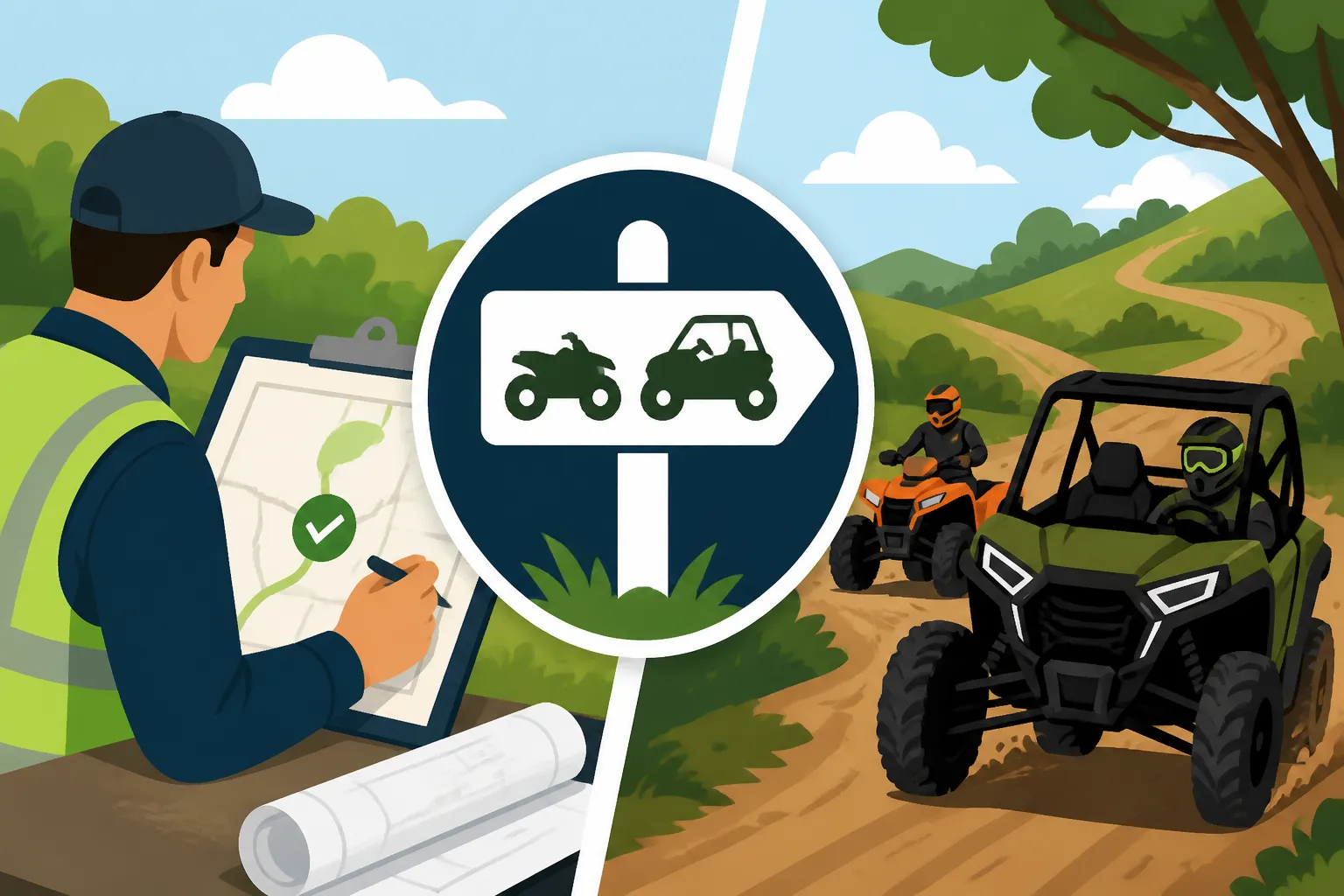
How a County Highway Department Designates ORV Roads
Many off-road vehicle (ORV) enthusiasts across Indiana dream of being able to legally and safely traverse county roads, connecting trails, accessing local businesses, or simply enjoying a scenic drive from their property to a nearby riding area. However, the path to making a county road "ORV friendly" isn't as simple as just hoping for the best. It's a complex journey involving local legislation, public safety considerations, and the very specific actions of your county highway department. This guide will meticulously unpack the process by which a county highway department in Indiana designates roads for ORV use, shedding light on the often-confusing bureaucratic maze and providing clarity for riders.
The Default Position: Why Indiana Roads Are Generally Closed to ORVs
It's a common frustration for many ORV owners: you have a perfectly capable machine, ideal for exploring, yet the public roads that crisscross your county remain off-limits. This isn't arbitrary; it's rooted in long-standing legal frameworks designed to maintain public safety and manage traffic flow. Understanding this default position is the first step in appreciating the journey a county must undertake to open its roads.
Understanding Indiana's Baseline Rule
By default, in Indiana, public roads are designed and designated for street-legal vehicles only. This means machines like cars, trucks, and motorcycles that meet specific safety and registration standards. Off-road vehicles, by their very nature and design, often lack some of these features or behave differently in a street environment. This foundational rule isn't meant to punish ORV owners, but rather to prevent accidents and ensure that all vehicles sharing the road adhere to a common set of safety regulations. Imagine the chaos if every type of vehicle, regardless of its suitability for pavement, was allowed to roam freely on busy thoroughfares. The state's primary concern is always the safety of all road users.
This baseline rule creates a significant hurdle for ORV enthusiasts who simply want to connect a segment of trail or ride from their home to a nearby gas station. It means that, without specific local action, riding your ATV or UTV on a county road, even a quiet gravel one, could lead to a citation for illegal road use. Many riders find this restrictive, especially in rural areas where ORVs are often an integral part of daily life for farming or land management. They often feel caught between the desire for practicality and the rigidity of the law, wondering why common sense doesn't always prevail.
The Role of the Indiana General Assembly
The authority for local governments, including county highway departments, to open roads to ORVs doesn't just spontaneously appear. It stems directly from the Indiana General Assembly. State legislation sets the overarching framework, delineating what local jurisdictions can and cannot do. Without this enabling legislation, a county simply wouldn't have the legal power to designate any public road for ORV use. This means that a county cannot simply "decide" to open its roads; it must operate within the parameters and permissions granted by state law.
The legislative process can be slow and often doesn't keep pace with the rapid evolution of ORV technology or the growing popularity of the sport. For years, communities and riders lobbied for changes, and eventually, the state responded by empowering local entities. This legislative foundation is crucial because it ensures a degree of uniformity and legality across the state, even as specific county ordinances might differ. It's a reminder that while the decisions are made locally, they are always underpinned by broader state principles. Without the state's blessing, any local attempt to open roads would be legally challenged and likely overturned, leading to even more confusion and frustration for riders.
Local Authority: How Counties Gain the Power to Open Roads
Once the state has laid the groundwork, the responsibility shifts to the local level. It's not a free-for-all, however; counties must follow a very specific administrative and legal path to gain the authority to designate roads for ORV use. This process involves formal legislative action at the county level, driven by their elected officials.
The Enabling Legislation for Local Ordinances
The state of Indiana has specific laws that grant counties the power to enact ordinances allowing ORVs on certain roads. These are not broad, sweeping permissions; rather, they provide the legal framework within which counties can create their own, more granular rules. For a county to open any road, its legislative body—typically the County Commissioners—must first adopt a formal ordinance. This ordinance acts as the county's own law, establishing the local rules, conditions, and procedures for ORV use on public roads. Without such an ordinance, the county highway department has no legal basis to designate, mark, or enforce ORV access.
This ordinance isn't just a simple statement; it's a comprehensive document that defines what an ORV is within the county's context, specifies where and when they can be operated, outlines any special equipment requirements, and details enforcement mechanisms. The development of this ordinance usually involves significant input from various county departments, including law enforcement, public works, and planning. It's a crucial first step that must be meticulously crafted to withstand legal scrutiny and address local concerns. Riders often overlook this foundational piece, assuming that if one county has open roads, all can. The reality is that each county must do its own legislative work.
The County Commissioners' Role in Adopting Ordinances
The county commissioners are the key players in this local legislative process. They are the elected officials responsible for the administrative and legislative functions of the county. When it comes to ORV road access, it's their responsibility to consider public input, weigh the pros and cons, and ultimately vote on whether to adopt an ORV ordinance. This process is rarely straightforward and often involves a delicate balancing act of competing interests. On one side, you have ORV enthusiasts advocating for access, citing recreational opportunities and potential economic benefits. On the other, you might have residents concerned about noise, safety, dust, and potential impacts on their property values.
Before an ordinance is adopted, there are typically public hearings where citizens can voice their opinions, concerns, and support. These meetings are critical for both sides to present their case and for the commissioners to gauge the community's sentiment. A well-prepared presentation by local ORV clubs, demonstrating responsible riding and proposing specific safe routes, can go a long way in swaying opinion. Conversely, a flurry of complaints about reckless riding in other areas can quickly derail progress. The commissioners must carefully consider all perspectives, knowing that their decision will affect the entire county. This deliberative process ensures that any decision to open roads is made transparently and with broad community input, aiming for a solution that serves the county's best interests. [Indiana Local Ordinances on ORV Riding] are the result of this careful consideration.
The Designation Process: From Ordinance to Open Road
Once a county has successfully navigated the legislative waters and passed an ORV ordinance, the practical work of designating specific roads begins. This is where the county highway department truly takes the lead, translating the ordinance's intent into tangible routes for riders. This involves careful consideration of safety, infrastructure, and community impact.
Criteria a County Highway Department Considers
When it comes to actually picking which roads will be open, the county highway department doesn't just randomly point to a map. They use a very specific set of criteria, heavily focused on safety and feasibility. One of the primary considerations is road width. Can an ORV safely share the road with other vehicles, or is the road too narrow to allow for safe passing? They'll also look at traffic volume; a quiet rural lane is a very different proposition from a busy county arterial. Speed limits are crucial too, as faster roads inherently pose more risks for ORVs, which may not accelerate or brake as quickly as traditional vehicles.
Visibility is another huge factor. Roads with numerous blind curves, steep hills, or intersections with limited sight lines might be deemed too dangerous. Proximity to residential areas also plays a role, as departments try to minimize noise and dust impacts on homeowners. They might also consider whether opening a particular road helps connect existing trail systems, creating a more cohesive recreational network, or if it provides critical access to a gas station or small business that riders frequent. While a robust ORV accessory like a SuperATV skid plate or a powerful winch might be invaluable for tackling challenging trail conditions, these upgrades don't inherently make a road safer for shared use. The highway department focuses on the inherent characteristics of the road itself and its environment. These are the details that dictate practicality and safety, informing which sections of the county's vast road network are suitable for ORV integration.
Collaboration and Public Input
The process of designating specific ORV roads is rarely done in isolation by the highway department. It usually involves significant collaboration with other county departments and ongoing public input. Highway departments often work closely with local law enforcement to discuss patrol strategies, enforcement challenges, and incident response. Emergency services might also be consulted to ensure that any designated routes don't impede their ability to respond effectively. Local planning departments might offer insights into future development plans that could impact road usage.
Beyond internal collaboration, public input continues to be a vital component. Even after an ordinance is passed, residents might have specific concerns about proposed routes or offer suggestions for alternative paths. Public forums, online surveys, and direct communication channels often remain open during this phase. This engagement helps the highway department refine its plans, address specific community concerns, and build consensus around the designated routes. The balance between providing recreational access and safeguarding the well-being and peace of mind of all residents is a constant negotiation. A well-informed public that feels heard is more likely to support the initiative, ensuring smoother implementation and greater compliance from both riders and other road users. This collaborative approach ensures that the final designation is as informed and community-supported as possible.
Physical Marking and Signage
Once the specific roads or sections of roads have been officially designated, the county highway department's next critical task is to clearly communicate this to the public. This involves the installation of visible and unambiguous physical marking and signage. You can't just expect riders and other motorists to know which roads are open by word of mouth. Signage must clearly indicate where ORV use is permitted, and equally important, where it is not. This might include signs at the entrance and exit points of designated ORV corridors, at intersections, and along the routes themselves.
The signage needs to be standardized and consistent across the county to avoid confusion. It should be easily understandable by both ORV riders and drivers of traditional vehicles. This clarity helps to prevent accidental infractions by riders who might inadvertently stray onto closed roads, and it also informs other motorists to expect ORV traffic. In addition to physical signs, many county highway departments will also publish official maps, either online or in print, that clearly delineate the designated ORV routes. These maps are invaluable tools for riders planning their trips and for law enforcement officials verifying legal access. The clarity and visibility of these markings are paramount for safety and compliance. Without proper signage, even the most well-intentioned ordinance can lead to confusion and potential hazards on the road. [Indiana ORV Decal Placement] is a similar example of clear marking requirements, but for the vehicle itself.
Restrictions and Regulations on Designated ORV Roads
Even when a county road is officially designated for ORV use, it's rarely a free-for-all. To ensure safety and harmony between different road users, county ordinances almost always come with a specific set of restrictions and regulations that riders must strictly adhere to. These rules are designed to mitigate risks and address common concerns.
Common Limitations Imposed by Ordinances
Local ordinances establishing ORV road access will invariably include a range of limitations. These are in place to ensure public safety and minimize disruption. For instance, age restrictions are very common, often requiring operators to be at least 16 or even 18 years old, particularly if they need a valid driver's license. [Vanderburgh's Eighteen-Year-Old Operator Rule] is a good example of this kind of restriction. Helmet laws are almost universally enforced on public roads, even if they might not always be mandatory on private property. Lighting requirements become critical for visibility, especially when operating an ORV after dark. Riders should ensure their machines have functional headlights and taillights, bright enough for other drivers to see them, which is a key safety feature, particularly for vehicles equipped with rugged aftermarket accessories that might block original lighting, even from a reputable brand like SuperATV.
Furthermore, ordinances often mandate that riders carry specific insurance coverage. Time of day restrictions are also frequent, with many counties prohibiting ORV use during late-night or early-morning hours to reduce noise impact on residential areas. Speed limits specific to ORVs, or the general posted speed limits for the road, must be obeyed. Many ordinances also specifically prohibit riding in ditches or on shoulders unless explicitly designated as part of the ORV route, reinforcing the idea that designated roads are for passage, not for off-road antics. These rules, while sometimes feeling restrictive, are essential for the sustainability of ORV access on public roads, as they demonstrate a commitment to safety and responsible recreation.
Enforcement and Penalties
With rules come consequences for breaking them, and local law enforcement plays a crucial role in ensuring compliance on designated ORV roads. Sheriffs' deputies, local police, and even conservation officers (if the area borders state land) are typically responsible for patrolling these routes and enforcing the county's ORV ordinance. If a rider is found operating an ORV in violation of the ordinance – perhaps riding on a closed road, without a helmet, or outside of permitted hours – they can expect to receive a citation.
The penalties for these infractions can vary significantly depending on the specific county and the nature of the violation. Fines are the most common consequence, but in some cases, repeated offenses or severe violations could lead to impoundment of the machine or other legal actions. [Vanderburgh's $75 First Fine] shows how a county might implement clear penalties. The county's commitment to enforcement is vital for the success of any ORV road designation. Without consistent enforcement, the rules become meaningless, potentially leading to unsafe conditions, public backlash, and ultimately, the revocation of ORV access. It's a delicate balance: enforcement should be fair and consistent, aimed at educating riders and ensuring safety, rather than simply punishing them. Riders must understand that the privilege of riding on designated roads comes with the responsibility of adhering to all rules, not just the ones they find convenient.
Why Some Roads Remain Closed
Even within a county that has an ORV ordinance, it's highly unlikely that all county roads will be opened to off-road vehicles. There are often very good, safety-driven reasons why specific roads or entire categories of roads remain closed. High traffic volume, for example, is a primary deterrent. Mixing slower, less agile ORVs with fast-moving conventional traffic, especially on roads with significant daily commutes, is a recipe for disaster. School zones and busy urban areas within the county limits are almost always excluded due to the high concentration of pedestrians and children, as well as complex traffic patterns.
Furthermore, roads that present inherent safety hazards, such as those with extremely narrow lanes, poor sight lines, or a history of accidents, will likely remain closed. Environmental concerns can also play a role, particularly if a road borders sensitive habitats or residential areas where noise and dust are significant issues. The decision to keep certain roads closed isn't about arbitrary exclusion; it's a calculated assessment of risk versus benefit. County highway departments and commissioners must prioritize the safety of all residents and road users. They understand that while opening some roads might appease ORV enthusiasts, compromising safety on others could have severe and tragic consequences, potentially leading to the entire program being reconsidered. This thoughtful approach ensures that ORV access is expanded responsibly, without creating undue hazards for the community. [Why Indiana Roads Are Closed by Default] explains the reasoning further.
The Rider's Role: Navigating and Advocating for ORV Access
As an ORV owner in Indiana, your responsibility extends beyond just operating your machine safely. To effectively enjoy designated ORV roads and even advocate for more access, you need to be informed, respectful, and engaged. Your actions can significantly impact the future of ORV riding in your community.
Researching and Understanding Local Ordinances
The most critical step for any ORV rider in Indiana is to thoroughly research and understand the specific ordinances in the counties where they plan to ride. There is no one-size-fits-all rule across the state; each county that has chosen to open roads has its own unique set of regulations. Simply assuming that because one county allows ORVs on its roads, all neighboring counties do too, is a recipe for a costly citation. A rider should consult their county's official website, look for the relevant ORV ordinance, and if necessary, contact the county highway department or clerk's office for clarification. Local ORV clubs are also fantastic resources, as they often stay up-to-date on changes and interpretations of local laws.
It's also important to remember that ordinances aren't static; they can be amended, revised, or even rescinded based on changing public sentiment, safety incidents, or new state legislation. Therefore, staying engaged and periodically checking for updates is crucial. The responsibility for knowing the rules always falls squarely on the rider. Just as a rider looking for specific parts or accessories might consult SuperATV's website for compatibility, they must consult official county maps and documents for legal riding areas. This proactive approach not only ensures legal compliance but also demonstrates a commitment to responsible riding, which can only benefit the ORV community as a whole. Knowing your local rules is as fundamental as knowing how to operate your machine.
Safe and Respectful Riding Practices
Even on designated ORV roads, how you ride makes all the difference in public perception and the future of ORV access. Operating your machine safely and respectfully is paramount. This means more than just adhering to the letter of the law; it's about being a good neighbor and ambassador for the sport. Reduce your noise levels whenever possible, especially when passing through residential areas. Minimize dust by slowing down on gravel roads, particularly when passing homes or other vehicles. Always respect private property, staying strictly on designated routes and never venturing onto private land without explicit permission.
Yielding to other traffic, whether it's a car, a bicycle, or a pedestrian, is not just a courtesy but a legal requirement. Use proper hand signals if your machine doesn't have turn indicators, and always make your intentions clear. Your actions, positive or negative, reflect on the entire ORV community. A single instance of reckless riding or disregard for local residents can quickly lead to widespread complaints, increasing pressure on county officials to revoke access or make it even more restrictive. Conversely, consistent safe and respectful behavior can build goodwill and demonstrate that ORVs can coexist harmoniously with other road users and residents, strengthening the case for maintaining or even expanding access.
Advocating for More ORV-Friendly Roads
If you're passionate about expanding ORV access in your county, becoming an active advocate is the most effective way to make a difference. This starts with joining local ORV clubs or associations, as these groups often have established lines of communication with county officials and a collective voice that carries more weight than individual complaints. Attend public meetings where ORV ordinances or road designations are being discussed. Don't just show up to complain; come prepared with well-researched arguments that highlight the benefits of ORV access, such as increased tourism, local business support, or enhanced recreational opportunities for residents.
Writing thoughtful, polite letters or emails to your county commissioners and highway department officials can also be impactful. Focus on solutions and present a constructive vision for how ORVs can safely integrate into the county's road network. Offer to volunteer for trail maintenance, roadside cleanups, or safety education initiatives. Demonstrating a commitment to responsible stewardship can significantly influence decision-makers. It’s important to remember that advocacy is a long game, requiring patience and persistence. Even if you have the toughest SuperATV rock sliders, being respectful and diplomatic in your interactions with local authorities and residents is far more effective than an aggressive or demanding approach. Collective, organized, and positive advocacy is key to shaping the future of ORV riding in your community.
Case Studies: Examples of Indiana Counties and Their Approaches
To truly grasp how county highway departments designate ORV roads, it helps to look at real-world examples. Indiana counties have taken various approaches, reflecting their unique demographics, geography, and community needs. Examining these can provide valuable insights into both successful models and ongoing challenges.
Hancock County's Open County Roads
Hancock County is one of Indiana's counties that has embraced ORV road access, providing a clear example of how a county highway department can integrate off-road vehicles into its infrastructure. For many riders living in or near Hancock County, the ability to ride on designated county roads has been a welcome change, allowing them to connect with trails or simply enjoy a ride without needing to trailer their machines everywhere. The county's ordinance [Riding Hancock County Roads] likely involved careful consideration of its rural character and the desire to offer recreational opportunities.
What made it work for Hancock County? Often, success hinges on a combination of factors: a receptive county commission, proactive engagement from local ORV groups, and a highway department willing to assess its road network for suitable routes. They likely focused on roads with lower traffic volumes, wider shoulders (where legal ORV use might be permitted), and routes that connected naturally to areas where ORVs are already present, such as farms or large properties. The specific rules, such as speed limits, hours of operation, and required safety gear, would be clearly outlined and enforced. While rider behavior and compliance are always ongoing challenges, Hancock County has demonstrated that with proper planning and communication, opening county roads to ORVs can be a viable and enjoyable option for residents and visitors alike.
Vanderburgh County's Marked Road Map
Vanderburgh County, located in southwestern Indiana, offers another excellent example, though with a distinct approach, particularly for its more densely populated areas. Instead of a blanket opening, [Vanderburgh County's Marked Road Map] illustrates a highly structured and visual method for designating ORV roads. This system often involves color-coded maps, which clearly show which roads are open, which are restricted, and which remain completely closed to ORV traffic. This visual clarity is immensely helpful for riders, eliminating much of the guesswork. [What a Red Road Means on Vanderburgh's ORV Map] and [What a Blue Road Means on Vanderburgh's ORV Map] are examples of how they categorize road access.
Vanderburgh County's ordinance likely includes specific rules tailored to its environment, such as a minimum age of 18 for operators on public roads, mandatory insurance certificates, and specific lighting requirements for riding after dark, like dual headlights and taillights. These stricter rules are often a response to safety concerns in more populated areas and a desire to ensure that ORV use doesn't unduly impact other residents. The highway department, in collaboration with local law enforcement, would be responsible for creating and maintaining these maps, installing appropriate signage, and ensuring that enforcement is consistent. This approach provides controlled access, allowing recreational riding in suitable areas while strictly limiting it in places where it poses higher risks or conflicts with residential peace. It's a pragmatic solution for a county balancing diverse needs.
Counties Still Debating or Resisting ORV Access
Not every Indiana county has embraced ORV road access, and many are still in various stages of debate, or have outright resisted opening their roads. This resistance isn't always due to anti-ORV sentiment, but rather legitimate concerns that need careful consideration. Safety concerns are frequently at the top of the list, particularly in counties with many narrow, winding roads, high traffic volumes, or numerous blind spots. Residents' concerns about increased noise, dust, and potential environmental impact on specific areas also play a significant role.
Some counties may simply perceive a lack of demand or believe that the administrative burden and costs associated with creating, implementing, and enforcing an ORV ordinance outweigh the potential benefits. They might also worry about increased liability for accidents or the strain on local law enforcement resources. For these counties, the process of designation has either stalled or has not even begun. While ORV advocacy groups continue to push for access, county officials must weigh all these factors, often in the face of vocal opposition from segments of the community. The debate in these counties highlights that opening roads is not a foregone conclusion, and it requires a strong, well-reasoned case, coupled with a commitment from riders to responsible behavior, to overcome these significant hurdles. The journey towards ORV-friendly roads is often a long one, requiring continuous dialogue and a willingness to address all concerns.
| County Approach | Key Characteristics | Advantages for Riders | Potential Challenges |
|---|---|---|---|
| Hancock County | General opening of county roads, with standard ORV regulations. | Widespread access, easier connections. | Specific rules still apply, requires careful attention to signage. |
| Vanderburgh County | Uses color-coded maps to designate specific open roads; stricter rules for operators. | Clear visual guidance, defined safe routes. | More restrictive in terms of age/equipment, less pervasive access. |
| Resistant/Debating | Roads remain closed; ongoing discussions or outright prohibition. | N/A (no legal road access for ORVs). | Frustration for riders, limited recreational options. |
| Tell City | Requires its own separate ORV registration and permit system. | Tailored local control, potentially unique riding opportunities. | Additional registration burden, specific rules unique to the city. |
Disclaimer
This article is for general informational purposes only and does not constitute professional advice. Laws, prices and regulations vary by location and change over time. Consult a qualified professional for guidance on your specific situation.