Indiana Rules for a Machine Over the Width Limit
Indiana’s width limit can turn a planned trail ride into a problem at the gate, especially if your side-by-side has oversized tires or added accessories. The key is to separate trail access from registration and road use: a permit or out-of-state decal does not make an over-width machine eligible for a trail system with a width restriction.
What Indiana’s width limit means
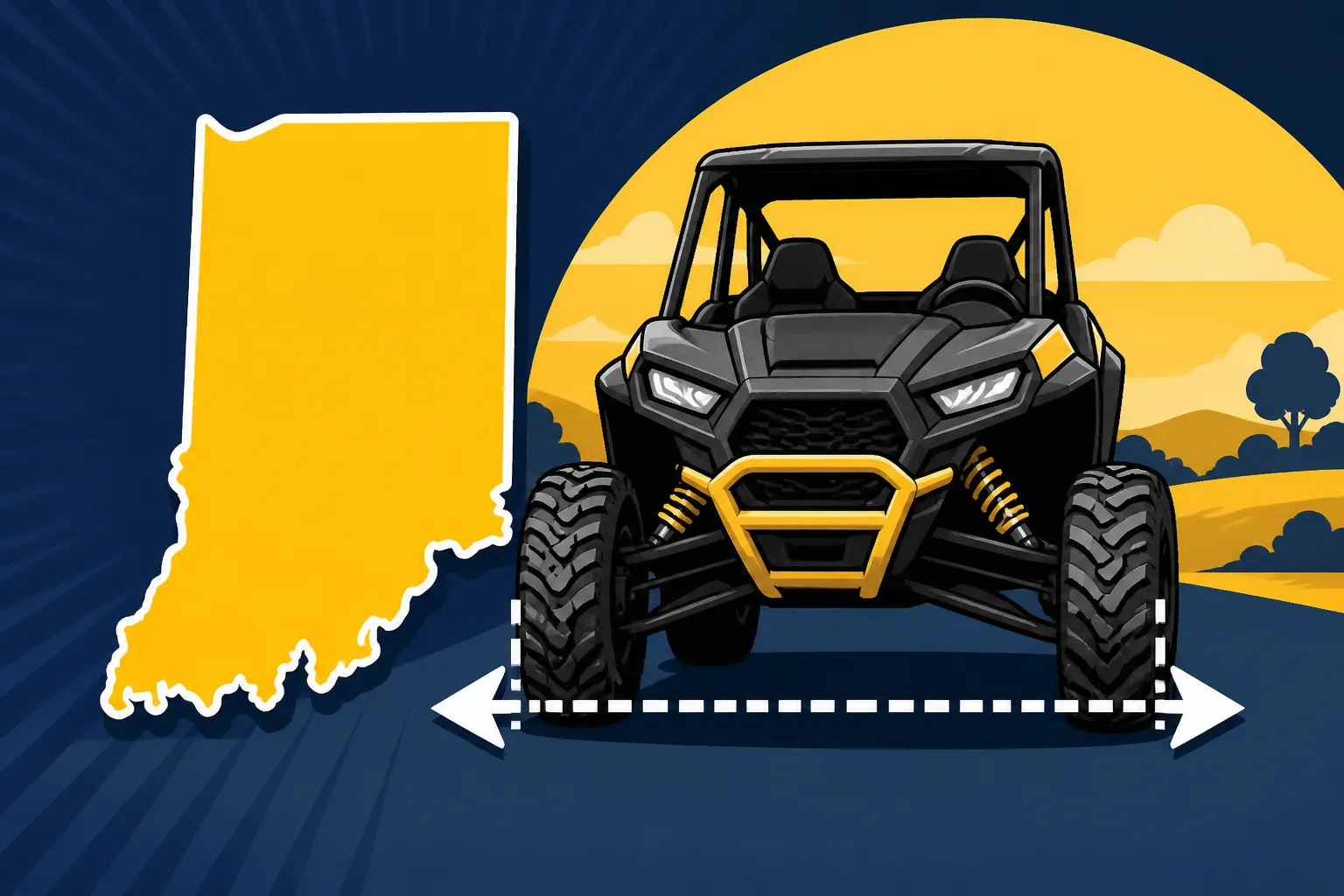
Indiana’s designated state ORV trails have a maximum vehicle width of 65 inches. A machine wider than that is not eligible to ride those trails, even if it has the right registration or trail permit. The restriction is about whether the machine fits the trail system, not simply whether it can be driven or transported in Indiana.
Width matters because trails may pass between trees, around obstacles, or along narrow sections where a wider machine could damage the route or create a hazard. A vehicle that fits on a wide road or open field may still be too wide for a designated ORV trail.
The limit is not a general statement that every machine over 65 inches is illegal throughout Indiana. Access depends on where you plan to ride and who controls that land. A private park may set its own rules, and private-land riding depends on permission and any applicable restrictions. Public-road use is a separate question from trail access; a trail permit does not authorize a machine to use roads.
| Riding situation | What the width limit means |
|---|---|
| Designated Indiana state ORV trails | A machine over 65 inches cannot use trails with the 65-inch restriction. |
| A private off-road park | Check that park’s current vehicle-width and trail rules; they may differ. |
| Private land | Get the landowner’s permission and follow any rules that apply to the property. |
| Public roads | Trail eligibility and road legality are separate; a trail permit does not grant road access. |
If you are choosing a machine, check its width before buying or modifying it. If you already own one, check the rules for the specific property before loading it onto a trailer. The broader overview in [Indiana Rules for a Full-Size Rig on a Trail] can help you think through access for larger vehicles, but the final answer should come from the area you plan to ride.
How to check your machine’s width
Start with the manufacturer’s specifications for the exact model and trim. Similar machines can have different widths, and published dimensions may refer to a standard configuration. If yours has aftermarket tires, wheel spacers, fender changes, or other additions, the original specification may no longer describe its current width.
Measure the machine in its riding configuration. In practical terms, check the widest point from side to side, including tires and any parts that extend beyond them. Keep the machine on level ground, with the tires set as they will be for the ride. A tape measure is enough; a straightedge can help identify the outermost points. If you need one, a basic measuring tape is easy to find at a hardware store or through Amazon.
Use this process before departure:
- Find the exact model and trim. Check the owner’s manual or manufacturer’s specifications, not a listing for a similar model.
- Inspect for width-changing modifications. Look at tires, wheels, spacers, fender flares, bumpers, and other additions that extend sideways.
- Measure the widest point. Measure across the machine in its current setup rather than relying only on a stock specification.
- Compare the result with the trail’s rule. For Indiana state ORV trails with a 65-inch maximum, a measurement over 65 inches means the machine is too wide for those trails.
- Confirm with the destination. Ask the park or land manager if the measurement method or applicable trail restrictions are unclear.
Do not assume that a machine listed at exactly 65 inches will necessarily be accepted without question. Published specifications can be rounded, and added equipment can change the real measurement. If your measurement is close to the limit, contact the destination before making the trip and explain the machine’s model, modifications, and measured width.
A dealer’s description, a registration document, or a permit receipt is not a substitute for checking dimensions. Those documents may establish other facts about the vehicle, but they do not show that it meets a trail-width requirement.
Permits, registration, and out-of-state machines
Indiana has separate requirements for vehicle registration and for riding on designated ORV areas. Registration or an out-of-state decal addresses one part of the process; a trail permit may be required for access to a particular state recreation area. Neither changes the physical width of the machine.
That distinction is important for visitors. An out-of-state registration or a visitor’s eligibility to ride does not override a trail’s width limit. A machine that is too wide remains too wide, regardless of where it is registered or whether its owner has obtained the applicable Indiana permit. For background on the different requirements, see Indiana ORV Permits Explained, Do You Need a Permit for Indiana ORV Trails?, and Indiana’s Out-of-State Annual Permit.
Before you travel, confirm three separate points:
- Is the machine properly registered or otherwise permitted for use? Requirements can depend on the machine and the rider’s circumstances.
- Does the destination require a trail permit? Check whether a permit is required for the specific property and machine.
- Does the machine meet the width limit? A valid permit does not waive an equipment restriction.
If you are visiting from another state, check how the applicable visitor rules and permits work before setting out. Indiana’s Daily and Annual Trail Permits explains the permit options, while Indiana’s Twenty-Day Visitor Rule concerns a separate registration question. Do not treat one as proof that the other requirement has been satisfied.
It is also worth confirming the rules for each place on a multi-stop trip. Indiana’s two state ORV areas may have different layouts and operating details, and private parks can set their own access conditions. Indiana’s Two State ORV Areas Compared is a useful starting point for planning, but check the destination’s current information before loading.
What to do if your machine is over 65 inches
If a measurement confirms that your machine is wider than the limit, do not try to use the restricted trail anyway. A permit does not create an exception, and arriving at the gate without checking can leave you with a machine you cannot ride there.
Instead, identify another place where the machine is allowed. Some private parks may accommodate wider vehicles, but rules vary by park, trail, and vehicle type. Ask about the width limit directly and clarify whether it applies to every trail or only certain routes. A park that admits full-size rigs may still restrict particular trails.
If the machine is close to the threshold, do not make changes based on guesswork. Removing or changing an accessory might reduce width, but the machine must still be measured in the configuration in which it will be ridden. Alterations can also affect handling, clearance, or safe operation. Confirm that any proposed change is suitable for the vehicle and acceptable to the destination.
For a machine comfortably over the limit, practical choices may include:
- Taking it to a private park that confirms it accepts that width.
- Riding it on private land with the owner’s permission.
- Choosing a narrower machine for restricted state trails.
- Checking whether the destination offers another lawful activity or route for the vehicle.
Do not confuse trail width with trailer width. A machine may fit on the trailer and still be prohibited from the trail. Likewise, being able to travel on a road does not establish permission to ride on a trail, and being eligible for a trail permit does not establish road-use rights.
Before each trip, review the current trail maps and notices, especially if you have modified the machine or are visiting a new area. Indiana Trail Maps From the DNR and Indiana Trail Conditions Before You Ride can help with planning, but confirm access rules with the managing property. The simplest approach is to resolve width, permit, registration, and route questions separately before you leave home.
Disclaimer
This article is for general informational purposes only and does not constitute professional advice. Laws, prices and regulations vary by location and change over time. Consult a qualified professional for guidance on your specific situation.