Indiana ORV Registration Refund
It’s a frustrating scenario many off-road vehicle owners face: you’ve just paid to register your ATV or UTV with the state of Indiana, perhaps even gotten your shiny new decal, and then suddenly your circumstances change. Maybe you decided to sell the machine sooner than expected, or you’re moving out of state, or perhaps the machine was unfortunately stolen or damaged beyond repair. Naturally, your first thought is, "Can I get a refund for that registration fee I just paid?" This guide is here to shed light on Indiana's policies regarding ORV registration refunds, offering realistic expectations and outlining what steps you can take when a refund isn't an option.
Understanding Indiana’s ORV Registration Fee Structure
When you register your off-road vehicle in Indiana, you’re essentially paying a fee for a service that grants you the legal right to operate your machine on designated trails and areas for a set period. This isn't like paying a pro-rated bill that gets adjusted if you stop using the service early. Instead, it's a one-time charge for a three-year period. Think of it more like buying a non-refundable concert ticket or paying a membership fee – once purchased, the benefits are yours for the specified duration, regardless of how much you end up using them.
The Indiana Bureau of Motor Vehicles (BMV) is responsible for this process, and they view the registration fee as compensation for processing your application, issuing a unique registration number, and providing the physical decal that proves your compliance. This system ensures that all eligible machines are properly accounted for, and the funds collected go towards important initiatives. You can learn more about the overall process in our guide on [Registering an ORV in Indiana]. The typical registration covers a full three-year period, which is why the question of a refund for a partial period often comes up. Many owners anticipate using their machines for the full term, but life often throws curveballs, leaving them wondering about their options.
The cost associated with ORV registration, while not excessive, is a commitment. For many, it's a small part of the larger financial picture of owning and enjoying an ATV or UTV in the Hoosier State. Understanding that this fee is tied to the administrative process and the provision of the decal for a fixed term, rather than a usage-based charge, helps clarify why refunds are generally not offered. It’s a similar concept to paying a flat fee for a fishing license; whether you go fishing once or a hundred times within the license period, the initial fee remains the same and is not returned. This flat-rate approach simplifies administration and ensures consistency for all ORV owners across the state. We cover the specific costs in detail in [Indiana ORV Registration Cost].
Scenarios Where a Refund Is Typically Not Granted
It's important to be realistic about when you can expect a refund for an Indiana ORV registration. In most common situations, the answer is unfortunately no. The state's regulations are quite clear that once the registration is processed and the decal is issued, the fee is generally considered earned and non-refundable. This can be a tough pill to swallow, especially when you feel like you haven't received the full benefit of the three-year term.
Let's look at some common scenarios that often lead owners to inquire about refunds:
Selling Your ORV Shortly After Registration
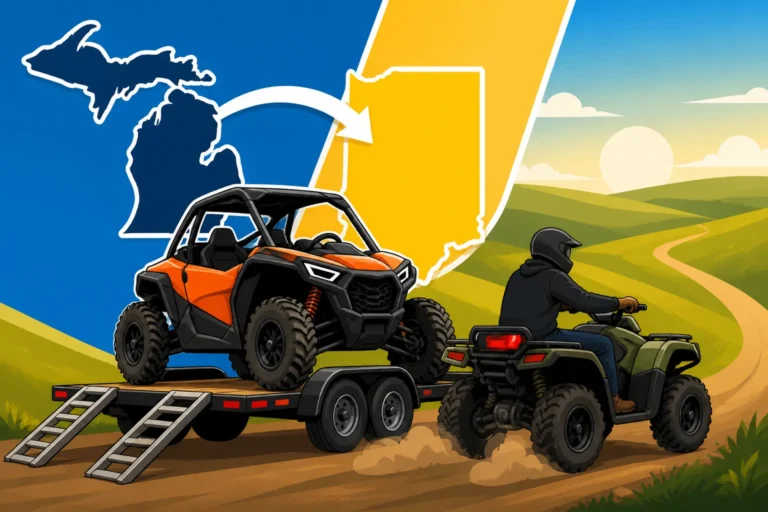
This is perhaps the most frequent reason owners ask about refunds. You’ve just registered your side-by-side, paid the fees, and then a great offer comes along for your machine. You sell it a few months later. From the state's perspective, the registration was valid for that period, and the new owner can continue to use the remaining registration term. The good news is that the existing registration stays with the machine when it's sold in Indiana. This means the buyer gets the benefit of the remaining months or years of your registration, which can actually be a selling point for them! You can often factor this remaining value into your asking price. Our article [Selling an ORV in Indiana] goes into more detail about this process.
Moving Out of State Before Registration Expires
If you registered your ATV in Indiana and then life takes you to Ohio or Kentucky, you might think you should get a refund for the unused portion of your Indiana registration. However, Indiana's registration system doesn't account for changes in residency. The registration is valid for the machine within Indiana, regardless of where its owner now resides. While you'll need to register your machine in your new state if you plan to operate it there, Indiana will not refund the prior registration fee. The original registration remains valid for that specific ORV in Indiana until its expiration date, even if you never bring it back. If you move, it’s a good idea to update your address with the BMV, just in case, which you can learn about in [Indiana ORV Registration Address Change].
ORV Is Stolen, Damaged, or Deemed Inoperable
This is a truly unfortunate situation, and while it's emotionally and financially impactful, it typically doesn't trigger a registration refund. The state has already provided the service of registering the vehicle for the three-year period. If your ORV is stolen or destroyed, the registration simply remains on file until its expiration. There isn't a mechanism to "un-register" the machine for a refund. You might still want to report the machine's status to your insurance company and potentially to the BMV if it impacts titling, but the registration fee itself is a sunk cost. In these tough times, focusing on insurance claims and potentially replacing the vehicle is usually the priority, not chasing a registration refund. If you lose your decal due to damage or theft, you can get a [Replacing a Lost Indiana ORV Decal].
Mistakes in Registration
Sometimes, errors happen. Perhaps you accidentally registered a machine that's actually exempt from registration (like a true farm machine that never leaves private property or specific farming tasks). Or maybe you made a duplicate payment, inadvertently registering the same machine twice.
- Exempt Machines: If you register an ORV that is truly exempt, such as one used exclusively for agricultural purposes on your own land and never on public trails, obtaining a refund is highly unlikely. The act of registering it signifies your intent to operate it in a way that would require registration, or it was a voluntary act. While regrettable, the BMV considers the service performed. You can find more about exemptions in [Does a Farm-Only Quad Need a BMV Decal?].
- Duplicate Payments: This is one of the very few exceptions where a refund might be considered. If you genuinely made an error and paid for the same registration twice (e.g., online and then again in person before the first transaction processed), you should contact the BMV immediately. Provide proof of both payments. This is an administrative error on your part, but if two payments were processed for a single service, there's a chance the duplicate can be reversed. This would involve the BMV's internal accounting, however, and is not a guaranteed process.
The overarching principle here is that the state processes the registration based on the information provided at the time of application. Once that process is complete and the decal is issued, the fee has fulfilled its purpose.
When a Refund Might Be Possible (and What to Do Instead)
While outright refunds for Indiana ORV registration fees are rare, there are extremely limited circumstances where you might be able to get your money back, or, more commonly, situations where alternative solutions make more sense. It's crucial to distinguish between a legitimate error on the part of the BMV and a change in your personal circumstances.
True Administrative Errors by the BMV
If there was an undisputed error made by the BMV itself during the processing of your application, a refund might be possible. This is exceptionally rare, but imagine a scenario where you paid for a three-year registration, and they accidentally only processed it for one year, or they made a severe data entry error that renders your registration invalid through no fault of your own. In such cases, you would need to contact the Indiana BMV directly, gather all your documentation (receipts, application forms, any correspondence), and clearly explain the administrative error. Be prepared to be patient, as these situations often require internal review. The burden of proof will likely be on you to demonstrate the BMV's error.
Duplicate Payment Scenarios
As mentioned earlier, a true duplicate payment for the same registration for the same machine is perhaps the most likely scenario for a refund. For instance, if you submitted an application and payment online, encountered a glitch, and submitted it again, resulting in two charges for a single registration, you should contact the BMV immediately. Provide both transaction IDs and bank statements showing the double charge. The BMV has procedures for correcting billing errors, but you must act quickly and provide clear evidence. This is not a situation where you registered one machine and then registered a different one; it applies specifically to accidental double-payment for a single, intended registration.
The Most Common "Solution": The Registration Stays with the Machine
For the vast majority of cases where you no longer need your ORV registration, the most practical solution isn't a refund, but rather understanding that the registration stays with the machine when it changes hands. This is a significant benefit to the buyer and should be highlighted when you sell your ATV or UTV.
Consider this: when you sell your ORV, the remaining validity of the registration decal transfers automatically to the new owner. They don't have to re-register it until your three-year term expires. This can make your machine more attractive to prospective buyers, as it saves them the immediate hassle and cost of registration. It’s a tangible asset that goes along with the sale. When completing the sale, make sure you have a proper [An Indiana Bill of Sale for an ORV]. Services like LawDepot can help you generate a professional document to ensure all details, including the transfer of registration, are clearly outlined. This ensures a smooth transition and protects both parties.
What to Do When a Refund Isn't an Option
Given that direct refunds for ORV registration in Indiana are a rarity, it’s best to approach the situation with realistic expectations. When you find yourself with an unused or partially used registration, focus on the practical steps you can take rather than dwelling on the impossibility of a refund.
Emphasize the Value to a Buyer
If you are selling your ORV, make sure to clearly communicate to potential buyers that the machine comes with a valid Indiana registration decal. This is a selling point! A new owner won't have to immediately go through the process of [Registering an ORV in Indiana] or pay the initial fees. This convenience and cost-saving can make your machine stand out. Frame it positively: "This quad comes with over two years left on its Indiana registration, so you're ready to hit the trails right away!"
When you facilitate the sale, always ensure you complete a thorough bill of sale. This document is critical, not only for the transfer of ownership but also for providing proof to the new owner of the machine’s legal status. A clear bill of sale, perhaps drafted using a reliable resource like LawDepot, should detail the machine, the VIN, the sale price, and the date of transaction. While the registration decal itself transfers, the formal change of ownership is documented through the title and bill of sale.
Documenting the Sale Properly
Even without a refund, proper documentation is paramount. If you're selling the machine, you'll need to provide the buyer with the official title (for machines bought after 2009) and a detailed bill of sale. This protects you from any liability for the machine after it's out of your hands. Services like LawDepot offer templates and guidance for creating legal documents, which can be incredibly helpful for a private sale. Ensure you keep a copy of the bill of sale for your records. This practice helps to avoid future disputes and clarifies the exact moment ownership transferred.
Consider the Overall Cost of Ownership
Remember that the [Indiana ORV Registration Cost] is a relatively small component of the overall [What an ORV Costs to Own in Indiana]. Over a three-year period, the daily or monthly cost of the registration is minimal. While no one likes to pay for something they don't fully use, viewing it in the broader context of fuel, maintenance, gear, and park fees might help ease the frustration. Sometimes, the administrative burden of pursuing a highly unlikely refund outweighs the actual dollar amount involved.
Planning Ahead
Going forward, when you purchase a new ORV or are due for a [Renewing an Indiana ORV Registration], it's wise to consider your plans for the next three years. Are you certain you'll keep the machine? Are there any anticipated moves or major life changes? While it’s impossible to predict everything, a brief moment of foresight can help you appreciate the three-year registration commitment. Our guide on [How Long an Indiana ORV Registration Lasts] can give you further perspective.
Here’s a quick summary table of common scenarios:
| Scenario | Is a Refund Possible? | What to Do Instead |
|---|---|---|
| Selling ORV with Time Left on Registration | No | Emphasize remaining registration as a selling point to the buyer. Provide a detailed bill of sale (consider LawDepot for templates). |
| Moving Out of State | No | No action needed regarding Indiana registration; it remains valid for the machine in Indiana until expiration. Register in new state as required. |
| ORV Stolen, Damaged, or Inoperable | No | Focus on insurance claims. No state mechanism to "un-register" for a refund. Registration simply expires. |
| Registered an Exempt Machine by Mistake | Highly Unlikely | Understand that the fee covered the processing. Use the machine legally where permitted, or accept it as a sunk cost. |
| Duplicate Payment for Same Registration | Potentially (Rare) | Contact Indiana BMV immediately with proof of both payments (transaction IDs, bank statements) for review. This is an administrative error, not a change of mind. |
| Purchased Machine but Never Received Decal | No Refund, but Action | Contact the BMV about the missing decal. They may issue a replacement after verifying registration was processed. Refer to [Indiana's Twenty-One Day Wait for a Decal] if it's within the normal waiting period. |
In conclusion, while the idea of getting a refund for an unused ORV registration in Indiana might seem logical when your situation changes, the reality is that the BMV's policy rarely allows for it. The registration fee covers a service for a fixed period, and once processed, it's considered final. Your best course of action is to understand this policy and, if selling your machine, leverage the remaining registration as a valuable asset for the new owner, always backed by robust documentation.
Disclaimer
This article is for general informational purposes only and does not constitute professional advice. Laws, prices and regulations vary by location and change over time. Consult a qualified professional for guidance on your specific situation.