Riding With a Group Across Two Parks
Taking a group from Redbird to Interlake can turn a fun ride into a logistical tangle if everyone assumes the parks share access, permits, or trail conditions. They do not form one continuous trail system, so plan the move between them separately. This guide covers how to coordinate riders, machines, paperwork, navigation, fuel, and a practical two-park itinerary.
Plan the two-park ride as two separate outings
Choose an order that suits your group
Redbird Off-Road State Recreation Area near Dugger and Interlake Off-Road State Recreation Area near Lynnville offer different riding experiences, but they are not joined by a trail. Your group must trailer its machines between parks using public roads. Treat each destination as its own ride day, with its own arrival plan, check-in, trail briefing, and end-of-day routine.
For a group unfamiliar with either park, it can help to choose one park as the main event and make the other a shorter second outing. That gives riders more time to learn the terrain and reduces pressure to cover a long list of trails. If your group has different preferences, agree ahead of time whether the priority is a full day at one park or a sampling of both.
The best order depends on where you are starting, where you plan to stay overnight, and which park’s trails suit your riders. A group coming from the Indianapolis area may plan differently from one approaching Southern Indiana from Evansville or Louisville. Don’t choose the order based only on a map: consider road travel, check-in hours, weather, trailer parking, and how much riding everyone can comfortably manage.
To compare the destinations before you commit, review Indiana’s Two State ORV Areas Compared. Then check individual park information for Redbird Off-Road State Recreation Area and Interlake Off-Road State Recreation Area. Park access, fees, hours, and trail availability can change, so confirm practical details before leaving home.
Leave time for the move between parks
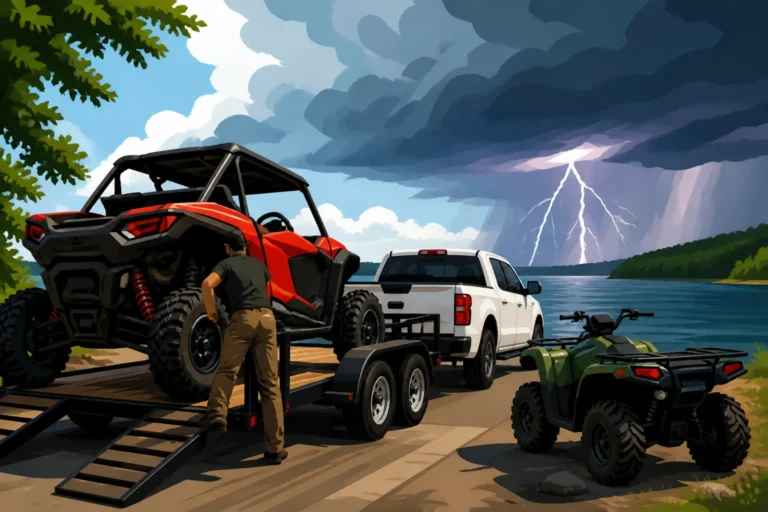
The ride between parks is a transport leg, not a trail connection. Every machine needs to be loaded, secured, and hauled on a suitable trailer or other lawful transport. Build that time into the itinerary instead of treating it as an afterthought. A group that rides until the last possible moment at the first park may end up rushing tie-downs, arriving late at the next destination, or skipping a planned check-in.
Before the trip, choose a meeting point for the move and make sure everyone knows the route and backup plan. Drivers should have each other’s phone numbers, trailer details, and a rendezvous location in case the group separates. If riders are hauling from different starting points, avoid relying on everyone to follow one vehicle through unfamiliar roads.
A simple schedule might include a morning arrival and ride at the first park, a planned stop to load and regroup, and an overnight stay before riding the second park the next day. That approach is often easier than trying to fit two full park days and the transfer into one exhausting stretch. For more planning help, see Trailering an ORV Across Indiana and Riding Two Indiana Parks in One Weekend.
Coordinate the group before the engines start
Set a pace that works for the least experienced rider
A group ride is only enjoyable when the pace, route, and break schedule work for the people in the group—not just the fastest or most confident riders. Before riding, ask about experience, machine type, comfort with hills or mud, and any physical limits that may affect the day. A beginner may be perfectly happy on a scenic loop but uncomfortable if the group quickly heads for steep climbs or deep ruts.
Agree on a lead rider and a sweep rider. The lead sets a manageable pace and makes trail decisions; the sweep stays behind the last rider and helps ensure no one gets left behind. Riders should know what to do if they lose sight of the person ahead: slow down, stop somewhere safe, and wait for the group rather than continuing alone or taking an unplanned turn.
Use regroup points at trail intersections, water breaks, and any place where the group might naturally split. A quick head count at those stops can prevent a small delay from becoming a search. Keep the group size manageable for the trail and visibility. If there are enough riders to make one group difficult to control, divide into smaller groups with a clear leader and a shared plan.
Discuss trail etiquette before entering the riding area. Give other park users room, follow posted signs, stay on marked routes, and don’t assume a machine in front of you has seen your group. For more on planning the ride itself, read Indiana Trail Etiquette on Shared Ground and Indiana Trail Difficulty Ratings.
Agree on communication and a regroup plan
Cell service may be unreliable in parts of Southern Indiana, so don’t make mobile calls or live location sharing the only way to keep the group together. Choose a clear fallback: a trailhead, staging area, parking lot, or another location everyone can identify on a paper map or downloaded map. Set a time to regroup if riders become separated.
Before the trip, confirm that everyone has the same plan for emergencies. At a minimum, riders should know who has a first-aid kit, who can contact emergency services, and where the group’s vehicles are parked. Share the park name, entrance, and expected riding area with someone who is not on the ride. If the group changes plans, update that person.
A navigation app such as onX Offroad can be useful for reviewing routes and helping riders orient themselves, but it should be one tool among several. Check that the group understands how to use the app before the ride, and don’t assume every rider will have a charged phone or a reliable signal. Download or save needed maps ahead of time, carry a backup power source, and bring a paper map or written directions when practical. Use onX Offroad to support the plan—not to replace park signs, posted closures, or staff instructions.
Sort out permits, fees, and park rules
Check requirements for every machine and every park
Before loading, verify the applicable trail permit and entrance requirements for both destinations. Don’t assume that a permit, registration, or payment for one machine automatically covers every vehicle in the group. Requirements can depend on the type of machine, where it is registered, and how the park classifies the visit. Confirm details directly through the relevant Indiana park or state information before departure.
An annual permit may be useful for riders who expect to visit more than once, while a day permit may better suit a one-time trip. The key is to understand what each permit covers and whether it is per machine. The entrance fee may be separate from a trail permit, so include both in your budget. Review Indiana’s Daily and Annual Trail Permits, Does One Annual Permit Cover Redbird and Interlake?, and Why an Entrance Fee Sits on Top in Indiana before the group makes a decision.
Have one person check that each rider knows what paperwork or proof to bring and how it should be displayed. Carry the required documents in a protected place, and don’t leave the group dependent on a single person’s phone or glove box. If one rider is visiting from outside Indiana, check that person’s specific requirements rather than assuming they match those of Indiana residents. Indiana’s Out-of-State Annual Permit can help you identify questions to resolve before the trip.
| Planning item | What the group should confirm | Why it matters |
|---|---|---|
| Trail permit | Which permit applies to each machine and each park | Prevents a rider from arriving without required authorization |
| Entrance fee | Whether the park charges a separate entrance fee | Keeps the group budget realistic |
| Registration | Whether each machine’s registration or decal meets applicable requirements | Avoids relying on another rider’s paperwork |
| Park hours | Opening, closing, and check-in details for each destination | Helps prevent a late arrival or rushed departure |
| Trail status | Closures, conditions, and routes open to your machine type | Keeps the planned route usable and within park rules |
| Group documents | Who carries what, and how riders can show required proof | Avoids a last-minute search at the gate |
Confirm conditions and rules close to departure
Trail conditions can change after rain, storms, or maintenance work. Reclaimed mine terrain may become especially challenging when clay is wet, and a route that felt comfortable in dry weather may be a poor choice for a mixed-experience group after heavy rain. Check current notices before you load, and be willing to change the plan if a trail is closed or conditions exceed the group’s ability.
Tell the group to follow posted signs and stay on permitted trails. Riders should not try to bypass a closure or follow tracks off a marked route just because the trail appears passable. Park rules may also cover helmets, passengers, vehicle equipment, and age or supervision requirements. Make sure every rider understands the rules that apply to their machine and situation.
A short briefing at the staging area can prevent misunderstandings later. Review the route plan, regroup points, hand signals, speed expectations, and what to do if someone has a mechanical problem. Check the park’s posted information again when you arrive; a plan made at home should never override a closure notice or direction from park staff.
Build a safer, more comfortable two-park itinerary
Match the route to machines, fuel, and energy
A mixed group might include sport ATVs, utility quads, side-by-sides, and dirt bikes. Those machines don’t always suit the same pace or the same trails. Check which routes are appropriate for the vehicles in your group and whether any size or equipment limits apply. If one rider’s machine is wider or less capable in mud, plan a route everyone can complete rather than dividing the group without a clear leader and communication plan.
Fuel planning deserves the same attention. Start with full tanks where practical, identify when the group can refuel, and avoid assuming that a convenient fuel stop will be open or located right beside the riding area. Carry fuel only as allowed by park rules and transport it safely. Review Fuel Between Indiana Trailheads and Planning Fuel for a Southern Indiana Loop when organizing the route.
Set a realistic stopping point for the day. Riders may be eager to keep going, especially on a first visit, but fatigue makes it harder to make safe decisions, watch for other trail users, and handle a difficult section. Schedule water and food breaks, and leave enough time to return to the staging area before the park closes. A relaxed finish is better than a hurried push through unfamiliar trails.
Prepare trailers, machines, and overnight arrangements
Before departure, check tire condition, brakes, lights, tie-downs, trailer connections, and the vehicle’s ability to tow the load. Walk around each loaded trailer before driving and again after the first stop. Riders should also inspect their machines, including fluid levels, tires, brakes, and any components that have caused trouble recently. A small maintenance check at home can prevent the group from losing valuable riding time to a preventable problem.
If the trip includes an overnight stay, decide where trailers and machines will be parked and how they will be secured. Confirm that lodging or camping arrangements allow the vehicles and trailers you are bringing. Don’t assume a campground close to a park has space for a long trailer or that a late arrival will be easy to manage. For camping considerations, see Camping Near Indiana ORV Trails.
Make the next morning simple. Agree on a departure time, identify who is carrying the shared supplies, and confirm the route to the second park before everyone goes to bed. If weather or a mechanical issue changes the plan, tell the full group—not just the lead driver. Using onX Offroad to review the route in advance can help with orientation, while written directions and a shared meeting location give everyone another way to stay coordinated. Keep the group’s plan flexible enough to account for weather, trail conditions, and the energy riders actually have after the first day.
A successful two-park trip is less about squeezing in every mile and more about making sure everyone gets there, rides within their abilities, and returns safely. Plan each park separately, make the trailer transfer part of the schedule, verify rules and fees for each machine, and agree on communication and regroup procedures before the first trail. That groundwork lets the group spend less time sorting out confusion and more time enjoying the ride.
Disclaimer
This article is for general informational purposes only and does not constitute professional advice. Laws, prices and regulations vary by location and change over time. Consult a qualified professional for guidance on your specific situation.