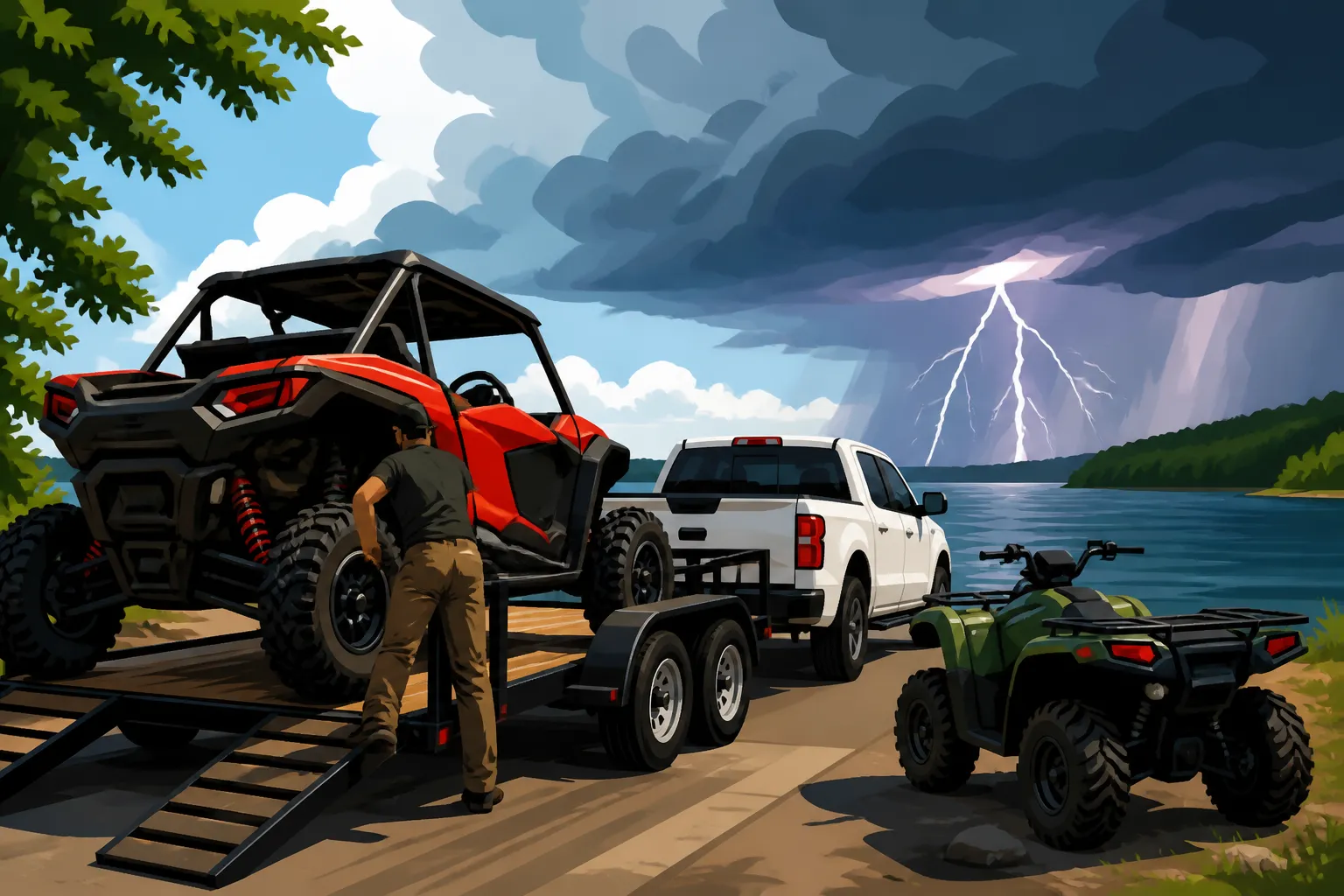
Loading Up at Interlake Before a Summer Storm
A summer storm can turn an enjoyable ride at Interlake into a hurried, slippery trip back to the trailer. The tricky part is deciding when to stop riding, finding a safe route out, and loading a muddy ATV or UTV without creating a second hazard. This guide walks through a practical plan for leaving Interlake before heavy rain arrives.
Make a storm plan before unloading
Check the forecast and park information
Before you leave for Interlake near Lynnville, check the forecast for the area around the park—not just the weather where you live. Summer storms can build quickly, and a forecast that looks manageable in the morning may include thunderstorms by afternoon. Look for the expected arrival window, the chance of lightning, and whether rain is expected to be brief or prolonged.
Check the park’s official updates before setting out and again before you unload. Weather can change trail access, operating conditions, or the safest time to leave. Read posted notices when you arrive, too. The gate board and staff instructions are more useful than relying on an old trip report or a trail map saved on your phone. For a broader pre-ride routine, see Indiana Trail Conditions Before You Ride and Indiana Trail Closures to Check First.
Plan your ride around the possibility that you may need to head back earlier than expected. If storms are forecast for mid-afternoon, for example, don’t start a long loop late in the morning and assume you can finish it at your usual pace. Leave a generous buffer for finding your way back, helping a companion with a mechanical issue, and loading several machines.
Choose a turnaround time and an exit plan
Pick a time when the group will turn back whether or not the sky looks threatening. A set cutoff helps avoid the familiar trap of thinking, “We can squeeze in one more trail.” It’s especially useful when everyone has driven a long way and wants to make the most of the day. A ride leader can announce the cutoff before the group leaves the staging area and repeat it at a planned stop.
Before riding, agree on where the group will regroup if someone gets separated and what to do if a machine breaks down. Keep the plan simple: stop in a safe place, stay together if possible, and use a phone or another agreed method to contact the group. Service can be unreliable in some southern Indiana riding areas, so don’t count on a call or map loading at the exact moment you need it. Cell Dead Zones in Southern Indiana is a useful reminder to prepare before signal disappears.
You can use onX Offroad to review your planned route and save map information for offline use before you arrive. Treat it as a navigation aid, not permission to use a closed trail or a substitute for signs, park notices, and staff directions. If the weather turns, prioritize the safest open route back rather than following a favorite loop or trying to reach a particular landmark.
Recognize when it is time to head back
Watch the sky and the trail, not only the clock
A darkening sky, distant thunder, increasing wind, or a sudden temperature drop can be a reason to start back before rain begins. Lightning is particularly important: you don’t need to wait for rain to make the ride unsafe. If you hear thunder, assume lightning is close enough to be a threat and move toward a safer location instead of continuing deeper into the trail system.
Rain also changes the riding surface. Interlake’s reclaimed-mine terrain includes slopes, uneven ground, and surfaces that can become slick. Wet clay can reduce traction, make braking less predictable, and turn a familiar climb or descent into a much harder section. A UTV that felt stable on a dry trail may slide or struggle in conditions that are changing under its tires.
If the first drops arrive, pause somewhere safe and reassess rather than automatically pushing on. Don’t cross running water or ride through a flooded low spot because it looks shallow. Water can hide ruts, debris, or a washed-out edge. Avoid steep slopes if traction is deteriorating, and don’t follow another vehicle into a section simply because it made it through first.
Leave before the route becomes the problem
If a storm is approaching, choose a reasonable route back and keep the group together at a safe pace. Ride within the ability of the least experienced person and the limits of the least capable machine in the group. Leave enough space between vehicles to avoid dust and debris in dry conditions, but don’t crowd one another on slippery ground.
If lightning becomes an immediate concern, stop riding and seek a substantial, enclosed shelter if one is available. A hard-topped vehicle with its windows closed is a safer option than waiting under an isolated tree. Avoid exposed high ground, lone trees, and open areas. If no shelter is nearby, move away from tall isolated objects and follow established lightning-safety guidance while you continue toward a safer location as conditions allow.
Keep navigation tools available, but don’t let them distract the driver. A passenger can check onX Offroad or another saved map while the driver concentrates on the trail. Follow park signage and current directions even if an app displays a route that looks shorter. For context on how the recreation area spans a wide landscape, see Interlake Across Pike and Warrick Counties and Interlake at Lynnville.
Load safely in wet and muddy conditions
Set up the trailer before the machines arrive
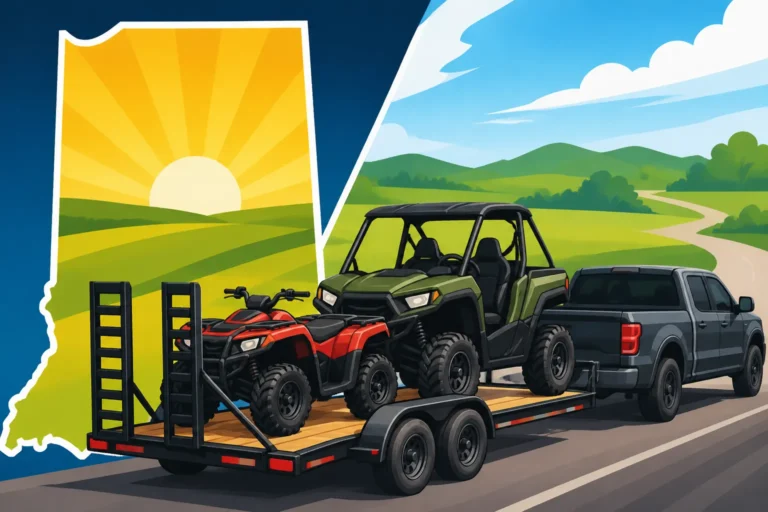
When you reach the staging area, park the tow vehicle and trailer on firm, level ground if you can. Avoid a soft shoulder, a steep slope, or a spot where runoff could collect. If the trailer is already positioned before the storm arrives, you can focus on loading rather than maneuvering in a rush.
Check that the loading ramp is secure, correctly aligned, and suitable for the machine’s weight. Wet tires and muddy ramps are a poor combination, so clear mud from the ramp surface if it is safe to do so. Keep bystanders well away from the loading path, and have one person direct the driver from a position where they can be seen without standing directly behind the machine or trailer.
Use a slow, controlled approach. Don’t make a sharp turn on the ramp, and don’t accelerate abruptly to overcome a slick spot. If the ramp or trailer shifts, stop and reset the setup rather than trying to correct it while the machine is moving. Follow the machine’s manual and the ramp manufacturer’s instructions for loading, braking, and securing the vehicle.
Strap the machine down and check the full load
Once the ATV or UTV is on the trailer, position it so the weight is distributed appropriately and the machine is stable. Put it in the recommended parked or secured state, set the parking brake if equipped, and turn it off. Use suitable tie-down points on the machine’s frame or designated locations. Avoid attaching straps to plastic bodywork or other parts that are not meant to bear the load.
Tighten the straps evenly and check that they cannot rub against sharp edges or hot components. If you’re hauling more than one machine, confirm that each one has enough clearance and is secured independently. A strap that looks tight while the machine is stationary can loosen as the suspension settles, so recheck the load after a short, safe drive and again when you stop.
Don’t rush the last checks because rain is starting. Verify the ramp is stowed and secured, the trailer connection and safety chains are in place, lights are working, and loose gear is contained. If visibility is poor or lightning is close, get yourself and your group to a safer place first. The trailer can wait until conditions allow you to work safely.
| Before you leave the staging area | What to check |
|---|---|
| Weather | Storm timing, lightning risk, and the latest park information |
| Route | A practical way back and a turnaround time for the group |
| Trailer | Stable parking spot, secure ramp, and clear loading area |
| Machines | Parked securely, turned off, and strapped at suitable points |
| Final departure | Ramp stowed, gear secured, and trailer connection checked |
Clean up and prepare for the drive home
Manage mud without creating a new hazard
Mud can make steps, footwells, ramps, and trailer decks slippery. Remove only what you can safely reach while the machine is parked and stable. Keep hands, clothing, and tools clear of hot or moving parts, and don’t climb beneath a machine that is supported only by a jack or ramp. If rain is already making the area unsafe, secure the load first and leave detailed cleaning for a safer location.
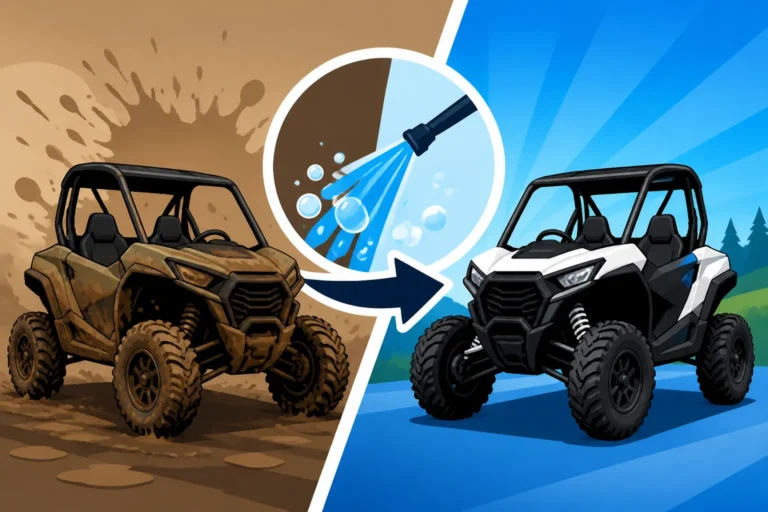
If you plan to wash the machine at the park, confirm that an appropriate wash area is available and follow posted instructions. Don’t assume you can rinse mud wherever you park, or that a hose or wash station will be available during a storm. A stiff brush, gloves, and a small cleanup kit can help remove loose clumps from tires and bodywork without turning the staging area into a mess. For a more complete post-ride routine, see Washing a Machine Before You Load.
Before driving away, make sure mud hasn’t covered lights, reflectors, or the trailer plate. Check that loose mud and equipment are not likely to drop onto the road. If visibility is poor, wait in a safe place for conditions to improve rather than rushing onto the highway with an unsecured or hard-to-see load.
Make the next trip easier
A little preparation makes an early departure much less stressful. Keep straps, gloves, a flashlight, a basic first-aid kit, and a towel together in a dry storage box. Save your route before riding, tell someone outside the group where you’re going, and agree on the time you expect to be back. If you’re staging early, Staging Early at Interlake offers related planning ideas, while Fuel Between Indiana Trailheads can help you think through fuel before a longer day.
After a wet ride, inspect the tires, brakes, lights, straps, and trailer before the next trip. Mud packed around components can hide damage, and water or grit can affect parts that seemed fine on the trail. If rain made the trails slick, remember what sections were difficult and adjust your next route or turnaround time accordingly. Indiana Riding After Heavy Rain is also worth reading before planning a ride when the ground is already wet.
The goal isn’t to squeeze every possible minute out of the day. It’s to get the group back, load without preventable risk, and leave Interlake with the machines and trailer secured for the drive home. A planned cutoff, an agreed route, and a calm loading routine make that much easier when summer weather changes quickly.
Disclaimer
This article is for general informational purposes only and does not constitute professional advice. Laws, prices and regulations vary by location and change over time. Consult a qualified professional for guidance on your specific situation.