Brown County’s New Ordinance
For far too long, riders across the Hoosier State have grappled with the frustrating uncertainty of where and how they can legally operate their beloved ATVs and UTVs on public roads. The dream of connecting trails, running quick errands, or simply enjoying a scenic drive often bumps up against a confusing patchwork of local rules, leaving many of us scratching our heads. But here in Brown County, there’s been a significant shift that’s bringing some much-needed clarity and opportunity, and this guide will break down exactly what Brown County's new ordinance means for you and your machine.
Understanding Brown County's New ORV Ordinance
The concept of taking your off-road vehicle onto public roads has always been a bit of a grey area in Indiana, largely left to individual counties and municipalities to decide. For years, many counties simply didn't have specific ordinances, leaving riders in a precarious "unregulated equals illegal" limbo. This made it incredibly difficult to plan rides that involved even short stretches of road, let alone dream of longer, scenic routes. The frustration was real – you invest in a capable machine, but its use felt perpetually confined.
Brown County, with its stunning scenery and popular outdoor recreation, recognized this growing need and the desire from its residents and visitors alike to integrate ORV use more seamlessly and safely. Their new ordinance isn't just a simple thumbs-up or thumbs-down; it's a thoughtful framework designed to open up certain roads while prioritizing safety and local community concerns. It's a move that many other counties will be watching closely as they consider their own approaches to ORV road access.
The Shift from Silence to Specifics
Before this new ordinance, Brown County, like many Indiana counties, largely operated under the default assumption that if a road wasn't explicitly designated for ORVs, it was off-limits. This created a significant barrier for anyone wanting to experience the county's natural beauty from the seat of their ATV or UTV. Riders often had to trailer their machines even for short distances between trails or properties, which was both inconvenient and costly. It essentially created isolated pockets of riding areas rather than a connected network.
The new ordinance directly addresses this by no longer remaining silent on the issue. Instead, it proactively establishes rules and conditions under which ORVs can legally traverse certain public roads. This shift is monumental because it removes the ambiguity that often led to confusion, citations, or simply riders avoiding areas altogether. It creates a defined legal pathway, allowing riders to plan their journeys with confidence, knowing they are operating within established local guidelines.
Key Provisions of the New Rules
While the exact text of any ordinance can be dense, the core of Brown County's new rules focuses on several key areas. First and foremost, it designates which types of roads are open to ORV traffic, usually excluding state highways and often municipal roads within incorporated towns or cities, unless those specific towns have their own complementary ordinances. This means that generally, county-maintained roads outside of city limits are the focus. Second, it lays out specific equipment requirements for ORVs operating on these roads, often mirroring what you'd expect for any street-legal vehicle: things like headlights, taillights, brake lights, mirrors, and sometimes turn signals. Third, it addresses operator requirements, such as age limits and potential insurance mandates.
It’s important to remember that these county ordinances typically supplement, rather than replace, state-level ORV laws. For example, even if Brown County opens its roads, you still need to ensure your machine is properly registered with the Indiana Bureau of Motor Vehicles (BMV) and carries the proper [Indiana ORV Decal Explained]. The ordinance doesn't override fundamental state law, but rather adds a layer of local regulation specific to road use. This layering of rules can sometimes feel complex, but it's crucial for ensuring both local control and broader state safety standards are met.
What the New Ordinance Means for Riders
With Brown County leading the way in establishing clearer guidelines, riders now have a framework to operate within. This isn't a free-for-all, but rather an invitation to ride responsibly and legally on designated roads, opening up new possibilities for exploration and utility. It validates the long-held desire of many ORV owners to integrate their machines more fully into their lives, whether for recreation or practical purposes.
Expanded Riding Opportunities
The most exciting aspect of this new ordinance for many riders is the expansion of legal riding opportunities. Imagine being able to ride from your cabin directly to a local eatery, or connecting two different trail systems without having to load your machine onto a trailer. For residents, it means being able to use your UTV to run to the hardware store or check mail without having to start up the truck. This kind of access transforms ORVs from purely recreational weekend toys into more versatile vehicles.
However, "expanded" doesn't mean "unlimited." Riders must still be diligent in understanding which specific roads are designated. Often, counties will provide maps or lists of open roads, and it’s your responsibility to know before you go. This might mean downloading a map from the Brown County website or calling the local highway department for clarification. It’s also crucial to remember that this typically applies only to county roads. State highways and interstates remain off-limits, and riding on private property without explicit permission is always trespassing.
Essential Equipment Requirements for Road Use
To be legal on Brown County's designated roads, your ATV or UTV will need to meet certain equipment standards. This isn't just about avoiding a ticket; it's about safety for yourself and other road users. Generally, you'll need:
- Headlights and Taillights: These aren't just for looking cool; they're essential for visibility, especially during dawn, dusk, or adverse weather. Ensure yours are fully functional and properly aimed.
- Brake Lights: Clearly visible brake lights are critical for signaling your intentions to traffic behind you.
- Mirrors: You’ll likely need at least one rearview mirror, and often two, to give you a full view of what's coming up behind you. Many riders find SuperATV mirrors to be robust and easy to install for this exact purpose.
- Turn Signals: While some county ordinances might allow hand signals, dedicated turn signals are almost always preferred for clarity and safety, particularly for UTVs.
- Horn: A working horn is a basic safety device for alerting others to your presence.
- Tires: Your tires must be DOT-approved if specifically required by the ordinance, or at least suitable for paved surfaces without causing undue damage. Aggressive mud tires might not be ideal for extensive road use.
Beyond these, some ordinances might have specific requirements for windshields, seatbelts (especially for UTVs), or even a slow-moving vehicle emblem. Always check the specific text of the Brown County ordinance to ensure your machine is fully compliant. If you're unsure about a particular piece of equipment, it's better to over-prepare than to fall short.
Operator and Safety Rules
Beyond the machine itself, the new ordinance will undoubtedly include rules for the operator. This commonly includes an age requirement (often 16 or 18, sometimes requiring a valid driver's license), and usually a mandate for proper registration through the Indiana BMV, meaning your machine needs a current [Indiana ORV Decal Explained]. You should also carry proof of registration and potentially insurance, as some county ordinances specifically require ORV liability insurance for road use. This is a good idea regardless, as protecting yourself and others is paramount.
Here are some common operator rules you can expect:
- Age and Licensing: Most ordinances will specify a minimum age, often mirroring rules for other motor vehicles. You might need a valid driver's license to operate an ORV on county roads.
- Helmet Use: While state law mandates helmets for riders under 18 everywhere, some county ordinances might extend this requirement to all ORV operators on public roads, regardless of age. Always check the specifics of the [Indiana Helmet Law for ORV Riders].
- Speed Limits: You'll be expected to adhere to posted speed limits, and there might be a lower ORV-specific speed limit on certain roads.
- Passengers: Rules regarding passengers, particularly minors, are common. For instance, children may need to be of a certain height or age to ride as a passenger, especially if seatbelts are required.
- Time of Day: Some ordinances restrict ORV road use to daylight hours, or require specific lighting for night use. Make sure your ORV is equipped with proper lighting for any potential night riding, something SuperATV can help with.
Always ride defensively and courteously, anticipating other traffic. Remember, you're sharing the road, and the impression you make can influence how these ordinances are perceived and enforced in the future. Respecting the rules is key to maintaining these new privileges.
Navigating Local Road Access for ORVs Beyond Brown County
Brown County's initiative is a fantastic step, but it's crucial to understand that it's part of a broader, sometimes confusing, landscape across Indiana. The rules vary dramatically from county to county, and even within different townships or cities within the same county. This is a common source of frustration for many ORV enthusiasts who travel throughout the state.
The Patchwork of Indiana County Ordinances
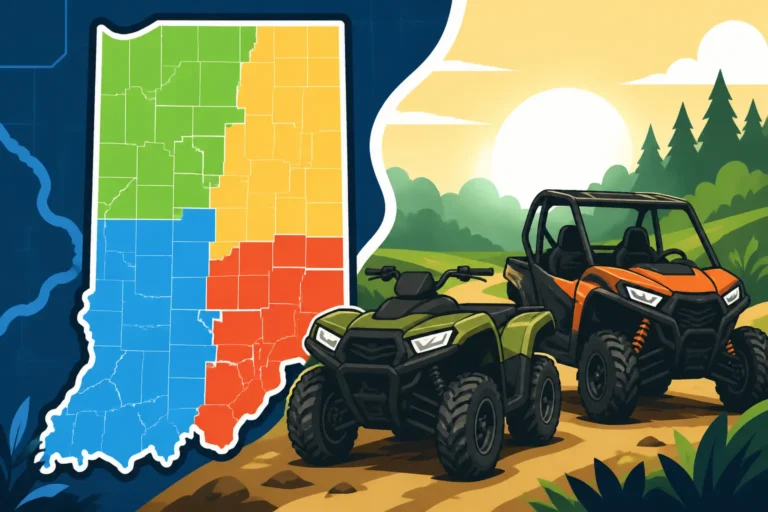
Indiana is a home-rule state, which means local governments have significant authority to pass ordinances specific to their communities, as long as they don't contradict state law. This is why you see such varied approaches to ORV road access. Some counties, like Brown County, have proactively created ordinances to allow and regulate ORV use. Others, like Hancock County, have also opened some of their roads, but with their own unique set of stipulations. Then there are counties that have taken a more restrictive stance, or simply haven't addressed the issue at all, meaning ORVs are generally prohibited from roads there by default. This mosaic of regulations is exactly why riders need to be so vigilant when crossing county lines.
This diversity means that a machine perfectly legal on a Brown County road might be illegal just a few miles away in an adjacent county that hasn't adopted similar rules. This can be incredibly challenging for planning multi-county rides or even simply figuring out how to get to your favorite trails. This is why resources that list [Indiana Counties That Allow ORVs on Roads] are so valuable, but always double-check with the county's official channels.
How Other Counties Are Handling ORV Road Access
While Brown County's ordinance is specific to its jurisdiction, it's helpful to look at how other areas have approached this.
- Hancock County: Has opened some county roads, typically those outside of incorporated towns. They often have specific speed limits and equipment requirements.
- Dearborn County: Has also passed ordinances allowing ORVs on certain county roads, usually with clear signage and requirements for registration and safety gear. You can often find detailed maps showing where it's permissible to ride.
- Vanderburgh County: Is another county that has adopted specific rules for ORV road use. Their ordinance, for instance, sets an age minimum for operators, requires insurance, and details lighting requirements for night riding. They also often provide maps, indicating which roads are open (e.g., green roads) versus those that remain closed (e.g., red roads). Riders must pay close attention to the specific designations, as riding a closed road could result in a significant fine. [Vanderburgh County's Marked Road Map] is a great example of this clarity.
These examples highlight the need for riders to perform their due diligence before they ride in any new area. A quick phone call to the county highway department or sheriff's office, or a check of the county's official website, can save you a lot of grief. The best approach is always to assume roads are closed unless you have clear, current information stating otherwise.
Preparing Your Machine for Brown County Roads
Getting your ATV or UTV ready for road use in Brown County involves more than just throwing on a helmet. It’s about making sure your machine is visible, safe, and compliant with all the local rules. This isn't just about avoiding a ticket; it's about making sure you and your passengers are safe and that you're not posing a hazard to other drivers. Think of it as upgrading your ride for a new kind of adventure.
Essential Modifications and Upgrades
If your ORV has spent its life strictly on trails or private property, it likely needs some upgrades to meet road-legal standards. While the specific requirements vary by ordinance, a general checklist includes:
- Lighting Systems: Beyond basic headlights and taillights, consider adding turn signals and a clear brake light if your machine doesn't have them. A good SuperATV turn signal kit can be a game-changer, integrating cleanly into your existing wiring. Ensure all lights are bright and fully functional.
- Mirrors: You’ll need at least one, and likely two, rearview mirrors to see traffic approaching from behind. Robust side mirrors are crucial for safe road operations.
- Horn: A loud and clear horn is a must for alerting pedestrians or other vehicles.
- Windshield: While not always strictly mandated, a full or half windshield (like those offered by SuperATV) can significantly improve comfort and protect you from road debris, making the ride much more enjoyable.
- Tires: Knobby off-road tires can be noisy and wear quickly on pavement, and may not provide optimal traction. If you plan extensive road use, consider a more road-friendly tire, or at least understand the limitations of your current setup.
- Fenders/Mud Flaps: Some ordinances require fenders or mud flaps to prevent debris from being thrown onto other vehicles.
Always keep in mind that the goal of these modifications is not just compliance, but genuine safety. Investing in quality upgrades from reputable brands ensures they’ll perform when you need them most.
Pre-Ride Safety Checks for Road Travel
Before every road ride, perform a thorough safety check on your ORV, just as you would for a long trail ride. This is even more critical when sharing the road with cars and trucks.
| Check Point | What to Look For | Why It Matters |
|---|---|---|
| Tires | Correct pressure, no cuts/bulges, adequate tread depth. | Proper handling, braking, and preventing blowouts. |
| Brakes | Firm pedal/lever, no sponginess, adequate pad thickness. | Critical for stopping safely, especially in traffic. |
| Lights & Signals | All headlights, taillights, brake lights, turn signals working. | Visibility to other drivers, communicating your intentions. |
| Mirrors | Clean, adjusted for clear rear view, securely mounted. | Seeing traffic behind you, crucial for lane changes or turns. |
| Steering & Suspension | No excessive play in steering, suspension moves freely. | Maintains control and stability, especially at speed. |
| Fluids | Check oil, coolant, brake fluid levels. | Prevents breakdowns and maintains performance. |
| Horn | Ensure it works loudly and clearly. | Alerts others to your presence or danger. |
| Seatbelts (UTV) | All belts functional and properly latching. | Keeps occupants secure in case of sudden stops or impacts. |
Beyond these mechanical checks, ensure you have your [Indiana ORV Registration Paperwork] or at least proof of registration, and proof of insurance if required, readily accessible. A small, waterproof document bag is invaluable for keeping these essentials dry and organized.
Insurance and Documentation
Even if Brown County's ordinance doesn't explicitly mandate insurance for ORV road use (though many do, like Vanderburgh County's), securing a good liability policy is always a wise decision. Accidents happen, and being uninsured can lead to devastating financial consequences. Many standard auto insurance policies do not cover ORVs, so you’ll likely need a specialized ORV policy. When obtaining a policy, ask specifically about coverage for road use and what restrictions might apply. Understanding [Indiana ORV Insurance Requirements] is paramount.
You should also keep your ORV's registration certificate and any other required documentation (like proof of insurance) on your person or in a secure, waterproof compartment on your machine. Being able to readily provide this information to a law enforcement officer is crucial. Remember that state law still requires you to [Registering an ORV in Indiana] and display your [Where the Indiana Decal Mounts], so that's a baseline requirement for all legal operation.
With Brown County taking this progressive step, the future of ORV road access in Indiana looks a little brighter. By understanding the rules, preparing your machine, and riding responsibly, you can enjoy these new opportunities to the fullest.
Disclaimer
This article is for general informational purposes only and does not constitute professional advice. Laws, prices and regulations vary by location and change over time. Consult a qualified professional for guidance on your specific situation.