Riding Outside Evansville’s Limits
Trying to figure out where you can legally ride your ATV or UTV near Evansville without getting into trouble can feel like navigating a maze blindfolded. You've got your machine, you're eager to hit the trails or even just cruise down a county road to a friend's house, but the fear of a ticket or worse keeps you parked. This guide is here to shed some light on the specific rules and nuances of riding off-road vehicles (ORVs) on public roads and easements, especially when you're outside Evansville's city limits but still within the broader Vanderburgh County area.
The Basics of Indiana ORV Road Laws
Indiana's approach to ORVs on public roads is generally quite restrictive, which can be a real head-scratcher for new owners or those coming from states with more lenient rules. It’s not just about what you can do, but what you can’t, and often, the exceptions are what make it truly confusing.
Why Indiana Roads Are Closed by Default
In most parts of Indiana, if a road isn't explicitly designated for ORV use, it's off-limits. This means you can't just hop on your quad or side-by-side and drive down Main Street, or even a quiet country lane, unless that specific road has been opened by a local ordinance. This statewide rule, that [Why Indiana Roads Are Closed by Default], aims to separate fast-moving road traffic from slower, differently handled ORVs, prioritizing safety for everyone. It's a fundamental concept that can be frustrating, especially when you feel like your ORV is perfectly capable of handling the pavement. Many riders envision a short, peaceful ride to a nearby trail or store, only to find themselves technically breaking the law just by leaving their driveway.
The Shoulder and Ditch Exception
Now, here's where it gets a little more nuanced and offers a tiny glimmer of hope for ORV enthusiasts. While you generally can't ride on the paved or graveled surface of a public road, Indiana law does make an allowance for operating your ORV on the "shoulder" or in the "ditch" adjacent to the road. This isn't a free pass to cruise indefinitely, though. The rule states that you can ride in the shoulder or ditch if there's [Sufficient Width to Ride Away From Traffic] and you maintain a reasonable distance from the traveled portion of the highway. Think of it as a narrow corridor of legality that keeps you out of the direct path of cars. This exception is usually for getting from one private property to another, or to access a legal crossing point, not for joyriding. The idea is to minimize interaction with road-going vehicles. You still need to be mindful of mailboxes, culverts, and other roadside obstacles that could pose a hazard. It’s a delicate balance between legal access and practical safety.
Crossing Public Roads Legally
Even if you can't ride on a road, there will inevitably be times when you need to cross one to get to another trail or piece of property. Indiana law has specific requirements for this. First and foremost, you must execute [Crossing at Right Angles in Indiana]. This means pointing your ORV straight across the road, minimizing the time you spend in a traffic lane. Before you even think about moving, you must come to [A Complete Stop Before an Indiana Crossing]. This isn't a rolling stop; it's a full, momentary halt to assess the situation. Crucially, you must [Yielding to All Traffic at a Crossing]. This means waiting for a clear break in traffic, no matter how long it takes, to ensure you don't impede or endanger any approaching vehicles. These rules are in place because crossing a road, even for a few seconds, puts you in direct conflict with traditional road traffic, and safety is paramount. Ignoring these simple rules can lead to dangerous situations and, of course, a ticket.
Understanding Vanderburgh County's ORV Ordinance
When it comes to ORV use on local roads, Indiana empowers counties to create their own ordinances to designate roads as open or closed. This means what applies in one county might be entirely different in Vanderburgh County, especially when considering areas just outside larger cities like Evansville.
Vanderburgh County's Marked Road Map
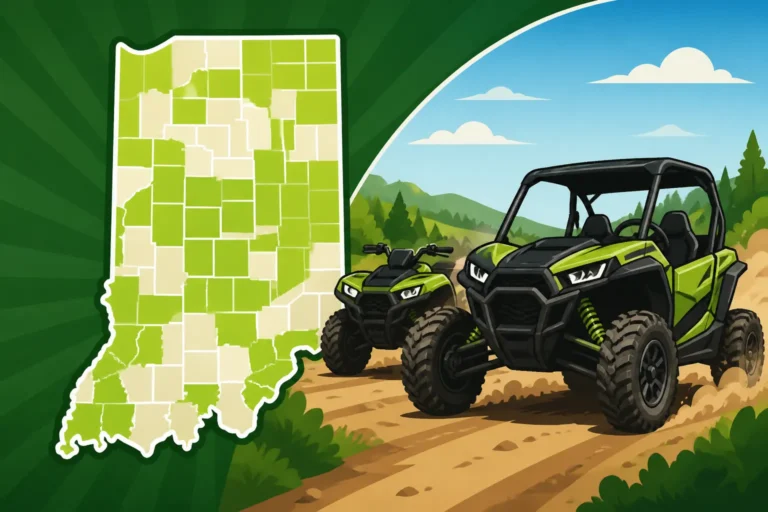
Good news for Vanderburgh County riders: the county does have an ordinance regarding ORV use on certain public roads. However, it's not a blanket opening of all roads. Instead, Vanderburgh County has implemented [Vanderburgh County's Marked Road Map]. This map, often available through the county's highway department or online, is your absolute go-to resource. It visually clarifies which county roads are open for ORV travel and which are not. For riders, it can be a lifesaver, telling you exactly where you can go. Learning to interpret [Reading Vanderburgh's Color-Coded Map] is essential. Typically, roads designated as open will be marked with a specific color, while closed roads will have another. It eliminates a lot of the guesswork, provided you consult it regularly, as these maps can be updated.
Understanding the legend is critical:
- [What a Red Road Means on Vanderburgh's ORV Map]: Generally, red roads are closed to ORV traffic, signifying areas where riding is prohibited. This might be due to traffic volume, road type, or proximity to residential areas.
- [What a Blue Road Means on Vanderburgh's ORV Map]: Conversely, blue roads are typically open for ORV use, indicating routes where the county has deemed it safe and permissible for ORVs to operate. These are usually less traveled county roads.
Always get the most current version of the map, as changes can occur based on safety assessments or community feedback. This map is your best defense against inadvertently riding where you shouldn't.
Why Evansville and Darmstadt Stay Closed
Even with Vanderburgh County's ordinance and map, it's vital to understand that this county ordinance typically applies to unincorporated areas. This brings us to a crucial point about [Why Evansville and Darmstadt Stay Closed]. As incorporated cities and towns, Evansville and Darmstadt have their own municipal authority. This means they can, and often do, maintain their own rules that supersede the county's ordinance within their corporate limits. So, even if you're just on the edge of town, a "blue" road on the county map might suddenly become "red" as you cross into city jurisdiction. The general rule for these urban areas is that ORVs are not permitted on public roads unless specifically allowed by a city ordinance, which is rare. So, while you might be Riding Outside Evansville's Limits on an open county road, you need to be acutely aware of where those limits are drawn. Don't assume that because the county has opened roads, the cities within it have done the same. Always confirm the specific municipal rules if you're approaching an incorporated area.
Key Requirements for Riding Designated Roads
Riding on Vanderburgh County's designated roads isn't a free-for-all. There are specific operational requirements you must meet to stay legal and safe. For instance, [Vanderburgh's Eighteen-Year-Old Operator Rule] is a common one, meaning that only licensed drivers aged 18 or older are typically permitted to operate an ORV on county roads. This aligns with standard motor vehicle licensing and maturity expectations for road interaction.
Another significant requirement is [Vanderburgh's Insurance Certificate Requirement]. You'll need to carry proof of liability insurance. This isn't just a good idea; it's often a legal mandate to ensure that in the event of an accident, there's coverage for damages or injuries. Make sure your ORV policy explicitly covers road use, even on designated county routes.
Finally, especially if you plan to ride anywhere near dusk or after dark, you must adhere to [Vanderburgh's Dual Light Rule at Night]. This typically means your ORV must be equipped with [Two Headlights After Dark] and [Two Taillights After Dark] that are properly functioning and visible. This is a critical safety measure, making your machine visible to other motorists and ensuring you can see the road ahead. Many stock ORVs might have adequate lighting for trail use, but ensuring they meet road-legal brightness and configuration is important. If your factory lighting isn't up to snuff, aftermarket options are readily available from brands like SuperATV, offering various light bars and auxiliary lights that can easily satisfy these requirements.
Here's a quick summary of key Vanderburgh County ORV road rules:
| Requirement | Description |
|---|---|
| Designated Roads | Only permitted on roads clearly marked "open" on the official Vanderburgh County ORV map. |
| Age of Operator | Typically, operators must be 18 years or older and possess a valid driver's license. |
| Insurance | Proof of liability insurance that covers ORV road use must be carried at all times. |
| Lighting | Must have at least two functional headlights and two taillights for riding after dark or in low visibility. |
| Decal | Your ORV must display a valid Indiana ORV registration decal, properly placed (e.g., [Indiana ORV Decal Placement]). |
| Speed Limit | Adhere to posted speed limits for the road or a lower ORV-specific limit if designated. |
| Passengers | Adhere to manufacturer recommendations for passenger capacity and safety restraints. |
Practical Advice for Riding Near Evansville
Navigating the local regulations can be daunting, but with a little preparation, you can enjoy your ORV responsibly and legally around Vanderburgh County.
Checking Before You Ride
The number one piece of advice is always to [How to Find an Indiana County ORV Ordinance] and check the very latest information before you even load up your machine. County ordinances, and particularly maps, can be updated periodically. What was open last year might be closed this year, or vice-versa, based on traffic studies, safety concerns, or local community input. Always consult the official Vanderburgh County website or contact their Highway Department directly. Don't rely on outdated maps or hearsay from other riders. A quick call or website check can save you a lot of grief. Remember that while a local business might encourage ORV riding, they are not the authoritative source for legal road access. Always go directly to the source for the most accurate and up-to-date information.
Equipping Your Machine for Road Use
If you plan to ride on any designated county roads, your machine needs to be properly equipped, not just for the trails, but for interacting with regular traffic. As mentioned, proper lighting is paramount. [Two Headlights After Dark] and [Two Taillights After Dark] aren't just suggestions; they're legal requirements in areas with light rules. Consider upgrading your standard lights with brighter LED options if you do a lot of evening riding. Brands like SuperATV offer a wide range of DOT-approved lighting solutions, from full headlight replacements to auxiliary light bars, that can dramatically improve your visibility and adherence to local laws.
Beyond lights, ensure your machine has functional mirrors, a horn, and is generally in good working order. Your Indiana ORV registration decal must be clearly visible and properly mounted. [Indiana ORV Decal Placement] is crucial, typically on the forward half of the machine, to allow law enforcement to easily verify your registration. Also, always carry your [Indiana ORV Registration and Insurance Proof] with you. While you might keep copies on your phone, having physical documents is often preferred in a roadside stop.
Consequences of Illegal Road Riding
Ignorance of the law is never an excuse, and the consequences for riding illegally on public roads in Indiana can be quite significant. If you're caught riding an ORV on a non-designated road in Vanderburgh County, you'll likely face a fine. [Vanderburgh's $75 First Fine] is a common starting point for a first offense. However, [What Happens After a First Vanderburgh ORV Ticket] can escalate quickly. Repeat offenses often come with significantly higher penalties. For instance, a third offense could land you with [What a Class C ORV Infraction Costs in Indiana], which can be up to $500, plus court costs.
These aren't just small nuisances; they're legal infractions that can impact your record and wallet. Beyond the direct fines, you could also face towing fees if your machine is impounded, and the hassle of retrieving it. [Indiana Fines for Illegal ORV Road Use] can add up quickly, especially if you're repeatedly caught. Moreover, illegal road use can invalidate your insurance coverage in the event of an accident, leaving you personally liable for damages. The best way to avoid these headaches is simply to stay informed and ride only where it's explicitly permitted, or stick to private property with permission.
Disclaimer
This article is for general informational purposes only and does not constitute professional advice. Laws, prices and regulations vary by location and change over time. Consult a qualified professional for guidance on your specific situation.