Riding a Parking Lot That Is Not Designated
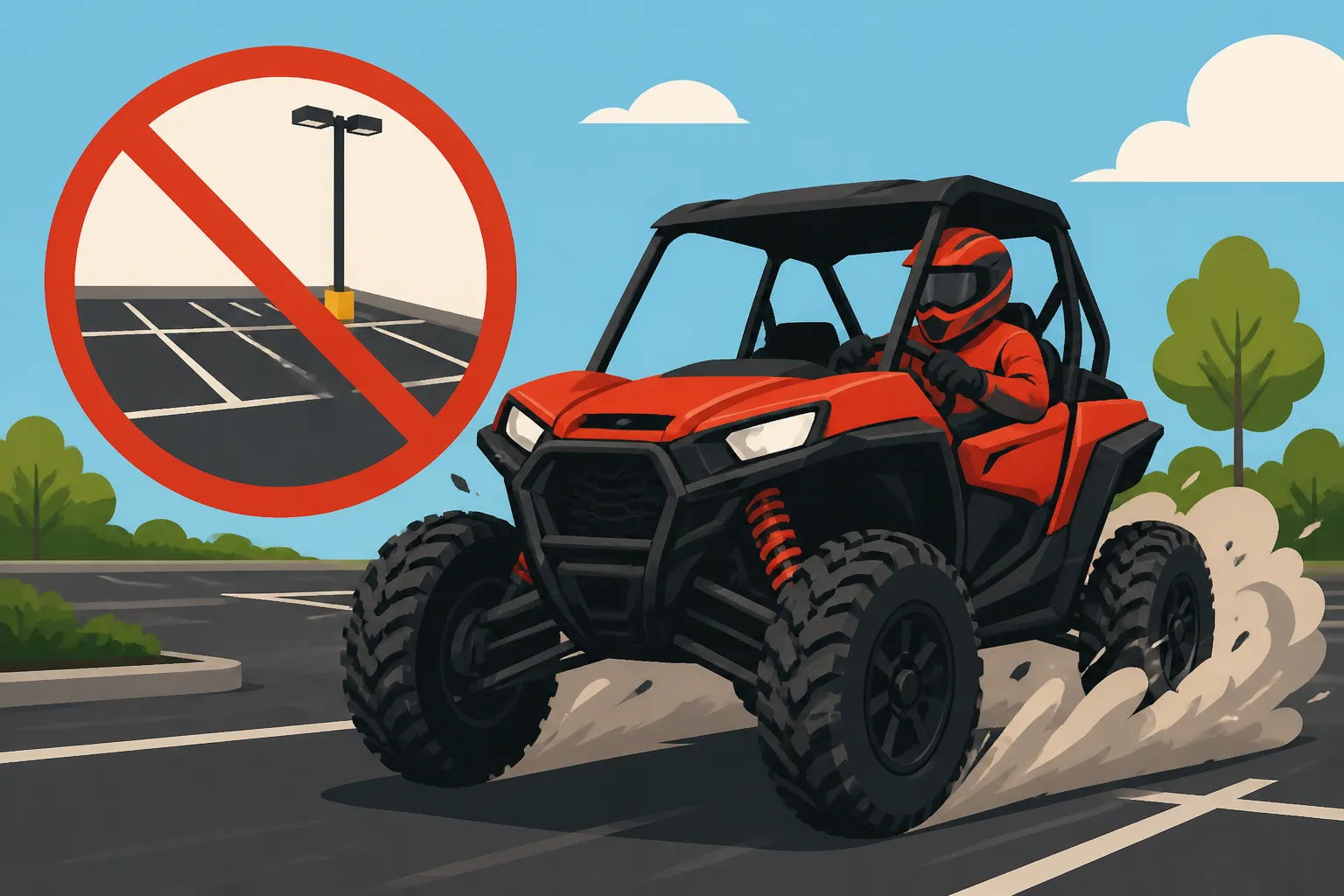
Many off-road vehicle enthusiasts in Indiana find themselves at a crossroads: they've just unloaded their ATV or UTV and need a quick spot to stage, test a new accessory, or simply move from their trailer to the trail. The temptation to just zip across a nearby parking lot, especially one that looks empty, is strong. But what might seem like a harmless shortcut can quickly lead to trouble, as Indiana has specific rules that govern where your machine can legally be operated. This guide will delve into the nuances of riding your ORV in parking lots that aren't specifically designated for such use, helping you avoid unnecessary fines and keep your passion on the right side of the law.
The Allure and Danger of Undesignated Parking Lots
Many of us have been there: you've got your shiny SuperATV accessories installed, your rig is ready to roll, and you're pulling into an area near your intended riding spot. Maybe you're at a local gas station, a restaurant, or even a big box store, simply needing a place to park your truck and trailer. It's perfectly natural to consider briefly firing up your ATV or UTV to move it, adjust something, or perhaps even take a quick spin to check a new repair. The parking lot seems open, unoccupied, and a logical next step from your trailer hitch.
Why the Temptation to Ride in a Parking Lot?
The convenience factor is huge. You've trailered your machine, perhaps for an hour or more, and now you're finally at your destination, or at least very close. Unloading takes time, and the idea of having to immediately load back up just to move to a legal riding area can feel like a waste. Plus, parking lots often offer a relatively flat, open space, which can seem ideal for a quick test ride if you've been working on your machine's suspension or just installed a new exhaust. Sometimes, it's just about the sheer excitement of getting on the machine after a long drive. Riders often confuse the appearance of an empty space with permission to ride. They might think, "It's private property, so as long as I'm not causing trouble, it should be fine," which is a common misconception that can lead to significant problems.
The Misconception of "Private Property" and ORV Use
This is where many riders get tripped up. While a parking lot is indeed private property, owned by the store, business, or complex it serves, that doesn't automatically grant permission for off-road vehicle use. Property owners have the right to set their own rules regarding how their land is used. Just because you can drive your truck there doesn't mean you can operate an ORV. In fact, most commercial parking lots, by their very nature and design, are not intended for ATVs or UTVs. They are built for passenger vehicles, for parking, and for pedestrian traffic. The assumption that "private land means I can ride" is fundamentally flawed when it comes to commercial or even many residential private properties, especially if you don't have explicit permission from the owner. [Indiana Trespass Rules for Riders] are very clear on this, and even seemingly innocent riding can be considered trespass.
Understanding Indiana's Stance on Parking Lot ORV Use
Indiana law, and local ordinances, are quite specific about where you can and cannot operate an off-road vehicle. The default position is generally restrictive, meaning you should assume you cannot ride somewhere unless it is explicitly designated for ORV use. Parking lots, by their very definition, are usually not designed or intended for the kind of riding ATVs and UTVs are built for. This isn't just about safety; it's about property damage, noise, liability, and the general public's expectation of how these spaces are used.
The "Designated" Difference in Indiana Law
Indiana law, particularly through the Department of Natural Resources (DNR) and local ordinances, focuses heavily on designated areas for ORV operation. When it comes to parking lots, "designated" means there are clear signs, markings, or official statements from the property owner or local authority explicitly permitting ORV use for specific purposes. This is rarely the case for the average commercial parking lot. Think of it this way: a public park might have a designated parking area for trail users, but that doesn't mean you can then ride your ORV through the picnic area or across the soccer fields. The parking lot itself is for parking vehicles, not for ORV operation, unless stated otherwise. Without that explicit designation, you're usually in violation. Even loading and unloading should be done with care, directly onto or off your trailer, without prolonged operation or joyriding in the lot.
Public Versus Private Parking Lots and ORV Rules
The distinction between public and private parking lots can be blurry for some riders, but the rules generally coalesce around the same principle: if it's not designated for ORV riding, don't ride there.
- Public Parking Lots: These are typically owned and maintained by a municipality, county, or state agency. They might be at a government building, a public park (not necessarily an ORV park), or a public recreation area. Operating an ORV in these lots without explicit permission or designation is almost universally prohibited. They are intended for the parking of street-legal vehicles and are often covered by the same rules that govern public roads, which generally ban ORVs unless a specific county ordinance has opened them, as discussed in topics like [Indiana Counties That Allow ORVs on Roads].
- Private Parking Lots (Commercial): These include grocery store lots, mall parking, restaurant lots, gas stations, and industrial parks. While privately owned, they are open to the public for commerce. Property owners typically have "no trespassing" rules for unauthorized activities, and ORV riding definitely falls into that category. They can, and often will, call law enforcement to address unauthorized ORV use. Even if you're a patron, your permission to be on the property extends to legitimate business activities, not recreational ORV riding.
- Private Parking Lots (Residential/Personal): This category might include your own driveway, a friend's private lot, or a small gravel area attached to a private residence. Here, the rules change significantly, as permission from the landowner is key. If you own the property, or have explicit, direct permission from the owner (preferably in writing for long-term use), you can generally operate your ORV. However, even on private residential land, noise ordinances and local nuisance laws can still apply, especially if your riding disturbs neighbors.
The Consequences of Riding in Undesignated Parking Lots
Ignoring the rules for ORV use in undesignated parking lots isn't just a minor infraction; it can lead to a range of legal, financial, and personal headaches. The "it's just a parking lot" mentality can quickly land you in a difficult situation with law enforcement, property owners, and even your own insurance company. It's crucial to understand that these aren't just minor inconveniences, but serious penalties that can impact your ability to enjoy your ORV in the future.
Legal Penalties and Fines
Operating an ORV in an undesignated parking lot in Indiana can lead to multiple citations. Depending on the specific location and the discretion of the enforcing officer, you could face:
- Trespassing: This is a common charge, as you are operating your vehicle on private property without permission. Even if the lot is open to the public for business, recreational ORV use is typically outside the scope of that implied invitation.
- Operating an Unregistered ORV: If your machine isn't properly registered with the Indiana BMV, this fine applies even if you're just moving it. Remember, [Registering an ORV in Indiana] is a fundamental requirement for most machines.
- Operating an ORV on a Prohibited Road/Area: Many parking lots fall under ordinances similar to those for public roads, where ORVs are generally banned unless explicitly permitted.
- Reckless Operation/Disorderly Conduct: If you're speeding, doing donuts, or causing a disturbance, these additional charges can be added, significantly increasing your fines and potential legal trouble.
- Property Damage: If you tear up grass, leave ruts, or damage pavement, you'll be liable for the repair costs on top of any fines.
An initial offense for illegal ORV road use or trespassing can lead to fines starting at several hundred dollars, and repeat offenses can escalate rapidly. [What a Class C ORV Infraction Costs in Indiana] can give you an idea of the financial impact.
Insurance Implications and Liability
Beyond the immediate fines, there's a significant liability risk. If you have an accident in an undesignated parking lot, whether you hit another vehicle, a pedestrian, or even a fixed object, your ORV insurance might not cover you. Most ORV insurance policies have clauses that limit coverage to legal operation on designated trails or private property with permission. Operating your machine illegally in a public or commercial parking lot could be seen as an exclusion, leaving you personally responsible for all damages and medical bills. Imagine hitting a parked car while test-driving your new SuperATV lift kit in a grocery store lot – you could be looking at thousands in repairs out of your own pocket, not to mention potential injury claims. This is a huge financial risk that far outweighs the minor convenience of a quick spin. Furthermore, the property owner could sue you for any damage to their property or for any injuries sustained by someone else on their property due to your unauthorized ORV use.
Property Owner's Rights and Public Perception
Property owners have every right to protect their land and their customers. When you ride an ORV in their parking lot, you're not just breaking a rule; you're potentially creating a nuisance, damaging their property, and putting their patrons at risk. This often results in calls to the police, which means a negative interaction with law enforcement and a tarnished reputation for ORV riders as a whole. Businesses, in turn, might become more stringent, posting "No ORV" signs or even actively contacting authorities every time they see an ORV. This hurts the entire ORV community, making it harder to foster positive relationships with landowners and the general public, and potentially limiting future opportunities for legal riding areas.
Safer, Legal Alternatives for ORV Staging and Riding in Indiana
The good news is that Indiana offers fantastic, legal opportunities for off-road vehicle enthusiasts. Instead of risking fines and liability in undesignated parking lots, smart riders plan ahead and utilize the many resources available. This not only keeps you on the right side of the law but also ensures a much more enjoyable and worry-free riding experience.
Utilizing Dedicated ORV Areas
Indiana boasts excellent state-managed ORV riding areas designed specifically for ATVs, UTVs, and dirt bikes. Places like [Redbird Off-Road State Recreation Area] and [Interlake Off-Road State Recreation Area] offer miles of diverse trails, staging areas, and proper facilities. These parks are exactly where your ORV belongs. They have designated parking lots for trucks and trailers, and once you've paid your [Indiana ORV Trail Permit Cost] and entrance fees, you can ride to your heart's content.
- Redbird SRA: Located in Sullivan County, Redbird offers 1,400 acres of trails, including challenging climbs and open areas. It's an old reclaimed mine property, providing a unique riding experience.
- Interlake SRA: Spanning Pike and Warrick counties, Interlake boasts 3,550 acres and nearly 100 miles of trails around seventeen lakes. It's one of the largest ORV riding areas in the Midwest, perfect for a full day or weekend adventure.
These parks provide the infrastructure, safety protocols, and clear rules that make for a legitimate and thrilling off-road experience.
Exploring Private Pay-to-Ride Parks
In addition to the state-run facilities, Indiana is home to several private pay-to-ride parks that cater specifically to off-road enthusiasts. Places like Badlands Off Road Park in Attica, Haspin Acres in Laurel, and Lawrence County Recreational Park offer a variety of terrain and amenities. These parks often have:
- Extensive Trail Systems: From mud bogs to rock crawls, these parks often have trails tailored for different skill levels and machine types.
- Designated Staging Areas: Plenty of space to unload your machine, gear up, and make any last-minute adjustments. Some even have wash stations, which are great for cleaning up your SuperATV portal gears after a muddy run.
- On-site Services: Many offer fuel, food, parts, and even camping, making them a one-stop destination for an ORV adventure.
- Clear Rules: While privately owned, these parks operate under specific safety and conduct rules, ensuring a controlled and enjoyable environment for everyone.
These private parks understand the needs of ORV riders and provide a legal, safe, and exciting alternative to unofficial riding spots.
Proper Transport and Staging for Off-Road Adventures
The key to avoiding issues with undesignated parking lots is proper planning and transport. Always assume that the only place to ride your ORV is a designated trail or private property where you have explicit permission.
- Dedicated Trailers: Use a suitable trailer to transport your ATV or UTV directly from your home to a legal staging area at an ORV park or private property.
- Designated Staging: Once at a park, unload your machine directly into the designated staging area. Avoid riding it around the main parking lot or entrance areas if not explicitly permitted. Only operate your ORV where it's legally allowed.
- Route Planning: If you need to stop for fuel or supplies, do so with your ORV securely loaded on your trailer. Only unload and operate your ORV once you are within a clearly marked and permissible riding zone. Planning your stops around official staging areas can save you a lot of grief.
- Being a Responsible Rider: Adhere to all local and state laws. Carry your [Indiana ORV Registration Paperwork] and any required permits. By being a responsible rider, you not only protect yourself but also contribute positively to the perception of the entire ORV community.
Here's a quick comparison of parking lot scenarios:
| Scenario | Legality | Risk Level | Potential Consequences | Best Practice |
|---|---|---|---|---|
| Designated ORV Staging Lot (Park) | Legal (with permit/fee) | Low | Enjoyable riding, easy access to trails | This is exactly what they're for! |
| Private Parking Lot (Owner's OK) | Legal (with explicit permission) | Moderate | Could still face noise complaints, unexpected liability | Get permission in writing, check local ordinances |
| Commercial Parking Lot (Undesignated) | Illegal (implied trespass/violation) | High | Fines, trespassing charges, property damage liability | Avoid entirely, keep ORV on trailer |
| Public Parking Lot (Undesignated) | Illegal (violation of public land use) | High | Fines, citations, impoundment | Avoid entirely, assume prohibited unless marked |
| Roadside Shoulder/Ditch | Generally Illegal (with exceptions) | High | Fines, dangerous interaction with traffic, potential injury | Know [Indiana Rules for Riding a Highway Shoulder] carefully |
By understanding these distinctions and opting for legal, designated riding spots, you can fully embrace the thrill of off-road adventure without the looming worry of legal trouble or unforeseen expenses. Get out there, explore, and ride safely and responsibly!
Disclaimer
This article is for general informational purposes only and does not constitute professional advice. Laws, prices and regulations vary by location and change over time. Consult a qualified professional for guidance on your specific situation.