Indiana Rules for Riding a Gravel Road
One of the biggest head-scratchers for any ATV or UTV owner in Indiana is figuring out exactly where you can and can't legally ride. It's not always intuitive, especially when you're looking at a perfectly quiet, dusty gravel road that seems ideal for a leisurely cruise. But before you even think about dropping your machine off the trailer, you need to understand the often-frustrating truth about Indiana's rules for riding these types of roads. This guide is here to untangle those rules, explain why they exist, and help you navigate the tricky landscape of riding your off-road vehicle on what appears to be a public thoroughfare.
The Default Rule: Why Most Indiana Gravel Roads Are Closed to ATVs and UTVs
It’s a common misconception, isn’t it? You see a quiet gravel road winding through the countryside, and your immediate thought might be, "This looks like a perfect place for my ATV or UTV." But here in Indiana, the reality is usually quite different. The vast majority of our state's roads, including those inviting gravel paths, are generally off-limits to off-road vehicles (ORVs) unless specifically opened by local ordinance. It’s frustrating, especially when you feel like you're not bothering anyone, but it's the law we have to contend with.
Understanding Indiana's "Closed by Default" Stance
Indiana operates on a "closed by default" principle when it comes to ORVs on public roads. This means that if a road isn't explicitly designated for ORV use by a county or municipality, it's considered illegal to ride your ATV or UTV on it. This can be a real buzzkill when you're exploring new areas, as it requires a proactive approach to understand local regulations before you ride. You can't just assume; you have to know. This can feel like a bureaucratic hurdle when all you want to do is enjoy your machine, but ignoring it can lead to hefty fines and other headaches. It's not like riding a bicycle where you can pretty much go anywhere. With ORVs, the state draws a very clear line. To learn more about the broader context, you might want to check out [Are ATVs Street Legal in Indiana?].
Imagine you're driving your truck with your UTV on the trailer, heading to a designated riding area. You spot a picturesque gravel road that could shave a few miles off your route, or simply offer a scenic detour. The temptation to unload and take the shortcut might be strong. However, unless you've done your homework and confirmed that the specific county or even the specific township has an ordinance allowing ORV use on that particular road, you're risking a ticket. It's a tough pill to swallow because these roads often feel less trafficked and less dangerous than paved ones, but the legal distinction is firm.
What Defines an Off-Road Vehicle in Indiana's Eyes?
Part of understanding these rules comes down to how Indiana actually defines an "off-road vehicle." It's not just about what it looks like, but its intended design and capabilities. Generally, an ORV is a motorized vehicle designed to travel over unimproved terrain and that has a width of 50 inches or more, a dry weight of 2,000 pounds or less, and travels on three or more tires. This includes your typical ATVs, side-by-sides, and even some dirt bikes, though dirt bikes often have their own specific regulations. The key here is "designed to travel over unimproved terrain" – that's what sets it apart from a car or a truck, even if that car or truck has four-wheel drive.
This definition is crucial because it’s what subjects your machine to the specific ORV laws, including those dictating where you can and cannot ride on public thoroughfares. If your machine fits this description, then the "closed by default" rule for public roads applies. It's not about how you use it, but how the state defines it. So, even if you’re driving your side-by-side gently down a gravel lane, if it’s an ORV by definition, you’re subject to ORV laws. You can explore [How Indiana Defines an Off-Road Vehicle] for a deeper dive into these classifications.
The Rationale Behind the Restrictions
So, why these restrictions? It often boils down to safety, road wear, and liability. ORVs are designed for off-pavement conditions, and their handling characteristics on hard surfaces, especially at speed, can be significantly different from street-legal vehicles. They typically have knobby tires for traction in dirt and mud, which don't grip asphalt or packed gravel the same way street tires do. This can lead to reduced control and longer stopping distances. Plus, the higher center of gravity on many UTVs and ATVs can make them more prone to rollovers on uneven road surfaces or during evasive maneuvers.
Beyond safety, there's the issue of road maintenance. While gravel roads might seem robust, the aggressive tires and suspension of ORVs can contribute to rutting, washboarding, and general wear and tear that the local highway department would then have to address. And, of course, there's the concern for other road users – cars, trucks, cyclists, and pedestrians. An ORV operating on a public road, especially one not designed for it, can pose an unexpected hazard. The state's primary goal is to ensure public safety and the longevity of its infrastructure.
The Exceptions: When a Gravel Road Opens Up for Your Machine
Now, it's not all doom and gloom! While the default is "closed," there are indeed situations where you can legally ride your ATV or UTV on a gravel road in Indiana. These exceptions are critical for riders to understand, as they represent the pathways to legal and enjoyable ORV use beyond dedicated off-road parks. It requires a bit of homework, but knowing these options can open up new riding opportunities.
County Ordinances: The Local Game Changer
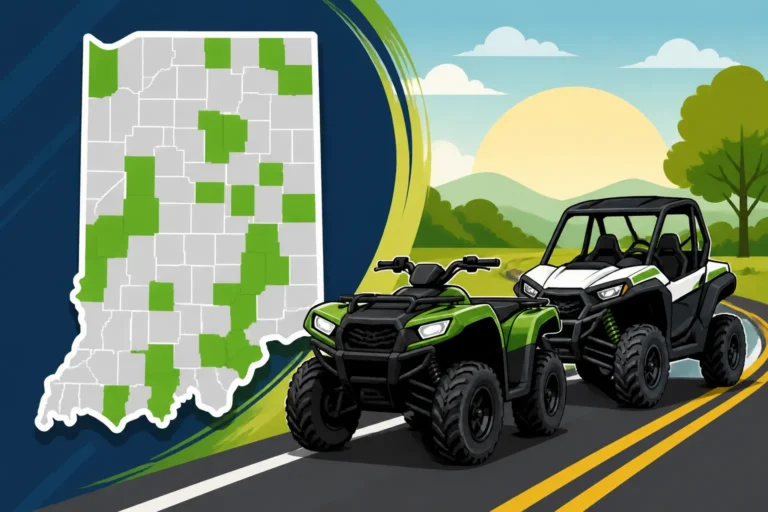
The most significant exception comes from local county ordinances. Indiana law grants counties the authority to pass ordinances that allow ORVs on certain county roads. This is where it gets interesting – and also a little complicated. Not all counties have done this, and those that have done so often have specific rules about which roads are open, when you can ride them, and what equipment you need. You can't just assume that because one county has an open roads policy, the neighboring one does too. For a list of counties that have taken this step, check out [Indiana Counties That Allow ORVs on Roads].
For example, imagine you're planning a trip to a county known for its beautiful rural scenery. You’ve heard whispers that they allow ORVs on some of their gravel roads. Before you even load your machine, you need to go directly to the source: the county's official website, or even call their highway department or sheriff's office. You might find a detailed map, a list of designated roads, or specific time restrictions. Some counties might only allow riding during daylight hours, or prohibit it during certain seasons. This is also where you might encounter specific insurance or licensing requirements unique to that county. It truly is a local game. Some counties, like Vanderburgh County, might have detailed maps, while others may have a simple list.
| County Designation Status | What It Means for Riders | Action Required |
|---|---|---|
| "Closed by Default" | ORVs are NOT permitted on any public roads (gravel or paved) unless explicitly stated otherwise. | Do NOT ride on public roads. Seek designated ORV trails or private land. |
| "Open by Ordinance" | Specific county roads (often gravel) ARE permitted for ORV use, subject to local rules. | Research the specific county's ordinance; identify open roads, hours, and rules. |
| "Limited Exceptions" | ORVs may be allowed for agricultural purposes, utility work, or road crossings. | Understand the strict conditions for these limited uses. |
Permitted Shoulder and Ditch Riding
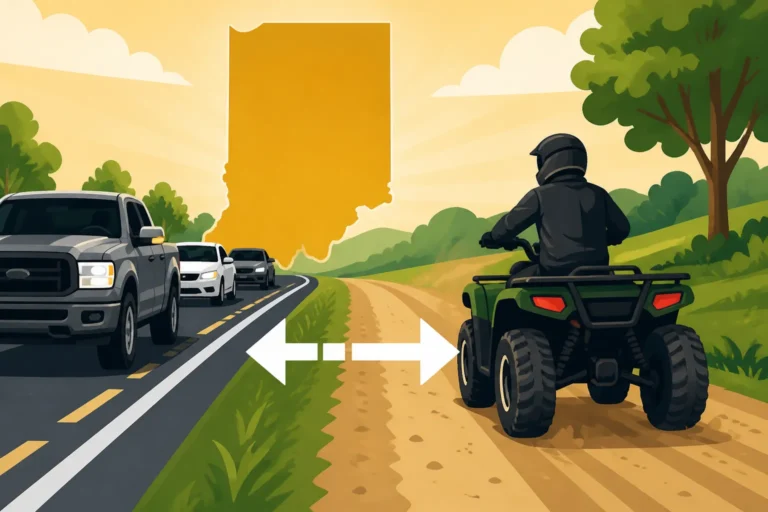
Even in counties that haven't opened up their gravel roads entirely, Indiana law does provide for some very specific, limited use of ORVs along public roads. This often involves riding on the shoulder or within the ditch alongside the road, but under very strict conditions. This isn't a free pass to cruise parallel to traffic; it's typically intended for accessing private property or connecting to a designated trail, and always with safety as the paramount concern. For detailed rules on this, see [Indiana Rules for Riding a Highway Shoulder] and [Indiana Rules for Riding a Ditch].
The shoulder or ditch must be of sufficient width to allow the ORV to operate safely and entirely off the traveled portion of the highway, away from traffic. You also generally have to ride in the same direction as the adjacent traffic. This isn’t about joyriding; it’s about very specific, utilitarian movement. Think about accessing a field from your property, or moving a short distance to a trailhead without putting your machine directly into traffic. It's a fine line, and an officer will be looking for strict adherence to the rules.
Crossing a Gravel Road Legally
Another common scenario where your ORV might encounter a gravel road is when you need to cross it to get from one piece of property to another, or to reach another trail segment. Indiana law does permit ORVs to cross public roads, including gravel roads, but again, with very specific requirements designed to minimize risk. You can't just zip across whenever you feel like it. The rules are clear and designed for maximum safety.
To cross a gravel road legally, you must bring your ORV to a complete stop before entering the traveled portion of the road. You must yield the right-of-way to all oncoming traffic, just as if you were in a car pulling out from a private driveway. And critically, you must cross the road at a right angle (as close to 90 degrees as possible) to the flow of traffic. This minimizes your time in the lane and makes you more predictable to other drivers. This isn't about merging into traffic, but about a quick, safe perpendicular crossing. It’s a very different maneuver than riding on the road. For more on this, consult [Indiana Rules for Crossing a Highway].
Navigating County Ordinances: How to Ride Legally
So, you've heard that some counties are opening up their gravel roads to ORVs. That’s fantastic news! But it also means you have to do your due diligence to ensure you're riding legally and safely. Simply hearing a rumor isn't enough; you need concrete information. Getting this right is crucial, because ignorance of the law is never an excuse, and law enforcement officers will certainly enforce what's on the books.
Researching Local Regulations
This is the most critical step. Before you even think about trailering your ORV to a new county, you need to find and read that county's specific ORV ordinance. Don't rely on word-of-mouth or outdated online forums. The best place to start is the county's official website, typically under the county commissioners, sheriff's department, or highway department sections. Look for a public ordinance or code. You might also find this information at your local Bureau of Motor Vehicles (BMV) branch, though they primarily handle registration and titling, not necessarily local road use rules.
When you find an ordinance, read it thoroughly. It will outline which roads are open, any time-of-day restrictions, speed limits specific to ORVs, age requirements for operators, and often, equipment requirements (like helmets, lights, or insurance). Some counties might even require a specific county-issued permit or decal on top of your state registration. This is where companies like SuperATV come in handy, offering accessory lighting or mirrors that might be required by a county ordinance, ensuring your machine is compliant and safe. Remember, these ordinances can change, so it's wise to check periodically, especially if you haven't ridden in a specific county for a while. A comprehensive guide for this process can be found in [How to Find an Indiana County ORV Ordinance].
Common Requirements in Open Counties
If a county has opened its gravel roads, they typically don't just throw the gates open without any rules. There are usually several common requirements that you'll need to meet. These often mirror, or even exceed, state-level ORV safety standards. Here's what you can generally expect:
- State Registration and Decal: Your ORV must be properly registered with the Indiana BMV and display a current registration decal.
- Lights: Your machine will likely need working headlights and taillights, especially if riding around dusk or dawn. Many ordinances specify that these must be on at all times, even during daylight. Accessories from SuperATV, like LED light bars, can significantly improve visibility and safety.
- Helmet Use: While state law mandates helmets for riders under 18, some county ordinances might extend this to all riders on public roads, regardless of age. Always wear one for your own safety, but definitely check the local rule. [Indiana Helmet Law for ORV Riders] has more on this.
- Driver's License/Age Restrictions: Most counties will require ORV operators on public roads to hold a valid driver's license. There are also usually minimum age restrictions, often 18 years old, to operate on public roads.
- Insurance: While Indiana does not require ORV insurance statewide, some counties do mandate proof of insurance for riding on their designated roads. Always carry proof of insurance if it's required.
- Sound Limits/Spark Arrestors: To minimize noise pollution and fire risk, counties may enforce sound limits and require spark arresters on your exhaust system.
These are just common examples; always refer to the specific county ordinance. You don't want to get caught unprepared, especially after driving a long way to ride. Make sure your machine is equipped and you have all your paperwork ready, just as an officer would expect during a roadside stop. [What an Indiana Officer Checks Roadside] gives you an idea of what they'll be looking for.
Potential Fines and Consequences
Riding an ORV illegally on an undesignated gravel road in Indiana is no small matter. The consequences can range from significant fines to having your machine impounded. Violations of ORV laws are typically classified as Class C infractions, which can carry a fine of up to $500 for a first offense. Repeat offenses can see those fines escalate dramatically. Beyond the financial hit, there’s the inconvenience and stress of dealing with law enforcement, potential court appearances, and the possibility of your ORV being towed and impounded, incurring additional fees for recovery. [Indiana Fines for Illegal ORV Road Use] elaborates on the costs.
Imagine you're out for a weekend ride, you take a wrong turn onto an undesignated gravel road, and suddenly you see flashing lights behind you. Not only could you face a fine, but your entire day is ruined. If you're riding without the proper registration, lights, or even a helmet where required, these can be additional citations stacked on top of the illegal road use. It's a strong incentive to do your homework and make sure you're always riding within the law. Taking the time to understand the rules and prepare properly is a small price to pay to avoid such a headache.
Practical Considerations for Gravel Road Riding
Even when you're legally allowed to ride a gravel road, there are practical considerations you need to keep in mind for your safety, the longevity of your machine, and courtesy to other road users. Riding an ORV on a public gravel road, even a designated one, is different from riding on a dedicated off-road trail, and it requires a different mindset.
Safety Gear and Machine Readiness
Your safety always comes first, especially on any public road. Even if a county ordinance doesn't explicitly mandate a helmet for adults, wearing one is always a smart choice. Additionally, protective eyewear, gloves, long pants, and sturdy boots are essential. Gravel roads can be unpredictable – loose rocks can fly up, dust can reduce visibility, and unexpected potholes can appear.
Beyond personal gear, your machine needs to be ready. Ensure your tires are in good condition and at the proper pressure for gravel. Aggressive knobby tires designed for deep mud might feel squirrely on packed gravel. Check your brakes, lights, and steering. If you're outfitting your UTV or ATV for potential gravel road use, especially where county ordinances require certain features, consider aftermarket accessories. Companies like SuperATV offer a range of products from full windshields to keep dust and debris out, to heavy-duty control arms that can better withstand the vibrations and impacts of gravel roads, and of course, essential lighting upgrades. A well-maintained and properly equipped machine is a safer machine.
Respecting the Road and Other Users
When you're riding on a gravel road, you're sharing that space with other vehicles – cars, trucks, farm equipment, and sometimes even bicycles or pedestrians. Your behavior directly impacts how the community perceives ORV riders, and potentially, how future ordinances are written or enforced.
- Mind Your Speed: Even if the speed limit is higher, consider the conditions. Gravel roads can be loose, dusty, and have blind curves. Excessive speed can kick up significant dust, obscure visibility for you and others, and increase the risk of losing control.
- Control Dust: Be aware of the dust you're generating, especially when passing homes or other vehicles. Slowing down considerably can help reduce the dust cloud.
- Yield to Others: Always yield to oncoming traffic and slower-moving vehicles. If a car is approaching, pull over to the side, slow down, or even stop to let them pass safely.
- Stay on the Designated Path: Do not venture off the designated gravel road onto private property or into fields. Trespassing is a serious offense and can quickly sour community relations.
- Minimize Noise: While ORVs are inherently loud, avoid excessive revving or aftermarket exhausts that make your machine even louder than necessary. Be a good neighbor.
Riding responsibly is key to maintaining the privilege of using these roads where allowed. If ORV riders gain a reputation for reckless or disrespectful behavior, it’s highly likely that counties will reconsider their ordinances or increase enforcement.
What to Do if You're Unsure
Let's face it, navigating these rules can be confusing. If you ever find yourself in a situation where you're unsure if a particular gravel road is open to ORVs, the safest and smartest course of action is always to assume it's closed. It's far better to err on the side of caution than to risk a fine, an accident, or worse.
If you want to be certain, take the time to contact the local county highway department or sheriff's office. They are the authoritative source for information regarding their local ordinances. Keep their contact information handy if you plan to explore new areas. You might also find local ORV clubs or groups that are knowledgeable about the area's specific rules, but always cross-reference their information with official county sources. They might also be able to point you to resources for [Registering an ORV in Indiana] or [Indiana ORV Registration Cost] if you have questions about your machine's compliance. Your peace of mind, and your wallet, will thank you for being diligent.
Disclaimer
This article is for general informational purposes only and does not constitute professional advice. Laws, prices and regulations vary by location and change over time. Consult a qualified professional for guidance on your specific situation.