Indiana Rules for Riding a Snow-Covered Road
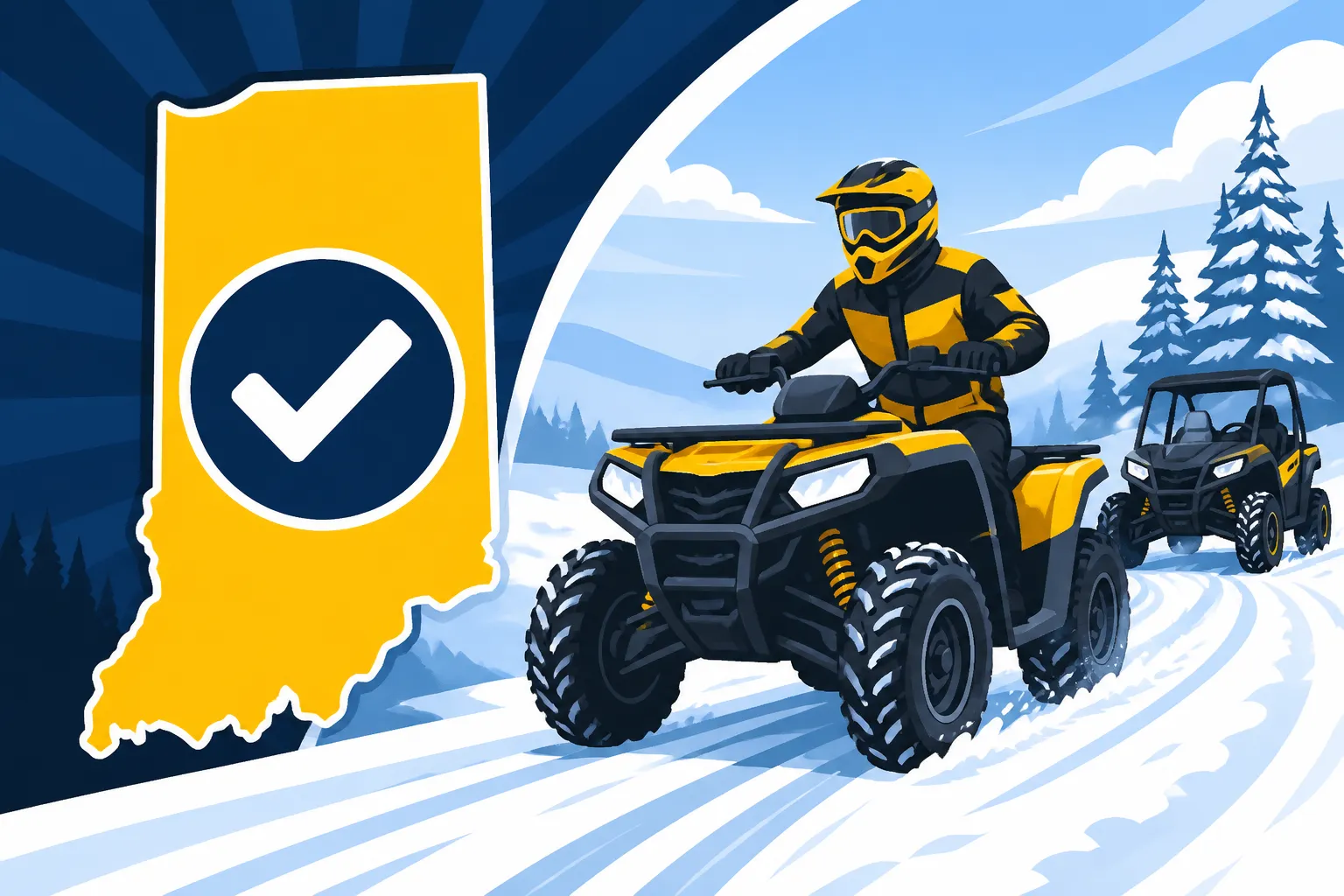
Oh, the allure of a fresh blanket of snow, beckoning you and your ATV or UTV out for a crisp winter ride! It's a common dream for many of us in Indiana, but it's also a source of real confusion. You see the snow, you know the roads are quiet, and you wonder: can I finally take my machine down the lane to the neighbor's, or even cross a quieter county road? This guide is here to clear up that frosty confusion, diving deep into Indiana's specific rules about riding an ORV on a snow-covered road.
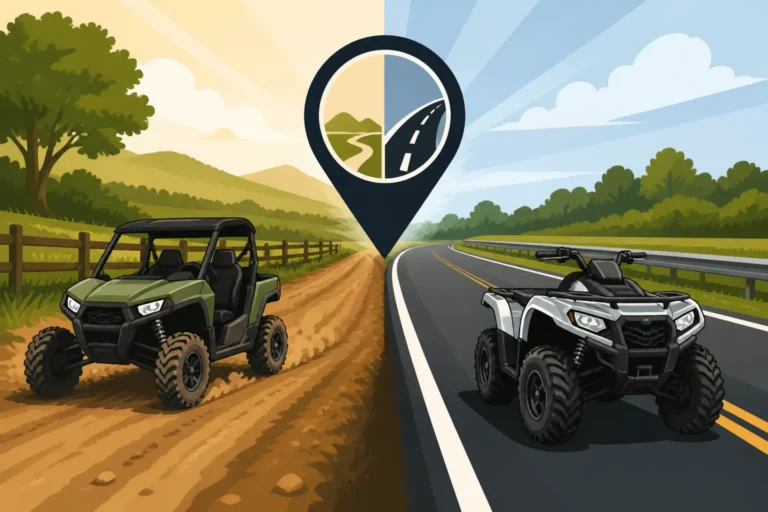
The General Rule: Why ORVs Are Mostly Off-Limits on Indiana Roads
Let's start with the basics, because understanding the default position helps make sense of the exceptions. In Indiana, off-road vehicles (ORVs) like ATVs, UTVs, and dirt bikes are generally not street legal and are prohibited from being operated on public highways and roads. This isn't just a suggestion; it's a rule designed to keep everyone safe, given that these machines aren't built with the same safety features, signals, or speed capabilities as a typical passenger vehicle.
Imagine you're driving your truck down a winding county road, and suddenly an ATV appears from a side trail, not expecting any other traffic. It's a recipe for disaster. This general prohibition is why you need a special designated area to ride your machine, like a private park or a designated trail system. The default stance of the state is that ORVs belong off the pavement, preserving the roads for vehicles designed for them. It's a common frustration for owners, especially those who live in rural areas and just want to get to a nearby field or friend's house. You have this powerful, capable machine, and it feels like it's unnecessarily restricted.
However, like most rules, there are nuances and specific exceptions, which is where the idea of riding on snow-covered roads comes into play. It's not a free-for-all, but it does open up some very limited possibilities.
Understanding the "Snow-Covered" Road Exception
Now, let's get to the heart of the matter: riding on snow-covered roads. Indiana law does indeed provide a narrow exception that allows ORVs on certain snow-covered public roads. But here's the crucial part, and where most people get it wrong: this exception does not apply to all roads, nor does it grant unlimited access. It's very specific, and if you don't understand the limitations, you could easily find yourself facing a fine.
What Constitutes a "Snow-Covered" Road?
First, what exactly does "snow-covered" mean? The law states "sufficient snow cover to provide reasonable use of the ORV." This isn't a precise measurement, like "four inches or more," which can be a little frustrating for owners seeking clarity. It generally means enough snow to protect the underlying pavement from damage by the ORV's tires and to allow the machine to operate as intended in a winter environment. Think of it this way: if you're riding on bare asphalt with a few flakes dusting it, that's not "sufficient snow cover." If there's a good blanket that's visibly covering the road surface, you're likely meeting that condition. The intent is to avoid ORVs tearing up roads that are otherwise clear.
Which Roads Are Included in the Exception?
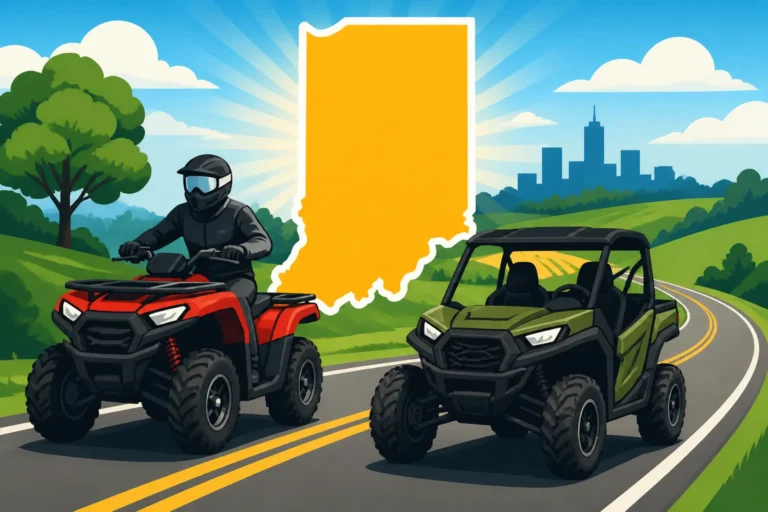
This is the most critical distinction. The snow-covered road exception generally applies to county roads and other local public roads, but NOT to state highways or interstate highways. This is a huge point of confusion. Many folks assume if it's a public road and it's snow-covered, they can ride it. Wrong. State highways (those marked with an Indiana shield, often numbered like State Road 37 or U.S. 41) are generally off-limits regardless of snow cover. They are higher-speed, higher-traffic routes, and the state maintains a firm stance on keeping ORVs off them for safety reasons. You absolutely do not want to be caught on a state highway, even if it's covered in snow; the penalties can be severe.
Local county roads and city/town streets are where this exception might come into play, if certain other conditions are met. These are typically lower-speed roads, often unpaved or lightly trafficked, where the local authorities have more discretion. However, even on these roads, you're not meant to go joyriding for miles. The purpose of this exception is often tied to accessing private property, crossing a road, or connecting to a designated trail, rather than using the road as a trail itself.
Crossing a Snow-Covered Highway
Separate from riding on a snow-covered road is the rule for crossing one. Even if a road is generally off-limits for riding, you are often permitted to cross a public highway, including a snow-covered one, under very specific circumstances. This is usually allowed when you're moving from one section of private property to another, or to access a legal riding area.
When crossing any highway in Indiana, whether snow-covered or not, you must adhere to strict rules:
- Complete Stop: You must come to a complete stop before entering the roadway.
- Yield to All Traffic: You must yield the right-of-way to all oncoming traffic. This means if a car is coming, you wait.
- Cross at Right Angles: You must cross the highway at a right angle (90 degrees) to the pavement. This minimizes your time in the traffic lane.
- No Riding Down the Road: You cannot ride along the shoulder or in the ditch of the road to get to your crossing point. You must approach the road, stop, cross, and immediately exit on the other side.
Failing to follow these crossing rules can lead to significant fines. It's about minimizing the time your ORV is exposed to regular vehicle traffic. Check out [Crossing a Road on an ORV in Indiana] for more details on this important topic.
The Role of Local Ordinances: A Winter Wild Card
Here's where things get even more localized and, frankly, a bit more complex. While state law provides a general framework, individual counties, cities, and towns in Indiana have the authority to enact their own ordinances regarding ORV use on local roads, including snow-covered ones. This means what's permissible in one county might be strictly prohibited in the next. It's a patchwork of rules that can be incredibly frustrating for riders who just want to know where they can and can't go.
Why Local Ordinances Matter So Much
Local governments are often better equipped to understand the specific needs and traffic patterns of their communities. Some rural counties, for instance, might be more lenient, recognizing that ORVs are a common mode of transportation for farmers or hunters, especially in winter. Other, more densely populated areas might have stricter bans, even on snow-covered roads, due to safety concerns or higher traffic volumes.
It’s not enough to know the state law; you must know your local ordinances. If you're planning to ride on a snow-covered road, whether it's your county road or a road near your cabin up north, you absolutely need to verify the local rules. Ignoring them is not an excuse. Many counties now publish their ordinances online, often on their county clerk or sheriff department websites. You might even find maps detailing which roads are open or closed, like [Reading Vanderburgh's Color-Coded Map]. This is crucial homework before you ever put a tire on a public road in winter.
How to Find Local Ordinances
Finding these local rules can be a bit of a scavenger hunt, but it's essential. Here's how I'd approach it:
- County Website: Start with the county government's official website. Look for sections related to ordinances, codes, or sheriff's department regulations.
- Contact Local Authorities: If you can't find it online, don't hesitate to call the county sheriff's department or the county highway department. They can typically direct you to the relevant ordinance or explain the rules. Be polite and specific in your questions.
- City/Town Clerks: If you're in a specific municipality, check with the city or town clerk's office.
Remember, even if state law allows an exception for snow-covered roads, a local ordinance can supersede that for their specific roads and prohibit it entirely. This can be a huge bummer if you've been looking forward to that winter ride, but it's the reality of Indiana's ORV laws. For more on this, check out [How to Find an Indiana County ORV Ordinance].
Safety and Practical Considerations for Winter ORV Riding
Beyond the legalities, winter riding presents its own set of unique challenges and safety considerations. Even if you're legally allowed to be on a snow-covered road, you need to be prepared for the conditions and understand the inherent risks.
Machine Preparation for Snow and Cold
Your ORV needs a little extra love when the temperatures drop and the snow flies. Just like you'd winterize your car, consider these for your ATV or UTV:
- Tires: Ensure your tires are in good condition and consider ones with an aggressive tread pattern for better grip in snow and ice. Lowering tire pressure slightly can also increase traction, but be careful not to go too low.
- Fluids: Check all fluid levels (oil, coolant, brake fluid) and ensure your coolant is rated for freezing temperatures.
- Battery: Cold weather can drain batteries faster. Make sure yours is fully charged and in good health. A battery tender over winter storage can be a lifesaver.
- Winch: A reliable winch, perhaps from a brand like
SuperATV, is an absolute must-have for winter riding. Snow can hide deep ruts, soft spots, and obstacles that can easily get you stuck. Being able to self-recover or help a riding buddy is invaluable. - Lighting: Short winter days mean riding in low light or darkness is more likely. Ensure all your lights are working and consider adding auxiliary LED lights for better visibility, especially if your local ordinance (like Vanderburgh County's dual light rule) requires specific lighting for night riding on roads.
Rider Safety Gear
Layering up is key, but don't forget specialized gear:
- Helmet: This is non-negotiable. Indiana's helmet law requires riders under 18 to wear a helmet, and while adults might not always be legally mandated on private property, it's just smart. On public roads, even snow-covered ones, a DOT-approved helmet is essential. See [Indiana Helmet Law for ORV Riders] for more.
- Warm, Waterproof Clothing: Insulated, waterproof gear will protect you from the cold and wet snow.
- Gloves and Boots: Good insulated gloves and waterproof boots are critical for maintaining dexterity and preventing frostbite.
- Visibility: Wear bright colors or blaze orange, especially if you're riding near active roadways or during hunting season. This makes you more visible to other vehicles and hunters.
Managing Hazards on Snow-Covered Roads
Snow-covered roads aren't just pretty; they're treacherous.
- Hidden Obstacles: Snow can conceal potholes, rocks, fallen branches, and even ice patches. Ride cautiously and be aware that what looks like a smooth surface might hide a nasty surprise.
- Reduced Traction: Even with appropriate tires, snow and ice dramatically reduce traction. Braking distances increase, and steering can become unpredictable. Slow down!
- Other Vehicles: Just because a road is snow-covered doesn't mean you're the only one on it. Other vehicles might be out, and they might not expect an ORV. Maintain vigilance and assume you are not seen.
- Visibility: Snow can reduce visibility, both falling snow and snow kicked up by your own machine or others. If conditions are too poor, it's best to stay home.
- Hypothermia/Frostbite: Getting stuck or having a breakdown in cold weather can quickly become dangerous. Always tell someone where you're going and when you expect to return. Carry emergency supplies like extra warm clothes, a blanket, and a way to start a fire.
Connecting to Trails and Staging Areas
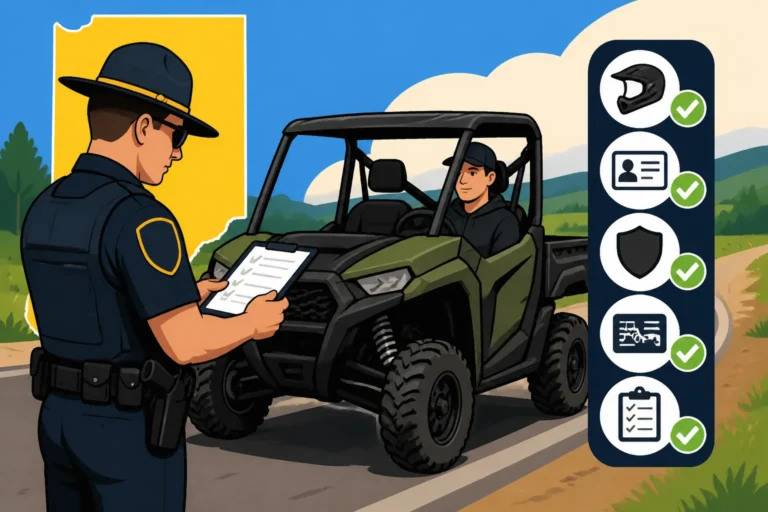
Often, the primary reason to use a snow-covered road might be to get to a designated trailhead or staging area, particularly if it's a short hop from private property. If you're traveling a public road to reach a trail, ensure you have your [Indiana ORV Registration and Insurance Proof] on hand. Your machine must be legally registered and displaying its decal, even for a short ride on a permissible road. This also applies to any required trail permits, such as those for state ORV parks. Getting to the trail is one thing, but riding on the trail safely is another, so be sure to check [Indiana Trail Conditions Before You Ride] for current information.
Table: Snow-Covered Road Riding – Quick Reference
| Feature | State Highways (e.g., US 41, SR 37) | County/Local Roads (where permitted) | Private Property (with permission) |
|---|---|---|---|
| Riding On Roadway | Generally PROHIBITED (even with snow) | POTENTIALLY ALLOWED (with sufficient snow & local ordinance approval) | Generally ALLOWED (with permission) |
| Crossing Roadway | ALLOWED (with complete stop, yield, right angle) | ALLOWED (with complete stop, yield, right angle) | N/A (on private land) |
| "Sufficient Snow Cover" | Not applicable for riding on road | Required for exception to apply | Not applicable |
| Required Equipment | Helmet (under 18), Lights, Spark Arrester, Registration, Insurance | Helmet (under 18), Lights, Spark Arrester, Registration, Insurance | Helmet (under 18) recommended, Spark Arrester |
| Local Ordinance Impact | State law generally prevails | Critical – local rules can prohibit | None (unless local noise/nuisance) |
| Traffic Hazards | HIGH (fast moving, unexpected ORV) | MEDIUM (slower, but still present) | LOW (controlled environment) |
| Common Use Case | Crossing only | Accessing adjacent property, short connections | Primary riding area |
Remember, this table is a general guide. Always verify the specific rules for your location before heading out.
Final Thoughts: Ride Smart, Stay Safe, and Know Your Laws
Riding your ATV or UTV in the winter wonderland of Indiana can be an incredible experience, but it demands respect for the law and the conditions. That urge to ride your SuperATV equipped machine on that pristine, snow-covered lane is understandable, but the key takeaway here is that Indiana's rules for riding a snow-covered road are far more restrictive than many riders realize. You can't just assume any road covered in white is open for business.
Always prioritize safety, both for yourself and others. Research the specific local ordinances for the county or municipality you plan to ride in. Ensure your machine is properly prepared for the cold and snow, and that you're wearing appropriate safety gear. A quick call to the local sheriff's department or a search of county websites could save you a hefty fine or, more importantly, prevent a serious accident. Be a responsible rider, and you'll get to enjoy many more winter adventures on your ORV.
Disclaimer
This article is for general informational purposes only and does not constitute professional advice. Laws, prices and regulations vary by location and change over time. Consult a qualified professional for guidance on your specific situation.