A Complete Stop Before an Indiana Crossing
Riding an off-road vehicle (ORV) in Indiana offers incredible freedom, but navigating public roads, even for just a moment, can feel like walking a legal tightrope. One of the most critical, yet often misunderstood, aspects is the requirement for a complete stop before crossing a highway or road. This guide will meticulously break down why this rule exists, what it means for you, and how to safely and legally make those crucial road crossings.
Why Road Crossings Are Such a Big Deal in Indiana
It’s easy to feel frustrated when you’re out enjoying the trails, maybe moving between two sections of public land, and suddenly you hit a paved road. You know you can’t just cruise down the highway, but you also need to get to the other side. This is where the tension arises for many Indiana ORV riders. The state’s default stance is that off-road vehicles belong off the road, but common sense dictates that you sometimes need to cross a paved surface to continue your adventure. It’s this necessary exception to the rule that creates a critical need for clear guidelines and strict adherence to safety.
The Default "No Roads" Rule
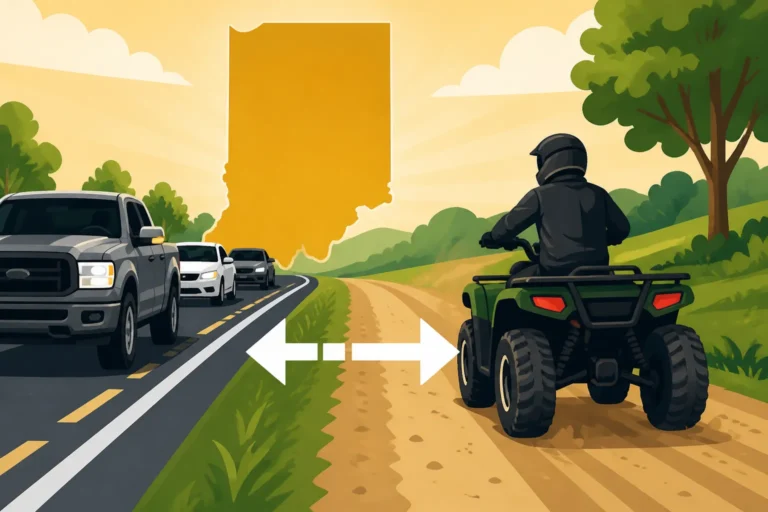
Indiana’s primary legislative framework regarding off-road vehicles makes it very clear: public roads, streets, and highways are generally off-limits for ORV operation. This isn't just a suggestion; it's a foundational principle designed to keep everyone safe. When you mix the agility and lower top speeds of most ORVs with the heavy, fast-moving traffic of cars and trucks, the potential for serious accidents skyrockets. ORVs typically lack the safety features, like crumple zones or advanced braking systems, found in street-legal vehicles, making them particularly vulnerable in a collision. Furthermore, other drivers might not anticipate an ORV emerging onto a paved surface, especially in rural areas where trails might unexpectedly meet roads. This is why [Why Indiana Roads Are Closed by Default] remains such a crucial piece of understanding for any rider.
The Confusion for Riders
Despite the general prohibition, Indiana law does carve out specific, limited circumstances where ORVs can interact with public roads, with crossing being a prime example. However, the exact rules for these crossings often cause significant confusion for riders. Is a rolling stop good enough? Do I have to dismount? What if there’s no shoulder? These are valid questions that highlight the anxiety many riders experience. The fear of inadvertently breaking the law and facing a fine, or worse, causing an accident, is very real. You're trying to do the right thing and stay legal, but the specifics can feel like a minefield. This is why a clear understanding of [Crossing a Road on an ORV in Indiana] is so vital for preventing issues and ensuring you can safely transition between trail segments without incident.
The Golden Rule: Making a Complete Stop
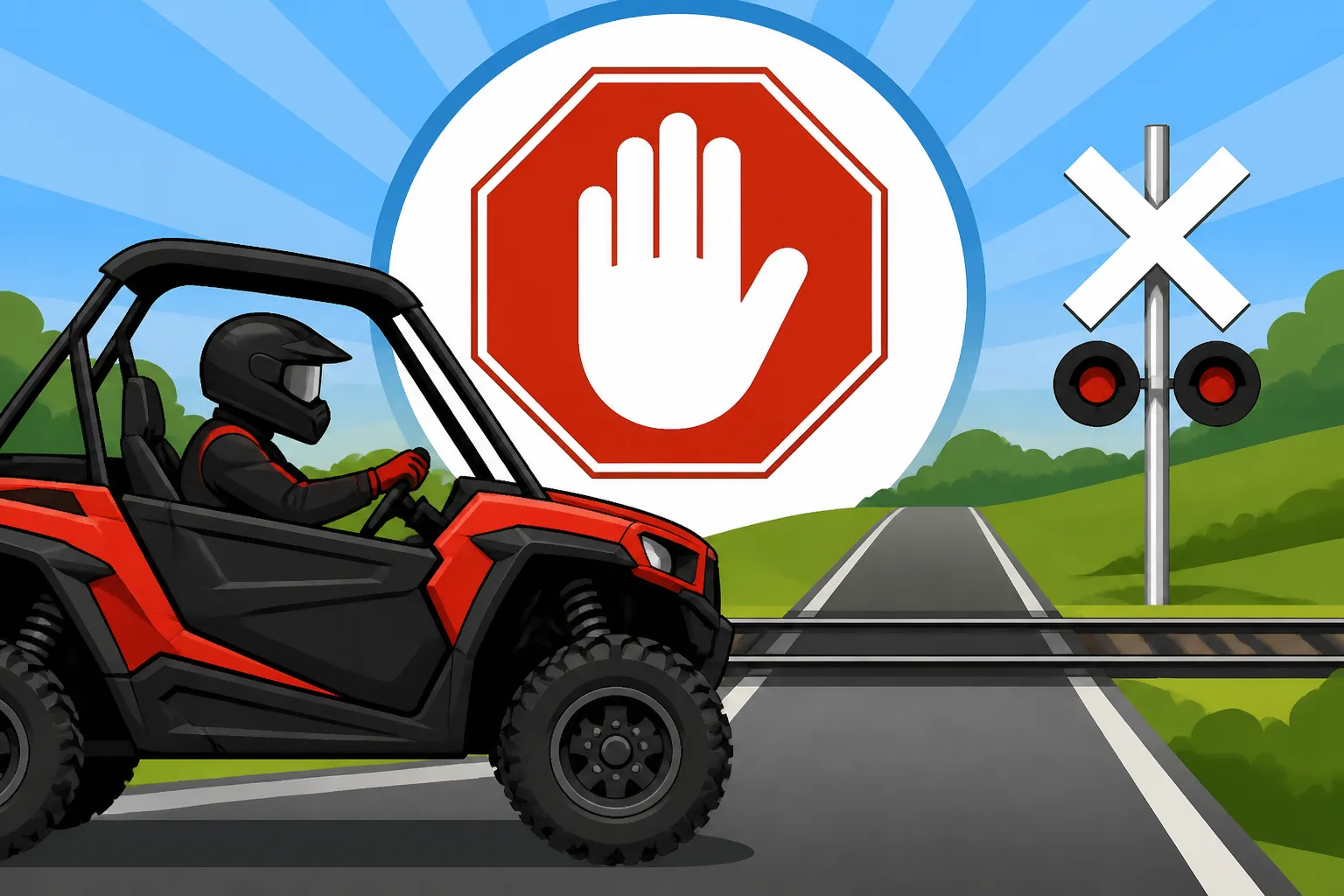
When it comes to crossing any public road in Indiana on your ORV, there is one non-negotiable, absolute rule: you must make a complete stop. This isn't just a suggestion for good measure; it's a legal requirement that serves as the bedrock of safe ORV operation when interacting with paved surfaces. It’s the moment where you pause, assess your surroundings, and consciously prepare for the brief, high-risk maneuver of entering and exiting active traffic lanes.
Defining a "Complete Stop"
Let’s be crystal clear: a "complete stop" means exactly that. Your ORV must come to a full, undeniable halt. This isn't a slow roll, a hesitant crawl, or merely touching the brakes briefly. Every wheel of your machine needs to cease rotation, and for a noticeable duration. Think of it like stopping at a stop sign in your car – you stop, count "one thousand one, one thousand two," and then proceed if safe. The purpose here is two-fold. First, it forces you, the operator, to slow down your perception and truly scan the environment for traffic. Second, it signals your intention to any approaching vehicles. They need to see that you are stopping and preparing to cross, rather than assuming you're going to pull out without warning. A rolling stop is not only illegal but also incredibly dangerous, as it dramatically reduces your reaction time and the visibility of your intentions to other drivers. This steadfast rule is the foundation of [A Complete Stop Before an Indiana Crossing].
Where to Stop
Knowing where to stop is almost as important as how to stop. The ideal spot is typically at the edge of the pavement, or just behind it, where you have the best possible line of sight in both directions without actually encroaching on the road. This position allows you to see oncoming traffic clearly, and just as importantly, allows drivers on the road to see you. If you stop too far back, your view might be obstructed by brush, trees, or terrain features. If you stop with your front tires on the pavement, you're already in the flow of traffic, which defeats the purpose of the stop.
Always aim for a position where your machine is stable, and you have a clear, unobstructed view of the road in both directions. Consider the terrain leading up to the road; sometimes a ditch or uneven ground might make stopping right at the edge difficult. In such cases, stop where it's safest and most visible, even if it means being a few feet further back. The goal is to maximize your ability to assess traffic and minimize your exposure to danger. Adding a set of wide-view mirrors, perhaps from a brand like SuperATV, can significantly enhance your peripheral vision when positioning for a stop, giving you a better view of approaching vehicles without having to turn your head as much.
Checking for Traffic From All Directions
Once you've come to that complete stop, your job isn't done. Now comes the critical act of scanning for traffic. This isn't just a quick glance left and right. You need to perform a thorough, methodical check in all directions. Look left, look right, look again left, and even consider any side roads or driveways that might intersect near your crossing point. Traffic can emerge from unexpected places, especially in rural settings.
Pay attention to both immediate traffic and any vehicles approaching from a distance. Are they slowing down? Are they signaling a turn? Your judgment of their speed and distance will dictate when it’s safe to proceed. Don’t assume a vehicle will stop for you, even if they appear to be. Always err on the side of caution. If in doubt, wait. Patience is your best friend here. Waiting an extra 30 seconds for a clear break in traffic is a far better outcome than rushing and putting yourself and others at risk.
Understanding the "Right Angle" Rule for Crossings
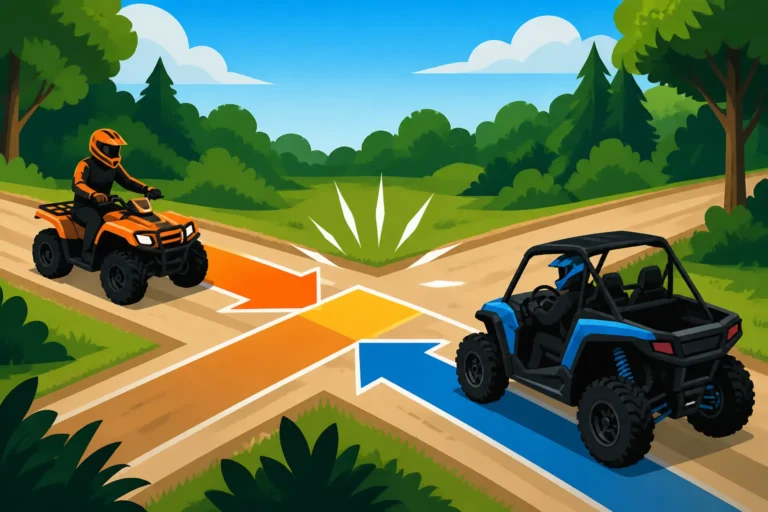
Beyond making a complete stop, Indiana law specifies how you must traverse the road: you must cross at a right angle. This isn't some arbitrary rule meant to make things harder; it's a deeply ingrained safety measure designed to minimize your time in harm's way and clarify your intentions to other drivers. Imagine two perpendicular lines meeting, forming a "T" shape – that's the angle you're aiming for relative to the road.
What "Right Angle" Means for Your ORV
Crossing at a right angle means driving your ORV straight across the road, perpendicular to the flow of traffic. Your path should be the shortest possible distance from one side of the road to the other, without veering off course or driving parallel to the road for any length of time. Picture yourself making a direct, straight line from the shoulder where you stopped to the opposite shoulder. This isn't the time for fancy maneuvers or slow turns. The goal is a swift, decisive movement that gets you out of the active traffic lanes as quickly and safely as possible. This precise movement is what is captured in [Crossing Square to the Lanes].
Why Deviating is Dangerous (and Illegal)
Attempting to cross diagonally or, worse, riding parallel to the road for even a short stretch is incredibly dangerous and directly violates the "right angle" rule. When you cross at an angle, you significantly increase the amount of time your ORV spends in the active traffic lanes. This longer exposure means a greater chance of being struck by an approaching vehicle. Furthermore, a diagonal crossing can be confusing for other drivers. They might not understand your intentions, potentially leading to misjudgments, sudden braking, or swerving.
A driver seeing an ORV cutting across at an odd angle might assume you're attempting to turn onto the road or are simply not paying attention. This ambiguity creates a high-risk situation. By crossing at a precise right angle, you communicate a clear, unambiguous intention: "I am going straight across and will be out of your way as quickly as possible." This clarity is paramount for road safety, ensuring that all parties can anticipate and react appropriately.
Practical Application on Uneven Terrain
Achieving a perfect right angle can sometimes be a bit tricky, especially if the shoulders or immediate approaches to the road are uneven, muddy, or feature ditches. It's not uncommon to encounter a significant drop-off or rut where the trail meets the pavement. In these situations, you might need to adjust your approach before reaching the pavement to ensure you can maintain a straight trajectory once you commit to crossing.
Take a moment to scope out the other side. Is there a clear, stable spot to exit? If you're using your machine for heavier tasks or traversing challenging terrain, having robust aftermarket accessories can really help. For example, a SuperATV heavy-duty winch might not be for crossing, but it speaks to preparing your machine for all challenges, including navigating tough approaches to a road. Avoid crossing where there's a steep bank or deep ditch that could cause you to lose control or get stuck mid-road. Sometimes, it's better to find a slightly less direct but safer crossing point a few yards down the road rather than attempting a precarious right-angle crossing over treacherous ground. Your safety and the safety of others on the road depend on your ability to execute this maneuver smoothly and predictably.
Yielding to Traffic: Your Absolute Priority
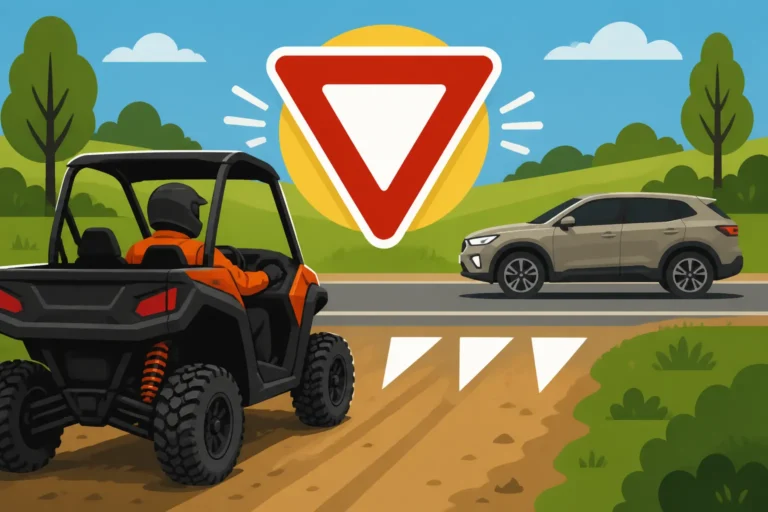
The moment you come to a complete stop at the edge of an Indiana road, poised for a crossing, the fundamental principle that guides your next action is yielding. This isn't just good etiquette; it's a legal and moral obligation that underscores the vulnerability of an ORV on a paved surface. In almost every scenario, vehicular traffic on the road has the right-of-way, and as an ORV operator, your absolute priority is to ensure you do not impede or endanger that traffic.
The Unspoken Agreement: Cars Have the Right-of-Way
When you're riding an ORV, you're operating a vehicle that, by design, is not intended for road use. When you approach a road crossing, you are essentially asking to temporarily use a space designated for other types of vehicles. Therefore, the "unspoken agreement" is that established road traffic holds the inherent right-of-way. This means you must wait for a clear, safe opportunity to cross. It is not up to the approaching drivers to slow down or stop for you, unless specific traffic controls (like a traffic light or stop sign at an intersection) dictate otherwise.
This rule is about mutual respect and anticipating the expectations of others. Car and truck drivers are generally not looking for ORVs to suddenly appear from a wooded trail or field. By completely stopping and yielding, you are taking personal responsibility for the safety of the crossing, acknowledging that you are the one entering a new, potentially hazardous environment. This commitment to safety is foundational to [Yielding to All Traffic at a Crossing].
Assessing Oncoming and Approaching Traffic
Successfully yielding requires a keen ability to assess the speed and distance of all oncoming and approaching traffic. It’s not enough to just see a car; you need to judge if you have ample time to start, cross the entire width of the road, and clear the opposite shoulder before that vehicle reaches your crossing point. This judgment involves:
- Speed: Is the vehicle traveling at the posted speed limit, or faster? Cars approaching from a distance can cover ground much quicker than you might estimate.
- Distance: How far away is the vehicle? A vehicle that looks far off on a straight stretch of road can be upon you in seconds.
- Obstructions: Are there any curves, hills, or other obstructions that could hide additional vehicles behind the one you’re seeing? Always assume there might be more traffic than is immediately visible.
It is always better to wait for a larger gap in traffic than to try and squeeze through a questionable one. If there's any doubt in your mind about having enough time, stay put. Rushing a crossing is an open invitation for disaster.
The Role of Other Vehicles
Sometimes, a kind driver might slow down and wave you across. While their intention might be good, you should still exercise extreme caution and make your own independent judgment. A driver waving you on might not see a second vehicle approaching behind them, or they might be misjudging your ORV’s acceleration capabilities. Never blindly follow a wave.
Your safety is ultimately your responsibility. Always conduct your own thorough check for traffic, confirm the road is truly clear, and only then proceed with your crossing. If you’re riding in a group, each rider is individually responsible for making their own complete stop and yielding to traffic, even if the rider in front of them has already crossed. This ensures that every individual makes a conscious decision based on real-time conditions, rather than relying on the judgment of others.
Navigating Different Road Types for ORV Crossings
Indiana is crisscrossed by a wide variety of public roads, from quiet rural lanes to bustling state highways. While the core rules of stopping, yielding, and crossing at a right angle remain universal, the context of where you're applying these rules significantly impacts the level of vigilance and caution required. Understanding these distinctions is key to making safe and legal crossings.
Crossing State Highways vs. County Roads
The speed and volume of traffic can vary dramatically between a quiet county road and a busy state highway. On a county road, especially in more remote areas, you might encounter sparse traffic and lower speed limits. This can sometimes lull riders into a false sense of security. However, even on these less-trafficked roads, the complete stop, yield, and right-angle rules are absolutely mandatory. It's easy to get complacent, but the unexpected vehicle on a quiet road can be just as dangerous as heavy traffic on a main artery.
When you're facing a state highway, the stakes are considerably higher. These roads often have higher speed limits, more consistent traffic flow, and include a greater mix of vehicles, including large trucks. Your awareness needs to be heightened significantly. The gaps in traffic that seem perfectly adequate on a county road will likely be insufficient for safely crossing a state highway. You'll need to be extra patient, wait for genuinely wide windows of opportunity, and be prepared for faster-moving vehicles. For state routes, you'll want to review [Crossing a Highway on an ORV in Indiana] to understand the specific implications.
Limited-Access Highways and ORV Restrictions
It is absolutely crucial to understand that ORVs are strictly prohibited from crossing limited-access highways in Indiana. This includes interstates and many divided highways where access is restricted to on-ramps and off-ramps. These roadways are designed for high-speed, continuous traffic flow, and there are no provisions for ORV crossings. Attempting to cross a limited-access highway is not only incredibly dangerous but also highly illegal, carrying severe penalties.
If your trail system or planned route requires you to navigate a limited-access highway, you must find an alternative. This often means trailering your ORV to bypass the section or finding a designated ORV underpass or overpass, if one exists (though these are rare outside of specific, engineered trail systems). There is simply no safe or legal way to operate an ORV on or across a limited-access highway. The reasons for this unequivocal ban are outlined in [Why You Cannot Cross a Limited-Access Highway].
Designated ORV Roads (and Their Crossings)
Some Indiana counties have enacted ordinances to open certain county roads to ORV use. This is fantastic news for riders, as it expands legal riding opportunities. However, even on these designated ORV roads, the rules for crossing other, non-designated roads still apply. For example, if you're riding legally on an open county road and come to an intersection with a state highway (which is not an open ORV road), you still must perform a complete stop, yield to all traffic, and cross at a right angle, just as you would from a trail.
The designation of a road for ORV use only applies to that specific road. It does not grant you blanket permission to disregard crossing rules on any other road you encounter. Always be aware of the status of the road you're currently on and, more importantly, the status of the road you intend to cross. Knowing [How an Indiana County Opens Its Roads] helps, but remember that these designations don't negate fundamental crossing safety.
| Road Type | Typical Traffic Speed & Volume | Crossing Rules | Specific Considerations |
|---|---|---|---|
| County Road | Lower speed, variable volume | Stop, Yield, Right Angle | Generally less intimidating, but vigilance still crucial. |
| State Highway | Higher speed, consistent volume | Stop, Yield, Right Angle | Requires extreme patience and larger gaps in traffic. |
| Limited-Access Hwy | High speed, very high volume | Prohibited | Never attempt to cross; find alternative routes or trailer. |
| Designated ORV Rd. | Varies by county | Still Stop, Yield, Right Angle | If crossing a non-designated road, original rules apply. |
Consequences of Ignoring Indiana's Crossing Rules
Ignoring Indiana’s ORV crossing rules isn't just a minor oversight; it's a serious gamble with significant legal, financial, and personal consequences. These regulations are in place to protect everyone on and near the roads. As tempting as it might be to rush a crossing or take a shortcut, the potential fallout simply isn't worth it.
The Legal Penalties
Indiana law is clear about the proper operation of ORVs, especially when they interact with public roads. Failing to make a complete stop, neglecting to yield to traffic, or crossing improperly can lead to various legal penalties. At a minimum, you could face a citation and a hefty fine. Conservation officers, sheriff's deputies, and state police are all authorized to enforce these rules. A ticket for an illegal ORV road use infraction, such as failing to stop or yield, can quickly put a damper on your riding day and lighten your wallet.
Repeated offenses or more egregious violations could lead to more severe consequences, potentially including impoundment of your vehicle or even charges beyond a simple traffic infraction if reckless endangerment is involved. These fines and penalties are designed to deter unsafe behavior and ensure compliance, making it clear that Indiana takes these rules seriously. For a deeper dive into the financial implications, check out [Indiana Fines for Illegal ORV Road Use].
Safety Implications and Liability
Far more critical than any fine are the devastating safety implications of an illegal or unsafe crossing. An ORV hitting a car, or a car hitting an ORV, almost invariably results in serious injury or fatality for the ORV operator and passengers due to the lack of protective enclosures, airbags, and substantial mass compared to a typical street vehicle. These types of accidents can change lives in an instant, leaving riders with lifelong injuries, disabilities, or worse.
Beyond personal injury, there's the enormous financial liability. If you're involved in an accident due to an illegal crossing, you, as the ORV operator and owner, could be held responsible for property damage to other vehicles, medical expenses for injured parties, and pain and suffering. This could amount to hundreds of thousands or even millions of dollars, far exceeding what most personal insurance policies might cover. Even if you have liability insurance for your ORV, operating it illegally on a public road might void certain coverages. This is where investing in quality safety equipment for your machine, perhaps robust roll cages or harnesses from a company like SuperATV, can provide some peace of mind on the trails, though it doesn't excuse illegal road behavior.
Impact on the ORV Community
Every rider's actions have a ripple effect on the entire ORV community. When individual riders are caught violating road crossing rules, it doesn't just reflect poorly on them; it can create a negative public perception of all ORV enthusiasts. This, in turn, can fuel opposition to opening new trails, lead to stricter regulations, or even result in the closure of existing riding areas. Lawmakers and local communities often base their decisions about ORV access on the demonstrated responsibility of riders.
By consistently following all rules, especially those pertaining to public road interactions, you are not only protecting yourself but also contributing to the positive image and future accessibility of ORV riding in Indiana. Responsible riding ensures that the sport remains viable and enjoyable for everyone. Conversely, a handful of irresponsible actions can jeopardize the enjoyment and privileges of hundreds of law-abiding riders. Let’s all do our part to keep our trails open and our crossings safe and legal.
Disclaimer
This article is for general informational purposes only and does not constitute professional advice. Laws, prices and regulations vary by location and change over time. Consult a qualified professional for guidance on your specific situation.