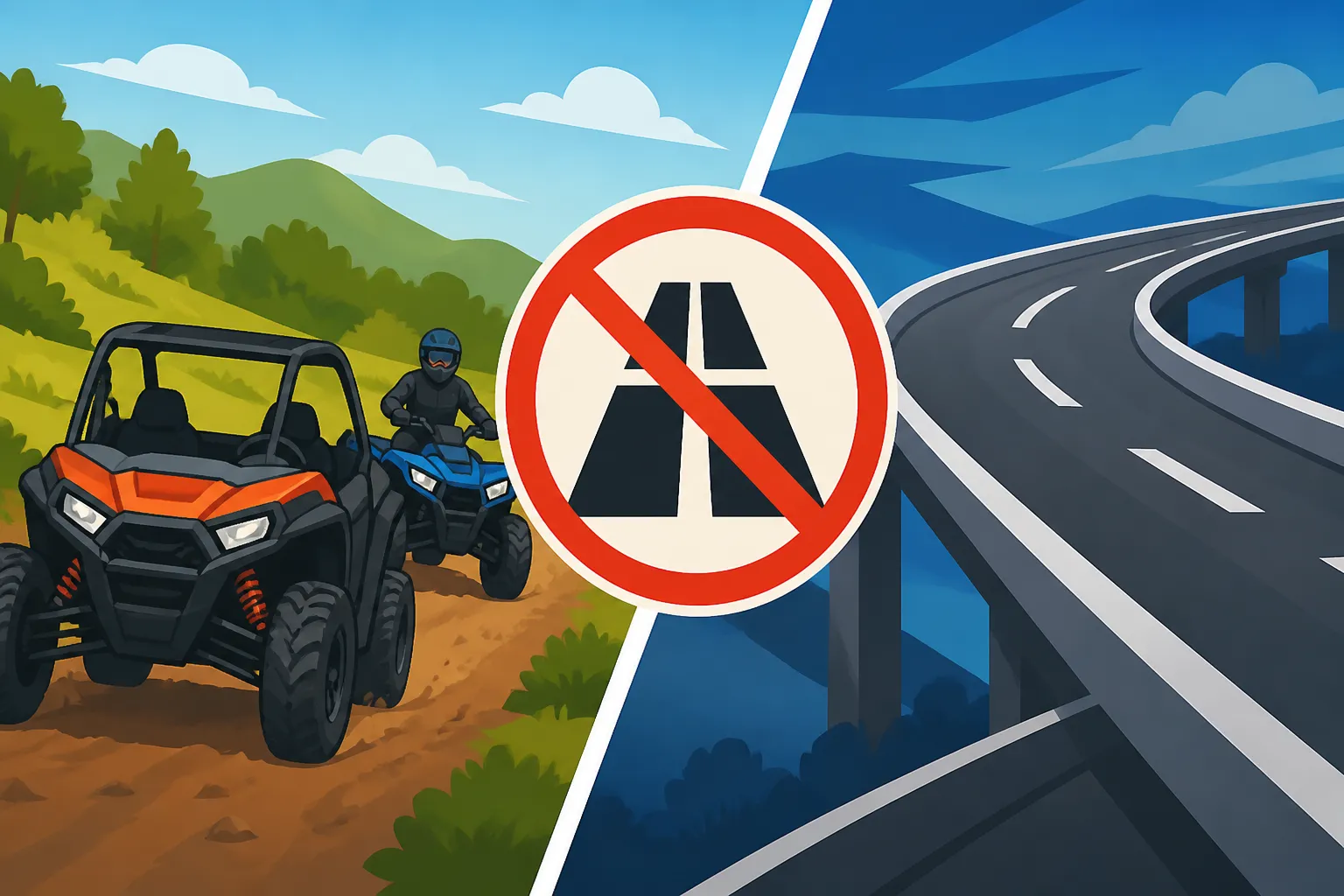
Why Limited-Access Highways Stay Closed
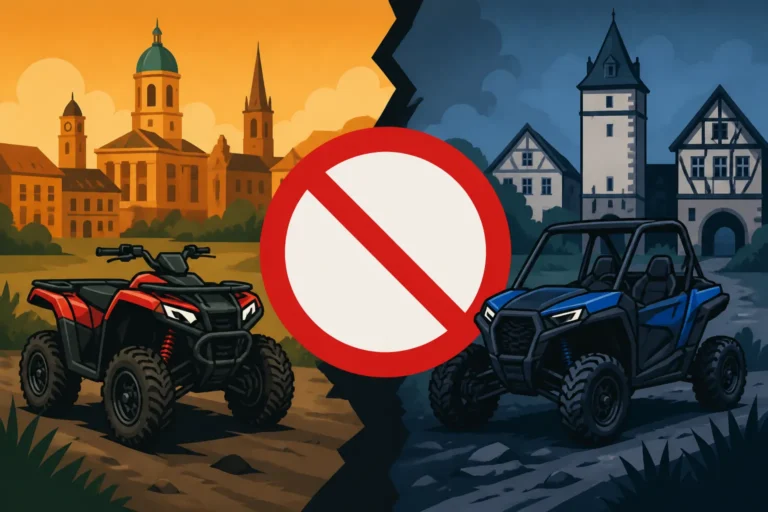
It’s a common frustration for many Indiana ATV and UTV enthusiasts: you're looking at a map, seeing a major highway that could be a perfect straight shot to your favorite riding spot or connect you between two great destinations. But alas, those limited-access highways remain off-limits for our beloved off-road machines. This guide dives deep into the very practical and safety-driven reasons why these vital arteries of commerce and travel are simply not designed, nor safe, for ATVs and UTVs in Indiana.
Understanding Limited-Access Highways in Indiana
When we talk about "limited-access highways," we're not just talking about any old paved road. These are the big boys, the workhorses of long-distance travel, and they're built with a very specific purpose in mind. Understanding their design and function is key to grasping why ORVs don't fit into the picture.
What Defines a Limited-Access Highway?
Think of your major interstates—I-70, I-65, I-74, or even significant multi-lane state routes like parts of US-31. These are the quintessential examples of limited-access highways. What makes them "limited-access"? Well, the name itself is a big clue! Unlike a regular county road where you might have driveways or cross-streets every few hundred feet, access to these highways is strictly controlled. You can only get on or off at designated interchanges, often involving ramps and overpasses. There are no stop signs, no traffic lights, and crucially, no cross-traffic or unexpected turns that might lead a driver to encounter a slow-moving or less-protected vehicle.
The design of these roads prioritizes a smooth, uninterrupted flow of high-speed traffic. They typically feature multiple lanes in each direction, wide shoulders (though not for ORV travel!), and usually a median separating opposing traffic. This intricate engineering creates an environment that's fantastic for cars, trucks, and semi-trailers moving at high speeds, but it's fundamentally incompatible with the characteristics and operational requirements of ATVs and UTVs.
The Purpose of Limited-Access Design
The very purpose behind the limited-access design is to facilitate efficient, high-speed, and as safe as possible travel for conventional motor vehicles over long distances. Every aspect, from the gentle curves and grades to the standardized signage and absence of local intersections, is engineered to minimize driver decision-making and maximize throughput. The idea is to reduce any variables that could cause sudden stops, quick maneuvers, or unexpected encounters between vehicles. This is a critical point when considering ATVs and UTVs.
Imagine a semi-truck traveling at 70 miles per hour suddenly encountering an ATV doing 40 miles per hour in the same lane. The speed differential alone creates an incredibly dangerous situation. These highways are built for cars and trucks that can sustain those high speeds, brake predictably, and offer a certain level of crash protection. Off-road vehicles simply do not fit these design parameters, and integrating them would fundamentally undermine the safety and efficiency that limited-access highways are built to provide for the vast majority of road users.
Safety Concerns for Off-Road Vehicles on Highways
The primary reason limited-access highways remain off-limits for ATVs and UTVs boils down to one critical factor: safety. The inherent characteristics of off-road vehicles and the nature of highway travel create a combination that is simply too dangerous for everyone involved.
Speed Differentials and Vehicle Dynamics
Off-road vehicles, whether you're talking about a roaring dirt bike, a nimble ATV, or a robust side-by-side, are purpose-built for tackling challenging terrain—mud, rocks, hills, and forests. They are not designed for sustained high-speed operation on paved roads. While some UTVs can reach respectable top speeds, these are often not meant for the continuous, high-speed demands of an interstate highway. The average speed limit on an Indiana highway is often 60-70 miles per hour, sometimes even higher in rural stretches. Most ATVs and UTVs struggle to maintain such speeds consistently, and even if they could, their optimal operating conditions are vastly different.
This creates a perilous situation due to massive speed differentials. When a car or truck traveling at highway speeds approaches a much slower ORV, the closing speed is enormous, drastically reducing reaction time. Furthermore, the vehicle dynamics of an ORV are completely different from a car. They have a higher center of gravity, narrower track widths compared to typical passenger vehicles, and knobby tires designed for traction on loose surfaces, not for smooth, high-speed asphalt. These features, while excellent for off-roading, make them less stable and more prone to rollovers or loss of control at highway speeds. A sudden gust of wind, an unexpected pothole, or even a quick steering correction could easily lead to a catastrophic incident, especially when sharing the road with multi-ton vehicles. This is particularly true for [Indiana Rules for a Machine Over 2,000 Pounds] machines which can become quite unwieldy at high speeds on pavement.
Visibility and Protection for Riders
Another huge safety concern is the sheer lack of visibility and protection for off-road riders on a highway. ATVs and dirt bikes are considerably smaller and sit much lower than the average passenger car, let alone a semi-truck. In the hustle and bustle of highway traffic, where drivers are often scanning for other full-sized vehicles, an ORV can easily be overlooked or blend into blind spots. Imagine trying to spot a dirt bike in your rearview mirror when you're being overtaken by several lanes of traffic; it's a terrifying thought.
Beyond visibility, the physical protection offered to the rider is minimal to non-existent compared to an enclosed passenger vehicle. On an ATV or dirt bike, the rider is completely exposed. Even in a UTV with a roll cage and seatbelts, the level of crumple zone protection and impact absorption simply doesn't compare to that of a car or truck. In the event of a collision at highway speeds, the risk of severe injury or fatality for an ORV rider is astronomically higher. This is why [Indiana Helmet Law for ORV Riders] are so important, even in off-road settings, but even a helmet can only offer so much protection against a multi-ton vehicle. The state prioritizes the safety of its citizens, and allowing such vulnerable vehicles on high-speed, high-impact roads would contradict that fundamental principle.
Legal and Regulatory Framework in Indiana
It's not just about common sense safety; the legal foundation in Indiana explicitly keeps off-road vehicles off limited-access highways. Understanding the state's definitions and default rules helps clarify why this is the case.
Indiana's Definition of an Off-Road Vehicle
Indiana law is very specific about what constitutes an "off-road vehicle" (ORV) and, crucially, where it's legally permitted to operate. Generally speaking, an ORV is defined as a motorized vehicle designed to travel over unimproved terrain and that is not otherwise registered for highway use. This typically includes ATVs, UTVs, dirt bikes, and even some specialized vehicles like dune buggies. The key distinction here is "not otherwise registered for highway use." While you can register an ORV with the Indiana Bureau of Motor Vehicles (BMV) for off-road use, this registration does not grant it the same rights as a vehicle registered for on-road travel.
State statutes delineate the types of vehicles allowed on public roadways, and ORVs are explicitly carved out of this designation for most road types. This is fundamental to [How Indiana Defines an Off-Road Vehicle]. The legal framework ensures that vehicles built for trails, fields, and dedicated off-road parks stay where they are designed to be, preventing them from mixing with traffic on roads where they are inherently unsafe and unprepared. This clear legal distinction is a cornerstone of traffic safety and regulation in the state.
Why Indiana Roads Are Closed by Default
In Indiana, the general rule of thumb for ORVs is that public roads are closed by default unless a specific state law or local ordinance explicitly opens them. This "closed by default" approach is designed to err on the side of caution, protecting both ORV riders and the general motoring public. Limited-access highways, being major state-maintained thoroughfares, fall squarely into the category of roads that remain closed to ORVs under this default rule. There are no state statutes or specific exceptions that would permit an ORV to operate on an interstate or a limited-access state highway.
This principle is a critical one: unless you can point to a specific law that allows ORV use on a particular road, it's safe to assume it's prohibited. This contrasts sharply with some other states that might have more lenient "street legal" conversion rules for ATVs and UTVs. While some accessories from companies like SuperATV can make your machine more capable off-road or add certain safety features, these additions do not magically make an ORV legal for Indiana highways. Even a machine with turn signals, mirrors, and a horn, if it's still fundamentally an ORV by Indiana's definition, is not allowed on these high-speed roads. So, while you might find yourself wishing you could just zip down I-69 to get to Redbird, the law, firmly rooted in safety, says absolutely not. This is why understanding [Why Indiana Roads Are Closed by Default] is so vital for every rider. Furthermore, even the question of [Are ATVs Street Legal in Indiana?] usually has a "no" answer for highways.
Infrastructure, Environmental, and Enforcement Considerations
Beyond the immediate safety concerns, there are broader implications for infrastructure, the environment, and the practicalities of law enforcement that contribute to keeping limited-access highways closed to ATVs and UTVs.
Road Surface Damage and Wear
Highways are engineered with specific materials and construction methods to withstand the continuous stress of heavy, high-speed traffic from cars, trucks, and semi-trailers. The types of tires used on ATVs and UTVs—often aggressive, knobby, and designed to dig into dirt, mud, and loose terrain—are simply not compatible with these paved surfaces. These tires, while fantastic for off-roading, can accelerate the wear and tear on asphalt and concrete. Imagine hundreds of machines with deeply lugged tires constantly churning over a highway lane; the damage over time would be significant, leading to costly and frequent repairs that divert resources from other road maintenance needs.
The very design of highway infrastructure, including the load-bearing capacity and material composition, is optimized for a certain kind of vehicle. Introducing a vehicle type with different weight distribution, tire characteristics, and dynamic forces could disrupt this delicate balance. Maintaining smooth, safe highway surfaces is paramount for the millions of conventional vehicles that rely on them daily, and protecting that investment means restricting vehicles that could prematurely degrade it.
Environmental Concerns and Debris
Another often-overlooked aspect is the potential for environmental impact and the introduction of debris onto roadways. ORVs are, by their nature, designed to operate in often muddy, dusty, or rugged environments. When an ORV transitions from an off-road trail directly onto a highway, it inevitably tracks mud, dirt, rocks, and other debris onto the paved surface. This loose material can then become a hazard for other motorists, potentially causing skids, thrown projectiles that damage vehicles, or even blocking drainage systems.
Furthermore, while modern ORVs are subject to emissions regulations, the noise and exhaust profiles of some machines, particularly older or modified ones, might not be suitable for sustained operation in high-traffic corridors. The concentration of these elements on a busy highway could raise concerns about air quality and noise pollution in ways that are distinct from their operation in more open, off-road settings. SuperATV, for instance, makes many aftermarket parts that enhance an ORV's performance and durability in its intended environment, but these parts are not designed to mitigate highway-specific environmental or infrastructure concerns.
Enforcement Challenges and Costs
From a law enforcement perspective, allowing ATVs and UTVs on limited-access highways would introduce a host of new and complex challenges, leading to increased costs and potential safety issues for officers and the public alike. Highways are vast, high-speed environments where monitoring and interdicting an ORV would be incredibly difficult and dangerous. Imagine a state trooper trying to safely pull over an ATV traveling at 40 mph on an interstate with traffic flying by at 70 mph; the risks are obvious.
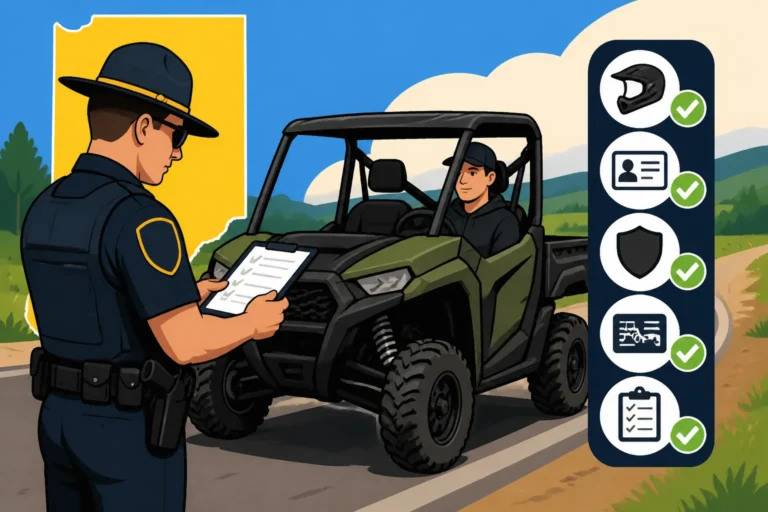
The potential for increased accidents, traffic disruptions due to slow-moving or erratic ORVs, and the sheer volume of enforcement needed to manage such a change would place an immense burden on state and local police forces. Resources that are already stretched thin would be diverted from other critical duties, ultimately compromising overall public safety. The current regulations, which clearly prohibit ORVs from these roads, simplify enforcement and ensure that officers can focus on the types of vehicles and infractions typically associated with highway travel. This prevents scenarios where [What an Indiana Officer Checks Roadside] suddenly includes an ORV on an interstate.
The "Shoulder and Ditch" Exception and Its Limitations
Many Indiana riders are aware of a specific provision in state law that allows for some ORV use near roads. However, it's crucial to understand that this exception has very strict limitations and absolutely does not apply to limited-access highways.
Understanding the Shoulder and Ditch Rule
Indiana law does contain a specific provision that states an ORV may operate on the far right of the paved portion of a public highway, on the shoulder, or in the ditch unless state law or a local ordinance prohibits it. This rule was primarily designed to accommodate landowners, farmers, and recreational riders who might need to cross a short distance or travel a brief stretch of road to access fields, connect to trails, or move between private properties, particularly in rural areas. It's an acknowledgment of the practical realities of land use and recreational access in a largely agricultural state.
However, this exception comes with significant caveats. It's intended for lower-speed, lower-traffic county and township roads, not multi-lane, high-speed arteries. Riders utilizing this exception are still expected to operate safely, yield to other traffic, and generally use common sense. This specific allowance is part of the larger discussion about [The Shoulder and Ditch Exception in Indiana], which outlines the precise conditions and types of roads where this might be permissible. But it's vital to remember that "public highway" in this context does not equate to "limited-access highway."
Why Limited-Access Highways Are Different
The fundamental difference between a local county road and a limited-access highway is precisely why the "shoulder and ditch" exception does not and cannot apply to the latter. Limited-access highways are characterized by:
- High Speeds: Traffic moves at significantly higher velocities, making any slow-moving ORV an extreme hazard.
- Lack of Safe Exits/Entries: There are no provisions for ORVs to safely enter or exit these roads, let alone cross them.
- Multiple Lanes: The presence of multiple lanes increases the complexity of traffic flow and the danger of speed differentials.
- No Cross-Traffic: While a benefit for cars, it means ORVs cannot simply "cross at right angles" to connect property, as they might on a local road.
Trying to use the shoulder or ditch of an interstate would put an ORV rider in an incredibly perilous situation, completely exposed to vehicles moving at speeds 2-3 times faster than they might be capable of. The risks of being struck, causing an accident, or becoming stranded are simply too high. State law explicitly excludes limited-access highways from this exception precisely because the safety parameters are completely different. Therefore, even if your UTV is outfitted with rugged SuperATV components designed for the toughest trails, those parts are for off-road endurance, not for defying highway safety regulations. This distinction is critical to understanding [Why You Cannot Cross a Limited-Access Highway] on an ORV.
Local Ordinances and Designated Roads – The Alternative
While limited-access highways are definitively out, it's important for Indiana ORV riders to know that not all hope is lost for connecting certain areas. Local ordinances offer a different, and much safer, pathway for limited road use.
County-Level Road Opening Options
Instead of looking to the state's major highways, ORV enthusiasts should focus their attention on local governance—specifically, county commissioners and councils. Indiana state law provides a framework that allows individual counties to pass ordinances permitting ORV use on certain designated county roads. This is a powerful tool for local communities to balance the recreational desires of their residents and visitors with local safety concerns and traffic patterns. You might find that some counties have opened all or parts of their roads, while others have chosen to keep them completely closed.
These local decisions are often made after careful consideration of road types, traffic volumes, speed limits, and input from law enforcement and residents. The beauty of this approach is that it allows for hyper-local customization, ensuring that any ORV access is implemented in areas that are deemed safe and appropriate, far away from the dangers of high-speed highways. For example, some counties like [Hancock County's Open County Roads] have taken steps to allow ORV access on certain parts of their road network, while [Dearborn County's Section 70.04] outlines specific rules for ORV usage within its jurisdiction. This local control offers a responsible alternative to the blanket prohibition on state-level highways and gives riders designated, legal routes to explore. [How an Indiana County Opens Its Roads] is a critical piece of information for any rider seeking to use public roads.
Riding to Trailheads and Designated Trails
For many ORV riders, the ultimate goal isn't to cruise down a highway, but to get from Point A (home, lodging, or a staging area) to Point B (the entrance of a trail system or off-road park). When counties designate specific roads for ORV use, they often do so with this "connector" purpose in mind. These designated roads typically feature lower speed limits, less traffic, and are more compatible with the operational characteristics of ATVs and UTVs. This allows riders to legally and safely transport their machines a short distance on wheels, rather than requiring constant trailering, which can be a hassle.
This approach effectively provides an alternative to using highways for connection. Instead of trying to force an ORV onto a dangerous, inappropriate road, riders can utilize the legal and safe routes provided by local ordinances to reach trailheads like Redbird Off-Road State Recreation Area or Interlake Off-Road State Recreation Area. It’s about finding the right tool for the right job: highways are for cars and trucks to cover long distances quickly, and designated county roads are for ORVs to safely bridge the gap to their true playground—the trails. This distinction allows riders to enjoy their machines responsibly and within the bounds of Indiana law.
| Feature | Limited-Access Highways (e.g., Interstates) | Designated County Roads (via ordinance) |
|---|---|---|
| Purpose | High-speed, long-distance conventional travel | Local access, connecting communities, agriculture |
| ORV Use | Prohibited by state law | Potentially allowed via local county ordinance |
| Speed Limits | High (e.g., 60-70+ mph) | Lower (e.g., 35-55 mph) |
| Traffic Volume | High | Generally lower |
| Safety for ORVs | Extremely poor (high speed diff., low visibility) | Better (lower speed, less traffic, specific rules) |
| Road Design | Controlled access, no cross-traffic | Uncontrolled access, cross-traffic, intersections |
| Shoulder/Ditch Use | Not applicable for ORVs | May be permitted by ordinance (with limits) |
Disclaimer
This article is for general informational purposes only and does not constitute professional advice. Laws, prices and regulations vary by location and change over time. Consult a qualified professional for guidance on your specific situation.