Packing a Deer Out of a Fish and Wildlife Area
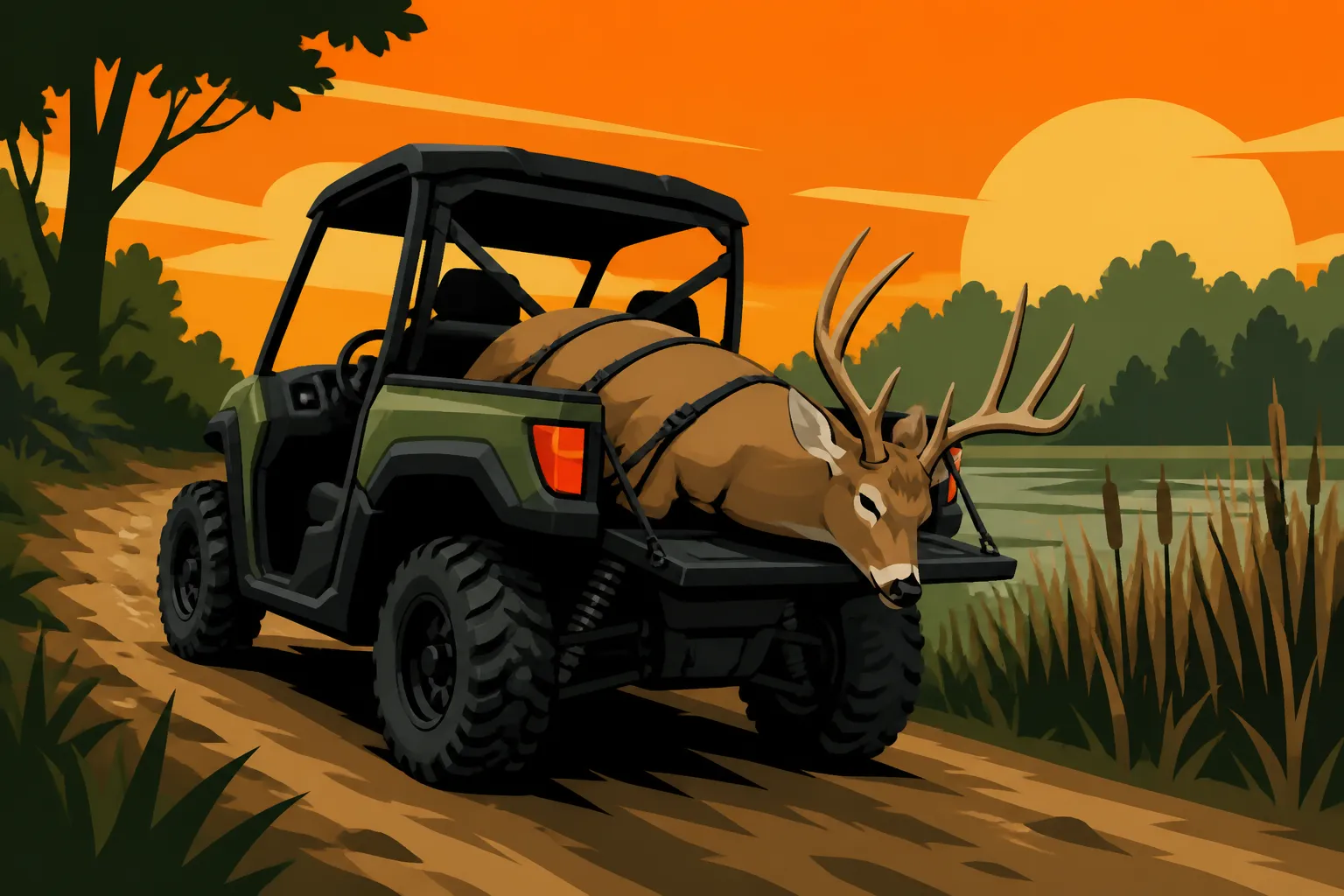
Packing a deer out of an Indiana Fish and Wildlife Area can be hard work, especially when the animal is far from a parking area. The key is not to assume an ATV or UTV is allowed just because it is registered, permitted for a trail park, or being used for a legitimate hunt. Check the property’s rules and get clear permission before planning a motorized recovery.
Can You Use an ATV or UTV to Retrieve a Deer?
Do not assume you may ride an ATV or UTV off-road to reach a deer on an Indiana Fish and Wildlife Area. These properties are managed for wildlife and public use, not as general ORV trail areas. Motorized travel is typically restricted to authorized roads or locations, and rules can differ by property, season, and activity.
A hunting license, an Indiana BMV registration, and an ORV trail permit serve different purposes. None should be treated as automatic permission to drive a machine across a field, through woods, or along an unmarked route to retrieve game. An out-of-state registration or trail permit does not create that permission either. For a broader explanation of access restrictions, see Why Fish and Wildlife Areas Ban ORV Riding and Indiana Rules on Fish and Wildlife Areas.
A property may allow vehicles on certain roads while prohibiting them on trails, closed roads, habitat areas, or other off-road ground. A road that appears usable on a map may also be closed seasonally or restricted to staff and authorized users. Do not infer that a road is open to ORVs from tire tracks, a gate being open, or another hunter’s use.
Before the hunt, contact the specific property office and ask about the planned recovery method. Describe the location, the route you would need to take, and the kind of machine involved. Ask whether vehicle access is allowed for retrieving a deer, whether it is limited to a designated road, and whether written or advance authorization is required. If staff cannot confirm that the route is allowed, plan to recover the deer without riding in.
The distinction matters because permission to hunt is not the same as permission to operate an ORV. Likewise, authorization to use a road does not necessarily allow travel beyond it. The rules for retrieving game by vehicle are worth checking directly; see Indiana Rules for Retrieving Game by ORV rather than relying on a general trail permit.
| Item or permission | What it may cover | What it does not automatically allow |
|---|---|---|
| Hunting license or property access authorization | Hunting or access under the applicable rules | ATV or UTV travel off authorized routes |
| Indiana BMV registration or decal | Required registration for a covered machine | Riding anywhere on public land |
| Indiana ORV trail permit | Use at qualifying ORV riding areas under their rules | Access to a Fish and Wildlife Area for deer recovery |
| Property-specific vehicle permission | The route and use the property authorizes | Travel beyond the stated limits |
This is also why it helps to distinguish Fish and Wildlife Areas from places specifically managed for ORV riding. A trail permit that applies at a riding area does not function as a general state-property access pass. Check Do You Need a Permit for Indiana ORV Trails? if you are sorting out trail permits, but confirm Fish and Wildlife Area access with the property itself.
Plan the Recovery Before You Hunt
A practical recovery plan starts before a shot, not after a deer is down. Terrain, distance, weather, daylight, and the property’s rules all affect how you can get the animal out. A plan that depends on taking an unauthorized route by machine can leave you with a difficult recovery and a potential violation.
Use this process to avoid last-minute assumptions:
- Identify the exact property and hunting area. Rules may vary between Fish and Wildlife Areas, and access points can lead to different management zones. Use the property’s current map and notices rather than relying on a map from a past trip.
- Ask about vehicle access before the hunt. Contact the property office and describe your intended recovery. Ask about permitted roads, gates, seasonal closures, and whether a machine may be used at all.
- Confirm what kind of permission is needed. If a staff member says a route or recovery method is allowed, ask whether that permission is limited to a particular date, road, or situation and whether you need to carry written confirmation.
- Choose a non-motorized backup. Be ready to drag, carry, or use a hand-pulled cart where allowed. Bring enough help and equipment for the distance you are willing to hunt from a legal access point.
- Set a realistic hunting boundary. If a deer falls well beyond a route you can legally use, the recovery may take longer. Choose a stand or hunting location with that possibility in mind.
- Recheck conditions on the day. A road that was open when you planned the hunt may be closed later. Read posted signs and check property notices before entering.
When you contact the property, be specific. “Can I use my ATV?” is less useful than “May I drive this machine on the marked access road to the named parking area for deer retrieval, and may I go beyond that road?” Ask whether the answer changes if the ground is wet, the road is gated, or the deer is not near an authorized route.
Do not treat informal advice as a substitute for current property instructions. A hunting partner may remember an old rule, and a route used in a previous season may no longer be open. Similarly, permission to travel on one road does not establish permission to cross adjoining land. If a route leaves the Fish and Wildlife Area, you may need permission from the landowner; see Indiana Landowner Permission Rules.
A short written note from the office can help you remember exactly what was authorized. It should identify the route and limits, not just say that “vehicle use is okay.” If the property provides a map or specific instructions, keep them available during the hunt.
What to Do When a Deer Is Down
After a successful shot, first make sure the area is safe and that you can track and approach the animal without entering a closed or restricted area. Follow applicable hunting rules and property instructions. If the deer is not immediately recovered, do not use the pressure of fading daylight as a reason to take an unauthorized route with a machine.
If you have already confirmed a permitted vehicle route, stay on it and follow the precise instructions you received. Do not cut across vegetation to get closer, drive around a locked gate, or use an unofficial path because it appears convenient. A machine can damage habitat or leave ruts, especially on wet ground, and those effects can create trouble for wildlife management and other users.
If motorized access is not allowed, consider practical alternatives:
- Use help. A second person can make a long drag safer and less exhausting. Tell someone where you are and arrange a check-in if the recovery may take a while.
- Use a hand-pulled cart or sled where permitted. Check that the route and equipment are allowed. A cart may handle a cleared road or firm ground better than a heavy machine, but it will not make a prohibited route legal.
- Break the job into manageable stages. If property rules and conditions allow it, move the deer to an accessible location in stages rather than attempting an exhausting single pull.
- Work with the terrain. Use established paths and avoid steep, soft, or sensitive ground. In wet conditions, a heavy pull can cause injury or damage even without a motorized vehicle.
- Ask the property office for guidance. If the deer is in a difficult location or an unusual situation, explain where it is and ask what recovery options the property allows. Do not assume a staff member can authorize an exception, but asking is safer than guessing.
If a property staff member or conservation officer gives you instructions, follow them rather than relying on a general answer from another visitor. Keep the machine parked in a lawful location unless you have clear authorization to proceed. If you cannot reach the office, the cautious choice is to avoid riding off-road and use a permitted recovery method.
After the deer is out, secure it for transport and leave the property by an authorized route. Pack out gear and waste, and avoid blocking roads or access points while loading. If you brought an ATV or UTV to another riding area, remember that its trail authorization does not carry over to the Fish and Wildlife Area. For general ORV rules on public land, Indiana Rules for Riding Private Property is not a substitute for checking the rules of the property you are on; confirm the applicable location-specific instructions before riding.
The simplest rule is also the safest: make the recovery plan fit the property’s vehicle rules, not the other way around. If an ATV or UTV route has not been clearly authorized, do not ride it to retrieve the deer. A few minutes spent confirming access before the hunt can prevent damage, conflict, and a difficult conversation after the animal is down.
Disclaimer
This article is for general informational purposes only and does not constitute professional advice. Laws, prices and regulations vary by location and change over time. Consult a qualified professional for guidance on your specific situation.