Taking a Dog to an Indiana ORV Park
Taking a dog to an Indiana ORV park can sound like a fun way to share a ride, but access rules and trail conditions vary. A leash alone is not a complete plan: you also need to know where dogs may go, how to keep them away from moving machines, and whether the park offers a safe place for them to wait.
Check the park’s dog rules before you leave
Do not assume that a park allows dogs everywhere just because it has outdoor trails. Redbird and Interlake are state recreation areas, while private riding parks set their own policies. Rules can differ for trails, campgrounds, parking areas, buildings and special events. Start with the park’s current information, then call if the dog policy is unclear.
This matters even if you already have the right riding permit. A permit for an ORV is not permission for a dog to enter every part of a property, and it does not replace a park’s pet rules. The same caution applies to entrance fees, hours and temporary closures. Check the specific location’s current requirements before planning the day; Indiana’s Two State ORV Areas Compared can help you distinguish the state riding areas, and Indiana State Recreation Area Hours is useful when you are working out arrival and departure times.
| What to confirm | Why it matters |
|---|---|
| Whether dogs are allowed on the property | Some private parks or particular areas may restrict pets |
| Whether dogs may be on riding trails | Permission to enter the park does not automatically mean trail access |
| Leash and control requirements | A dog near machines needs reliable control, even in a busy staging area |
| Rules for campgrounds, buildings and event areas | Pet access may differ from the rules for outdoor day-use areas |
| Water and shade availability | Do not rely on a park having a safe, accessible place for your dog to cool down |
| Current closures and conditions | Heat, storms, mud or trail work can change the plan or make a visit unsafe |
| Whether dogs may wait in a vehicle | A parked vehicle can become dangerous quickly, even if the windows are open |
For a state-area visit, read the latest information for Redbird Off-Road State Recreation Area or Interlake Off-Road State Recreation Area rather than relying on a general assumption about Indiana parks. For a private property, contact the operator directly. Ask specific questions: “Can my leashed dog enter the riding area?” is more useful than “Are pets allowed?” The answer may differ between the parking area and the trails.
Also ask whether the park has rules for dogs during organized rides, races or other events. A property that welcomes pets on an ordinary day may set different limits when crowds, loud equipment or restricted areas are involved. If you are visiting with a group, make sure everyone knows the dog rules before arrival, not after unloading.
Before paying for a permit, check what it covers and whether it applies to each machine in your group. Dog access is a separate question. The information in Indiana ORV Trail Permit Cost can help with the riding side of the budget, but confirm pet rules and any separate entrance requirements with the park.
Decide whether the riding day is suitable for your dog
Even when dogs are allowed, an ORV park is not a suitable outing for every dog. Trails can be loud, dusty, hot, crowded and unpredictable. Engines may start suddenly; vehicles may approach from behind or around blind corners; and a dog that is calm at home may become frightened in a busy staging lot.
Think about your dog’s health, behavior and experience before bringing them. A dog that struggles with heat, has mobility or breathing problems, reacts strongly to unfamiliar dogs, or bolts when startled may be safer at home or with a trusted caregiver. Puppies, older dogs and dogs recovering from illness or injury may also have a harder time with rough ground, noise and long periods outdoors. When health is a concern, ask your veterinarian whether this kind of environment is appropriate.
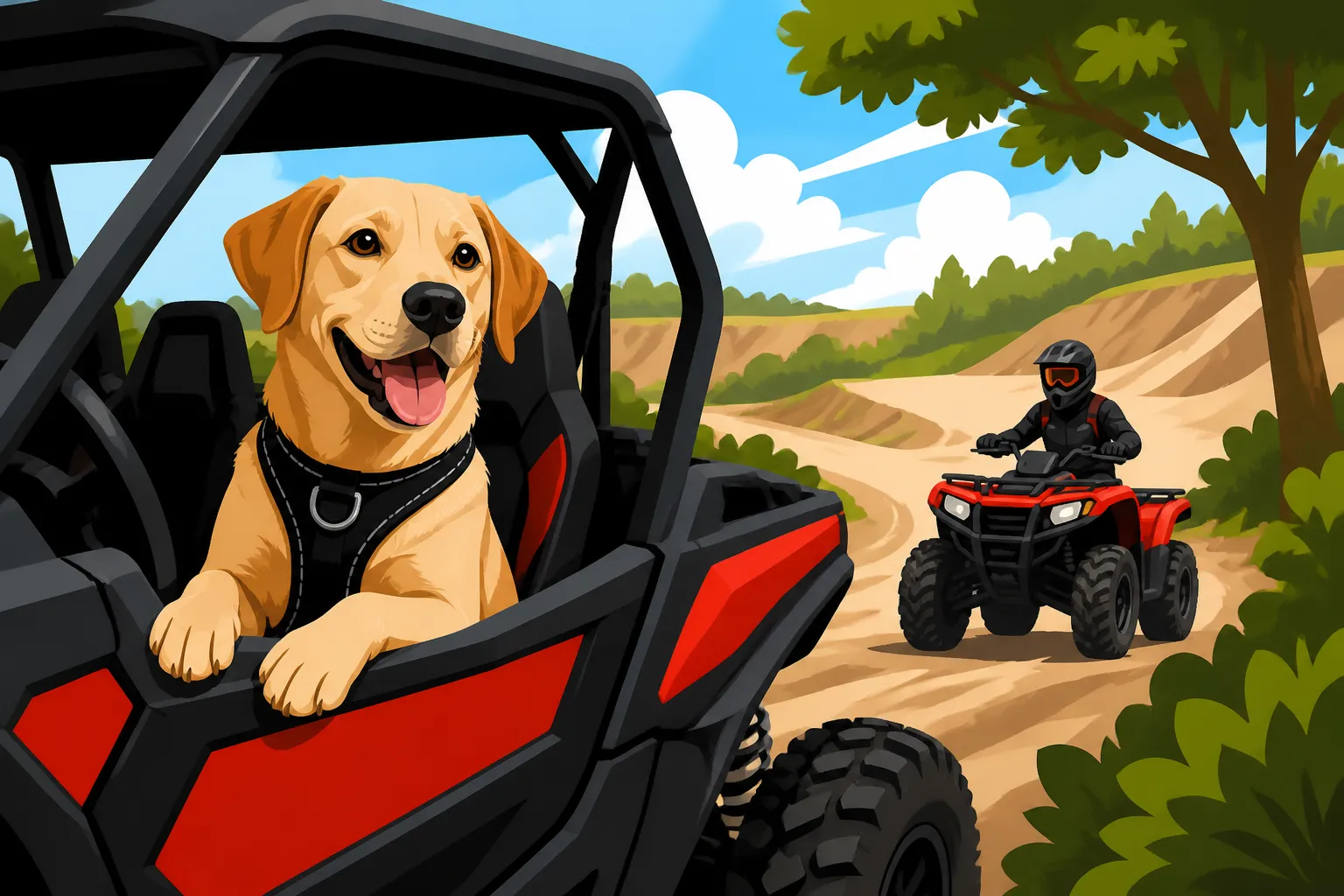
A dog should not ride loose on an ATV or UTV. A sudden stop, bump, turn or panic response can throw the dog or distract the operator. A dog sitting on a lap, standing on a footwell or riding in an open cargo area is also exposed to falls, branches, debris and hot surfaces. Do not treat a seat belt or a human passenger restraint as a safe dog restraint unless the equipment is specifically designed for that use and compatible with the vehicle. If the dog cannot be kept safely away from the machine while it is moving, do not take the dog on the ride.
Noise and exhaust are important considerations, too. Dogs hear differently from people, and prolonged exposure to engines can be stressful. Dust can irritate eyes and airways. Keep a dog well away from vehicles that are starting, idling or being loaded, and do not tie a leash to a machine, trailer or other object that may move. A leash can help prevent wandering, but it is not a substitute for distance and supervision.
Weather may decide the question for you. A hot day, humid conditions, little shade or a long stretch of exposed trail can make the outing risky, particularly if the dog cannot rest somewhere cool. Surface temperature can also be hard on paws. Check the forecast, but remember that sun, dust and heat around a staging area may feel worse than the general air temperature suggests. If you would not be comfortable walking slowly on the ground in your bare feet, your dog’s paws may need protection or a different plan.
Trail conditions deserve the same attention as weather. Mud, loose material, sharp debris, steep slopes and traffic can all create hazards for a dog on foot. Review Indiana Trail Conditions Before You Ride and park notices before setting out, then reassess on arrival. If the trail is busy or difficult to walk safely, leave the dog at a supervised base area only if the park allows it and the area is genuinely safe. Otherwise, skip bringing the dog.
Plan a safe day at the park
If the park allows dogs and your dog is suited to the setting, build the visit around the dog’s needs rather than expecting them to fit into a full day of riding. Decide in advance who will supervise the dog whenever other members of the group are on the trail. A dog should not be left alone in a vehicle, tied beside a trailer, or unattended in a crowded staging area.
Pack the basics in a way that keeps them accessible:
- A sturdy leash and a well-fitted collar or harness with current identification
- Plenty of drinking water and a bowl
- Shade or a suitable resting setup, if the park permits it
- Waste bags and a way to carry them out
- A towel and basic supplies for cleaning mud or dust
- Any medication your dog needs
- A first-aid kit appropriate for a dog
- Paw protection if your dog is accustomed to it and it fits safely
Bring more water than you expect to need. A dog may drink more in heat, after walking over rough ground or when stressed. Offer water during breaks and watch for signs that the dog needs to stop. Heavy panting, weakness, unusual drooling, confusion, vomiting or difficulty walking can signal a serious problem. Move the dog to a cooler, quiet place and seek veterinary help if symptoms are severe or do not improve. Do not try to “finish one more loop” if the dog is struggling.
Keep the dog leashed wherever the park requires it, and maintain control even where a leash is not explicitly required. A dog running across a trail can startle riders or be struck by a machine. Keep the leash short enough that it cannot trail into wheels, belts or other moving parts. Do not walk a dog along an active trail or across a route without first checking for traffic and following park instructions. If the surroundings are too loud for the dog to respond to you, increase distance from the riding area.
Give the dog a quiet retreat. A spot beside a running vehicle is not a safe rest area, and a tied leash can become a hazard if machines or people pass close by. Look for a place that is allowed by the park, away from traffic, exhaust and dust, with shade and drinking water. If no such place is available, the better choice may be to leave the dog with someone who is not riding or arrange care at home.
Be considerate of other visitors. Some people are uncomfortable around dogs, and other dogs may be reactive. Keep your dog from approaching strangers, children, parked machines or other pets without permission. Pick up waste promptly and dispose of it as the park directs. These small steps help avoid conflict and keep dog access from becoming a problem for other visitors.
A riding group should agree on a simple plan before the first machine starts: who is watching the dog, where the dog will rest, and what the group will do if the dog becomes anxious or overheated. The person supervising the dog should not be expected to ride and monitor the dog at the same time. If nobody can stay with the dog, bring a non-riding companion or choose another arrangement.
Good trail etiquette applies even when you are not riding with the dog. Keep to permitted areas, respect closures and avoid disturbing wildlife. Review Indiana Trail Etiquette on Shared Ground and follow instructions posted at the park. A dog that is frightened or loose can create risks for riders, wildlife and itself, so turn back or move to a quiet area if the setting becomes too busy.
Make a backup plan if dogs are not allowed
If the park does not allow dogs on the trails, do not bring one and hope to work around the rule. A dog left in a vehicle can overheat, and a dog tied near a staging area may be exposed to engine noise, exhaust, traffic and other visitors. An open window does not make a vehicle a safe place to leave a dog while the group rides.
The practical alternatives are to leave the dog with a responsible caregiver, use a reputable boarding or day-care service, or arrange for one person to stay with the dog away from the active riding area if the property permits it. If the park allows dogs only in limited areas, plan a shorter visit and make sure the person staying with the dog has shade, water and a safe place to wait. Do not assume that the dog can be moved to a nearby trail or public area; check access rules for that location as well.
Private riding parks may have their own pet policies, so confirm directly with the operator before buying a pass or loading the machine. Indiana Rules for Riding a Private Park covers the broader point: private property rules matter, and one park’s policy does not establish another’s. If you plan to ride at a state area, look up that site’s current instructions and contact the office if anything is unclear.
Finally, consider whether bringing the dog improves the day for the dog, not just for the group. A short walk near a quiet campground may suit some dogs; hours beside a noisy trailhead may not. If you cannot provide safe supervision, cooling, water and distance from moving machines, leaving the dog at home is the more responsible choice.
Disclaimer
This article is for general informational purposes only and does not constitute professional advice. Laws, prices and regulations vary by location and change over time. Consult a qualified professional for guidance on your specific situation.