What a Newly Married Owner Files With the BMV
Getting married is such an exciting time, full of new beginnings, but let's be honest, it often comes with a heap of administrative tasks that can feel overwhelming – especially when it comes to updating your official documents. If you're an Indiana off-road vehicle owner who's recently tied the knot, you're probably wondering how your new marital status or name change impacts your ATV or UTV registration and title. This guide is here to walk you through exactly what a newly married owner needs to file with the Indiana Bureau of Motor Vehicles (BMV) to keep everything above board and stress-free.
Why Marriage Impacts Your ORV Registration and Title
It might seem like your off-road adventures are completely separate from your marital status, but from a legal standpoint, a change in your name or marital status can have significant implications for your ORV's paperwork. The state of Indiana wants to ensure that the ownership records for your ATV, UTV, or dirt bike are accurate and reflect your current legal identity. This isn't just bureaucratic red tape; it's about protecting your rights as an owner and ensuring clear documentation should you ever decide to sell your machine or if something unfortunate were to happen.
The Legal Name Change: Connecting the Dots
For many, getting married involves a name change. Perhaps you've decided to take your spouse's surname, or maybe you've opted to hyphenate. Whatever your choice, this new legal name needs to be consistently reflected across all your official documents, and your ORV registration and title are no exception. The name on your driver's license, your Social Security card, and ultimately your vehicle documents, must all align. If they don't, you could run into issues proving ownership, registering your vehicle, or even selling it down the line. Imagine trying to explain to a potential buyer why the title has a different name than your ID – it just creates unnecessary headaches and can raise red flags.
Beyond the hassle, having mismatched names can cause real problems with law enforcement if you're ever stopped while riding. An officer checking your [Indiana ORV Registration and Insurance Proof] might see a discrepancy between your ID and the registration certificate, leading to questions or even delays. It's much simpler to get it updated correctly from the start.
Matching Records for Proof of Ownership
The core reason for updating your ORV paperwork after marriage, especially with a name change, is to maintain an unbroken chain of ownership and clear identification. Your registration certificate and title are your primary proofs that you legitimately own your ATV or UTV. When your legal name changes, these documents become technically outdated. This can be especially important if you live in a county that has opened its roads to ORVs and requires you to carry proof of insurance and registration. For example, [Vanderburgh County's Insurance Certificate Requirement] specifies that your documents must be current.
The Indiana BMV relies on these consistent records to ensure that the rightful owner is associated with each registered vehicle. Without these updates, tasks like renewing your registration, transferring the title, or even dealing with insurance claims can become a bureaucratic maze. Keeping your name consistent across your [Indiana ORV Registration Paperwork] and your vehicle title ensures that there are no questions about who the legal owner of the machine truly is. This continuity safeguards your investment and simplifies any future transactions involving your off-road vehicle.
The Steps to Update Your Indiana ORV Registration
Updating your Indiana ORV registration after marriage, particularly a name change, is a relatively straightforward process once you know what to gather and where to go. It's often bundled with updating your driver's license, making it a convenient one-stop shop for many new spouses. However, understanding the specific ORV requirements can save you a trip or two to the BMV.
Gathering Your Documentation
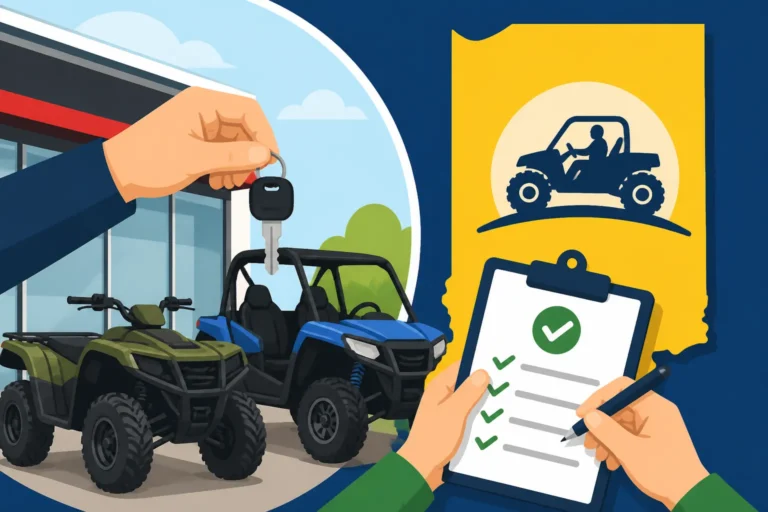
Before you even step foot in an Indiana license branch, it’s crucial to gather all the necessary documentation. This preparation is key to a smooth and efficient update process. Here's a checklist of what you'll typically need:
- Your Current Indiana Driver's License or State ID: This is your primary form of identification, and if your name has changed, you'll need to update this first. The ORV registration and title will need to match the name on your updated driver's license.
- Your Original Marriage Certificate: This document is the legal proof of your marriage and name change. The BMV will need to see this to verify the name change. Make sure it's an official certified copy, not just a ceremonial one.
- Your Current ORV Registration Certificate: This is the document you received when you initially registered your ATV or UTV. It contains all the current information that needs to be updated.
- Proof of Indiana Residency: Usually covered by your driver's license, but sometimes additional documents like utility bills can be helpful if there are any questions about your address. Remember, if you've moved to a new address after getting married, you'll also need to file an [Indiana ORV Registration Address Change].
- Proof of Social Security Number: This is typically your Social Security card, but other documents may be accepted.
Having these documents neatly organized and readily accessible will significantly speed up your visit to the BMV and prevent any frustrating delays.
Completing the Necessary Forms
When you visit an Indiana license branch to update your ORV registration due to a name change, you'll likely complete a form for a "change of name" or "correction" on your vehicle registration. There isn't a dedicated "marriage update" form specifically for ORVs, but rather a general process for amending your personal details. The BMV staff will guide you to the correct form.
The key is to clearly indicate that the change is due to a legal name change following marriage. You might need to fill out a new registration application with your updated name, even if it's just to correct the name on an existing one. Be prepared to fill in all the standard information about your ORV, such as the VIN, make, model, and year, just as you would for a new registration or renewal. Double-check every field to ensure accuracy, as even a small typo could cause further issues down the road. If you're feeling a bit lost about what standard information is typically needed, consulting a resource like LawDepot for generic vehicle registration templates might give you an idea of the kind of data points they collect, though you'll be using the official BMV forms.
Where to File and What to Expect
The primary place to file these updates is at any local Indiana BMV license branch. While the BMV is responsible for ORV registration, you can't complete this process online for a name change, as original documentation like your marriage certificate needs to be verified in person.
When you arrive, take a number for "Title and Registration" or "Driver's License and Identification." Since your name change on your ORV documents is contingent on your updated driver's license, it’s usually best to address both at the same visit. The BMV clerk will review your documents, verify your identity and marriage certificate, and process the updates. There may be a small fee associated with issuing a corrected registration certificate, but it's typically minimal.
Once the process is complete, you should receive a new registration certificate reflecting your updated name. You'll want to keep this new certificate with your ORV, perhaps in a waterproof bag, whenever you ride. Remember that it can take some time for the system to fully update, but your new certificate serves as immediate proof. For a comprehensive overview of the general process, you can refer to [How Indiana ORV Registration Works].
Addressing Your Indiana ORV Title After Marriage
While updating your ORV registration after marriage is critical for current use, addressing your ORV title is even more fundamental. The title is the ultimate proof of legal ownership, and keeping it current with your legal name is paramount. Indiana generally titles machines bought after 2009, so if your machine falls into that category, this section is especially for you. If you're uncertain about whether your machine needs a title, check out [Do You Need a Title for an ATV in Indiana?].
When a Title Update is Crucial
Updating your ORV title isn't always strictly required immediately after a name change, but it's highly recommended, especially if you plan to sell the machine in the future. The most critical time to update your title is when you're preparing for a transfer of ownership, such as selling your ORV. A discrepancy between the name on the title and your current legal name will absolutely halt a sale. Buyers and license branches will expect the seller's name on the title to match their official identification.
However, if you're holding onto your ORV for the long haul and have no immediate plans to sell, some owners might defer the title update. This isn't ideal, as it just pushes the administrative task down the road, potentially making it more complicated later. It's always best practice to align your title with your current legal name as soon as possible after changing your name. This proactive approach simplifies any future transactions and avoids potential legal headaches. If your ORV was purchased before 2009, it might be a [Title-Optional Machine in Indiana], which simplifies things a bit, but it's still good to have consistent records.
The Process for Amending a Title
Amending your ORV title to reflect a name change due to marriage follows a similar path to updating your registration, but typically requires a few more steps and a specific form. You'll again need your updated driver's license, your official marriage certificate, and your original ORV title certificate.
The primary form you'll need to complete is usually an "Application for Certificate of Title" (Form State Form 1014). On this form, you'll indicate that you are applying for a "corrected title" or "amended title" and specify the reason as a name change due to marriage. You'll fill in all the details of your ORV and your new legal name. There will be a fee for issuing a new title certificate. You can typically pay for an ORV title at a license branch.
The BMV agent will review all your documents. Once processed, a new title certificate will be mailed to you, displaying your updated name. This can take a few weeks to arrive, so don't expect it on the same day. It's important to keep this new title certificate in a safe place, not on your ORV, as it's a critical legal document. For detailed instructions on what is typically required for a title, you might find [Indiana ORV Title Requirements] helpful.
Joint Ownership Considerations
Marriage often involves combining assets, and you might consider adding your spouse's name to your ORV title, especially if they will also be riding it or if it's now considered joint marital property. This is a significant decision with legal implications. When you add a second name to a title, it typically creates a joint ownership scenario. This means both individuals have an ownership interest in the ORV.
The process for adding a spouse's name to the title will involve submitting an Application for Certificate of Title (State Form 1014) and indicating both your names as owners. You'll typically choose between "AND" or "OR" ownership. "AND" means both parties must sign off on any future sale or major transaction, providing more protection but requiring both signatures. "OR" means either party can act independently. It's a good idea to discuss which option makes the most sense for your situation.
Adding a spouse to the title can also have implications for things like insurance and liability, so it's wise to ensure your insurance policy reflects the joint ownership. If you ever need to [Remove a Name From a Registration] or add one, understanding these nuances from the start is crucial. For further details on joint ownership, especially for registration, you might look at [Two Names on an Indiana Registration]. While that link is for registration, the principles of joint ownership apply similarly to titles.
Here's a quick reference table for updating your ORV documents after marriage:
| Document Type | Action Needed | Key Documents Required | Where to File | Expected Outcome |
|---|---|---|---|---|
| Driver's License | Update name, address (if applicable) | Current ID, Marriage Certificate, Proof of SSN | Indiana BMV License Branch | New driver's license issued immediately |
| ORV Registration | Update name on existing registration | Updated Driver's License, Marriage Certificate, Current ORV Registration Certificate | Indiana BMV License Branch | New ORV registration certificate issued immediately |
| ORV Title | Apply for a corrected/amended title | Updated Driver's License, Marriage Certificate, Original ORV Title Certificate, Form 1014 | Indiana BMV License Branch | New ORV title mailed in 2-4 weeks |
Potential Pitfalls and Tips for a Smooth Process
Navigating government paperwork can be tedious, and there are always common snags that can trip you up. Being aware of these potential pitfalls and having a few tips in your back pocket can make the process of updating your ORV documents after marriage much smoother. The goal is to get it done correctly the first time and avoid unnecessary delays or repeat visits to the BMV.
Common Mistakes to Avoid
One of the biggest mistakes people make is not updating their driver's license first. Your ORV documents, along with nearly every other official document, depend on your driver's license reflecting your current legal name. If you show up at the BMV with an outdated license and expect to update your ORV title, you'll likely be sent away to update your license first, making for a wasted trip.
Another common pitfall is not having the original or a certified copy of your marriage certificate. A photocopy, a wedding invitation, or a photo on your phone won't cut it. The BMV needs to verify the legal document that officially changed your name. Similarly, make sure all your ORV paperwork is present. If you've lost your original title, for instance, you'll need to apply for a duplicate title before you can apply for a corrected one, which adds time and expense to the process. For more on what paperwork to look for, checking paperwork before you pay is a good general rule.
Finally, ensure you understand the difference between registration and title. They are distinct documents serving different purposes, and both need to be accurate. Neglecting one while updating the other is a frequent oversight.
Dealing with Liens or Financing
If your ORV is still under a loan, meaning there's a lienholder on your title, the process for updating your name becomes a bit more complicated. In most cases, the lienholder actually holds the physical title until the loan is paid off. To get your name changed on the title, you'll likely need to involve your lender.
You'll typically need to contact your bank or financing company and inform them of your name change. They may require you to provide them with your marriage certificate and updated identification. The lienholder will then need to release the original title to the BMV or provide specific authorization for the name change. This often means the BMV will issue a new title with your updated name, but the lienholder's name will still appear on it until the loan is satisfied. It’s crucial to communicate clearly with your lender throughout this process to ensure all parties are on the same page. Without their cooperation, updating a title with a lien can be a real headache. You can learn more about this in [Indiana ORV Title With a Lien].
Proactive Planning for Future Changes
While you're fresh off the excitement of marriage and handling this wave of paperwork, it's a good moment to think proactively about any future changes. Life happens, and sometimes names change again (think divorce, or simply deciding to revert to a maiden name). Having clean, up-to-date records now will make any future adjustments much simpler.
Consider keeping copies of all your key documents – your marriage certificate, updated driver's license, and the new ORV registration and title – in a secure, digital format as well as physical files. This can be invaluable if originals are ever lost or damaged. You might even use a service like LawDepot to create a personal legal document inventory or affidavit to keep track of your important papers and their locations. While it won't replace official documents, it helps you stay organized.
Finally, keep an eye on your registration renewal dates. [Renewing Every Three Years in Indiana] is standard for ORVs, so make a note of when your next renewal is due. By handling your name and ownership updates now, your next renewal will be a breeze, reflecting all your correct information.
Disclaimer
This article is for general informational purposes only and does not constitute professional advice. Laws, prices and regulations vary by location and change over time. Consult a qualified professional for guidance on your specific situation.