Two Machines at One Indiana Address
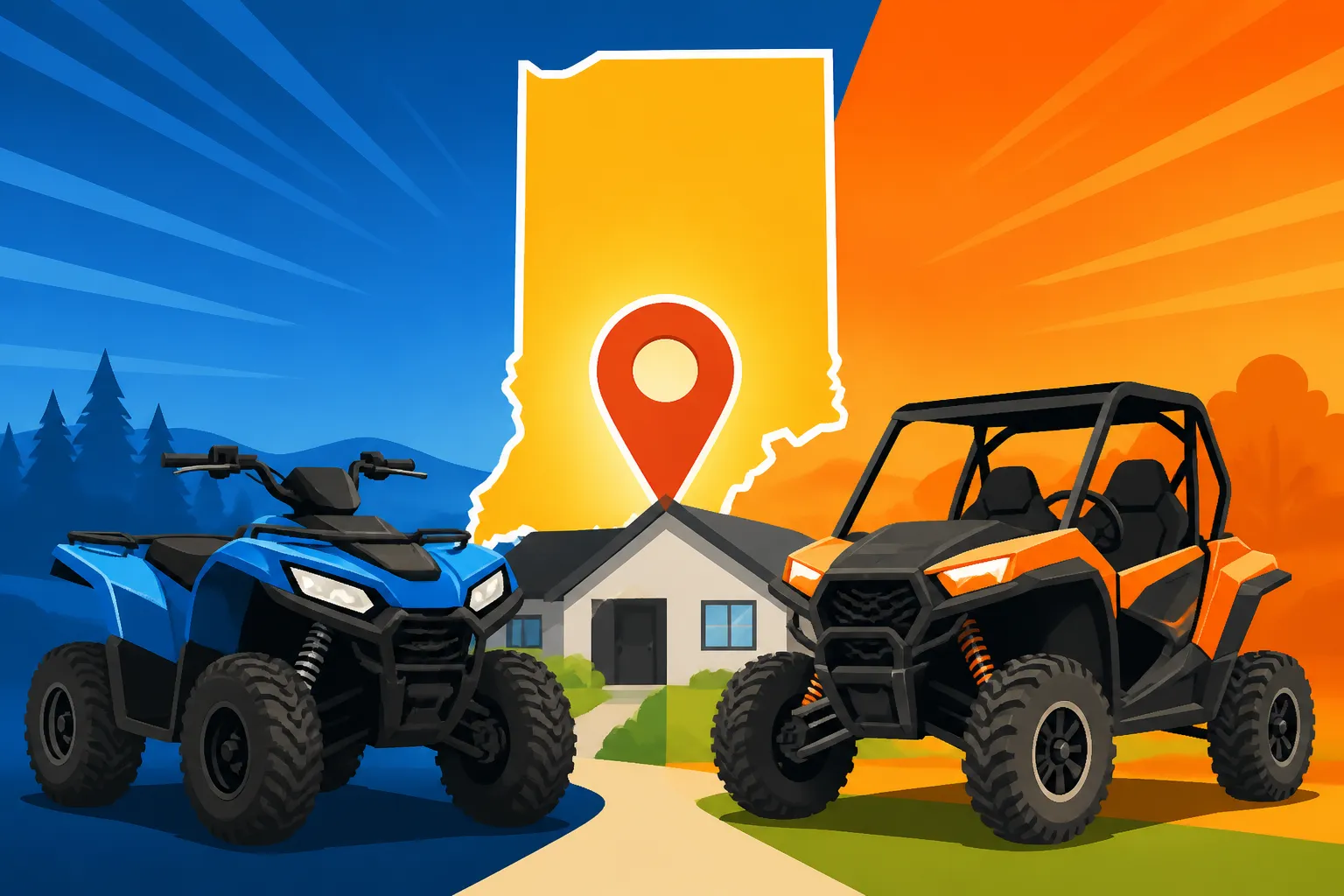
It's completely normal to find yourself accumulating a few off-road vehicles over time, whether it's a quad for you, a side-by-side for the family, or a dirt bike for a younger rider. Many of us have a garage or barn that slowly but surely fills up with these beloved machines, and then the question inevitably pops into your head: does having "Two Machines at One Indiana Address" change how you handle the registration and titling? This guide is here to clarify exactly how Indiana treats multiple ORVs living under the same roof.
Each Off-Road Vehicle Is an Individual in Indiana
When it comes to the Indiana Bureau of Motor Vehicles (BMV), each off-road vehicle (ORV) is considered its own unique entity. Think of it like cars in your driveway – each car needs its own license plate, registration, and title, even if they all belong to the same household. Your ATVs, UTVs, and dirt bikes are no different. Indiana's regulations focus on the individual machine and its specific characteristics, not on the collective quantity housed at a single address.
Each ORV, Its Own Identity and Paperwork
Every single ORV you own, whether it's a vintage quad or a brand-new side-by-side, possesses its own unique Vehicle Identification Number (VIN). This VIN is the machine's fingerprint, and it’s what the state uses to track its ownership and registration status. Because of this, each machine requires its own distinct set of official paperwork. This means a separate title application for each machine that needs one and an individual [Registering an ORV in Indiana] process for every ORV you intend to ride on state-sanctioned trails or in open county areas.
For example, if you have a quad you bought in 2008 and a UTV you just purchased last year, they'll have very different titling requirements because of the cutoff date. The newer UTV will definitely need [Titling an ORV in Indiana], while the older quad might be title-optional. Regardless, each machine stands on its own in the eyes of the law. You can't just register one and assume it covers the others, even if they're identical models.
Decals, Not Family Plans
There's no such thing as a "family plan" or a bulk discount when it comes to ORV registration decals in Indiana. Each registered ORV will receive its own specific registration decal. This decal, which typically indicates the year of registration and a unique identifier, must be affixed to the machine itself in a clearly visible location. If you're wondering [Where the Indiana Decal Mounts], it's usually on the forward half of the machine, often near the handlebars or on a visible frame member.
This individual decal system is crucial for law enforcement and park rangers to quickly verify a machine's compliance. If you're out on the trails at Redbird SRA with a friend who's riding your second quad, both machines need their own current decals. If one is missing or expired, that machine could be subject to fines, even if the other one in your group is perfectly legal. It's all about individual machine accountability.
Common Scenarios for Multiple Machines at One Address
The reality of having several ORVs at one location can present a few different scenarios, each with its own nuances in terms of paperwork and responsibility. Understanding these distinctions can help prevent future headaches.
Multiple Machines, Single Owner
This is perhaps the most common situation. You, as one individual, own several ORVs. Maybe you have a sport quad, a utility side-by-side, and a dirt bike for your teen. In this case, the process is straightforward: you simply go through the titling and registration procedure for each machine. The fact that they all share your mailing address changes nothing about the individual requirements for each.
For instance, if you're registering three machines, you'll pay the [Indiana ORV Registration Cost] three times, once for each vehicle. The same applies to [Indiana ORV Title Cost] if they all require a title. You'll complete separate forms, provide separate proof of ownership (like a bill of sale or previous title), and receive three distinct registration certificates and decals. It's essentially repeating the single-machine process multiple times. While it might seem like a lot of paperwork, the good news is that you can often process multiple applications in one visit to a BMV license branch, making it a bit more efficient.
Different Owners, Shared Address
Another common scenario arises when different people living at the same address own their own ORVs. Picture this: you own your quad, and your adult child, who lives with you, owns a side-by-side. Or perhaps you and your spouse each have your own machine. In these cases, even though the machines are stored at the same physical location, the ownership is distinct.
Each owner is responsible for their own machine's registration and titling. Your child would handle their side-by-side's paperwork, and you would handle yours. This is particularly important for [Selling an ORV in Indiana] or [Buying a Used ORV in Indiana]. If your child decides to sell their machine, they are the legal owner who must sign the title or bill of sale. Clear proof of ownership, like a properly executed bill of sale, is paramount, especially in private party transactions. Websites like LawDepot can be incredibly helpful for creating legally sound bills of sale, ensuring that when one machine changes hands within the household, all parties have documentation that clearly defines the transaction. This avoids any ambiguity about who legally owns which machine.
Farm Use vs. Recreational Use
What if one of the machines at your address is used exclusively for farm work, while another is purely for recreational trail riding? Indiana law provides certain exemptions for ORVs used solely for agricultural purposes on private property. [Indiana Registration for a Farm Machine] explains this in detail. If your utility UTV never leaves your sprawling farmland in central Indiana for recreational purposes, it might be exempt from registration. However, that exemption is tied to the use of that specific machine, not its presence at an address that also houses recreational ORVs.
Your sport quad, which you take to Interlake SRA every other weekend, would still need to be fully registered. The location of storage doesn't blur the lines; it's the intended and actual use of each individual machine that determines its registration status. You cannot claim a recreational machine is "farm use" just because you also have a farm machine at the same address. Each case is assessed independently based on its specific function and where it operates.
Practicalities and Pitfalls of Multi-Machine Ownership
While having several ORVs can be a blast, managing them all effectively, especially when they share an address, requires a bit of organization and forethought. You want to make sure you're not caught off guard by an expired registration or a missing piece of paper.
Keeping Track of Paperwork for Each Machine
This is where things can quickly get messy. With multiple machines, you'll have multiple titles, registration certificates, and perhaps even different insurance policies. Losing track of which document belongs to which VIN can lead to significant headaches down the road. Imagine trying to [Renewing an Indiana ORV Registration] for one machine, only to realize you can't find its current registration card.
It's a smart idea to create a dedicated filing system. A binder with separate sections for each ORV, clearly labeled with the VIN and model, can be a lifesaver. Keep copies of everything – titles, bills of sale, registration certificates, and insurance cards. Some people even take photos of these documents and store them securely on their phone or in cloud storage for easy access. Remember, the BMV considers each machine distinct, so your [Indiana ORV Registration Paperwork] must be distinct for each as well. For creating or organizing important documents related to ownership or transfers, especially within a family, using a service like LawDepot to generate standardized forms can help ensure all details are correctly captured and easy to find when needed.
Insurance and Liability for Multiple ORVs
Just as each ORV needs its own registration, it will likely need its own insurance coverage. While some insurance providers might offer multi-vehicle discounts, the underlying principle is that each machine requires its own policy. This is critical for protecting yourself in case of an accident. Think about it: if your child is riding their dirt bike and has an incident, your policy for your side-by-side might not cover their machine, even if it's stored in the same garage.
It's crucial to understand your [Indiana ORV Insurance Requirement] for each vehicle. If you're in a county that has opened its roads to ORVs, like Vanderburgh County, they often require proof of insurance for any machine being operated on those public ways. Your insurance agent can help you navigate policies for multiple ORVs, ensuring each machine is adequately covered for its intended use and by its primary operator.
Selling or Transferring One of Many
When it comes time to part ways with one of your ORVs, the process remains the same as if it were your only machine. The fact that you still have other ORVs at your address doesn't alter the legal requirements for the sale or transfer of that particular vehicle. You'll need the title (if applicable), a proper bill of sale, and any other documentation required by the BMV.
If you're selling a machine privately, a well-drafted bill of sale is your best friend. It protects both the buyer and the seller by clearly stating the terms of the sale, the condition of the machine, and the transfer of ownership. This is another area where services like LawDepot can be invaluable. They provide templates and guidance to help you create a comprehensive bill of sale, ensuring all the necessary legal language is included. This attention to detail can prevent disputes and clarify any questions regarding the ownership history, especially when dealing with a machine that has been part of a multi-ORV household.
Streamlining the Process and Avoiding Headaches
Managing multiple ORVs doesn't have to be a constant source of stress. With a bit of planning and utilization of available resources, you can keep everything in order and focus on enjoying your machines.
Batching Your BMV Trips
While each machine requires its own paperwork, you don't necessarily have to make a separate trip to the BMV for each one. Most license branches are perfectly equipped to handle multiple registration and titling applications during a single visit. Gather all your documents for all the machines you need to register or title, and present them together. This can save you a lot of time and travel. To find the nearest location, check [Where to Register an ORV in Indiana].
Before heading out, it's always a good idea to double-check the BMV's website or call your local branch to confirm their hours and any specific requirements for multiple transactions. Having all your original titles, bills of sale, and identification ready for each machine will make the process much smoother for both you and the BMV staff.
Digital Organization and Reminders
In today's digital age, there's no reason to rely solely on paper copies. Scan or photograph all your important ORV documents and save them to a secure cloud service or an external hard drive. This creates a backup in case the originals are lost or damaged.
Even more importantly, set up digital reminders for your registration renewals. Since Indiana ORV registrations last for three years, it's easy for the expiration date to sneak up on you. A reminder in your calendar or a dedicated app can alert you well in advance, giving you plenty of time to complete the [Renewing an Indiana ORV Registration] process before your decals expire. This proactive approach helps avoid any lapse in registration and potential fines.
Utilizing Online Tools
The Indiana BMV offers some online services that can streamline certain processes, though not all ORV transactions can be completed online. For renewals, checking the BMV's online portal is always a good first step. If you're fortunate enough to find that an online renewal is available for your specific machine, it can save you a trip to the branch.
Beyond the BMV, general organizational tools and platforms for legal documents can also be quite useful. While not directly linked to state registration, for personal record-keeping, creating a "digital vault" of all your ORV-related documents can simplify future transactions or just help you quickly locate information. Remember, whether you have one machine or ten, staying organized is key to being a responsible and stress-free ORV owner in Indiana.
Disclaimer
This article is for general informational purposes only and does not constitute professional advice. Laws, prices and regulations vary by location and change over time. Consult a qualified professional for guidance on your specific situation.