Indiana ORV Registration for a Nonresident
So, you're planning an epic off-road adventure to Indiana, maybe Redbird or Interlake, and you've got your machine loaded up, ready to hit the trails. But then it hits you: what about registering your ATV or UTV in a state that isn't your home? Navigating another state's specific off-road vehicle (ORV) rules can feel like trying to find your way through a new trail system without a map. This guide is here to clear up the confusion and lay out exactly what nonresidents need to know about ORV registration in the Hoosier State, ensuring you're legal and ready for some serious fun.
Understanding Indiana's "Twenty-Day Rule" for Visiting Riders
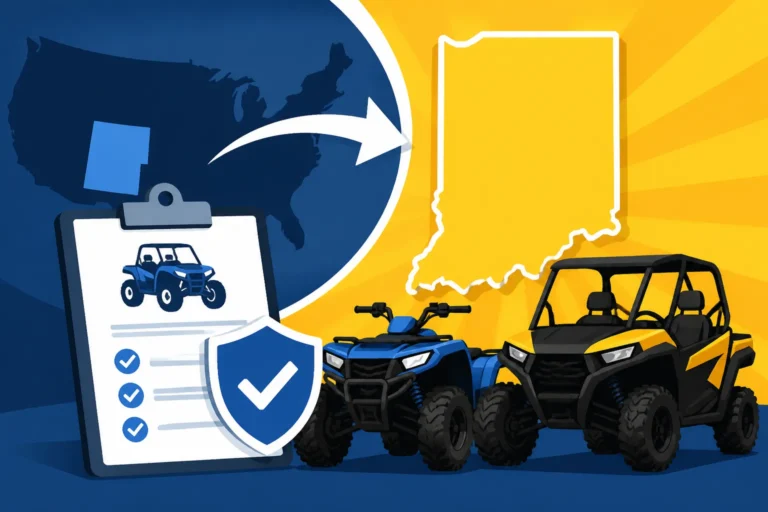
Indiana understands that many off-road enthusiasts travel from neighboring states like Ohio, Michigan, Illinois, and Kentucky to experience our unique riding parks and trails. The good news for most visitors is that you likely won't need to go through the full Indiana registration process right away. Indiana has a specific provision, often called the "twenty-day rule," designed to accommodate nonresident riders who are already legally registered in their home state.
This rule essentially states that if your ORV is properly registered and displaying a valid registration decal from your home state, you can ride in Indiana for up to twenty cumulative days within a single calendar year without needing an Indiana ORV registration. Think of it as a grace period that allows you to enjoy our trails without jumping through extra hoops for short visits. Each time you bring your machine into Indiana and ride it, any part of that day counts towards your twenty-day limit. It's not about twenty continuous days, but rather the total number of days spent riding in Indiana throughout the year. For example, if you visit Redbird Off-Road State Recreation Area for a long weekend in April (3 days), then return to Interlake Off-Road State Recreation Area for another weekend in August (2 days), you've used 5 of your 20 days. This makes it crucial to keep track of your visits if you're a frequent traveler to Indiana's ORV hotspots. You can read more about this in [Twenty Days a Visitor May Ride].
The intention behind this rule is to make Indiana accessible to riders from out of state, promoting tourism and enjoyment of our natural resources. However, it places the responsibility squarely on you, the rider, to monitor your usage. It's not uncommon for folks to lose track, especially if they make several short trips throughout the year. Getting close to that twenty-day mark can sneak up on you faster than you think, and that's when you need to start thinking about the next steps to remain compliant.
When a Nonresident Needs Full Indiana ORV Registration
While the twenty-day rule is incredibly convenient for short visits, there are clear scenarios where, as a nonresident, you'll need to obtain a full Indiana ORV registration for your machine. Ignoring these situations could lead to unexpected headaches and potential fines, which is the last thing you want when you're here to have a good time.
The most common trigger is, of course, exceeding that twenty-day cumulative limit within a calendar year. Once you hit day twenty-one, your out-of-state registration no longer offers you legal passage to ride in Indiana. At this point, your machine is considered to be operating without proper registration in Indiana, and you'll need to apply for an Indiana ORV registration just as a resident would. Conservation officers and local law enforcement are aware of these rules, and they'll expect you to be compliant. You can learn more about the consequences in [What Happens After a Visitor's Twentieth Day of Riding].
Another scenario where you'd need full Indiana registration is if you decide to make the Hoosier State your permanent home. If you relocate to Indiana and bring your ORV with you, you'll typically have a grace period to switch over your registration and title (if applicable) to Indiana. This isn't just for ORVs; it's a standard requirement for most vehicles when establishing residency in a new state. The clock starts ticking from the moment you become an Indiana resident, so it's wise to address this sooner rather than later to avoid any issues.
Finally, if you, as a nonresident, purchase an ORV within Indiana, whether new from a dealer or used from a private seller, you'll need to navigate Indiana's initial registration process. Even if you plan to take the machine back to your home state, the point of sale in Indiana typically mandates that it adheres to Indiana's immediate registration and titling rules before it leaves the state or if it's to be ridden here. This means dealing with Indiana's Bureau of Motor Vehicles (BMV) to get the machine registered in your name, even if you eventually transfer it to your home state's system. This is where having all your ducks in a row with documentation, like a solid bill of sale, becomes critically important. Some people use services like LawDepot to ensure they have robust and legally sound documentation for purchases, whether for their home state or for an Indiana transaction, so they don't run into issues down the line.
The Registration Process for a Nonresident ORV (When Required)
Okay, so you've determined you need to get your ORV fully registered in Indiana. Don't fret; while it's an extra step, the process is straightforward once you know what's required. It's largely the same process any Indiana resident would follow, but it's good to be prepared.
First and foremost, you'll need the proper documentation. This typically includes proof of ownership, which could be your original certificate of origin (for new machines), a bill of sale, or a title if your home state issued one. You'll also need a valid photo ID. If you're buying a used ORV in Indiana, make sure the seller provides a clear bill of sale and any previous registration or title documents. In situations where ownership history might be a bit murky, or if you need to create a comprehensive bill of sale for your records, resources like LawDepot can be quite helpful in generating a formal document that satisfies the requirements for proof of purchase. The key is to demonstrate clear ownership to the Indiana BMV. For a deep dive into what paperwork you'll need, check out [Indiana ORV Registration Paperwork].
You'll head to an Indiana Bureau of Motor Vehicles (BMV) branch, often referred to as a license branch. This is where you'll submit your paperwork and pay the necessary fees. Unlike some states where the Department of Natural Resources (DNR) handles ORV registration, Indiana centralizes this function with the BMV. This makes the process consistent with how you'd register other vehicles. [Where to Register an ORV in Indiana] has more details on locations.
Upon successful registration, you'll receive a registration certificate and an Indiana ORV decal. This decal is super important; it needs to be affixed to your ORV in a clearly visible location, usually on the front half of the machine, like the frame or a major structural component. The decal is how law enforcement quickly identifies that your machine is legally registered in Indiana. It’s not just a sticker; it's your proof of compliance. Make sure you understand [Indiana ORV Decal Placement] to avoid any issues.
There's typically a processing period for the decal to arrive in the mail after you complete the initial registration at the BMV. While you'll get your temporary paperwork, the physical decal can take a few weeks. It's often around [How Long an Indiana Decal Takes to Arrive], so plan accordingly if you have an immediate riding trip in mind.
Finally, keep in mind that Indiana ORV registrations are valid for three years. This means you won't have to renew it annually, which is a nice break! Just remember to mark your calendar for when it's due to expire and handle the [Renewing Every Three Years in Indiana] process.
Here's a quick comparison of the two nonresident scenarios:
| Scenario | Requirement | Action Needed | Key Documents |
|---|---|---|---|
| Visiting (Under 20 Days) | Valid out-of-state ORV registration & decal | Keep track of days ridden in Indiana | Out-of-state registration certificate, ID |
| Visiting (Over 20 Days) | Full Indiana ORV registration | Apply at Indiana BMV | Proof of ownership (title/bill of sale), ID, application |
| Becoming Indiana Resident | Full Indiana ORV registration | Apply at Indiana BMV after establishing residency | Proof of ownership (title/bill of sale), ID, application |
| Buying ORV in Indiana | Full Indiana ORV registration (initial) | Apply at Indiana BMV, often facilitated by dealer | Bill of sale, Manufacturer's Certificate of Origin (new) |
Avoiding Pitfalls and Staying Legal on Indiana Trails
Even after you've got your registration sorted, whether it's via the twenty-day rule or a full Indiana registration, there are a few more things to keep in mind to ensure your off-road adventures in Indiana remain smooth and worry-free. No one wants a surprise ticket when they're out enjoying the beautiful trails.
One of the biggest pitfalls is simply not understanding or adhering to the twenty-day rule. Many riders mistakenly believe it's twenty days per park, or per specific trip, rather than a cumulative total for the entire calendar year. If you exceed this limit without obtaining an Indiana registration, you could face fines for operating an unregistered ORV. These penalties can be costly and put a damper on your trip, so it's always better to be safe than sorry. For a detailed look at potential fines, check out [Indiana Fines for an Unregistered ORV].
Remember that ORV registration is separate from trail permits. While your Indiana ORV registration (or valid out-of-state registration) makes your machine legal for use, you'll still need to purchase a trail permit to ride at Indiana's state-operated ORV areas like Redbird and Interlake. These permits fund trail maintenance and operations. You can buy daily or annual permits, and there are separate entrance fees for state parks as well. Don't confuse the two; having one doesn't exempt you from the other. More on this can be found in [Indiana ORV Trail Permit Cost].
Always carry your registration certificate and proof of identification with you when you're riding. While the decal is visible on your machine, law enforcement officers may still ask to see your physical paperwork. Keep it in a waterproof bag or container to protect it from the elements. Some riders even take a photo of their registration on their phone, but a physical copy is always recommended as backup, especially in areas with spotty cell service.
Finally, while ORV registration is handled at the state level by the BMV, local ordinances can still impact where and how you can ride. Some Indiana counties have adopted their own rules regarding ORV use on county roads. While these usually pertain more to residents, it's good practice to be aware of any local specific regulations, especially if you plan on riding on or near public roads to access trailheads or other areas. Always respect posted signs and private property. By being prepared and informed, your nonresident ORV experience in Indiana can be nothing but pure, unadulterated fun on the trails.
Disclaimer
This article is for general informational purposes only and does not constitute professional advice. Laws, prices and regulations vary by location and change over time. Consult a qualified professional for guidance on your specific situation.