Indiana Trails With a Staging Lot
Finding a place to ride is only half the planning. If you’re towing an ATV or UTV, you also need somewhere to park, unload, gear up, and check your route without blocking traffic or discovering the lot is unsuitable for your trailer. This guide covers Indiana riding areas to investigate and how to confirm their staging arrangements before you go.
Indiana riding areas to check for staging
A staging lot is more than a parking space. For a family hauling several machines, it needs to accommodate the tow vehicle and trailer, give riders room to unload safely, and connect conveniently with the park entrance or trail system. What a park calls its parking or staging area may not offer all of those things, so confirm the details before setting out.
Redbird Off-Road State Recreation Area
Redbird, near Dugger in Sullivan County, is a state off-road riding area worth checking if you’re looking for a place to unload before a ride. Its location in southern Indiana makes it a practical option for riders planning a trip around the area. Start with the park’s official information and ask specifically about current parking and staging arrangements, rather than assuming every vehicle and trailer combination will fit.
The useful questions are concrete: Is trailer parking available? Is there room to turn around with a longer tow vehicle? Can you unload several machines without taking up the traffic lane? Are parking arrangements different on busy weekends or during special events? A quick call can prevent the frustrating experience of arriving with a trailer and finding that the available space does not suit your setup.
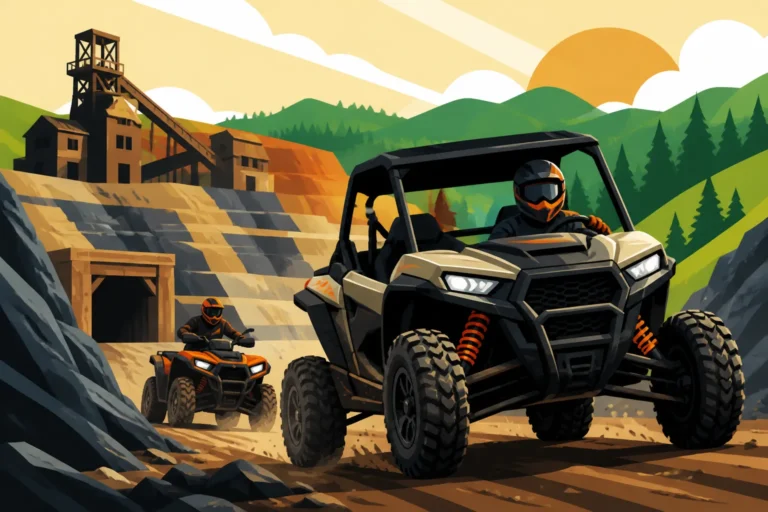
Redbird’s trails run through reclaimed mine land, so conditions may change with weather. Mud, ruts, and uneven surfaces can affect not only the trails but also how comfortably you move equipment around the park. Check trail notices before leaving home, and avoid assuming that a previous visit tells you what the site will be like today. For more about the area, see [Redbird Off-Road State Recreation Area] and [Indiana's Two State ORV Areas Compared].
Interlake Off-Road State Recreation Area
Interlake, in southwestern Indiana near Lynnville, is another state recreation area to consider. Its network of trails and varied terrain can make it a full-day destination, but that makes the staging plan especially important: you may want to arrive with fuel, food, water, riding gear, and anything needed for small trail-side adjustments already organized.
Before heading to the entrance, check whether the current parking area can accommodate your trailer and group. Ask about the best arrival time if you are bringing multiple machines, and whether there are any site-specific restrictions on where trailers can be left. If your group plans to meet separately, agree on a location in advance. Cell service can be unreliable in some rural riding areas, and “we’ll find you at the lot” is less reassuring if one vehicle arrives late and cannot get a signal.
Use the park’s official information to confirm access, operating details, and applicable riding requirements. Indiana state recreation areas may have requirements that are separate from your machine’s registration, so do not treat a staging pass, trail permit, or parking arrangement as interchangeable. Read [Interlake Off-Road State Recreation Area] and check [Indiana Trail Maps From the DNR] when planning a state-area visit.
Private parks such as Badlands and Haspin Acres
Private riding parks can be worth investigating when you want a different terrain mix or a riding destination outside the state recreation areas. Badlands Off Road Park near Attica and Haspin Acres in southern Indiana are examples, but their access rules, parking setup, and park-specific requirements may differ from one another and from state-managed areas.
Do not assume that a private park’s staging lot works the same way as a state park’s parking area. Ask whether parking is included with the visit, whether trailers have a designated area, and how close you can unload to the trail entrance. If your group has a wide UTV, a long trailer, or several vehicles, explain that when you call. A lot that works easily for a pickup and one ATV may be awkward for a large convoy.
Private parks can also have their own waivers, operating rules, and payment arrangements. Review those requirements before you leave, and make sure each rider understands where to check in and where machines are allowed to travel. Explore [Badlands Off Road Park in Indiana] and [Haspin Acres in Southern Indiana] as starting points, then confirm details directly with the park you choose.
| Riding area to investigate | What to confirm about staging | Planning detail to check |
|---|---|---|
| Redbird Off-Road State Recreation Area | Trailer parking, turning room, unloading space, and busy-day arrangements | Current access information, trail conditions, and applicable state-area requirements |
| Interlake Off-Road State Recreation Area | Parking for your vehicle and trailer, group meeting point, and unloading layout | Current notices, route information, and riding requirements |
| Badlands Off Road Park | The park’s parking and unloading process, trailer arrangements, and check-in | Park-specific rules, waivers, and access details |
| Haspin Acres | Where to park, how unloading works, and any restrictions for your setup | Park-specific procedures and current operating information |
How to choose a staging lot that fits your ride
A good staging area helps the day start calmly. You can unload without rushing, get everyone organized, and leave the parking area without weaving between other trailers. The best choice is not necessarily the one closest to home; it is the one that fits your machine, trailer, riding group, and trip plan.
Match the lot to your trailer and group
Before you choose a riding area, think through the entire arrival. How long is your vehicle-and-trailer combination? Will you be backing into a space? Are you towing one machine or several? Does anyone in your group need extra time or room to get on and off a machine? Those details can change which staging arrangement feels manageable.
For a small group with one ATV, a basic parking area may be enough. A family bringing a side-by-side, a youth machine, and a second vehicle needs more space to unload and gear up. A club ride with several trailers needs a meeting plan and a way to avoid crowding the entrance. If you are unsure, call the park and describe your setup instead of asking only, “Is there parking?”
Plan for the end of the day, too. Machines may be muddy, riders may be tired, and loading can take longer than expected. A staging area that is easy to use when you arrive should also leave you room to secure ramps, tie-downs, helmets, and loose gear before driving away. Keep your loading area orderly so you are not blocking another vehicle that is trying to leave.
Check access, amenities, and rules before departure
A map pin can show where a park entrance is, but it cannot reliably tell you whether a particular lot is open, spacious, or suitable for your trailer. Verify access details with the park, and ask about restrooms, water, fuel availability, and overnight parking if those features matter to your group. Do not assume that a trailhead or staging area has services just because it is a popular destination.
Also confirm the requirements for each machine and rider. State recreation area permits, a machine’s BMV registration or decal, and park entrance procedures are distinct pieces of the trip. Requirements can vary depending on where you ride and whether you are visiting a state-managed or private park. For broader planning, see [Indiana ORV Permits Explained] and [Indiana Registration for a Side-by-Side].
If you are visiting from another state, check how your registration and the location’s permit rules apply to your trip. Do not rely on a friend’s older experience as a substitute for confirming the rules. And if the route to the park involves public roads, remember that road-use rules are separate from permission to ride on the park’s trails.
A practical way to plan the trip
Once you have picked a likely riding area, use a short checklist to confirm the details that affect your arrival. This takes a few minutes and can save a long drive with the wrong expectations.
Confirm the lot directly with the park
Call or check the park’s official information before you tow. Ask whether the staging or parking area is open on your planned day, whether trailers are permitted, and whether there are restrictions on vehicle size or parking location. If you expect to arrive near opening or closing time, confirm those details as well. Hours and access instructions can change, and a gate sign or posted notice may contain important information.
Be specific about your equipment. Say whether you have a long trailer, multiple machines, or a group arriving in separate vehicles. If you plan to unload ramps or leave a trailer parked while riding, ask where that is allowed. Also ask what to do if the main lot is full. It is better to know the park’s plan ahead of time than to improvise along a road or in an unauthorized area.
If the park cannot answer a question clearly, do not treat silence as permission. Choose another option or make a backup plan. That is especially sensible for a large group, a first visit, or a holiday weekend when parking may be busier than expected.
Use maps as planning aids, not as permission
A navigation app can help you find the general route, while an off-road mapping tool such as onX Offroad can help you review mapped riding areas and plan around your intended destination. Use these tools to prepare, not to assume that every visible track is open to riding. A line on a map does not establish that you have permission to use it, that the trail is open, or that a particular parking area is available.
Compare any digital route information with the park’s current directions and official notices. This is useful when roads or entrances are easy to confuse, or when a group needs to share a meeting location. You can send the same map pin to everyone, then agree on the park entrance or approved staging area rather than a vague nearby landmark.
onX Offroad can also help you organize a route plan before you leave, but keep a backup that does not depend on cell service. Download or save useful information where possible, carry the park’s address and contact details, and make sure the driver knows where to go if the group gets separated. For official state-area mapping and notices, review [Indiana Trail Maps From the DNR] and [Indiana Trail Conditions Before You Ride].
Staging lot checklist for ride day
The lot is the transition point between the road trip and the ride. A few simple habits can make it safer and less stressful, particularly when several machines are unloading at once.
Arrive ready to unload safely
Park only where directed and leave room for other visitors to maneuver. Before lowering ramps, check the surface and make sure the trailer is stable. Keep children and bystanders clear of the loading path, and unload machines one at a time. If the lot is crowded, wait for a safe opening rather than trying to squeeze between vehicles.
Put on helmets and other riding gear before entering the trails, not while standing in a busy vehicle lane. Keep tie-downs, ramps, and loose equipment together so they do not become trip hazards. If your group is large, choose one person to help coordinate unloading and another to check that everyone has their gear and knows the plan.
Before riding away, confirm that every rider knows the meeting point in case the group gets separated. Agree on what to do if someone has a mechanical problem or needs to return early. A simple plan matters at parks where terrain can separate riders and mobile reception may be limited.
Leave the lot as carefully as you found it
Secure the tow vehicle and trailer according to the park’s instructions, and do not leave gear scattered around the staging area. Keep food, water, tools, and spare equipment organized so you can find them quickly when you return. If you expect to be out for several hours, consider how changing weather may affect anything left in the vehicle or trailer.
When you return, check for mud, debris, or damage before loading. Use designated wash areas if the park provides them, and do not wash a machine where runoff could create a problem or violate park rules. Make sure ramps are firmly placed and tie-downs are secured before driving away.
Finally, check notices before your next trip rather than relying on memory. Conditions, access, parking arrangements, and trail closures can change between visits. A little preparation keeps the staging lot from becoming the most stressful part of an otherwise great Indiana ride.
Disclaimer
This article is for general informational purposes only and does not constitute professional advice. Laws, prices and regulations vary by location and change over time. Consult a qualified professional for guidance on your specific situation.