Bringing a Machine From Ohio
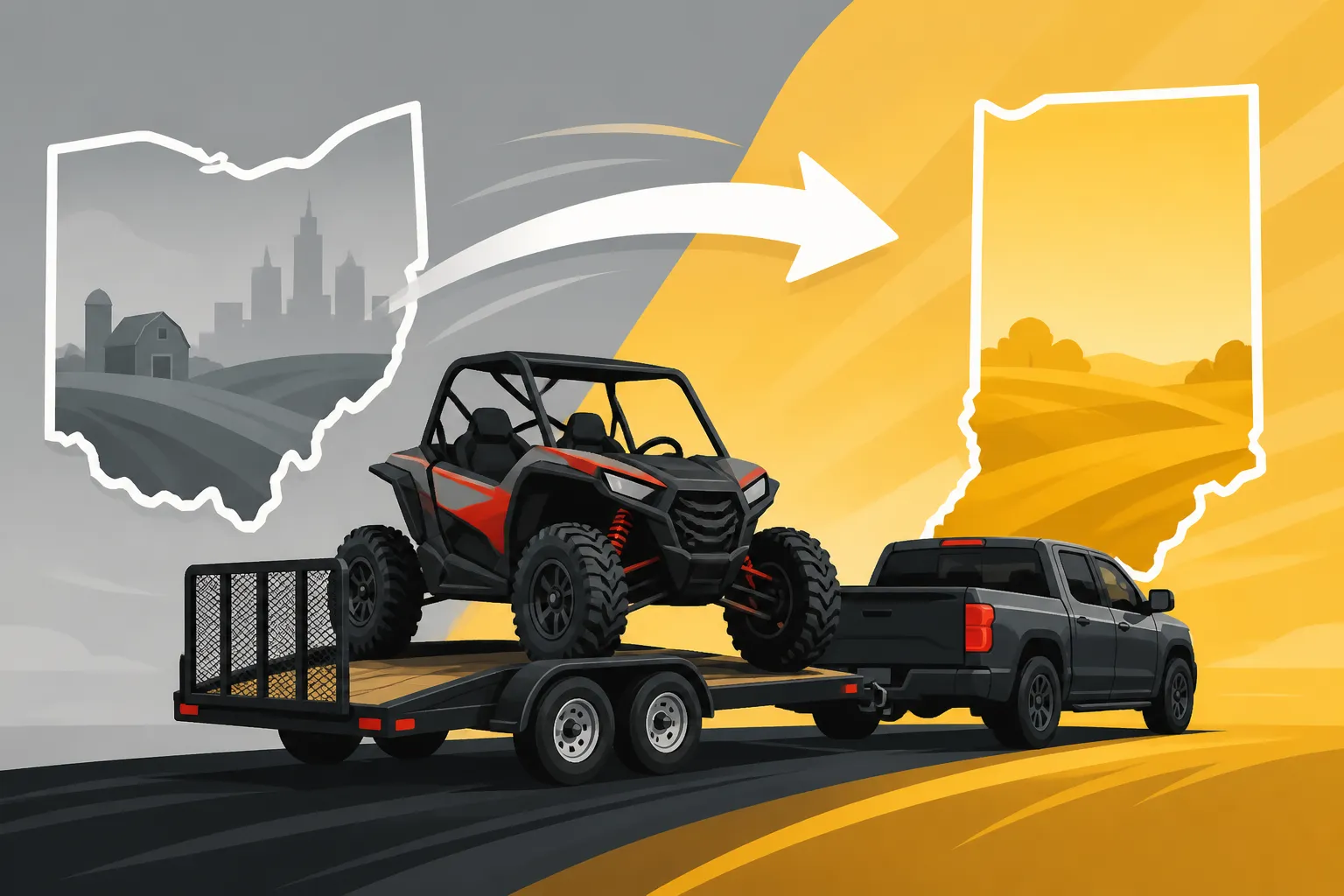
Bringing your beloved ATV or UTV with you when you move from Ohio to Indiana, or even if you just bought one over the border, can feel like navigating a maze of paperwork and rules. It's frustrating to think you've got everything in order, only to find Indiana has its own unique way of doing things. This guide is here to untangle that confusion, walking you through the ins and outs of getting your Ohio-purchased or Ohio-registered off-road vehicle properly documented and ready for Indiana's fantastic trails.
Understanding Indiana's ORV Registration and Titling Basics for Out-of-State Machines
Moving states or buying a machine across state lines always comes with its own set of administrative hoops to jump through, and your off-road vehicle is no exception. While Ohio might have one set of rules, Indiana has its own distinct framework for how ORVs are registered and titled. It's not about making things difficult; it's about ensuring all machines operating within the state's borders are properly accounted for, both for safety and for funding trail maintenance. Ignoring these differences can lead to headaches, fines, and delays when all you want to do is hit the dirt.
Why Indiana Cares About Where Your Machine Came From
Indiana's approach to ORV documentation has a few key distinctions that often catch new residents or out-of-state buyers off guard. For starters, Indiana has specific rules about titling that were enacted back in 2009. This means that if your machine was purchased in 2010 or later, Indiana will almost certainly require a title for it, even if Ohio did not. This can be a significant difference, as some older Ohio machines, or even certain types of ORVs, might have been exempt from titling requirements in their home state. Understanding this foundational difference is crucial for a smooth transition.
Furthermore, Indiana differentiates between simply owning a machine and legally operating it on designated trails. Titling establishes legal ownership, while registration—which results in a decal—grants you permission to ride. Both are often necessary for machines coming from out of state, and they involve separate, though often simultaneous, processes at the Indiana Bureau of Motor Vehicles (BMV). The state needs to know who owns the machine and that it's contributing to the funds that maintain our riding areas, which is a major reason for the [Where Indiana ORV Fees Go] system.
Key Documents You'll Need From Ohio
To begin the process of getting your ORV compliant in Indiana, you'll need to gather all the relevant paperwork from its time in Ohio. The more documentation you have, the smoother the transfer will likely be. This typically includes the original Ohio title if one was ever issued. If your machine was never titled in Ohio, perhaps due to its age or type, you'll need a clear chain of ownership, usually starting with a well-documented bill of sale. This bill of sale should ideally include the seller's information, buyer's information, machine's make, model, year, and its Vehicle Identification Number (VIN).
Beyond the title and bill of sale, any previous registration certificates from Ohio can be helpful, though not always strictly required for titling in Indiana. You'll also need your personal identification, such as a driver's license, to prove your residency or identity when applying at the Indiana BMV. For any documents that might be missing or incomplete, don't despair—Indiana has provisions for these situations, but it's always easier to start with a complete set. Having everything neatly organized before you step into the BMV will save you a lot of time and potential frustration.
Navigating the Indiana BMV Process for an Ohio Machine
Once you've got your Ohio paperwork in hand, the next step is to head to your local Indiana Bureau of Motor Vehicles (BMV) branch. This is where the magic happens, or at least where the bureaucratic wheels start turning to get your ORV properly documented in the Hoosier State. The BMV handles both the titling and registration aspects for off-road vehicles, which can be a relief compared to states where these functions are split between different agencies. They are the central hub for [How Indiana ORV Registration Works].
The process involves a few key steps: verifying your machine's identity, establishing ownership, and then fulfilling the titling and registration requirements. It's a journey that prioritizes clear documentation and adherence to Indiana's specific mandates. Be prepared for a bit of a wait, and always be polite to the clerks – they're your best resource for getting through this process efficiently.
The All-Important Indiana Title Requirement
Indiana has a pretty firm stance on ORV titling for machines bought or first brought into the state after December 31, 2009. If your machine from Ohio falls into this category, you absolutely will need to apply for an Indiana title. This requirement often surprises owners of older machines, or those who bought their ORV used in Ohio and it never had a title there. The BMV's rationale is to create a clear record of ownership, which helps prevent theft and ensures proper accountability. So, even if your machine was a cherished family heirloom passed down for generations in Ohio without a title, if it's new to Indiana and was acquired after 2009, get ready to apply for one. This is key to understanding [Why Indiana Titles Machines Bought After 2009].
For machines that were already titled in Ohio, the process is usually more straightforward: you'll submit your Ohio title, along with proof of sale (if applicable), and apply for a new Indiana title. The BMV will transfer the ownership record to Indiana. However, if your Ohio machine was never titled, perhaps because it was an older model or exempt under Ohio law, Indiana has a specific procedure. You'll typically need to provide your bill of sale and may be required to file an [Filing an Ownership Affidavit for a Quad With No Paperwork]. This affidavit essentially serves as your sworn statement of ownership when a traditional title isn't available. In some cases, a VIN inspection might be required to verify the machine's identity, especially if there's any ambiguity in the paperwork.
Registering Your ORV for Indiana Trails
Once your ORV is titled (or an affidavit of ownership is accepted), the next step is registration, which is what gives you the legal right to ride on designated public trails in Indiana. This is a separate but often concurrent process at the BMV. Indiana's ORV registration is valid for three years, which means you won't have to worry about renewing it annually. [Indiana's Three-Year ORV Registration] provides a bit of breathing room for riders. When you successfully register, you'll be issued an Indiana ORV decal. This decal must be prominently displayed on the machine, typically on the forward half of the frame or another visible, non-removable part. This ensures that conservation officers and park rangers can easily confirm your machine is compliant. Understanding [Where the Indiana Decal Mounts] is crucial for avoiding any roadside issues.
To register, you'll need to fill out the necessary forms, provide proof of ownership (your new Indiana title or approved ownership affidavit), and pay the registration fee. The costs are generally standardized, though you'll want to check with the BMV for the exact figures, as I can't give specific numbers. [Indiana ORV Registration Cost] will give you an idea of what to expect. After you submit everything, there's a processing period. It's common for the decal to take a few weeks to arrive in the mail, so don't expect to walk out with it immediately. If you're planning a trip soon after registering, keep this in mind! In the meantime, you should always carry proof of your registration application or temporary documentation, just in case you're stopped.
Common Roadblocks and How to Overcome Them
It's completely normal to hit a snag or two when transferring an ORV from one state to another, especially with differences in titling and registration laws. Many riders bringing their machines from Ohio face similar challenges, from missing paperwork to confusion over deadlines. Anticipating these roadblocks can help you prepare and avoid unnecessary stress or delays. The good news is, Indiana's BMV has processes in place to address most of these common issues, even if they sometimes require a little extra effort on your part.
The Missing Paperwork Predicament
One of the most frequent hurdles for ORV owners bringing machines from Ohio, particularly for older models or those bought in private sales, is a lack of complete paperwork. Maybe the original Ohio title was lost decades ago, or the bill of sale for a machine you bought used wasn't as detailed as Indiana requires. This can feel like a dead end, but it's not. Indiana's BMV understands that not every ORV has a pristine paper trail. In such cases, a robust [An Indiana Bill of Sale for an ORV] becomes your most important document. If you're in a situation where you need to create a new, legally sound bill of sale—perhaps because the previous one was informal—online tools like LawDepot can be incredibly helpful for generating proper documents. They offer templates that ensure all the necessary legal language and details are included, providing the BMV with the clear proof of transfer they need.
If a bill of sale isn't sufficient or your machine truly has no traditional ownership documents, the BMV may direct you to file an Ownership Affidavit. This is a formal, notarized statement where you affirm under penalty of perjury that you are the rightful owner of the ORV. It's a serious document, so ensure all information is accurate. You might also need to have a VIN inspection performed by a law enforcement officer to verify the machine's identity and ensure it's not stolen. This is particularly important if the VIN is damaged, illegible, or if there's any doubt about its origin. For truly unique cases, where a VIN might be missing or tampered with, the BMV can even assign a special identification number, as detailed in [Getting a Special Identification Number for a Homebuilt Quad].
Timing is Everything: Deadlines and Penalties
Indiana is fairly strict about the timeframe for titling your ORV, especially if you're a new resident or have just purchased the machine. The state generally gives you 45 days from the date of purchase or the date you establish residency to apply for your Indiana title. This deadline is important because exceeding it can result in an administrative penalty. Nobody wants to pay extra fees just because they missed a cutoff, so it's wise to prioritize this task as soon as you're settled or the purchase is complete. The [Indiana ORV Titling Deadline] is something you should mark on your calendar.
The BMV can impose an [Indiana's Administrative Penalty After 45 Days] for late title applications. While the exact amount can vary, it's an avoidable expense that can easily be sidestepped by prompt action. My best advice here is not to procrastinate. As soon as you have all your Ohio documents in order and have a moment, head to the BMV. Even if you don't plan to ride immediately, getting the title and registration taken care of protects you from potential fines and ensures your machine is legally recognized in Indiana. Remember, an ORV registered in Ohio has a limited window of [Twenty Days a Visitor May Ride] in Indiana before full registration is required. As a new resident, you're expected to bring it into compliance within that 45-day window, or sooner.
Getting Your Ohio Machine Ready to Ride Indiana Trails
So, you've moved your ORV from Ohio, tackled the Indiana BMV, gotten your title, and received your new registration decal. Congratulations! You've navigated the often-confusing bureaucratic landscape. Now, the exciting part: getting your machine ready to hit the extensive and varied trails that Indiana has to offer. But before you load up and head out, there are a few final considerations to keep in mind to ensure a safe, legal, and enjoyable experience on Indiana's off-road playgrounds.
Preparing for Your First Indiana Ride
With your Indiana ORV decal in hand, the very first thing you need to do is correctly mount it on your machine. The decal signifies that your ORV is properly registered in Indiana and contributes to the state's trail system. Indiana law specifies that the decal must be affixed to the "forward half" of your ORV, in a location that is clearly visible and not easily removed. For most ATVs and dirt bikes, this means on the frame, handlebars, or front fender. For side-by-sides, it might be on the front brush guard or a similar forward-facing part. Make sure it's secure, clean, and won't easily peel off when riding through mud or brush. [Where the Indiana Decal Mounts] is a straightforward guide to proper placement.
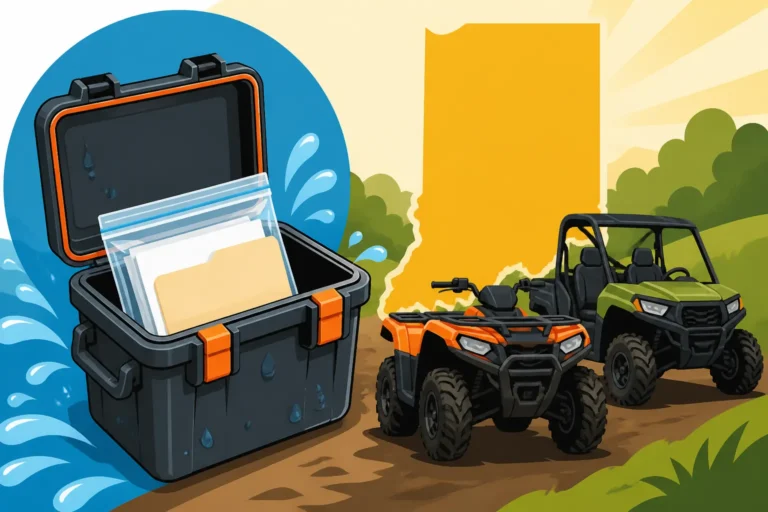
Beyond the decal, remember that Indiana has specific rules regarding rider safety, especially for younger operators. While you might be familiar with Ohio's rules, it's crucial to adhere to Indiana's helmet laws, particularly for riders under 18 years of age. This applies even on private property and within state parks like Redbird and Interlake. Always carry your registration certificate with you when you ride. While a BMV decal is clearly visible, having the actual paper proof of registration, perhaps in a dry box or a waterproof pouch, is wise in case a conservation officer requests it. [Keeping Paperwork in a Dry Box] is a simple but effective strategy.
Where You Can Legally Ride Your Ohio Transplant
Indiana boasts some fantastic places to ride, from state-managed ORV parks to privately owned pay-to-ride facilities. Your Ohio transplant is now ready to explore them all! The most well-known public riding areas are Redbird Off-Road State Recreation Area in Sullivan County and Interlake Off-Road State Recreation Area in Pike and Warrick counties. These parks offer hundreds of acres of diverse terrain, from challenging hill climbs to sprawling trails over reclaimed mine land. Each requires a valid Indiana ORV permit (which is separate from your registration decal) and often a gate entrance fee. To understand where you're headed, check out [Where to Ride an ORV in Indiana].
Beyond the state parks, Indiana also has privately owned parks like Badlands Off-Road Park and Haspin Acres, which offer their own unique experiences and may have slightly different rules or permit structures. It’s also important to remember that riding on public roads in Indiana is generally prohibited unless a specific county or municipality has passed an ordinance allowing it on designated roads. Always check local ordinances before venturing onto county roads, as rules can vary greatly from one area to another. [Indiana Counties That Allow ORVs on Roads] can help you find out if your destination permits road riding. Always respect private property and never ride without explicit permission from the landowner. A little research goes a long way in ensuring your Indiana ORV adventures are safe and legal.
Here's a quick look at how Indiana's ORV requirements might compare to what you experienced in Ohio:
| Feature | Ohio (General) | Indiana (General) |
|---|---|---|
| Titling | Required for new ORVs sold by dealers, certain models. Exemptions for older models or specific use. | Required for ORVs purchased or brought into state after Dec 31, 2009. Few exemptions. |
| Registration | Required for operation on public land, trails. Issued by DNR. | Required for operation on public land, trails. Issued by BMV. Lasts three years. |
| Decal | Issued upon registration, usually annual. | Issued upon registration, valid for three years. Must be visibly mounted. |
| Sales Tax | State sales tax applies, may vary by locality. | Flat 7% state sales tax on purchase. No local add-on. |
| Helmet Law | Mandatory for riders under 18 on public lands. | Mandatory for riders under 18 everywhere (public/private). |
| BMV vs. DNR | DNR typically handles ORV registration and titling. | BMV handles ORV titling and registration. DNR manages parks/trails. |
Disclaimer
This article is for general informational purposes only and does not constitute professional advice. Laws, prices and regulations vary by location and change over time. Consult a qualified professional for guidance on your specific situation.