Indiana Helmets at Redbird and Interlake
Redbird and Interlake riders often ask whether a helmet is required for every person, or only younger riders. The answer depends on age, vehicle type and any current property rules. Here’s how to understand Indiana’s age-based requirement, what to check before riding at either state recreation area, and how to choose gear that’s actually protective.
The helmet rule: age, vehicle and location matter
Indiana’s age-based helmet requirement applies to people under 18 who operate or ride as passengers on an ORV. That’s the starting point for planning a trip to Redbird or Interlake, but it may not be the only rule that matters: each riding property can also have conditions posted for its trails and facilities.
For adults, the statewide age-based rule is different. That does not mean you should assume a helmet is optional at every park or on every trail. Check the current rules for the property before unloading, and follow any posted direction from park staff. A helmet is also sensible protection for adults, even when a particular rule does not require one.
The vehicle matters too. A quad, dirt bike and side-by-side do not offer the same protection or have the same rider setup. Indiana’s rules include an exception associated with an enclosed cab, but a roll cage by itself is not the same thing as an enclosed cab. If you think your vehicle qualifies for an exception, confirm that it meets the actual rule rather than relying on its appearance.
| Riding situation | Practical rule to plan around |
|---|---|
| Rider or passenger under 18 on an ORV | Plan to wear a protective helmet; check whether a specific exception applies to the vehicle |
| Adult on a quad or dirt bike | Check current property rules; wearing a helmet is the safer choice |
| Adult in a side-by-side | Check rules for the property and vehicle; do not treat a roll cage alone as a helmet exemption |
| Any rider at Redbird or Interlake | Read current park notices and follow staff directions before riding |
For more detail on the statewide requirement, see Indiana Helmet Law for ORV Riders. The park-specific question is covered in [Indiana Helmet Rules at an ORV Park], while The Enclosed Cab Exemption in Indiana explains why a roof and roll cage do not automatically count as an enclosed cab.
A key distinction: a helmet rule is not the same as a trail-permit rule. Riders may need to meet both sets of requirements. A permit does not replace protective gear, and wearing a helmet does not replace a required permit. See Do You Need a Permit for Indiana ORV Trails? for the separate permit question.
What to check at Redbird and Interlake
Redbird Off-Road State Recreation Area and Interlake Off-Road State Recreation Area are Indiana riding destinations with their own entry and trail procedures. They are not interchangeable with private land or an open county road. Before traveling, check current property information for operating conditions, closures, riding rules and any helmet instructions that apply to your visit.
The safest way to plan is to prepare every rider to wear a helmet, then confirm whether the property requires one for adults as well as minors. This avoids the common mistake of reading the statewide age rule as the complete list of rules for a particular recreation area. Posted signs and current instructions at the property matter.
Redbird
At Redbird, a good pre-trip check includes the property’s current riding notices, trail conditions and any rules for the vehicle you plan to bring. If someone in your group is under 18, put an appropriate helmet on the packing list as a requirement, not an optional extra. For adults, bring one too and check the latest property directions before riding.
Do not rely on a past visit, a friend’s recollection or an old social media post to settle the current rule. A park can communicate requirements through updated notices, signs or staff. If anything is unclear, ask before riding rather than treating the absence of a sign at the staging area as permission to ignore a rule.
Interlake
Use the same approach at Interlake: confirm current property information before leaving, and prepare all riders to meet the strictest applicable helmet rule. This matters especially when a group includes different ages or mixes quads, dirt bikes and side-by-sides. A rule that seems straightforward for one vehicle may not answer the question for another.
If your trip involves multiple properties, check each one separately. A helmet decision made for Redbird should not automatically be carried over to Interlake, or vice versa, without confirming current directions. The same applies to permits: Indiana’s Daily and Annual Trail Permits explains the permit types, but does not determine a property’s helmet requirements.
Keep helmet questions separate from permits and registration
A visiting rider may have questions about an out-of-state registration, an Indiana trail permit and a helmet all at once. These are separate issues. Indiana’s visitor rules and permit requirements do not, by themselves, determine what protective equipment you need. Check Indiana’s Twenty-Day Visitor Rule if you are bringing a machine from another state, and verify the property’s current helmet rules separately.
It also helps to distinguish a state trail permit from an ORV registration decal. One relates to riding access on covered state properties; the other is a separate registration matter. Neither is a substitute for a helmet. For a broader explanation of the distinction, see Indiana ORV Permits Explained.
Choosing a helmet that protects rather than just passes a glance
A helmet should fit securely, suit the kind of riding and be in good condition. A decorative or novelty helmet can look like riding gear without offering the protection expected of a compliant protective helmet. For a youth rider, particularly, do not choose by appearance or buy a size they can “grow into.”
Look for a helmet designed for the type of riding involved and check for the required safety certification and label. A Department of Transportation sticker is a useful thing to verify when selecting a helmet for road-related use, but a sticker alone does not establish that the helmet is the right fit or is undamaged. Check the manufacturer’s information and the applicable rule.
When shopping online, including on Amazon, read the product description carefully and verify the exact model’s certification rather than relying on a broad search result or a seller’s shorthand. Confirm that the helmet is intended for motorized off-road riding, has the appropriate label, and is not described as novelty or costume headwear. If information about the model or certification is unclear, choose another listing or ask the manufacturer.
Check fit on the rider
A helmet that is too loose can shift during a crash; one that is painfully tight may be abandoned or worn incorrectly. A proper fit is snug and even, without painful pressure points. The helmet should not slide freely when the rider moves their head, and the retention strap should fasten securely.
Try the helmet on with the rider’s usual riding accessories in mind. If they wear goggles, check that the eye opening and strap work with them. The helmet should not be so large that the goggles cannot sit properly, and the strap should not be left undone because it feels uncomfortable.
Children need particular attention. A young rider’s helmet should fit now, not after a growth spurt. Recheck fit as the child grows, and do not assume a helmet that fit last season still fits securely. See Indiana State Park Rules for Riders Under 16 for related youth-riding considerations, and Indiana Safety Training for Riders for ways to build safer riding habits beyond gear.
Inspect before every ride
Before heading onto a trail, look over the helmet for cracks, damaged straps, loose hardware, worn padding or other visible problems. Check that the retention system works and that the helmet sits properly when fastened. Follow the manufacturer’s instructions for cleaning and storage.
A helmet that has been involved in a significant impact may need replacement even if damage is not obvious. Use the manufacturer’s guidance on impact damage, service life and replacement. Avoid modifying the shell or adding accessories in a way the manufacturer does not approve.
Keep helmets out of places where they can be crushed, repeatedly dropped or exposed to conditions the manufacturer warns against. Carry them in a way that protects the shell and strap. A dusty gear bag or open trailer can be convenient, but it is not a good place for a helmet to bounce around beneath tools and tie-down hardware.
Special cases: side-by-sides, passengers and younger riders
The most confusing helmet questions often involve side-by-sides. Their roll cages, doors, windscreens and seat belts can create a sense of enclosure, but those features do not automatically mean the vehicle qualifies for an enclosed-cab exception. If you are relying on an exception, verify the vehicle against the applicable rule and the current property requirements.
For a passenger under 18, do not assume the driver’s age or the vehicle’s protective structure removes the helmet requirement. Check the rule for the passenger as well as the operator. If your vehicle’s setup makes it unclear whether an exception applies, the straightforward choice is to have the younger rider wear a helmet.
The same caution applies to mixed-age groups. If adults and minors are riding together, make a group gear plan instead of waiting until the gate to sort out who has what. Ask every rider to bring a correctly fitting helmet, then check current property instructions for any additional requirements. This is easier than discovering that a child’s helmet is too small or that an adult has no helmet available.
For more on the vehicle-specific question, see Why Under-18 Riders Wear Helmets in a UTV. The exception itself is discussed in The Enclosed Cab Exemption in Indiana. A cage, roof or windshield may be part of a vehicle’s design, but it should not be treated as proof that the exception applies.
Passengers need their own properly fitting helmet
A driver’s spare helmet is not automatically suitable for a passenger. Each rider should have a helmet that fits securely and can be fastened correctly. A helmet that is too large for a child or too small for an adult can be uncomfortable and less secure.
If a passenger is sharing a machine, confirm that the vehicle is designed and equipped to carry that passenger safely. A helmet does not make an unsafe passenger position safe, and it does not change the machine’s passenger capacity. Check the owner’s manual and the park’s rules before allowing a passenger to ride.
Do not confuse supervision with helmet compliance
An adult riding alongside a child does not replace the child’s safety equipment. Nor does supervision necessarily waive age-based riding conditions. Treat helmet requirements, age and supervision as separate checks. For details on young riders, review [Indiana Supervision Rules for Young Riders] and the rules for the specific property.
A useful group routine is to check helmets before starting engines: ask each rider to fasten the strap, confirm the helmet sits securely and check that younger riders have the correct size. It takes little time and helps catch a loose strap or forgotten helmet before the group reaches the trail.
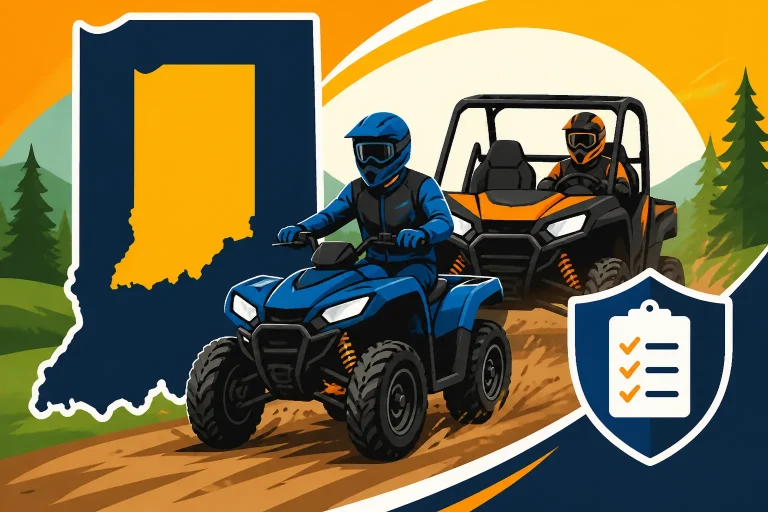
A simple pre-ride checklist
Use this checklist before each Redbird or Interlake trip. It is designed to prevent the most common planning errors without treating a helmet as the only safety issue.
- Confirm the property’s current rules. Check the latest notices for Redbird or Interlake, including any helmet directions, vehicle restrictions and trail closures. Do not assume the rules have stayed the same since your last visit.
- Identify every rider’s age and vehicle. Make a list of operators and passengers, including anyone under 18. Record whether each person will ride a quad, dirt bike or side-by-side.
- Prepare a suitable helmet for each rider. Check fit, condition, retention strap and certification information. Do not count on finding a correct-size helmet at the property.
- Verify any claimed exception. If you believe an enclosed-cab exception applies, check the rule and vehicle details rather than relying on the presence of a roll cage or roof.
- Check permits separately. Confirm whether each machine and rider needs a trail permit or other access document. See Where to Buy an Indiana ORV Permit for permit purchasing information.
- Pack related safety gear. Goggles or eye protection, gloves, boots and clothing suited to the conditions help address hazards that a helmet alone cannot prevent.
- Recheck at the staging area. Make sure each rider has the correct helmet and has fastened it. Read posted directions and ask staff if there is a conflict or uncertainty.
A helmet is one part of a larger safety setup. Ride within your ability, use trails suited to your group and follow closures. Mud, loose material, blind corners and changing trail conditions can make a familiar route more demanding than expected. A properly fitted helmet reduces one important risk, but it does not prevent every injury.
If you are unsure whether your helmet or vehicle meets a rule, do not try to settle it by guessing at the trailhead. Check the applicable official information before the trip or ask park staff. That is especially important when a rider is under 18, when a passenger is involved, or when the group is counting on an enclosed-cab exception.
Frequently Asked Questions
Do adults have to wear helmets at Redbird and Interlake?
Indiana’s age-based requirement applies to riders under 18. Adults should check current rules posted for Redbird or Interlake rather than assuming the statewide age rule answers every property-specific question. Wearing a helmet is the safer choice for adults regardless.
Does a roll cage make a side-by-side an enclosed cab?
Not automatically. A roll cage is not, by itself, proof that a vehicle qualifies for an enclosed-cab exception. Check the actual rule and the vehicle’s configuration. If uncertain, have riders wear helmets.
Does an Indiana trail permit cover helmet requirements?
No. Permits and helmet requirements are separate. A permit may be needed for riding access, but it does not replace protective equipment or override property rules.
Can a child use an adult-sized helmet?
Only if it fits the child securely and can be fastened correctly. A helmet that is loose or likely to shift is not a good fit. Choose a helmet suited to the child’s current size.
Disclaimer
This article is for general informational purposes only and does not constitute professional advice. Laws, prices and regulations vary by location and change over time. Consult a qualified professional for guidance on your specific situation.