Indiana ORV Park Day Rates Compared
An Indiana riding day can cost more than the number posted at the gate: some parks charge separately for trail access and vehicle entry, while private parks may price access differently. That makes comparing day rates confusing, especially if you’re bringing several machines or passengers. This guide explains what to check at Redbird, Interlake, and private parks before you load the trailer.
What an Indiana ORV park day rate may include
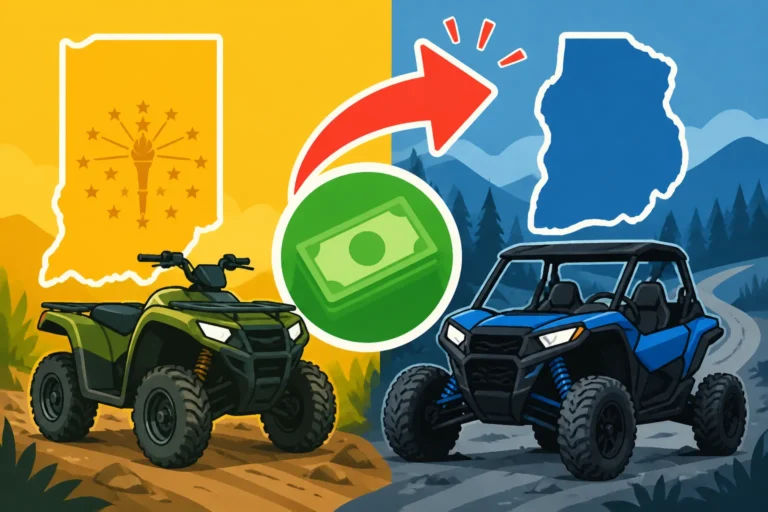
Trail access and park entrance can be separate charges
Start by checking whether the advertised day rate covers riding access, entrance to the property, or both. At state recreation areas such as Redbird and Interlake, trail-use permits and entrance fees can be separate parts of the visit. A low-looking trail permit may not be your full cost if an entrance fee is also due.
When you compare parks, write down each charge separately rather than treating “day rate” as a single, universal price. Ask whether the fee is per machine, per person, per vehicle, or per visit. Also check whether a passenger or non-riding guest pays an entrance charge even if they are not bringing another ORV onto the trails.
Indiana’s state trail permits are a separate topic from park entrance charges, so it helps to understand [Indiana's Daily and Annual Trail Permits] before planning more than one ride. The distinction matters most when you’re comparing a single visit with a season of riding: a permit may cover access under its own terms, while an entrance fee may still apply each time you arrive.
Private parks set their own fee structure
Private riding areas, including Badlands Off Road Park and Haspin Acres, can use different admission and access arrangements from state recreation areas. Some may distinguish between trail access and other riding areas, or have separate charges connected to entry, vehicles, passengers, or required waivers. Don’t assume a price you saw discussed by another rider covers the same things you plan to use.
For a fair comparison, check the park’s own posted information before leaving home. Confirm what the fee buys, whether the rate changes for different machine types, and whether any required waiver or other admission step is separate. If you’re riding with a group, make sure the quoted amount applies to every machine and every rider in your party.
A simple comparison table can keep the details straight:
| Cost item | What to confirm before you go |
|---|---|
| Trail access | Whether the charge is per machine and which riding areas it covers |
| Park entrance | Whether it is separate from trail access and who pays it |
| Passengers and guests | Whether non-riding visitors pay an admission charge |
| Waiver or required check-in | Whether there is an additional step or charge |
| Extra riding areas | Whether track, obstacle, or other access is included |
| Annual option | Whether it fits your expected number of visits and what it covers |
| Operating details | Gate hours, closures, and any rules that could affect your ride |
If you’re comparing state areas specifically, [Indiana's Two State ORV Areas Compared] can help you think through the differences between Redbird and Interlake beyond the entry price.
Comparing Redbird, Interlake, and private riding areas
Redbird and Interlake are not a one-line price comparison
Redbird Off-Road State Recreation Area near Dugger and Interlake Off-Road State Recreation Area near Lynnville are popular state-managed options, but a useful comparison goes beyond the permit amount. Consider the route from home, the entrance arrangements, the trails your group wants to ride, and whether everyone in the party understands which fees apply to each machine.
A park with a lower-looking trail charge may not be the less expensive choice once you include any separate entrance fee and the cost of hauling your machines there. For example, a family leaving from Indianapolis might find the total trip budget is shaped as much by fuel and trailer logistics as by the gate charges. A rider coming from Evansville may weigh the options differently.
Check the details for the specific park and visit you have in mind. Park access rules, trail availability, and the applicable charges can vary by location and circumstance. For a deeper look at each area’s layout and riding experience, see [Indiana's Two State ORV Areas Compared], [Redbird Off-Road State Recreation Area], and [Interlake Off-Road State Recreation Area].
Private parks may suit a different kind of riding day
Badlands Off Road Park in Attica and Haspin Acres near Laurel are private riding destinations with their own admission and operating rules. Their value to your group may depend on what kind of terrain you want, how long you plan to ride, whether you want to use particular riding areas, and what facilities or services are available during your visit.
Compare the entire day, not just the first fee you see. If your group wants a particular type of terrain, confirm that your machine is allowed there and that the relevant access is included. If you’re taking a beginner or a young rider, look for information about suitable areas, age rules, supervision, and safety requirements. A park that better matches your group’s experience can be a better choice even if the basic charges are not the lowest.
Before heading to a private park, review its own current admission details and rules. You can also read [Badlands Off Road Park in Indiana] and [Haspin Acres in Southern Indiana] for park-specific planning considerations. Treat those as starting points, then confirm the details directly with the park.
Compare the riding experience alongside the price
Two parks charging different amounts may offer very different days. One group may prioritize a long trail loop; another may want mud, obstacles, or space for a range of experience levels. Check the map, trail descriptions, machine restrictions, and closures before deciding which park gives your group the most useful day.
Tools such as onX Offroad can help riders plan routes and get a sense of the riding area before loading up. Use mapping as a planning aid, not as a replacement for park rules or official closure information. A route shown on a map does not automatically mean a trail is open, appropriate for your machine, or authorized for public use.
Also account for travel and preparation. A farther park can mean more fuel, more time on the road, and a longer day for the driver. If the group needs an overnight stay, campsite availability and lodging can shift the overall budget substantially. For broader planning ideas, see [Indiana's Private Off-Road Parks] and [Indiana Trail Conditions Before You Ride].
How to estimate your total cost for a ride
Count machines, people, and visits separately
Before comparing a day rate, list how many machines will be riding and how many people will be entering the park. Those numbers do not always match: a passenger may share a machine, while a guest may come along without riding. The park’s fee structure determines how each person or vehicle is counted.
Then estimate how many visits you expect. A single-day option may make sense for an occasional trip, while an annual option may be worth investigating if you plan to return. Don’t assume an annual permit removes every other cost. Check whether it covers only trail access, whether it applies to each machine, and whether entrance charges or other fees remain separate.
For a state-area visit, it’s useful to review [Indiana's Daily and Annual Trail Permits] and [Why an Entrance Fee Sits on Top in Indiana]. The key is to compare the same set of costs for each option: the machine permits, any entrance charges, and any additional items your group needs.
Build a simple trip budget before you leave
A practical budget includes more than the gate. Add fuel for the tow vehicle and ORVs, food, any overnight stay, and likely wear on tires and other equipment. If your group is traveling from a distance, a small difference in admission can be outweighed by the cost of driving to a farther park.
For example, imagine two friends each bringing a machine and splitting the tow vehicle’s fuel. They should compare the costs per machine, confirm whether each rider needs a separate permit, and check whether the park charges a separate entrance fee. A family with one machine and several passengers should instead verify how the park counts guests and whether any riders are subject to different rules.
Keep a note on your phone with the park’s fee categories and any confirmation you receive. If you use onX Offroad to plan the route, pair that with the park’s official information about access, conditions, and closures. That way, the navigation plan and the admission plan both reflect the rules for the place you’re actually visiting.
Confirm details just before the trip
Fees, access arrangements, and operating details can change, so check the park’s own information close to your visit. Confirm that the area is open, that your planned riding area is available, and that the listed admission details apply to your machine and group. If a detail is unclear, contact the park rather than relying on a third-party post or an old receipt.
Pay particular attention to seasonal conditions and temporary closures. Heavy rain can affect riding conditions, and a closed trail can change whether a park is worth the drive for your group. Check [Indiana Trail Closures to Check First] and [Indiana Riding After Heavy Rain] as part of your planning, then follow posted notices at the entrance.
A practical checklist for comparing day rates
Compare like with like
Use the same assumptions for every park: the same number of machines, riders, passengers, and riding days. Then record whether the listed rate includes trail access, park entrance, required waivers, and access to any additional riding areas. If a park offers an annual option, compare it only after confirming what it covers and how many visits your group realistically expects to make.
Keep travel costs in the comparison too. A park that is close to home may be the more affordable choice overall, even if its admission is not the smallest figure on a page. On the other hand, a longer trip may be worthwhile if the terrain, facilities, or trails are a better fit for your group.
Before loading, check that your machine meets the park’s requirements and that each rider has the necessary gear and paperwork. Review [Indiana Helmet Rules at a State ORV Area] and [Indiana Rules for Riding a Private Park] for related safety and access considerations.
Questions to ask before paying
If you can’t tell what a listed rate includes, ask direct questions. Is the charge per machine or per rider? Does it cover the riding area you plan to use? Is park entrance separate? Are passengers charged? Does an annual option apply to one machine or more than one? Are there restrictions on machine type, age, or riding area?
Also ask how the park handles closures, weather-related changes, and check-in. A clear answer before you leave can prevent the frustrating experience of reaching the gate with the wrong assumption about a pass or an extra charge. Keep the answer with your trip notes so everyone in the group knows what to expect.
A good comparison does not require finding one universally “cheapest” park. It means understanding the full cost for your particular trip, checking current details with the park, and choosing the riding area that fits your machines, experience, and plans.
Disclaimer
This article is for general informational purposes only and does not constitute professional advice. Laws, prices and regulations vary by location and change over time. Consult a qualified professional for guidance on your specific situation.