Crossing a County Road From One Field to Another
It's a common scenario for many Indiana off-road vehicle (ORV) owners: you're out enjoying the trails, perhaps moving between different sections of your property, or heading from one hunting spot to another, and a county road suddenly stands between you and your destination. While the thought of a quick jaunt across the asphalt might seem harmless, Indiana law has very specific, and often strict, rules about when and how you can legally cross a public road on your ATV or UTV. This guide aims to clear up the confusion and help you navigate these tricky situations safely and legally.
The Basics of Indiana Road Crossings for ORVs
Indiana takes the safety of its public roads very seriously, and that extends to how off-road vehicles interact with them. While the state generally prohibits ORV use on public roads, there are specific, limited exceptions, and crossing a road is one of them – but it comes with a tight set of rules. It’s not about convenience; it's about minimizing risk for everyone on the road.
Why Crossing is Different from Riding
When we talk about "crossing a county road," we're talking about a very specific, brief maneuver, not driving down the road. This distinction is crucial in Indiana law. You cannot simply use the county road as a shortcut or to connect two distant points. The legal intent of an ORV crossing is solely to get from one permissible riding area directly across to another, with the least amount of time spent on the pavement. Think of it like crossing a stream – you do it at the narrowest, safest point, without lingering. The moment you start traveling along the road, even for a short distance, you've likely moved from a legal crossing to an illegal road use, which can carry significant penalties.
This narrow interpretation means that even if you have a powerful UTV equipped with upgrades from SuperATV designed for varied terrain, those modifications don't grant you extra road privileges for traveling along a public thoroughfare. The law focuses on the act of traversing, not the vehicle's capabilities for it. This is why understanding [Indiana Rules for Crossing a Highway] is so important.
The "Right Angle" Rule
One of the most foundational rules for ORV road crossings in Indiana is the "right angle" requirement. This means you must approach the road, cross it, and leave it at as close to a 90-degree angle as possible. You shouldn't be traveling diagonally across the road or making wide turns. The idea is to minimize the distance and time your ORV spends in the traffic lanes. Imagine drawing a perfectly straight line from one side of the road to the other, perpendicular to the flow of traffic. That's your ideal crossing path.
This isn't just a legal nicety; it's a safety measure. Crossing at a right angle gives other drivers the clearest and most predictable indication of your intentions. It reduces the chance of misjudgment or confusion, especially on roads where visibility might be less than ideal. If you're coming out of a field, make sure your approach is as direct as possible, lining yourself up for that straight shot across.
Stopping and Yielding
Before you even think about moving onto the pavement, Indiana law mandates a complete stop. This isn't a rolling stop; it's a full, momentary halt where your wheels cease turning. You must come to a dead stop before entering the roadway from either side. This allows you to thoroughly check for oncoming traffic in both directions, just as you would at a stop sign or before entering a main thoroughfare in your car.
Once you've stopped, the next critical step is to yield to all traffic. This means that if there's any vehicle, bicycle, or pedestrian approaching, you must wait for them to pass. You have no right-of-way when crossing a public road on an ORV. It is entirely your responsibility to ensure the crossing is absolutely clear before you proceed. Rushing a crossing or misjudging the speed of an approaching vehicle can lead to serious accidents, not to mention a hefty citation. Remember, safety always comes first, and a few extra seconds waiting for traffic to clear is always worth it. Understanding [A Complete Stop Before an Indiana Crossing] is paramount for your safety and legal compliance.
Specific Conditions for a Legal Crossing
While the fundamental rules of stopping, yielding, and crossing at a right angle apply broadly, there are additional layers of conditions that dictate when and where a crossing is permissible. It's not a free-for-all; rather, it's a privilege with very specific boundaries designed to protect both the ORV operator and the general public.
Visibility and Safety Considerations
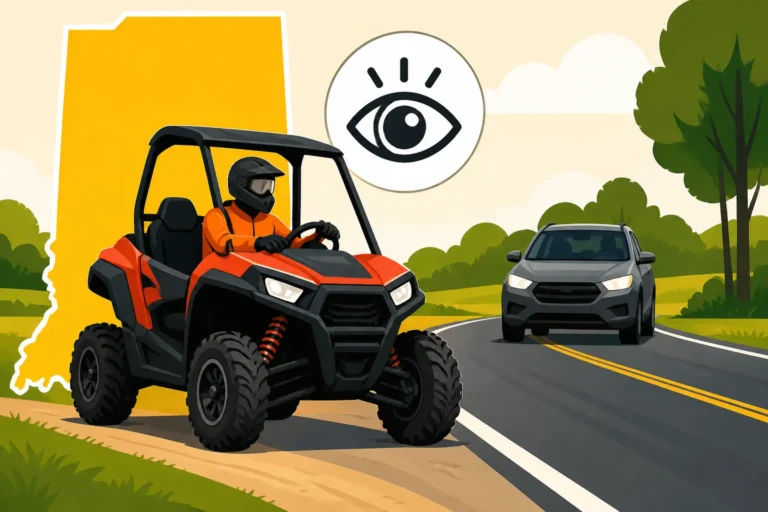
Legal ORV crossings are only permitted when it is safe to do so. This might seem obvious, but it has specific implications. You cannot cross a road if your view of oncoming traffic is obstructed, either by terrain, buildings, dense foliage, or even severe weather conditions like heavy fog or rain. Similarly, if the road itself presents an unsafe condition—such as a sharp blind curve immediately after your crossing point, or if you're attempting to cross a particularly busy highway where traffic moves at high speeds—it's likely an illegal and certainly unsafe maneuver.
The law emphasizes that you must be able to see clearly and be seen clearly by others. This often means choosing your crossing points wisely. Avoid depressions, rises, or areas with dense roadside vegetation that could conceal your presence or limit your ability to spot traffic. If you use your ORV for utility work or farming, perhaps with robust SuperATV accessories like heavy-duty winches or cargo racks, ensure these don't impede your visibility or make your machine harder to maneuver quickly across a road. Factors like [Sufficient Width to Ride Away From Traffic] also play a role in whether a crossing location is truly safe.
The Shoulder and Ditch Exception
Indiana law includes specific provisions regarding the use of shoulders and ditches adjacent to public roads, but these are distinct from actively traveling on the main paved surface. Generally, ORVs are allowed to operate within the right-of-way of a public highway, but only on the shoulder or in the ditch. This "shoulder and ditch exception" allows for travel alongside the road, but not on it.
When it comes to crossing, this exception plays a supporting role. While you might use the shoulder or ditch to position your machine for a legal crossing from one field to another, you cannot use it to travel down the road to find a better crossing point. The intention is for continuous, direct travel off the paved surface. The moment your ORV's wheels touch the main travel lane, you must be in the act of stopping, yielding, or crossing at a right angle. Traveling in a ditch beside a [Hancock County Road] might be permitted, but transition to the paved surface for anything other than a direct crossing is generally not.
Permitted vs. Non-Permitted Roads
It's also crucial to distinguish between roads that are generally open to ORV crossings and those that are strictly prohibited. In Indiana, the default is that ORVs are not permitted on public roads. However, county ordinances can open certain roads for ORV use, including crossing. This means that a crossing that's legal in one county might be entirely illegal in an adjacent one. For example, some counties like Dearborn County might have very specific sections of their code (e.g., [Dearborn County's Section 70.04]) that allow for such crossings, while others maintain a blanket ban.
| Type of Road | General Rule for ORVs in Indiana | Crossing Provision |
|---|---|---|
| State Highways | Prohibited (Limited-Access) | Strictly Prohibited. Cannot cross. |
| County Roads | Prohibited (unless designated) | Permitted for direct crossing only, under strict conditions (stop, yield, right-angle). |
| City/Town Streets | Prohibited | Generally Prohibited, unless a specific local ordinance allows. |
| Private Roads | Owner's discretion | Owner's discretion. |
| Limited-Access Highways | Strictly Prohibited | Cannot cross, even at a right angle. |
Note: This table provides general guidance. Always check local ordinances for specific county or municipal rules.
You absolutely cannot cross a limited-access highway (like an Interstate or certain State Routes). These roads are designed for high-speed traffic, and attempting to cross them on an ORV is incredibly dangerous and illegal. For any other county or local road, you must always assume it's closed to ORV travel and crossing, unless you have verified that a specific local ordinance permits such action. This vigilance is key to staying out of trouble and safe. You can't just assume; you need to know [How an Indiana County Opens Its Roads] to ride legally.
What Happens if You Don't Follow the Rules
Disregarding Indiana's ORV laws regarding road crossings isn't just about facing a fine; it can have severe consequences, from significant financial penalties to legal liability for accidents, and even potential vehicle impoundment. The state has put these rules in place for a reason: to protect all road users and to ensure off-road vehicles are used responsibly.
Penalties for Illegal Road Use
If you're caught using your ORV illegally on a public road in Indiana – whether that's traveling along it, or making an improper crossing – you could be facing a Class C ORV Infraction. This isn't just a slap on the wrist. A single Class C infraction can cost you several hundred dollars in fines and court fees. And it doesn't stop there. Subsequent offenses, especially if they demonstrate a pattern of disregard for the law, can lead to escalating penalties, potentially even vehicle impoundment.
Imagine getting pulled over after a quick, illegal dash across a road. The conservation officer or sheriff's deputy will likely issue you a citation. This is a hassle you don't need, especially if you were just trying to get from one side of your property to the other. Beyond the immediate financial hit, such an infraction can go on your record, potentially influencing future interactions with law enforcement. It's far better to take the extra time to plan a legal crossing or find an alternative route than to risk facing the financial and legal repercussions. Knowing [What a Class C ORV Infraction Costs in Indiana] might give you pause before taking unnecessary risks.
Owner Liability
One of the most concerning aspects of illegal ORV road use is the potential for owner liability. In Indiana, the owner of an ORV is generally responsible for its safe and legal operation, even if they aren't the one operating it at the time. If you allow someone to ride your ATV or UTV, and they violate the rules, leading to an accident or injury, you as the owner could be held legally and financially liable. This is particularly relevant when it comes to road crossings.
For example, if you lend your SuperATV-equipped UTV to a friend, and they attempt an unsafe or illegal road crossing, resulting in a collision with a car, you could be named in a civil lawsuit. This could lead to claims for property damage, medical expenses, lost wages, and pain and suffering. Your personal assets could be at risk. This is a very serious consideration and highlights why understanding and adhering to ORV laws is not just for the operator's safety but for the owner's legal protection as well. It’s also important to note [Why an Indiana Owner Is Liable] in such situations.
What an Officer Checks Roadside
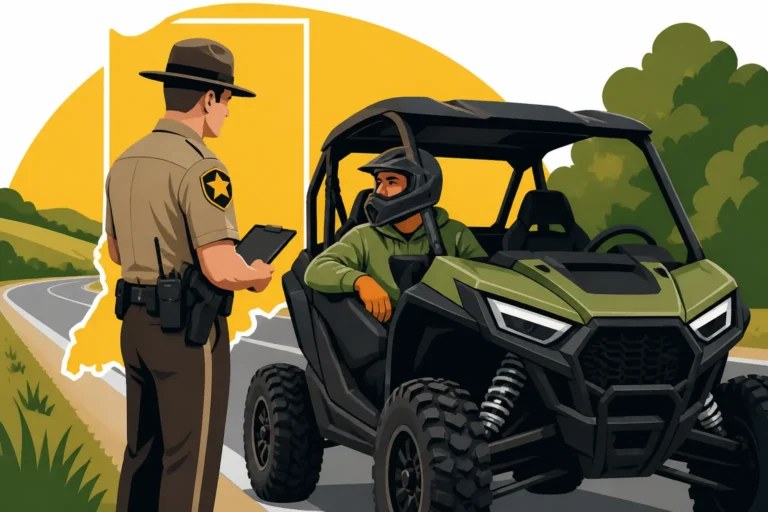
If you do find yourself stopped by a conservation officer or local law enforcement while operating your ORV, they will be checking for several key things. First and foremost, they'll verify your registration decal and ensure it's properly displayed. [Where the Indiana Decal Mounts] is specific, usually on the front half of the machine, clearly visible. They'll also ask for proof of your registration certificate, which you should always carry with you, perhaps in a waterproof pouch on your machine.
Beyond paperwork, the officer will assess your conduct and the circumstances of your ORV use. Were you truly making a direct, right-angle crossing, or were you traveling along the roadway? Did you come to a complete stop and yield to traffic? Were you wearing appropriate safety gear, especially if you're under 18, as required by [Indiana's Helmet Law for Riders Under 18]? They might also check your machine for basic safety equipment like working headlights and taillights, particularly if you're riding near dusk or after dark. Being prepared and compliant is the best way to ensure a roadside stop is brief and uneventful. [Checking Paperwork Before You Pay] is crucial for any ORV owner.
Disclaimer
This article is for general informational purposes only and does not constitute professional advice. Laws, prices and regulations vary by location and change over time. Consult a qualified professional for guidance on your specific situation.