Reading Vanderburgh’s Color-Coded Map
Navigating the ever-shifting landscape of off-road vehicle (ORV) regulations can feel like trying to hit a moving target, especially when you venture from one Indiana county to another. It's frustrating to think you're doing everything right, only to find out a local rule you missed could land you a hefty fine. This guide is here to untangle the specifics of Vanderburgh County's unique color-coded map, helping you understand where you can legally ride your ATV or UTV on public roads and how to interpret their system so you can ride with confidence and peace of mind.
Navigating the Nuances of Indiana's ORV Road Laws
Indiana's approach to ORV road access is, shall we say, a bit of a patchwork quilt. It’s not a simple statewide "yes" or "no" to riding on public roads, and that can be incredibly confusing for riders who just want to enjoy their machines without breaking the law. What’s perfectly legal in one county might get you ticketed just a few miles down the road in the next. This local control means that understanding the specific rules for each county you plan to ride in is absolutely critical.
Why Local Ordinances Matter More Than State Law
At its core, Indiana state law generally dictates that off-road vehicles are not permitted on public roads. That's the baseline. However, state law also provides counties with the authority to create their own ordinances that can open up certain roads or areas to ORV use. This is where the complexity truly begins. A county's decision to open roads isn't a blanket permission slip; it almost always comes with a specific set of rules, restrictions, and designated routes. Without these local ordinances, you’re stuck with the statewide default, which keeps your machine off the pavement unless you're crossing a road at a right angle or hugging a shoulder for a very limited distance. This decentralized system means that the onus is entirely on you, the rider, to know the local rules before you even think about putting a tire on a county road.
The frustration this creates for ORV enthusiasts is palpable. Imagine planning a trip, loading up your rig, and driving hours to a new area, only to find out the roads you hoped to connect your trails with are strictly off-limits, or worse, that you're riding illegally without even knowing it. This isn't just about avoiding a ticket; it's about respecting local communities and ensuring the future of ORV riding by demonstrating responsible behavior. [Indiana Counties That Allow ORVs on Roads] is a testament to the fact that while some areas welcome ORVs, others maintain strict prohibitions, making local knowledge paramount.
The Importance of a Designated ORV Map
Given the intricate nature of county-level regulations, relying on hearsay or general assumptions about what might be allowed is a recipe for trouble. This is precisely why official, designated ORV maps, like the one provided by Vanderburgh County, are not just helpful – they are absolutely essential. These maps translate complex legal text into easily digestible visual information, showing you at a glance which roads are open and which are closed. Without such a map, you're essentially riding blind, risking fines, confrontations with law enforcement, and potentially even accidents if you inadvertently end up on a road where drivers aren't expecting ORV traffic.
These maps aren't just for showing you where to ride; they're often part of the county's public awareness campaign to inform both residents and visitors. They represent the county's explicit designation of ORV-friendly routes, offering clarity that a simple road sign might not. Think of it as your official guide, published by the local authorities, to help you navigate their specific road network. Not every county in Indiana provides such a detailed, color-coded map, making Vanderburgh County's effort particularly valuable for riders. It removes much of the guesswork and allows you to plan your routes with a higher degree of certainty. When you're planning a ride, it's always a good idea to check for the most current version of these maps, as local ordinances can change over time.
Decoding Vanderburgh County's Color-Coded Map
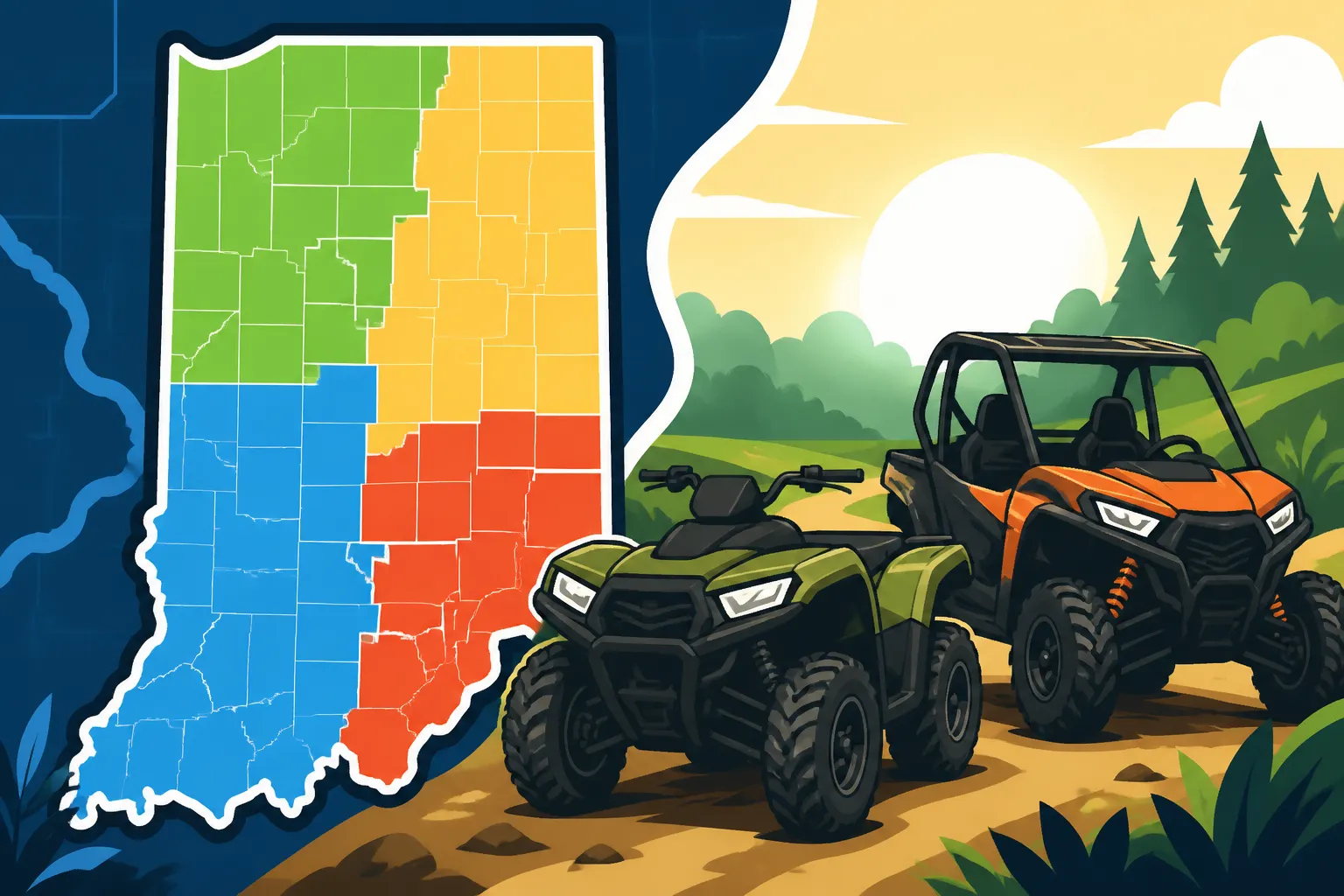
Vanderburgh County, understanding the need for clear communication, has implemented a color-coded map system to guide ORV riders. This visual approach cuts through some of the legal jargon and gives you a quick reference point for planning your routes. However, simply looking at the colors isn't enough; you need to understand what each color signifies in the context of their specific ordinance. This isn't just about pointing your machine down a blue road and hoping for the best; it's about understanding the underlying rules that govern even those designated routes.
Understanding What a Red Road Means on Vanderburgh's ORV Map
When you pull up Vanderburgh County's ORV map and see roads marked in red, your immediate interpretation should be: "These roads are closed to ORV traffic." Red is universally recognized as a signal for "stop" or "prohibited," and in this context, it means exactly that. These red roads are areas where the county has explicitly decided that ORVs should not be present, or they represent areas beyond the county's jurisdiction to open, such as state highways or roads within incorporated city limits. [What a Red Road Means on Vanderburgh's ORV Map] is clear: stay off.
Typically, roads designated as red might include major arterial roads, state routes, or anything within the corporate boundaries of towns or cities like Evansville or Darmstadt. [Why Evansville and Darmstadt Stay Closed] is often due to higher traffic volumes, different local jurisdictional rules, or simply a policy decision by the municipality to keep ORVs off their paved streets. Attempting to ride your ATV or UTV on a red-marked road is a direct violation of the county ordinance and could result in significant fines and legal repercussions. Law enforcement in Vanderburgh County takes these designations seriously, and ignorance of the map is not a valid defense. It’s imperative to plan your routes carefully, ensuring you only utilize the designated blue roads and avoid any red segments entirely. This also means you need to be aware of where town or city limits begin, as the map's red lines often align with these boundaries.
Interpreting What a Blue Road Means on Vanderburgh's ORV Map
Now, for the good news! When you see a road marked in blue on Vanderburgh County's ORV map, this generally indicates that these roads are open and permitted for ORV use. This is where you can legally ride your ATV or UTV, but it's crucial to understand that "open" does not mean "anything goes." Blue roads come with their own set of rules and conditions that riders must strictly adhere to. Think of it as a privilege that comes with specific responsibilities. The county has made an effort to open these roads, and it’s up to riders to demonstrate that they can use them safely and responsibly.
These conditions typically include stipulations such as specific operating hours, age restrictions for operators, requirements for vehicle equipment (like proper lighting), and often, proof of insurance. For example, [Vanderburgh's Eighteen-Year-Old Operator Rule] dictates that only riders aged 18 or older may operate an ORV on county roads, regardless of their driver's license status. [Vanderburgh's Insurance Certificate Requirement] means you'll need to carry proof of liability insurance, and your machine must comply with [Vanderburgh's Dual Light Rule at Night], requiring both headlights and taillights for operation after dark. While riding a designated blue road, you're expected to follow all standard traffic laws that apply to other vehicles, including speed limits, stop signs, and yielding rules. These blue roads are your gateway to exploring the county on your ORV, but only if you play by the rules. Make sure your machine, perhaps with some robust lighting upgrades from a company like SuperATV, is fully compliant before you head out.
The Map's Legends and Fine Print
While the color-coding on Vanderburgh County's map provides a fantastic visual shortcut, it is absolutely non-negotiable to read the accompanying legend, explanatory text, and any fine print that comes with the map or the full ordinance. The colors give you the general idea, but the details are in the text. This is where you'll find the specific conditions, exceptions, and requirements that apply to all ORV use on county roads. Skimming past this information is akin to skipping the instructions for assembling complex furniture – you might get it together, but it probably won't be right, and it might even fall apart!
This critical text will clarify things like the exact definition of an ORV within the ordinance, the precise hours of operation, any specific safety gear requirements beyond state law, and penalty structures for violations. It might also contain disclaimers about private property, ongoing construction, or seasonal closures. For example, it could specify that while a road is blue, certain portions might be temporarily restricted. It’s also the place where you’d find information about where to [Check for the Vanderburgh County ORV ordinance] or how to find updates. Understanding these details helps you anticipate potential issues and ensures you meet all legal obligations. Always cross-reference the map with the written ordinance to ensure you have a complete and accurate understanding of the rules.
Practical Considerations for Riding in Vanderburgh County
Riding an ORV on designated county roads in Vanderburgh County, or anywhere else, requires more than just knowing which roads are open. It demands preparation, adherence to rules, and a deep respect for both the law and other road users. This proactive approach not only keeps you safe and out of trouble but also helps maintain a positive image for the entire ORV community. We want to be seen as responsible enthusiasts, not as a nuisance.
Preparing for a Ride on Designated Roads
Before you even think about putting your ORV on a blue-marked road in Vanderburgh County, a thorough preparation routine is essential. First and foremost, you need to ensure your machine is properly registered with the Indiana Bureau of Motor Vehicles (BMV) and that you have the required decal displayed. [Registering an ORV in Indiana] is the first step for any owner. Beyond registration, your machine itself needs to meet specific equipment standards. This includes working headlights and taillights, which, as mentioned earlier, are explicitly required for night riding in Vanderburgh County. Many riders opt for aftermarket lighting from reputable brands like SuperATV to ensure maximum visibility and compliance.
You'll also need to carry proof of insurance, as it's a specific requirement under the county ordinance. [Indiana ORV Registration and Insurance Proof] should always be with you, either physically or digitally on your phone. Beyond legal requirements, consider practical safety gear. Even though Indiana has specific [Indiana Helmet Law for ORV Riders] for minors, wearing a helmet yourself is always a smart choice for any road riding. Finally, always check the most current version of the Vanderburgh County ORV map and ordinance immediately before your ride. Regulations can sometimes be updated, and what was open last season might be closed this season.
Staying Within the Boundaries and Rules
Once you're out on the designated blue roads, staying strictly within the boundaries and rules is paramount. It’s easy to get carried away enjoying the ride, but veering off the permitted path, even for a moment, can have serious consequences. This means not only staying on the paved or gravel surface of the designated roads but also understanding the nuances of road-riding etiquette and law. Don't be tempted to cut across fields, use private driveways as shortcuts, or even ride excessively on the shoulder if the ordinance doesn't specifically permit it for more than necessary maneuvering.
Remember, the blue roads are a privilege, not an invitation to treat all adjacent land as open riding. Trespassing laws still apply, and respecting private property is non-negotiable. If you encounter a road that suddenly turns from blue to red on the map, you must turn around or find an alternative legal route. Ignoring these boundaries can lead to tickets, fines, and even vehicle impoundment. [Indiana Fines for Illegal ORV Road Use] can be substantial, making careful adherence to the map and ordinance a much better option. Always be mindful of other vehicles, pedestrians, and cyclists, maintaining safe speeds and yielding the right-of-way.
General Indiana ORV Road Riding Rules to Remember
While Vanderburgh County has its specific rules, there are overarching Indiana state laws that apply to ORV operation, even on designated county roads. These aren't just suggestions; they are legal mandates designed for safety and order. For instance, [Indiana Helmet Law for Riders Under 18] is a statewide rule, meaning any passenger or operator under the age of 18 must wear an approved helmet, regardless of whether the county has a specific helmet rule in its ordinance. This applies to enclosed cabs as well; generally, the exemption only applies if the cab is fully enclosed with seatbelts and meets other specific criteria.
When crossing a public highway that isn't part of a designated ORV route, you must do so at a right angle to the flow of traffic, come to a complete stop, and yield to all oncoming traffic. [Indiana Rules for Crossing a Highway] are very clear on this. You cannot just blast across. Speed limits on designated ORV roads are the same as for other vehicles, typically posted and enforced. And, of course, operating an ORV while under the influence of alcohol or drugs is strictly prohibited and carries severe penalties, just as it would in a car or truck. By understanding and adhering to both the specific Vanderburgh County rules and these general Indiana state laws, you ensure a safe, legal, and enjoyable ORV experience for yourself and others.
| Feature / Aspect | Red Roads on Vanderburgh Map | Blue Roads on Vanderburgh Map |
|---|---|---|
| Status for ORVs | Strictly Prohibited, Closed | Permitted, Open (with conditions) |
| Examples | State highways, roads within city/town limits | Designated county roads, often rural or less traveled |
| Rider Action | Avoid completely, do not enter | Follow specific county ordinance rules, ride responsibly |
| Penalties | High fines, potential impoundment, Class C Infraction | Fines for non-compliance with blue road rules (e.g., age) |
| Key Restrictions | Jurisdiction beyond county control, high traffic | Age limits (e.g., 18+), insurance, lighting requirements |
| Required Equipment | N/A (as you shouldn't be there) | Headlights, taillights (for night), spark arrestor, tires |
| Driver's License | N/A | Not explicitly required by state, but age 18+ rule applies |
| Helmet Law (Minors) | State law still applies (under 18 must wear helmet) | State law still applies (under 18 must wear helmet) |
| Insurance | N/A | Required by Vanderburgh County ordinance |
| Local Examples | Roads in Evansville, Darmstadt | Various county roads outside incorporated limits |
Disclaimer
This article is for general informational purposes only and does not constitute professional advice. Laws, prices and regulations vary by location and change over time. Consult a qualified professional for guidance on your specific situation.