Crossing Square to the Lanes
Navigating Indiana's roads on your ATV or UTV can feel like walking a tightrope – you want to enjoy your machine, but the rules can be confusing and the consequences for getting it wrong are real. One of the most critical, yet often misunderstood, rules is how to safely and legally cross a paved road. This guide will thoroughly break down the specific requirement of "crossing square to the lanes," detailing what it means, why it’s so important for your safety and legality, and what other regulations you absolutely need to know to avoid trouble.
The Basics of Crossing a Paved Road on Your ORV in Indiana
It’s a scenario many of us face: you’re enjoying a ride on private property, maybe heading from one field to another, or moving between designated trail sections, and suddenly, a paved road stands in your way. Unlike casually merging with traffic in a car, operating an off-road vehicle across a public roadway in Indiana has very strict guidelines. Ignoring them isn't just a risk for a ticket; it's a significant safety hazard for everyone involved.
Why "Crossing Square to the Lanes" Matters
When the law talks about "crossing square to the lanes," it’s not just a fancy legal phrase; it's a directive rooted deeply in safety and predictability. Imagine trying to drive your quad across a busy two-lane highway at an angle, perhaps even a diagonal. You're exposing your machine, and yourself, to oncoming traffic for a longer period of time. You're also making it incredibly difficult for drivers on the road to anticipate your movement. They see a vehicle moving sideways relative to their path, which is disorienting and dangerous.
The "crossing square" rule means you must approach the road at a 90-degree angle, move directly across the lanes, and exit on the other side at a 90-degree angle. This is the shortest, most direct path, minimizing your time in the flow of traffic. It also makes your intention clear to any approaching vehicles: you are going straight across, not attempting to turn and merge, nor are you lingering in the roadway. This predictable, efficient movement is key to reducing the chance of a collision, particularly a broadside impact where your side is exposed. It’s about being seen, being understood, and being gone as quickly and safely as possible.
The "Complete Stop Before an Indiana Crossing" Rule
Before you even think about putting tires on that asphalt, Indiana law is crystal clear: you must come to a complete and utter stop. This isn't just a slow roll or a momentary hesitation; it means stopping your machine entirely, gears in neutral or park, and physically bringing your forward motion to zero. It's the same principle as stopping at a stop sign or a railroad crossing. You need to be able to scan the road thoroughly, without the distraction of simultaneously trying to maneuver your machine.
Once stopped, you need to engage all your senses. Look left, then right, then left again. Are there cars approaching in the distance? How fast are they going? Is there a semi-truck about to crest a hill? Don't just glance; actively search for traffic. Listen, too. Sometimes, you can hear a vehicle approaching before you see it, especially around curves or over rises. Take your time. A common mistake is feeling rushed, especially if there's a group waiting behind you. Your safety, and the safety of others, hinges on making a calm, informed decision that there is a truly safe and clear gap in traffic before you proceed. This strict requirement is your first line of defense against an accident.
Yielding to All Traffic at a Crossing
This rule is non-negotiable and frankly, it's just common sense: as an ORV operator, you always yield to any and all traffic on the paved roadway. You are the one interrupting the flow of traffic, not the other way around. This means if there's any doubt, any approaching vehicle, no matter how far away it seems, you wait. You might be out in a rural area where traffic is sparse, and it might be tempting to just zip across when you see a car a quarter-mile down the road. Resist that urge. That car can close the distance faster than you think, and you simply do not have the right of way.
Failing to yield can lead to catastrophic consequences, not only for potential collisions but also legally. If you cause another driver to swerve, brake suddenly, or if an accident occurs, you will be held responsible. This isn't a situation where you can argue who was going faster or who saw whom first; the law places the burden squarely on the ORV operator to ensure the crossing is absolutely clear. Think of it as inviting every single vehicle on that road to proceed before you do. It's a critical aspect of responsible ORV operation on or near public thoroughfares, ensuring that your quick crossing doesn't become a dangerous encounter.
Beyond the Square Cross: Other Essential Indiana Road Rules for ORVs
While "crossing square to the lanes" is paramount, it’s just one piece of the puzzle when it comes to ORV use on Indiana roads. The reality is that for many ORV enthusiasts, the convenience of using public roads for short distances, or to connect trails, is a huge draw. However, Indiana has very specific regulations governing where and how you can ride, and misunderstanding these can quickly turn a fun outing into a costly legal headache.
Where Indiana Allows ORVs on Public Roads and Where It Doesn't
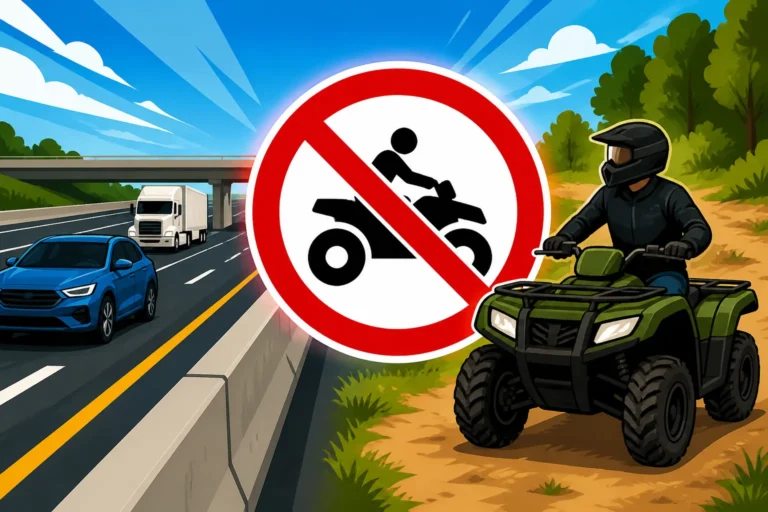
Let's get this straight right off the bat: by default, Indiana's state highways and federal routes are absolutely off-limits to ORVs. You cannot ride your ATV or UTV down a state road to get to the gas station, period. The general rule of thumb across the state is that ORVs are not permitted on public roads unless a specific exception or local ordinance makes it so. This default closure is critical to understand, as many new riders assume they can just jump on any road for a short jaunt.
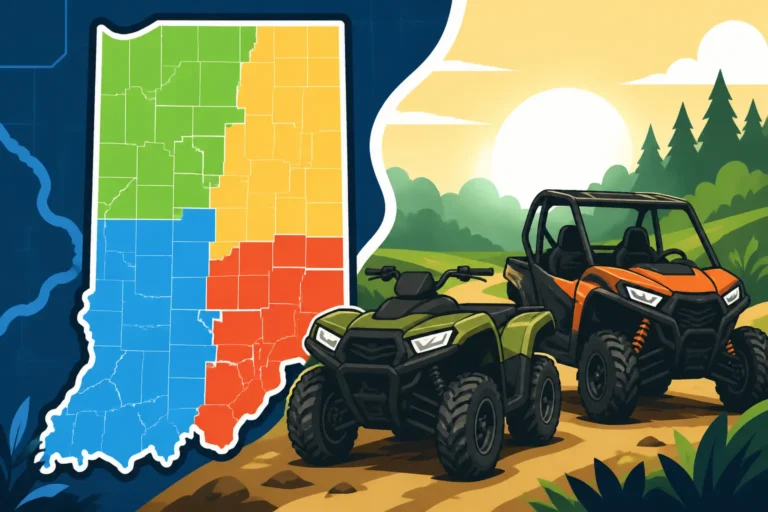
The primary exception to this rule is found at the county level. Indiana law allows individual counties to pass ordinances that open certain county roads for ORV use. This is why you might hear about some areas being more "ORV friendly" than others. But even then, these ordinances typically come with strict conditions – specific roads, speed limits, times of day, and often requirements for insurance or age. It's not a blanket free-for-all. Before you ever put a tire on a county road, you absolutely must check with the local county's highway department or sheriff's office to confirm if an ordinance exists and what its specific parameters are. Just because your buddy heard a county opened its roads doesn't mean all roads are open, or that the rules apply to your specific machine. Ignoring this is a quick way to find yourself [Getting Ticketed While Riding a County Road].
The Shoulder and Ditch Exception in Indiana
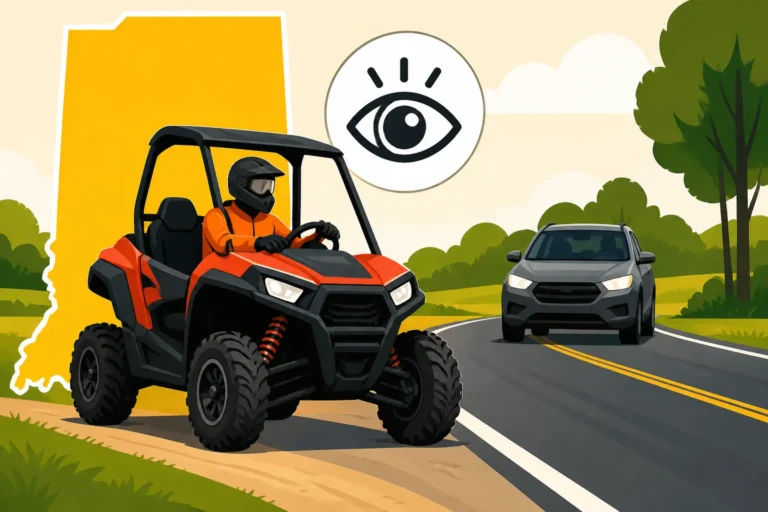
So, if paved roads are generally off-limits, what about the edges? Indiana law provides a narrow exception that allows ORVs to ride on the shoulder or in the ditch of a public road, but only under very strict circumstances. This isn't a license to cruise parallel to the highway. The intent is typically for short movements, often connecting private properties or reaching designated crossing points, rather than sustained travel.
For starters, there must be [Sufficient Width to Ride Away From Traffic]. This means the shoulder or ditch has to be wide enough for your machine to safely operate without encroaching on the paved portion of the road or endangering pedestrians, cyclists, or other vehicles. If the shoulder is narrow, crumbling, or heavily rutted, it's likely not considered "sufficient width." Furthermore, while riding in the ditch, you need to be mindful of culverts, erosion, and hidden obstacles that could cause an accident. The moment you need to ride on the paved surface to avoid an obstacle in the ditch, you're likely violating the law unless you're making a lawful, "square" crossing. This exception is not about convenience; it's about minimizing interaction with official roadways while allowing limited necessary movement. It’s crucial to remember that even within these areas, you still cannot ride along a limited-access highway, nor can you operate your ORV within the corporate limits of most cities or towns unless specifically allowed by local ordinance.
Crossing Roads on Designated Routes vs. Undesignated Areas
Here's another point that can confuse riders: just because a county might have opened certain roads to ORVs doesn't mean the rules for crossing other roads suddenly disappear. If you're on a county-designated ORV road, and that road intersects with a state highway where ORV travel is prohibited, you still must follow the "crossing square to the lanes" rule for that state highway. The designation of one road doesn't grant you privileges on an intersecting, undesignated road.
Consider a situation where you're enjoying a ride on a designated county road in Hancock County, which has opened some of its roads. As you approach an intersection with a state route, you must come to a [A Complete Stop Before an Indiana Crossing], look both ways, and if clear, cross the state route directly at a 90-degree angle. You cannot ride along the state route's shoulder, nor can you turn onto it. The crossing is a discrete event, entirely separate from the designated road you were just on. This distinction is vital because it highlights that even in ORV-friendly areas, you must always be aware of the specific classification of the road you are interacting with. Whether it's a designated county road, a prohibited state highway, or a short, unpaved connector, the "crossing square" and yielding rules are your universal safety net when traversing paved surfaces.
Practical Advice and Avoiding Penalties
Understanding the rules is one thing, but consistently applying them in the real world, especially when you're excited to hit the trails or simply get from point A to point B, can be challenging. Many riders, even experienced ones, find themselves making common mistakes that can lead to fines, accidents, or even the impoundment of their valuable machine. Let's talk about how to stay on the right side of the law and prioritize safety every time you operate your ORV on or near Indiana roads.
What an Indiana Officer Checks Roadside
If you happen to be stopped by an Indiana conservation officer, sheriff's deputy, or state police officer while operating your ORV, whether on a road, shoulder, or even just crossing, they will be looking for a few key things. First and foremost, they'll check for proper registration. This means having your [Indiana ORV Registration Paperwork] with you, displaying your current [Where the Indiana Decal Mounts], and ensuring it's not expired. An expired registration or missing decal can lead to a quick citation. Secondly, they'll verify your compliance with helmet laws, particularly if you or a passenger are under 18. [Indiana Helmet Law for Riders Under 18] is strict, even on private property in some cases, so always err on the side of caution.
Beyond documentation and gear, an officer will observe your operating practices. Were you crossing square? Did you come to a complete stop? Were you riding safely away from traffic on the shoulder or ditch? They'll also check for any signs of impairment, as [Indiana DUI Rules for ORV Riders] are just as stringent as for operating a car. Having a well-maintained machine is also a plus; a loud, smoking, or obviously unsafe vehicle might draw more scrutiny. Being polite, cooperative, and having your paperwork readily accessible can make a significant difference in how the interaction proceeds. A quick check, like ensuring your SuperATV mirrors are properly adjusted for maximum visibility, shows you take safety seriously.
Common Mistakes and How to Avoid Them
It’s incredibly easy to inadvertently slip up, especially if you’re new to ORV riding in Indiana or are used to different rules in other states. One of the most common mistakes we see is the "rolling stop" or the "diagonal dash." Riders, perhaps in a hurry or underestimating the speed of oncoming traffic, fail to come to a full stop before crossing, or they angle their machine across the road instead of crossing directly at 90 degrees. This immediately puts you in violation of the "crossing square to the lanes" rule and significantly increases your risk. Always remember: full stop, look, listen, then cross straight.
Another frequent error is assuming that if some county roads are open, all county roads are open. This leads to riders venturing onto roads not designated for ORV use, often unaware they are breaking the law. Before you ever leave your property, take a few minutes to confirm the specific local ordinances. A quick call to the county sheriff’s department can save you a world of trouble. Also, remember the limited scope of the shoulder and ditch exception; it’s not for sustained travel or joyriding. Equipping your UTV with a sturdy SuperATV bumper and full skid plates is great for the trails, but won't protect you from a ticket if you're riding in a prohibited area. Know your route, know the local rules, and when in doubt, find another way or keep your machine off the pavement entirely.
Consequences of Non-Compliance
Breaking Indiana’s ORV road rules isn't just a slap on the wrist. The penalties can range from substantial fines to more severe legal repercussions. Operating an unregistered ORV, or riding where prohibited, can result in a [What a Class C ORV Infraction Costs in Indiana], which can be hundreds of dollars. These fines can quickly add up, especially if an officer observes multiple violations in one stop. Beyond the immediate financial hit, repeated offenses or particularly egregious violations can lead to your machine being impounded, a logistical and financial nightmare to retrieve.
Furthermore, [Why an Indiana Owner Is Liable] for improper ORV use is a critical point. If you lend your machine to someone who then breaks the rules, or if an accident occurs due to non-compliance, you as the owner can be held responsible. This extends beyond fines to potential civil liability in the event of an accident. Imagine the headache and cost if your ORV causes damage to a vehicle or injury to a person because you failed to cross safely or were riding where prohibited. While insurance can help mitigate some financial risks, it doesn't excuse you from breaking the law. Even a simple crossing, if done improperly, could turn into a life-altering event. Taking these rules seriously is not just about avoiding a ticket; it's about protecting yourself, your machine, and others on the road.
Indiana ORV Road Crossing Rules Summary
To make it easier to remember the core rules for crossing a paved road with your ORV in Indiana, here's a quick summary:
| Rule Category | Specific Requirement | Why It's Important |
|---|---|---|
| Approach & Angle | Cross Square to the Lanes | Minimizes time in traffic, increases predictability for other drivers, reduces collision risk. |
| Pre-Crossing Action | Complete Stop Before Crossing | Ensures thorough scanning of traffic, allows for informed decision-making, prioritizes safety. |
| Right of Way | Yield to All Traffic | ORVs always yield to paved road traffic, prevents accidents, operator bears responsibility. |
| Legal Status | Only Cross Where Permitted | ORVs are generally prohibited on public roads; only cross where a local ordinance or exception allows. |
| Shoulder/Ditch | Use Only Where Sufficient Width Exists | Avoids encroaching on paved lanes, minimizes interaction with traffic, for short movements only. |
| Documentation | Carry Registration & Display Decal | Required by law, aids roadside checks, proves legal ownership and registration. |
| Safety Gear | Helmets for Under 18 | Mandatory for minors, crucial for head protection in case of accident. |
| Behavior | No Impairment, Safe Operation | Prevents dangerous driving, ensures clear judgment, avoids DUI charges. |
Disclaimer
This article is for general informational purposes only and does not constitute professional advice. Laws, prices and regulations vary by location and change over time. Consult a qualified professional for guidance on your specific situation.