How Wide a Shoulder Must Be to Ride
Trying to figure out where you can legally ride your ATV or UTV in Indiana can feel like navigating a minefield. You bought your machine for adventure, for the freedom of the open trail or the utility of getting work done, but the rules about public roads are often murky and frustrating. This guide is here to cut through the confusion, particularly focusing on that common question: how wide does a road shoulder need to be for you to legally ride your off-road vehicle? We'll break down Indiana's specific regulations, explain what "sufficient width" truly means, and give you the practical knowledge you need to ride legally and safely.
Understanding Indiana's Default Road Rules for ORVs
Indiana, like many states, starts with a foundational principle when it comes to off-road vehicles and public roads: they're generally not meant to mix. This can be a real headache for riders who just want to get from one trail segment to another, or even just access their own property without trailering. It feels like you're constantly looking over your shoulder, wondering if you're breaking an unspoken rule.
The "Closed by Default" Reality
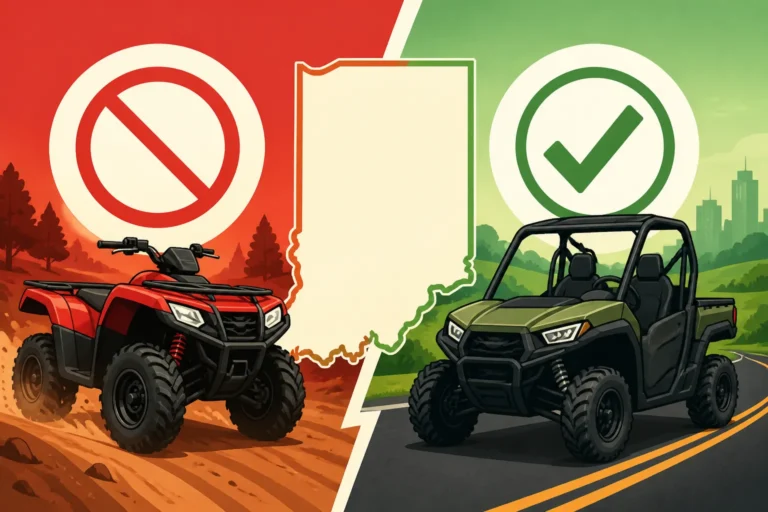
The reality is that most public roads in Indiana are, by default, closed to ATVs and UTVs. This means you can't just hop on your machine and cruise down any paved or gravel road you choose. The law is quite explicit that unless there's a specific exception or a local ordinance that states otherwise, your off-road vehicle belongs off the road. This isn't just about safety; it's about how these machines are classified. They're not considered street-legal vehicles in the same way a car or motorcycle is, and they lack many of the features required for highway use. It's a common point of frustration, especially when you see other types of vehicles on the road, but for ORVs, the onus is on the rider to prove it's legal, not for the state to prove it's illegal. For a deeper dive, check out [Why Indiana Roads Are Closed by Default].
Why Shoulders and Ditches Are Sometimes Exceptions
Now, here's where things get a little less straightforward, and where the question of shoulder width comes into play. Indiana law does provide specific, limited exceptions that allow ATVs and UTVs to operate on the "shoulder, or in the ditch or right-of-way" of a public highway. This isn't a free pass to ride anywhere, but it acknowledges the practical need for ORV users to sometimes utilize public thoroughfares. However, these exceptions come with very strict conditions. The primary condition is that the ORV operator must be riding adjacent to the roadway and not on the main traveled portion of the highway. Furthermore, and this is critical, they can only do so "if the operation does not interfere with traffic or create a hazard." This is where the concept of "sufficient width" becomes absolutely paramount. If there isn't enough space, or if your presence creates any kind of danger or impediment, that exception quickly evaporates. It's a narrow window of opportunity, and you have to be vigilant about meeting all the criteria. This specific exception is detailed further in [The Shoulder and Ditch Exception in Indiana].
Specific Width Requirements for Riding a Shoulder
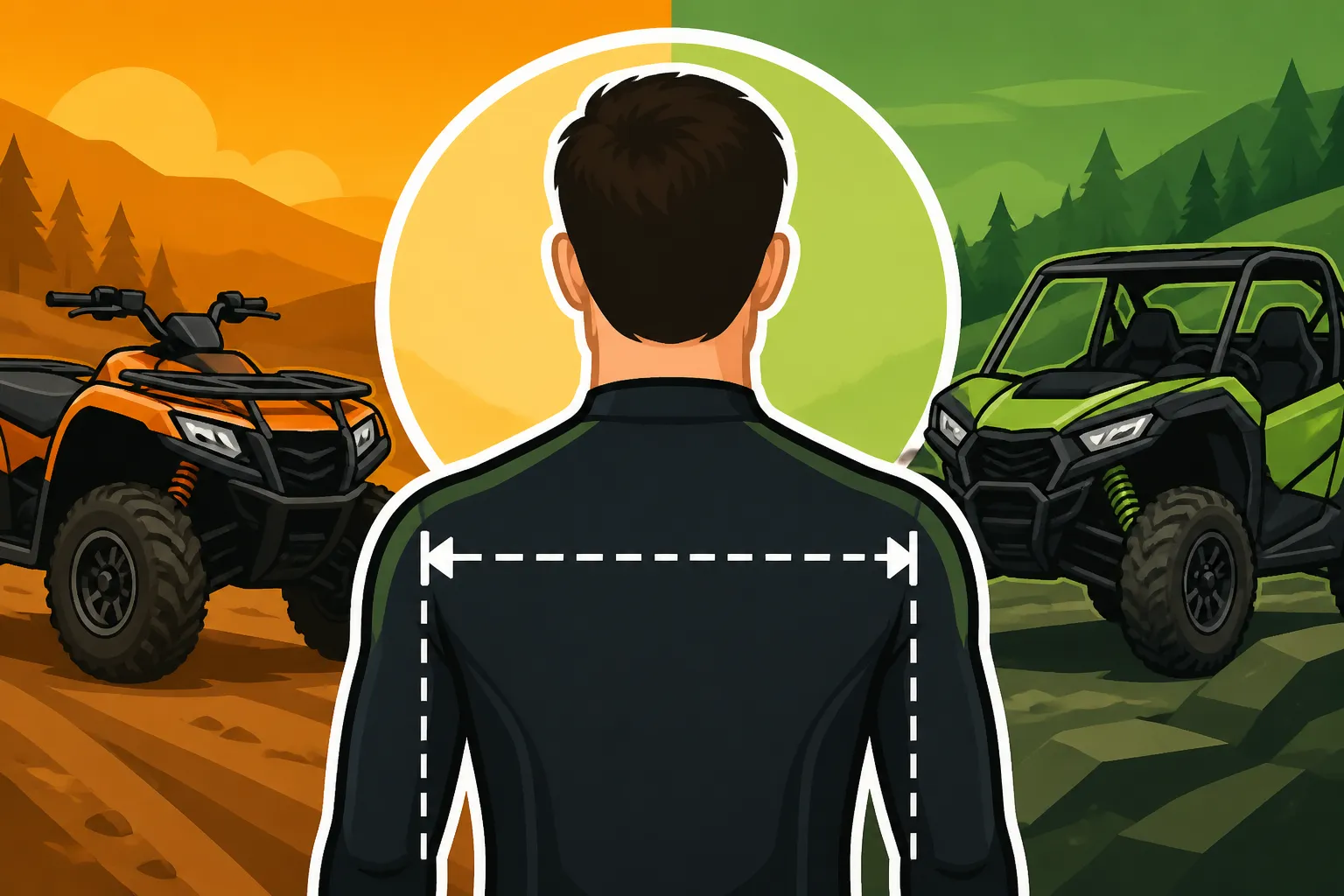
So, you're looking at that strip of gravel or grass next to the asphalt, wondering if it's wide enough for your side-by-side or quad. The Indiana code doesn't give you a precise measurement in feet or inches, which can be incredibly frustrating. It uses the term "sufficient width," which places the responsibility squarely on your shoulders as the operator to make a judgment call. This ambiguity is precisely why many riders feel uncertain and often avoid shoulders altogether.
What "Sufficient Width" Truly Means
When the law says "sufficient width," it's primarily referring to enough space for you to operate your ORV safely and without interfering with vehicular traffic on the main roadway. This means you need to be able to ride completely off the paved or traveled portion of the road. Your tires should not be touching the asphalt or concrete that cars use, nor should your machine be so close that an extended mirror or a swaying trailer could make contact. Think of it this way: if a car or truck passes you, there should be ample space between your ORV and their vehicle, allowing both to proceed without any perceived risk or need for the driver to adjust their path.
Consider a full-size pickup truck with its mirrors extended. Could it pass your UTV on the shoulder without you feeling like you have to hug the ditch? That's the kind of buffer we're talking about. A shoulder that's barely wide enough for your tires is not "sufficient width." It needs to be wide enough that you're not constantly worried about cars clipping you or kicking up debris directly into your path. It’s about creating a clear and safe separation. The internal link [Sufficient Width to Ride Away From Traffic] offers more on this interpretation.
The Safety Aspect of Shoulder Riding
Riding a shoulder isn't just about legal compliance; it's fundamentally about safety. Even on a sufficiently wide shoulder, you're still in close proximity to fast-moving traffic. Your ORV, whether it's a nimble dirt bike or a robust UTV equipped with SuperATV accessories, is not designed to absorb the impact of a collision with a passenger vehicle. This means you need to be hyper-aware of your surroundings. Are there blind spots? Is the shoulder itself uneven, soft, or riddled with potholes that could cause you to swerve? What about road debris, gravel, or even broken glass that's often pushed to the edge of the road?
Your visibility to other drivers is also paramount. While you might be able to see cars coming, can they see you, especially if you're on a dusty or shadowed section of shoulder? Wearing bright colors, ensuring your lights are on, and even considering a safety flag are all smart moves. Ultimately, the safety aspect dictates that if there's any doubt about the width or conditions, it's safer to avoid that section of shoulder entirely or find an alternative route. Your life and the lives of others on the road depend on your careful judgment.
Potential Hazards and "Insufficient" Shoulders
Not all shoulders are created equal, and many are simply not suitable for ORV travel, regardless of whether a narrow interpretation of "sufficient width" might technically apply. A shoulder that abruptly narrows, disappears, or is covered in loose gravel, deep mud, or impassable vegetation could quickly turn a legal ride into a dangerous situation. Imagine a shoulder that's wide enough for 50 yards, then suddenly hits a utility pole, a culvert, or a guardrail, forcing you to either stop short or dangerously swerve onto the main road. That's an "insufficient" shoulder from a practical safety standpoint.
Furthermore, shoulders often have hidden hazards like soft edges that can cause a rollover, or drainage grates that can snag a tire. If you're on a steep incline or decline, maintaining control on an uneven shoulder, especially with a heavier machine or one loaded with cargo, becomes significantly more challenging. You also need to consider visibility around curves or over hills. If a car can't see you until the last second, no amount of width will make it safe. When in doubt, err on the side of caution. It's far better to find a different route or trailer your machine than to risk a citation or, worse, an accident.
Beyond the Shoulder: Other Road Rules to Know
While understanding shoulder rules is vital, it's just one piece of the puzzle when it comes to riding your ORV in Indiana. The state has a tiered approach to ORV use on public land and roads, and knowing these various regulations can save you a lot of grief (and fines!).
Crossing Public Roads Legally
Even if you can't ride along a road, there will inevitably be times when you need to cross one to get from one section of trail or private property to another. Indiana law provides for this, but again, with strict conditions. You must bring your ORV to a complete stop before entering the roadway. Then, you must yield to all oncoming traffic, ensuring the path is clear. Finally, you must cross at as close to a ninety-degree angle as practical. This minimizes your time on the traveled portion of the road and makes your intentions clear to other drivers. You can't just drive across diagonally or meander over. It must be a direct, perpendicular crossing. Think of it as a momentary interruption of traffic, not an integration with it. For the exact steps, see [Crossing a Road on an ORV in Indiana].
Navigating County-Designated ORV Roads
While the state law generally restricts ORVs on roads, it grants counties the power to open certain roads to ORV use through local ordinances. This is where things can get truly localized and confusing, as what's legal in one county might be strictly prohibited in the next. These designated roads are typically county roads outside of city limits. When a county opens a road, they often have specific requirements: special signage, speed limits, age restrictions for operators, and sometimes even a requirement for liability insurance.
It's absolutely essential to do your homework before riding on county roads. Don't assume that because your buddy rode his SuperATV side-by-side on a county road in one part of the state, you can do the same anywhere else. Check the specific county's ordinances. Websites for county commissioners or highway departments are often good places to start looking for this information. Ignoring these local rules could lead to significant fines or even confiscation of your machine. Learn more about this process by reviewing [How an Indiana County Opens Its Roads].
Local Ordinances and What They Can (and Can't) Demand
When counties or even smaller municipalities pass ordinances related to ORV use, there are limits to what they can legally require or prohibit. For example, a local ordinance generally cannot demand that you possess a specific type of driver's license to operate an ORV on their designated roads if state law doesn't require it for that specific type of ORV use. Nor can they impose arbitrary weight limits below 2,000 pounds for ORVs if the state doesn't.
However, local ordinances can implement things like specific operating hours, speed limits, noise restrictions, and requirements for safety equipment beyond state minimums (like specific lighting after dark). They can also mandate proof of insurance or an age restriction for operators that is higher than the state minimum for certain roads. This variation means that a truly comprehensive understanding requires looking beyond just state law to the local level where you intend to ride. It's a complex patchwork, but taking the time to understand it is crucial for responsible riding. You can find more information about what local ordinances may impose in [Indiana Local Ordinances on ORV Riding].
Practical Tips for Riding Responsibly and Safely
Riding an ATV or UTV in Indiana is a fantastic experience, whether you're hitting the trails at Redbird SRA or just using your machine for chores around your property. But enjoying that experience responsibly means adhering to the rules, both state and local, and always prioritizing safety.
Always Ride Defensively
When you're operating an ORV, particularly near or on any public thoroughfare, you need to ride with extreme defensive caution. This means anticipating what other drivers might do, assuming they don't see you, and always being prepared to react. Cars and trucks are larger, faster, and their drivers aren't always looking for ATVs or UTVs, especially on shoulders or county roads. Maintain a safe speed that allows you to react to unexpected hazards, whether it's a vehicle veering onto the shoulder, a pedestrian, or an obstacle in your path. Always keep your headlights on, even during the day, to maximize your visibility. If your machine is equipped with SuperATV aftermarket lights, use them! It's a small step that can make a big difference in being seen.
Know Before You Go: Checking Local Rules
The single best piece of advice for any Indiana ORV rider is to "know before you go." This means researching the specific area where you plan to ride. If you're heading to a state recreation area like Interlake, check the DNR's website for their current rules and conditions. If you're exploring county roads, check the county's official website for any specific ORV ordinances. This proactive approach can prevent an unpleasant encounter with law enforcement or a costly fine. Keep physical or digital copies of relevant rules and your vehicle's registration handy. For instance, [Indiana ORV Registration and Insurance Proof] is vital information to have on you.
Here's a quick reference table for general guidance, but always verify locally:
| Scenario | State Law Guidance | Local Ordinance Impact |
|---|---|---|
| Riding Main Roadway | Generally Prohibited | Possible if county/city has a specific ordinance opening roads, often with restrictions (e.g., speed, age, insurance). |
| Riding Shoulder/Ditch | Permitted if "sufficient width," doesn't interfere with traffic or create hazard. | Local ordinances cannot override state law on "sufficient width" but can add specific restrictions or prohibitions on certain shoulders. |
| Crossing Roads | Permitted after stop, yielding, and crossing at a 90-degree angle. | Local ordinances typically cannot prohibit crossing but might add specific visibility or signage requirements at certain intersections. |
| Helmet Use | Required for riders under 18 on public lands/designated areas; recommended for all. | Local ordinances may extend helmet requirements to all ages on their designated roads or specific areas. |
| Insurance | No statewide ORV insurance requirement for general use, but recommended. | Certain counties (e.g., Vanderburgh) do require proof of insurance for riding on their designated ORV roads. |
Essential Gear and Machine Prep
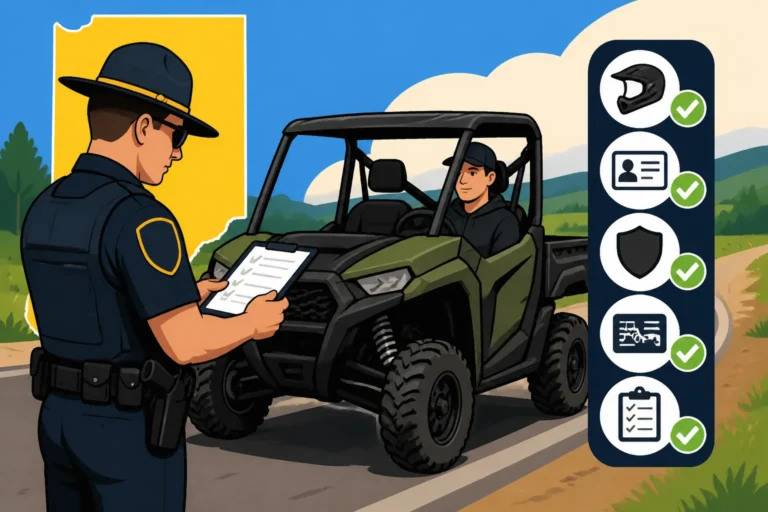
Before every ride, conduct a quick pre-ride inspection of your machine. Check your tires, brakes, lights, and fluid levels. Make sure your spark arrestor is in good working order if you're riding in an area that requires one (many public lands do). Beyond your machine, ensure you have the proper safety gear. A DOT-approved helmet is non-negotiable for anyone under 18 on public land, and it's a smart choice for all riders, everywhere. Eye protection, gloves, sturdy boots, and long pants are also highly recommended. If you plan to ride where shoulders might be dusty or uneven, consider how your tires will handle it; knobbier tires are better for off-road conditions than purely street-oriented ones. Always carry your registration certificate and proof of any required insurance. Being prepared isn't just about following rules; it's about making sure your ride is as enjoyable and safe as possible.
Disclaimer
This article is for general informational purposes only and does not constitute professional advice. Laws, prices and regulations vary by location and change over time. Consult a qualified professional for guidance on your specific situation.