Indiana Rules for a Passenger Under 18
It can feel like you need a law degree just to understand what's safe and legal for your kids when riding ATVs and UTVs in Indiana, especially when they're just passengers. There's so much conflicting information out there, and the stakes are high when it comes to the safety of your little ones. This guide is here to untangle the complexities of Indiana's regulations for ORV passengers under 18, helping you keep your family safe and compliant.
Understanding Indiana's Core Rules for Minor Riders and Passengers
When it comes to off-road vehicles (ORVs) in Indiana, the law makes clear distinctions between who can operate a machine and who can simply be a passenger. This is a crucial starting point for any family hitting the trails. Many assume that if a child isn't driving, the rules are more relaxed, but that's not always the case, especially when public land is involved. The state has specific guidelines in place to protect young people, regardless of their role on the vehicle, and understanding these is paramount for a safe and legal outing. It's not just about avoiding a ticket; it's about minimizing risk for the most vulnerable members of your riding crew.
Age and Supervision: The Foundation for Young Riders
Indiana law sets specific age limits for operating ORVs, and these indirectly impact who can ride as a passenger. For example, a child under 14 cannot operate an ORV at all on public land. Even on private property, if a child under 14 is operating, they must be under the direct supervision of an adult who is at least 18 years old. Now, when it comes to passengers, there isn't a specific minimum age listed for a child to be a passenger. However, the requirement for an ORV to be designed to carry more than one person, and the inherent risks involved, mean that common sense and the operator's judgment are key. You wouldn't put a toddler on the back of an ATV, for instance, even if the law doesn't explicitly forbid it. The spirit of the law focuses on safety and ensuring that any minor on an ORV is there under the safest possible conditions. This is where personal responsibility and good judgment truly come into play, filling the gaps where explicit age mandates for passengers might not exist. Keep in mind that general supervision rules for minors still apply, even if they're not operating the machine. For more on this, check out [Indiana Supervision Rules for Minors].
Operator Responsibility When Carrying a Minor Passenger
As the operator of an ORV, especially when carrying a passenger under 18, you bear a significant responsibility. The first step is ensuring your machine is actually designed for a passenger. Many ATVs are single-rider machines, and carrying a passenger on one of these can significantly affect stability and control, making it incredibly dangerous. Side-by-sides (UTVs), on the other hand, are often built with multiple seats and roll cages, making them much more suitable for carrying extra occupants. If you're running a two-seater UTV, make sure the passenger seat, seat belts, and grab handles are all in excellent working order. This is where investing in quality accessories, perhaps from a brand like SuperATV, can really enhance the safety and comfort for your young passenger. You need to ensure the machine can safely accommodate the extra weight and that the passenger has appropriate handholds and footrests. Beyond the machine itself, your driving style becomes even more critical. No aggressive maneuvers, no excessive speed, and a constant awareness of the terrain are paramount. Remember, any accident involving a minor passenger, even if it happens on private property, can lead to serious legal and ethical ramifications for the operator. The law explicitly states that if an owner allows a minor to operate or ride in violation of the rules, the owner is liable, which means you could face consequences even if you weren't the one driving. This also ties into [Indiana Rules for Carrying a Passenger].
Mandatory Safety Gear for Under-18 Passengers in Indiana
Safety gear is non-negotiable for young ORV passengers in Indiana. The state has specific requirements for helmets and, in some cases, seat belts, designed to minimize injury in the event of an accident. While many of us ride with our kids on private land thinking these rules don't apply, that's not always true. It's easy to get confused by the nuances, especially when comparing an open-air ATV ride to a UTV with an enclosed cab. But getting these rules right is crucial for their well-being and for staying on the right side of the law.
Helmet Requirements: It's Not Just for Operators
Indiana law is very clear: any person under 18 years of age who is operating or riding as a passenger on an ORV must wear a helmet. This rule applies anytime they are riding, whether on public trails, designated county roads, or even on private property. The only significant exception to this helmet rule is for individuals riding in an "enclosed cab" of an ORV. An enclosed cab generally means a vehicle with a roof, a windshield, and side enclosures that provide substantial protection similar to a car. However, even with an enclosed cab, if the child is still under 18, many parents choose to err on the side of caution and have them wear a helmet anyway, especially on rough trails. A standard motorcycle or ORV helmet that meets DOT (Department of Transportation) standards is what's required – no novelty helmets that offer little to no actual protection. Investing in a good-quality, properly fitting helmet for your child, perhaps one that can be paired with other protective gear from a reputable dealer, is one of the best safety decisions you can make. The helmet needs to be securely fastened at all times. For a deeper dive into this, see [Indiana's Helmet Law for Riders Under 18] and [Indiana Helmet Law on Private Property].
Seat Belts and Enclosed Cabs: UTV Specifics
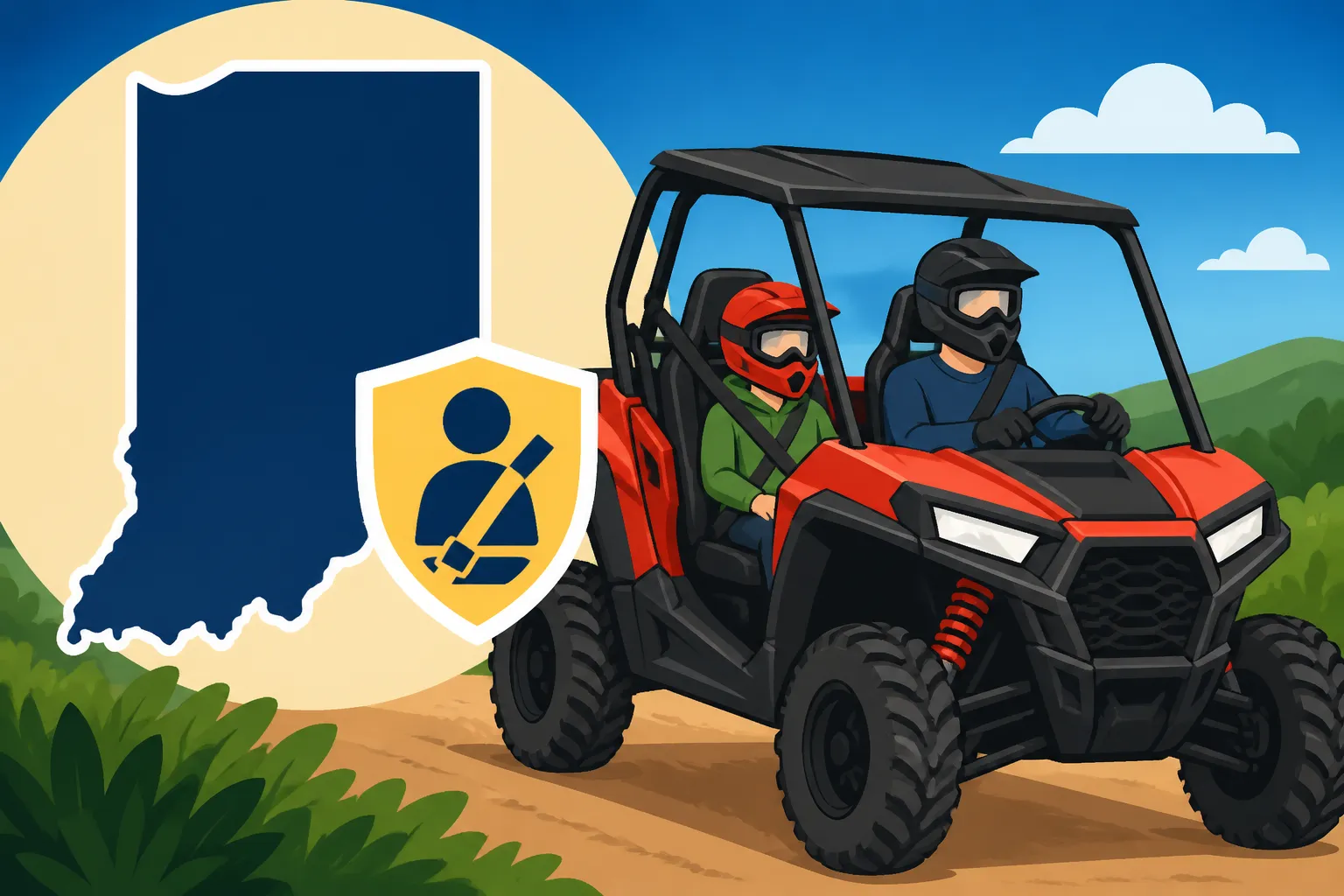
While seat belts aren't typically a feature on traditional ATVs, they are standard equipment on most side-by-sides (UTVs), and Indiana law requires their use when present. If an ORV is equipped with a seat belt, all occupants, including passengers under 18, must wear it. This is particularly relevant for UTVs, which are increasingly popular for family outings. The combination of a roll cage and a seat belt provides a significant layer of protection, especially when navigating challenging terrain. As mentioned, the "enclosed cab" exemption allows occupants under 18 to forgo a helmet if they are fully enclosed. However, this is distinct from the seat belt requirement; even in an enclosed cab, if seat belts are installed, they must be worn. Many UTV owners enhance their machines with aftermarket accessories from companies like SuperATV, such as more robust doors, windshields, and even full enclosures, which further contribute to passenger safety and comfort, particularly for younger riders. Always ensure these modifications don't compromise the original safety features, but rather augment them. It's about creating the safest environment possible for your precious cargo. Remember to check [Indiana Seat Belt Rules at an ORV Park] for specific public land guidelines.
Where Minors Can Ride as Passengers in Indiana
Knowing what rules apply is one thing, but knowing where those rules are enforced can be a whole other headache. Indiana offers a variety of riding opportunities, from dedicated state recreation areas to private land, and even some limited county roads. Each type of location can have slight variations or additional rules that impact how and where a minor can ride as a passenger. It’s important not to assume that rules on private land are completely absent, or that public park rules are the same as those on an open county road. Due diligence here can prevent unpleasant surprises and, more importantly, ensure your family's safety.
Riding on Public ORV Parks and Trails
Indiana boasts excellent public riding areas like Redbird Off-Road State Recreation Area and Interlake Off-Road State Recreation Area. These parks are fantastic resources for families, but they come with specific regulations designed for safety and environmental protection. For passengers under 18, the state-wide helmet law always applies here, regardless of the ORV type, unless they are in a truly enclosed cab. Furthermore, park staff, such as conservation officers, will actively enforce these rules. At parks like Redbird, where trails can be rugged and challenging, ensuring your young passenger is securely belted in (if riding a UTV) and wearing a DOT-approved helmet is paramount. Beyond the basic state laws, these parks may also have additional guidelines regarding speed limits in staging areas, designated youth riding zones, or specific trail difficulty ratings that might influence where you take a minor passenger. Always check the park's specific rules and signage upon arrival, as these can sometimes be more stringent than the general state statutes. Being prepared means a smoother, safer, and more enjoyable experience for everyone.
Private Property and Designated County Roads
Riding on private property with landowner permission offers a bit more flexibility, but it's not a complete free-for-all when it comes to minors. The state's helmet law for riders and passengers under 18 generally still applies on private land. This is a common misconception, with many believing that "private property" means "no rules." While enforcement might be less direct compared to a state park, the law is clear, and in the event of an accident, liability can still fall heavily on the owner or operator who disregarded safety requirements. [Indiana Rules for Riding Private Land] offers more context.
As for designated county roads, this is a much rarer scenario in Indiana. Most county roads are closed to ORV use, but a few counties have passed ordinances to open certain roads for ORVs. When riding on these very specific, designated county roads, all state laws, including those regarding helmets and supervision for minors, are fully in effect and will be enforced by local law enforcement. Additionally, these counties often have their own specific requirements, such as minimum age for operators (often 18 or older), insurance mandates, and specific lighting rules, which would naturally extend to how minor passengers are carried. Always research the specific county ordinance if you plan to ride on their roads, as they can vary greatly. Ignorance of the law is never an excuse, especially when a child's safety is on the line.
Here's a quick summary of key rules for minor passengers:
| Feature/Rule | ATV (Single Rider) | ATV (Designed for Passenger) | UTV (Side-by-Side) | Public Land | Private Land (With Permission) | Designated County Roads |
|---|---|---|---|---|---|---|
| Passenger Age | Generally discouraged/illegal on public land | No specific minimum, but operator discretion is key | No specific minimum, but operator discretion is key | Varies by machine | Varies by machine | Varies by machine |
| Helmet (Under 18) | Required | Required | Required, unless in an enclosed cab | Required | Required | Required |
| Seat Belt (If Equipped) | N/A (most don't have them) | N/A (most don't have them) | Required | Required | Required | Required |
| Operator Age | 14+ with supervision (public); 14+ (private) | 14+ with supervision (public); 14+ (private) | 14+ with supervision (public); 14+ (private) | See [Indiana Minimum Age to Ride an ORV] | See [Indiana Minimum Age to Ride an ORV] | Often 18+ for operator |
| Supervision | Direct adult supervision for operators under 14 | Direct adult supervision for operators under 14 | Direct adult supervision for operators under 14 | Required | Required | Required |
| Machine Suitability | Not designed for passengers; dangerous | Must be factory-designed for two | Must be factory-designed for multiple occupants | Critical | Critical | Critical |
Remember, the goal is always to maximize safety, and following these rules provides a strong foundation for responsible ORV riding with your family in Indiana.
Disclaimer
This article is for general informational purposes only and does not constitute professional advice. Laws, prices and regulations vary by location and change over time. Consult a qualified professional for guidance on your specific situation.