Yielding to All Traffic at a Crossing
Navigating Indiana's beautiful landscapes on your ATV or UTV is an incredible experience, but it comes with a serious responsibility, especially when you encounter public roads. Many riders feel a knot in their stomach when they have to cross a highway, worried about doing it wrong or, even worse, causing an accident. This guide is here to walk you through the absolute essential rule for any ORV road crossing in Indiana: the requirement to yield to all traffic, ensuring you understand not just what to do, but why it's so critical for your safety and the future of ORV access in our state.
The Absolute Golden Rule: Yielding to All Traffic
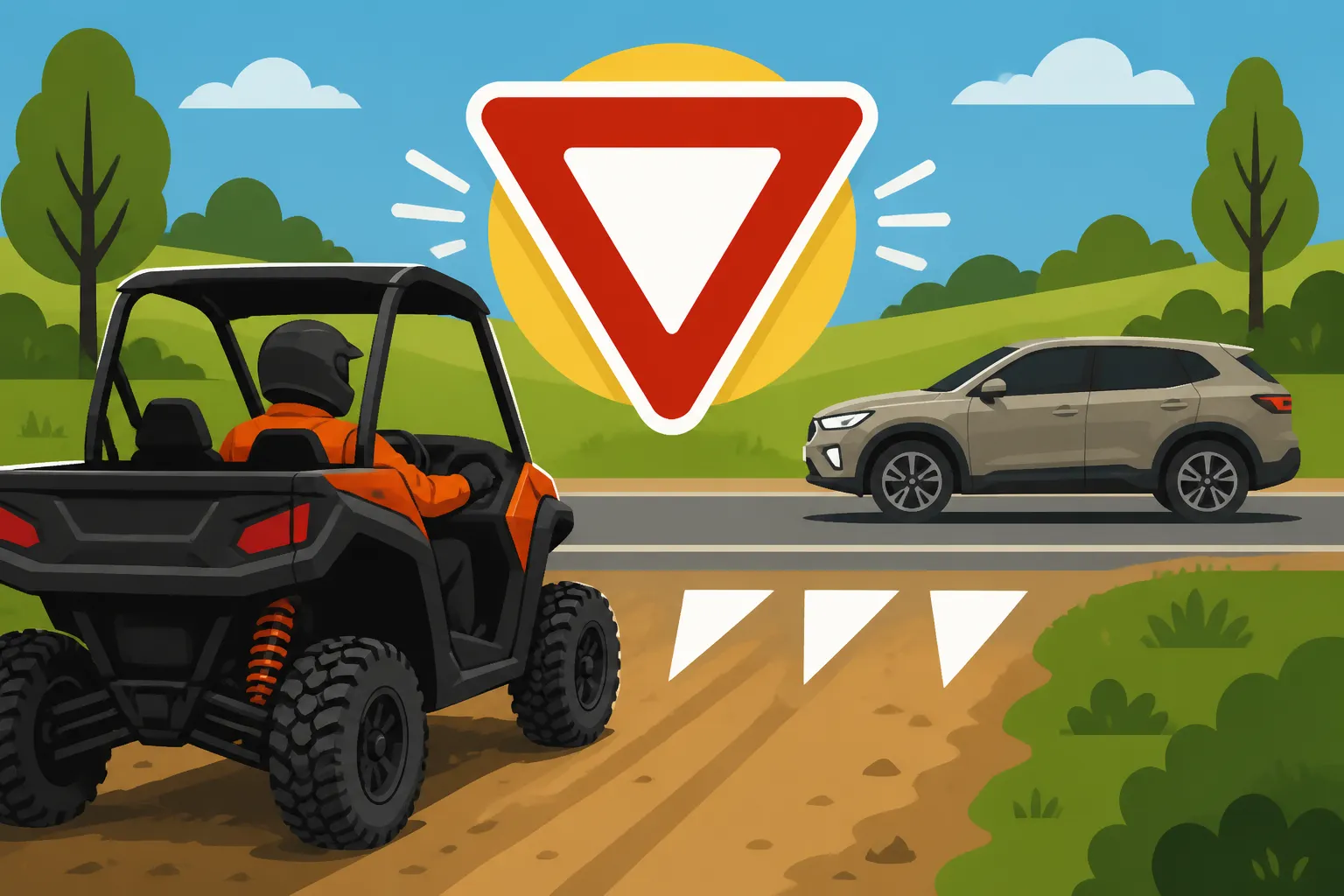
Let's be blunt: when you're on an ORV in Indiana and you're about to cross any public road, you are essentially a guest in someone else's space. The road is not inherently yours to share in the same way it is for a car or truck. Because of this fundamental difference, the law places the burden of safety squarely on the ORV operator. You must always, without exception, yield to all traffic. This isn't just a suggestion; it's a legal mandate designed to prevent dangerous situations, and understanding its gravity is the first step toward responsible riding.
Why This Rule Is Non-Negotiable
Think about it from the perspective of a driver in a regular vehicle. They're typically not expecting an ATV or UTV to suddenly appear at a road edge. Their machines are larger, faster, and often less maneuverable than your ORV. A moment of confusion or misjudgment on your part could have catastrophic consequences for everyone involved. The non-negotiable nature of this rule stems from the need to integrate ORV crossings into the existing traffic flow with minimal disruption and maximum safety. It's about protecting yourself, your passengers, and the unsuspecting motorists who might be sharing the road with you, even if only for a fleeting moment. This rule underscores the unique position ORVs hold in Indiana's traffic laws, often requiring specific actions to override the default assumption that roads are for traditional vehicles.
This isn't just about avoiding a ticket; it’s about maintaining the privilege to ride. Every time an ORV operator fails to yield and causes an incident, it puts more pressure on lawmakers to restrict access, potentially closing off trails or making road crossings even more difficult. It's a collective responsibility. By upholding this rule, you're not just being a safe rider; you're contributing to the positive perception and continued enjoyment of off-roading for everyone in Indiana.
Understanding "All Traffic"
When the law says "all traffic," it means every single vehicle moving on that road, regardless of direction, speed, or whether you think you have enough time to get across. This includes cars, trucks, motorcycles, bicycles, farm equipment, and even pedestrians. It doesn't matter if they're a mile down the road or just around the bend; if their presence could reasonably create a hazard during your crossing, you must wait. This also means you can't assume a vehicle will slow down or yield to you. In fact, you should operate under the assumption that they won't, and act accordingly.
"All traffic" also means being aware of vehicles that might be turning onto the road you're crossing, or vehicles exiting driveways nearby. Sometimes, the most unexpected traffic can be the most dangerous. A rural mail carrier, a delivery truck, or even a neighbor pulling out of their driveway are all considered "traffic" that you must account for. It requires a comprehensive scan of your surroundings, not just a quick glance down the main lanes. This heightened awareness ensures that your crossing is truly safe and not just a risky dash.
The Legal Ramifications of Not Yielding
Ignoring the yielding rule is a serious offense in Indiana. At best, you could face a significant fine under [Indiana Fines for Illegal ORV Road Use] and have your ORV impounded. At worst, you could be found entirely at fault in an accident, leading to civil lawsuits that could cost you everything, not to mention the potential for severe injuries or fatalities. Remember, even if a county has opened its roads to ORVs, the specific rules for crossing remain stringent.
The legal system in Indiana does not look kindly on ORV operators who disregard fundamental traffic laws. The penalties can escalate quickly, from a simple citation for a first offense to more severe charges if an accident occurs. Your insurance might not cover you if you're found to be in violation of traffic laws, leaving you personally responsible for damages and medical bills. It's a gamble with incredibly high stakes, and it's simply not worth it. Always prioritize safety and adherence to the law over saving a few seconds.
How to Safely Approach an Indiana ORV Road Crossing
Successfully and safely crossing a public road on your ORV involves more than just hitting the brakes and looking both ways. It's a methodical process that requires your full attention and adherence to a specific set of actions. Think of it as a small, critical mission within your larger ride. Every step is designed to minimize risk and maximize your visibility and control.
Scouting Your Crossing Point
Before you even get close to the pavement, start thinking about your crossing point. Is there a clear line of sight in both directions? Are there any hidden dips, blind curves, or thick vegetation that obstruct your view or that of approaching motorists? A good crossing point allows you to see traffic far in advance and gives drivers plenty of time to see you. Sometimes, it's worth riding a little further on a shoulder or even briefly dismounting to get a better vantage point, rather than attempting a risky crossing at a suboptimal spot.
Consider the terrain leading up to and away from the road as well. Is it muddy, rocky, or heavily rutted? You want a smooth, stable approach and exit to maintain control of your machine. A rough approach can distract you, cause you to lose traction, or delay your crossing, increasing your exposure to traffic. If you're on a trail and see a road crossing coming up, slow down, assess the area, and choose the safest, most visible spot. A few extra seconds of planning can make all the difference between a smooth transition and a close call.
The Full Stop Requirement
Indiana law is clear: you must bring your ORV to a complete stop before entering the roadway. This isn't a "rolling stop" or a "slow down and creep forward." It means your wheels must cease all movement. This absolute pause serves several purposes. It gives you a moment to reassess the traffic situation one last time, ensuring no new vehicles have appeared since your initial scan. It also demonstrates to any observing law enforcement or passing motorists that you are being cautious and deliberate.
A complete stop means you have full control of your machine. You can put your feet down, stabilize yourself, and truly focus all your senses on the road ahead. This is the moment to listen for approaching vehicles you might not yet see and to feel for vibrations from heavy trucks. Don't rush this step. It's the anchor of a safe crossing. You can find more details on this in [A Complete Stop Before an Indiana Crossing].
Looking Twice, Then Looking Again
After your complete stop, it's time for the crucial "look." But one look isn't enough. You need to look left, then right, then left again. And then, if you're on a wider or busier road, you might even consider looking behind you for any vehicles turning. Why so many looks? Because conditions can change rapidly. A vehicle that was far away during your initial approach might now be closer than you anticipated. A vehicle could have turned onto the road from a side street you didn't initially see.
This triple-check method is standard defensive driving practice, and it's even more critical when you're on a less visible ORV. If you're riding with a group, make sure everyone in front of you has cleared the road before you proceed, and if you're the lead rider, signal clearly to those behind you when it's safe to cross. Clear communication and thorough observation are your best friends in these situations.
The Nuances of Right-of-Way in Indiana for ORVs
Understanding who has the right-of-way is fundamental to safe driving, and for ORVs in Indiana, it's a critical concept to grasp. Unlike traditional vehicles that are generally assumed to have the right to travel on public roads, ORVs operate under a different set of rules. This distinction is crucial for every rider, as misinterpreting it can lead to dangerous situations and legal trouble.
ORVs and the Default Road Closure
In Indiana, public roads are generally closed to ORV traffic by default. This means you cannot simply ride your ATV or UTV down a county road or state highway without explicit permission or designated access. There are specific exceptions, such as [Crossing a Road on an ORV in Indiana], but these are very limited and highly regulated. This default closure is why the burden of yielding always falls on the ORV operator. You are not a regular part of the traffic flow, and other drivers are not expecting you to be there, even for a crossing.
This default closure is a significant point of frustration for many riders who just want to connect trails or access certain areas. However, it's a protective measure for both ORV operators and other motorists. It prevents haphazard riding on roads not designed for ORVs, which often lack proper lighting, turn signals, or speed capabilities for safe integration with faster traffic. Always assume a road is closed unless you have confirmation otherwise, and treat any crossing with the utmost caution and respect for the rules.
Designated County Roads and Their Limits
While many Indiana county roads are generally closed to ORVs, some counties have passed ordinances to open certain roads or sections of roads for ORV use. This is fantastic news for riders, but it doesn't grant you carte blanche. Even on a designated county road, the rules for crossing a different road or encountering other traffic remain paramount. For example, if a county road is opened, you might still need to cross a state highway that remains closed to ORVs. You can learn more about how counties open roads in [How an Indiana County Opens Its Roads].
Even on designated ORV roads, you are still required to operate your machine safely and adhere to all traffic laws applicable to your vehicle, including speed limits, stop signs, and, most importantly, yielding when necessary. The "designated" status usually pertains to the ability to travel on that specific road, not an exemption from yielding at intersections or crossings. You must always be prepared for the unexpected and assume other drivers may not be aware of the local ORV ordinance. Products from companies like SuperATV, such as their turn signal kits or horn kits, can be invaluable for increasing your visibility and ability to signal your intentions, even on designated roads.
Understanding the "Right-of-Way" You Don't Have
It's a harsh truth for ORV riders: when it comes to road crossings in Indiana, you essentially have no inherent right-of-way. While standard traffic laws dictate who goes first at intersections based on signs, signals, or arrival times, for an ORV crossing a public road, the default is that all other traffic has the right-of-way over you. Your job is to wait until the path is absolutely clear and safe.
This means you can't assume a gap in traffic will be held open for you, or that a driver will slow down because they see you waiting. You are responsible for identifying a clear and safe opportunity to cross without impeding or endangering any other vehicle. This is a crucial distinction from driving a car, where you might have the right-of-way at a green light or a stop sign if you arrived first. On an ORV, at a road crossing, you are always the one who must defer.
Real-World Scenarios: Navigating Different Crossing Situations
The "yield to all traffic" rule might seem straightforward, but applying it in real-world scenarios can present unique challenges. Different types of roads, traffic volumes, and environmental factors demand varying levels of caution and specific approaches. Let's break down a few common situations you might encounter while riding your ORV in Indiana.
Crossing a Quiet Rural Road
Imagine you're out exploring some beautiful back trails in Brown County, and your GPS indicates you need to cross a sleepy, gravel county road to connect to the next section. It might seem like an easy crossing, with perhaps only one car passing every ten minutes. However, the rule still applies. You must still come to a [A Complete Stop Before an Indiana Crossing], look left, right, and left again, and yield to any approaching vehicle, no matter how distant. These quiet roads can sometimes be the most deceptive, as the lack of consistent traffic can lull you into a false sense of security.
Even on these less-traveled roads, drivers may be moving at higher speeds, assuming they won't encounter anything unexpected. A farm truck might appear over a rise quicker than you anticipate, or a local resident might be driving without much attention. Never assume a road is "safe enough" to just roll across. Take your time, make your observations, and only proceed when you are absolutely certain the path is clear. This discipline is what prevents incidents on seemingly harmless stretches of road.
Intersecting With a Busy State Route
Now, picture a far more daunting scenario: you need to cross a busy state route, perhaps a two-lane highway with higher speed limits and a steady flow of vehicles. This situation demands maximum vigilance. Your complete stop at the edge of the pavement becomes even more critical. You'll need to carefully gauge the speed and distance of approaching vehicles, looking for a truly substantial gap in traffic. It's not about darting across when you think you can make it; it's about waiting until there's no question.
On these busier roads, drivers are often focused on their own speed and the traffic immediately around them. Your smaller ORV can be easily overlooked, especially if you blend in with the background. Consider waiting for multiple vehicles to pass to create a larger, safer window. If possible, choose a crossing point with a clear view for at least a quarter-mile in both directions. If the traffic is simply too heavy to safely cross, you might need to find an alternative route, even if it adds time to your ride. Safety always outweighs convenience.
What if Another ORV Is Waiting?
It's not uncommon to encounter other ORV riders also waiting to cross a road, especially near popular trailheads or designated ORV areas. While it might feel natural to follow the lead of another rider, never assume their decision to cross makes it safe for you. Each operator is responsible for their own safe crossing. Just because the rider in front of you went, doesn't mean the gap is still clear for you. Traffic conditions can change in seconds.
Maintain a safe distance from the ORV in front of you while waiting, giving yourself space to maneuver and a clear line of sight. When the ORV ahead of you crosses, reiterate your full stop and conduct your own thorough look-left, right, left routine. If you're riding in a group, it's a good practice to designate a lead and sweep rider, and communicate clearly about when it's safe for each individual machine to proceed. Don't rush or feel pressured to follow immediately; your safety is paramount.
Essential Gear and Preparedness for Indiana Road Crossings
While adhering to traffic laws and exercising caution are paramount, certain gear and preparations can significantly enhance your safety when performing an [Crossing a Road on an ORV in Indiana]. Being seen, being able to communicate, and having a well-maintained machine are all crucial factors that contribute to a successful and incident-free road crossing. Don't underestimate the power of preparation.
Visibility Is Key
On an ORV, you are inherently less visible than a car or truck, especially to other drivers who aren't expecting you. Enhancing your visibility is not just a good idea; it can be a lifesaver. Consider installing additional lighting, such as brighter LED headlights or auxiliary lights, especially if you ever find yourself needing to cross near dusk or dawn. Many aftermarket accessories, including those offered by companies like SuperATV, focus on improving visibility. Reflective tape on your machine or helmet can also make a huge difference, catching the glint of headlights.
Furthermore, make sure you and your passengers are wearing bright, high-contrast clothing. Blaze orange, neon green, or reflective vests are excellent choices, particularly during hunting season or in low-light conditions. The more you stand out against the background, the more likely a driver is to spot you in time to react. Don't rely solely on your ORV's factory lighting; go above and beyond to make your presence known.
Communication with Your Riding Group
If you're riding with others, clear communication is absolutely vital, especially at road crossings. Before you even approach a road, discuss your plan: who will lead, who will follow, and what signals you'll use to indicate a clear path or a need to wait. Hand signals are a universal language among riders, but consider investing in helmet-mounted communicators for easier verbal interaction, especially on noisy machines or in windy conditions.
When stopped at the edge of a road, the lead rider should clearly signal when it's safe to cross. The next rider should then confirm it's still clear for them before proceeding, and so on. This staggered approach ensures that each individual has made their own safety assessment. Never assume the entire group can cross in one go. Maintaining awareness of your fellow riders and their position relative to traffic is a shared responsibility that enhances overall group safety.
Maintaining Your Machine for Road Sections
A well-maintained ORV is a safer ORV, especially when crossing roads. Ensure your brakes are in excellent working order, providing quick and reliable stopping power. Your tires should be properly inflated and have adequate tread for both off-road grip and stable on-pavement performance. Check your lights—headlights, taillights, and any turn signals you might have installed—before every ride. A burnt-out bulb could severely compromise your visibility.
Beyond the basics, think about the specific demands of road crossings. Does your machine start reliably every time? You don't want to stall halfway across a busy road. Is your steering tight and responsive, allowing for precise control? Any mechanical issue that might seem minor on a trail could become a critical safety hazard when interacting with vehicle traffic. Regular maintenance not only prolongs the life of your machine but also ensures it performs optimally when safety is paramount.
Consequences of Failing to Yield in Indiana
The rules for ORV road crossings in Indiana aren't just polite suggestions; they are legally binding requirements with serious implications if disregarded. Failing to yield to all traffic can lead to a cascade of negative outcomes, ranging from immediate legal penalties to devastating personal consequences. Understanding these potential repercussions should reinforce the importance of meticulous adherence to the law.
Legal Penalties and Fines
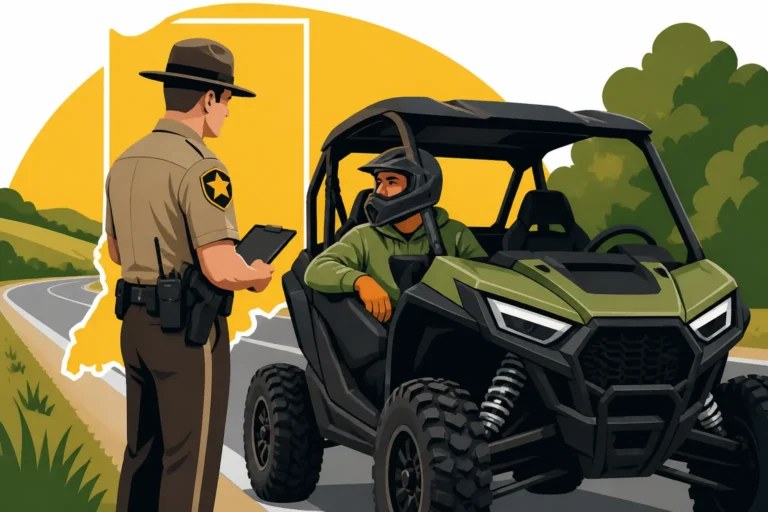
The most immediate consequence of failing to yield or otherwise riding illegally on a public road is a citation from law enforcement. An Indiana conservation officer or local police deputy has the authority to issue tickets for violations of ORV statutes. These can be classified as Class C infractions, carrying fines that can quickly add up. For example, [What an Indiana Officer Checks Roadside] often includes looking for proper registration, decals, and safe operation. If you're found to be operating unsafely, especially by failing to yield, the penalties will reflect that severity.
Beyond the initial fine, repeated offenses can lead to higher penalties, impoundment of your vehicle, and even more severe legal action. Remember, these are not mere inconveniences; they are official marks on your record that underscore the seriousness of operating an ORV unlawfully. The legal system in Indiana takes the safety of its roadways seriously, and ORV operators are held to a high standard, particularly when interacting with conventional traffic.
The Risk of Accidents and Liability
This is arguably the most terrifying and devastating consequence. Failing to yield can directly lead to an accident with a car, truck, or other vehicle. Given the size and speed disparity between an ORV and most road vehicles, the ORV operator and passengers are almost always at a higher risk of severe injury or fatality. Even a minor collision could result in broken bones, concussions, or worse. The trauma, medical bills, and potential for long-term disability can be life-altering.
Beyond personal injury, there's the significant issue of liability. If you are found to be at fault for an accident because you failed to yield, you could be held financially responsible for property damage to the other vehicle, their medical bills, lost wages, and pain and suffering. This can amount to hundreds of thousands or even millions of dollars. Your standard ORV insurance policy might not cover incidents that occur while you're in violation of traffic laws, leaving you personally exposed. Always carry your [Indiana ORV Registration and Insurance Proof] when riding, but understand that compliance with the law is your primary defense against liability.
Impact on ORV Access in Indiana
Every accident or serious infraction involving an ORV on public roads in Indiana creates negative publicity and fuels public sentiment against off-road riding. When incidents occur due to reckless behavior or a disregard for traffic laws, it often leads to increased calls for stricter regulations, further limitations on where ORVs can operate, or even the closure of existing trail systems and designated roads. Lawmakers and local officials often respond to public outcry, and a few irresponsible riders can jeopardize the enjoyment and access for the entire ORV community.
By always yielding to all traffic and operating your ORV with the utmost caution and responsibility, you are actively contributing to the positive image of off-roading in Indiana. You're helping to demonstrate that ORV riders are responsible members of the community who respect the law and prioritize safety. This is how we ensure that future generations continue to have places to ride and that current access remains open and viable. Let's all do our part to keep our trails and roads accessible for everyone.
| Action Required at ORV Road Crossing | Reason for Action | Legal / Safety Benefit |
|---|---|---|
| Full Stop | Mandatory by law; allows for comprehensive observation and control. | Avoids "rolling stop" tickets; ensures maximum time to react. |
| Look Left, Right, Left Again | Traffic conditions change rapidly; ensures no hidden vehicles. | Maximizes awareness of approaching vehicles; reduces blind spots. |
| Yield to All Traffic | ORVs do not have right-of-way on public roads by default. | Prevents collisions; upholds legal responsibility; reduces liability. |
| Cross at Right Angles | Minimizes time spent in active traffic lanes. | Reduces exposure to passing vehicles; quicker, more direct path. |
| No Passengers if Prohibited | Ensure compliance with machine and age restrictions. | Prevents fines; enhances stability and control of the ORV. |
| Use Proper Lighting/Signals | Increases visibility to other motorists, especially at night. | Prevents accidents; meets [Indiana Lighting Requirements for ORVs]. |
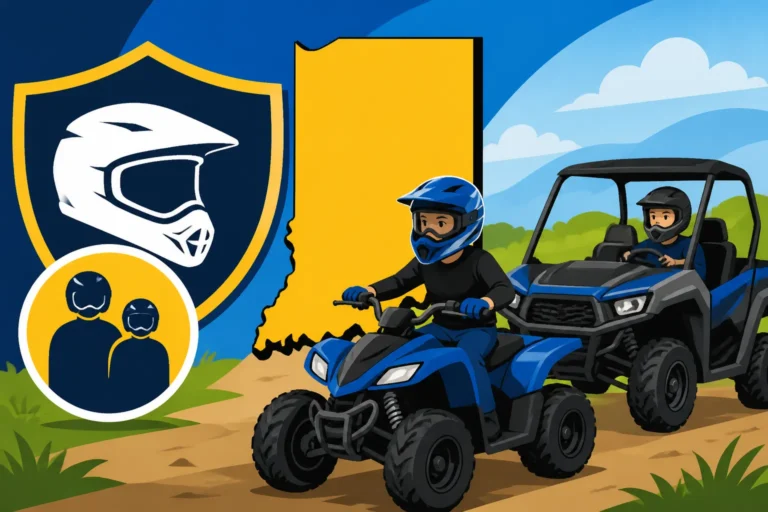
| Wear Helmet (if under 18) | Mandatory by [Indiana Helmet Law for ORV Riders] for minors. | Reduces head injury risk; avoids citations. |
Disclaimer
This article is for general informational purposes only and does not constitute professional advice. Laws, prices and regulations vary by location and change over time. Consult a qualified professional for guidance on your specific situation.