Paying for an ORV Title at a License Branch
You’ve just bought a new (or new-to-you) off-road vehicle here in Indiana, and the excitement is palpable – visions of hitting the trails at Redbird or Interlake are dancing in your head. But then reality sets in: the dreaded paperwork. Paying for your ORV title at an Indiana license branch can feel like navigating a maze, especially if you’re unsure what to bring, what to pay, or even if your machine needs a title in the first place. This guide is here to cut through the confusion, walking you through the entire process so you can get your machine properly titled and get back to thinking about your next adventure, not your next trip to the BMV.
Unpacking Indiana's ORV Titling Requirements
It's easy to get ahead of yourself when you're excited about a new machine, but understanding the why and what before the how much can save you a significant headache down the line. Indiana has specific rules about which off-road vehicles need a title and when, and not grasping these details upfront can lead to delays, frustration, and even unexpected fees. Let’s break down these foundational requirements before you even think about stepping foot in a license branch.
Does Your Machine Even Need an Indiana Title?
This is often the first, and most confusing, question for many ORV owners. Unlike some states, Indiana has a specific cutoff date that dictates whether your machine requires a title. Generally, if your off-road vehicle (ATV, UTV, or dirt bike) was purchased after December 31, 2009, it will require a title. This rule was put into place to better track ownership and deter theft, which is a big concern for many in the ORV community. If you bought your machine new from a dealer in 2010 or later, they would have likely handled the initial titling process or guided you through it. However, for private sales, especially of machines nearing that cutoff date, it’s crucial to verify.
If you’re scratching your head wondering if your specific quad or side-by-side falls under this requirement, you’re not alone. Many folks inherit machines or buy them from someone who has owned them for years, making the original purchase date murky. It’s always best to assume it needs a title if it’s a newer machine and then verify based on the exact purchase year. Remember, a title serves as legal proof of ownership, akin to a car title. Without it, proving you own your ORV can become a real problem if it’s ever stolen, damaged, or you decide to sell it. Understanding [Why Indiana Titles Machines Bought After 2009] is key to navigating this process. For a broader overview, you can also check out [Do You Need a Title for an ATV in Indiana?].
Title vs. Registration: What's the Difference When It Comes to Fees?
Here's another point of common misunderstanding: titling and registration are two separate, albeit often intertwined, processes with distinct purposes and fees. Think of it this way:
- Titling is all about ownership. The title certificate proves that you are the legal owner of the specific off-road vehicle. It's a one-time process for each owner (unless you transfer it again) and establishes a clear chain of custody for the machine. The fee for the title is a flat state fee.
- Registration is all about permission to operate. When you register your ORV, you're essentially getting a permit to ride on Indiana's public ORV trails and any county roads that have been designated for ORV use. This involves a registration fee and results in a decal that must be affixed to your machine. Registration is typically renewed every three years.
While many people handle both titling and registration at the same license branch visit, it's important to understand they are separate actions with separate costs. You can title a machine without immediately registering it, though if you plan to ride anywhere beyond private property, you'll need both. This distinction helps explain why you'll see different line items on your receipt when you're at the license branch. Getting your [Titling an ORV in Indiana] squared away is the first hurdle, and then you can move on to understanding [How Indiana ORV Registration Works] for legal trail riding.
Gearing Up for Your Visit to the Indiana License Branch
Showing up unprepared at the Indiana Bureau of Motor Vehicles (BMV) is a classic rite of passage for many, often resulting in a frustrating second trip. But with a bit of foresight and organization, you can make your visit for your ORV title payment much smoother. Let's make sure you have everything in order so your trip is efficient and successful.
The Paper Trail: Documents You Must Bring
This is arguably the most critical step. Without the correct paperwork, your visit will be unproductive, no matter how much money you bring. Here’s a list of the essential documents you’ll need to have in hand when you walk through that door:
- Bill of Sale (Proof of Purchase): This document is paramount, especially for private sales. It needs to clearly identify the buyer and seller, the date of sale, the purchase price, and a detailed description of the ORV, including the Vehicle Identification Number (VIN). A properly drafted bill of sale protects both parties and is required for the BMV to assess sales tax. If you're looking for a solid template, resources like LawDepot can provide comprehensive, legally sound documents to ensure all necessary information is captured. This ensures your [An Indiana Bill of Sale for an ORV] is ironclad.
- Previous Title (If Applicable): If you're buying a used machine that was previously titled, the seller must sign over the original title to you. Make sure the seller's signature is notarized if required by the state (check the specific title document for instructions). This title is your direct proof of the chain of ownership.
- Proof of Identity: Your valid Indiana driver's license or state ID card is necessary to verify who you are.
- VIN Verification (If Required): In some cases, especially for machines brought in from out of state or those with questionable previous ownership, the BMV might require a physical VIN inspection. This can often be done at the license branch itself, but it’s worth asking beforehand. Always know your [Indiana ORV Serial Number Requirements] and be ready to provide them.
- Application for Certificate of Title: This form (often BMV Form 39531) will need to be filled out. You can usually get a copy at the license branch or download it from the BMV website beforehand to save time.
It truly cannot be overstated: double-check every single document for accuracy and completeness. Missing a signature, an initial, or even a date can send you right back to square one. For a full rundown on what paperwork you'll need, refer to [Indiana ORV Title Requirements]. And before you commit to a purchase, always remember [Checking a VIN Before an Indiana Purchase] for your peace of mind.
Beating the Clock: Understanding Titling Deadlines and Late Penalties
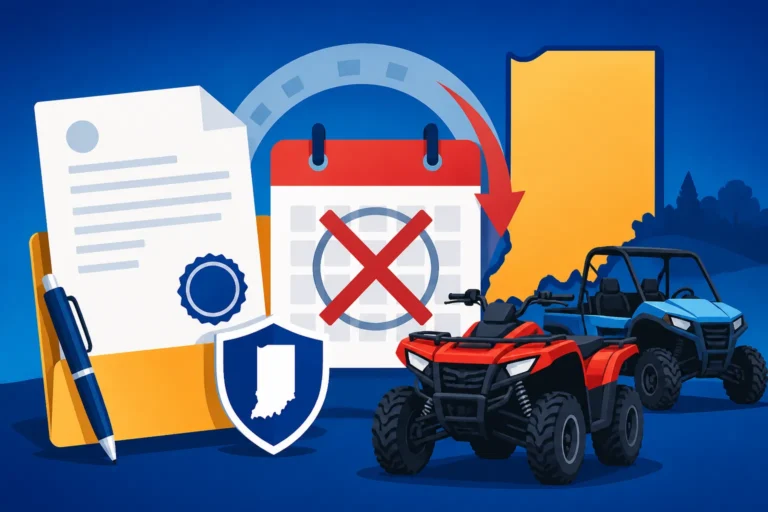
This is where the frustration often builds for many new ORV owners, and it's completely avoidable with a little planning. Indiana imposes a strict 45-day deadline from the date of purchase to apply for your ORV title. This means you have a little over a month and a half to get your paperwork in order and make it to the license branch. Missing this deadline will trigger an administrative penalty.
What does that mean for your wallet? It means an additional fee will be tacked onto your titling costs. While specific penalty amounts can change, it's typically a set amount that you pay on top of the standard title fee and sales tax. This isn't just a minor inconvenience; it's a financial hit that feels unnecessary, especially when you're already paying for the title and sales tax. The BMV sees this as an incentive to get things done promptly, but for owners juggling schedules, it can feel like a punitive charge. So, mark your calendar the moment you make that purchase! Knowing about [Indiana's Forty-Five Day Titling Deadline] and [Forty-Five Days Before the Penalty] can save you from an unwelcome surprise. If you do miss it, be prepared for [Indiana ORV Late Title Penalty].
The Moment of Truth: Paying Your ORV Title Fees
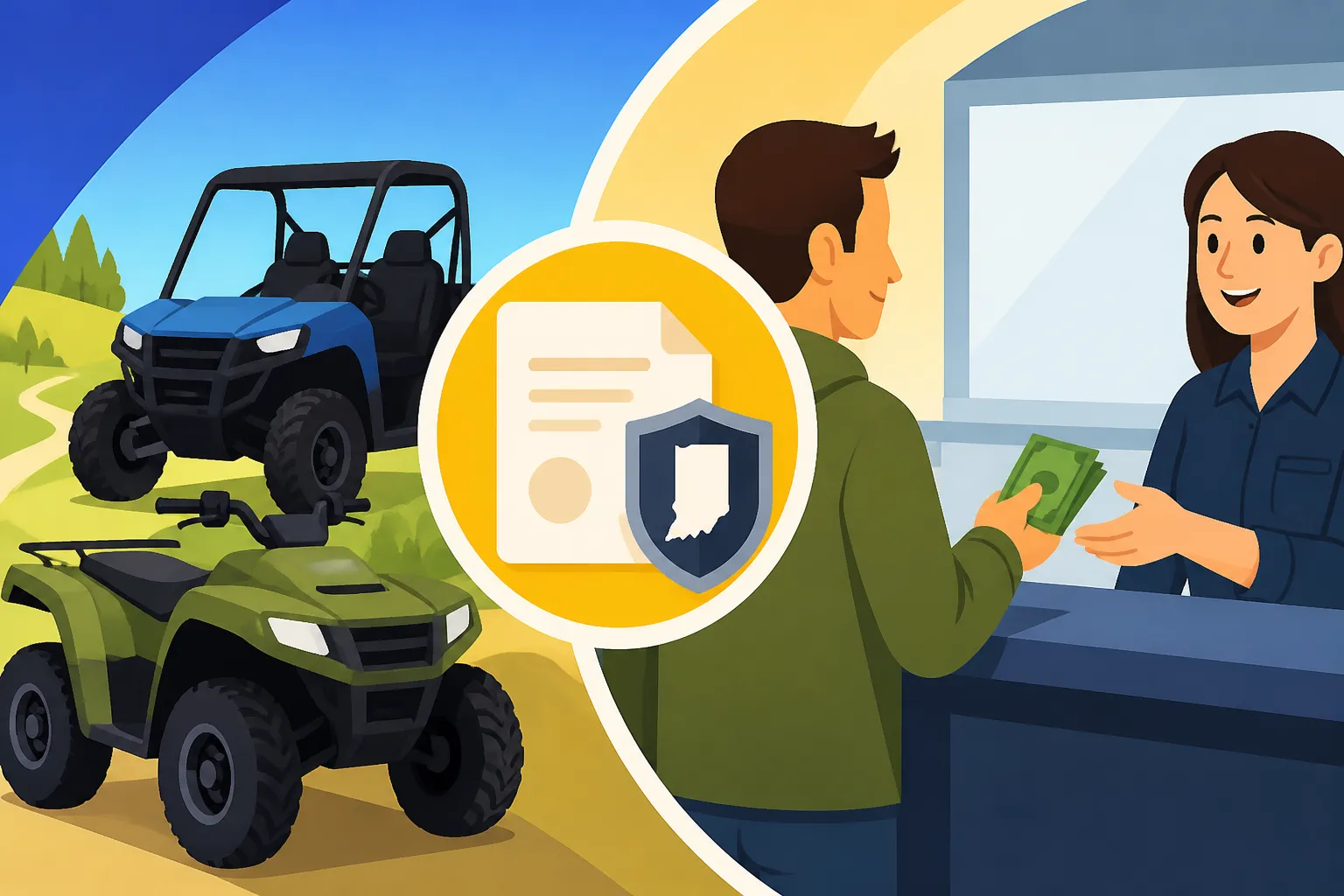
Alright, you've got your paperwork perfectly organized, and you've navigated the tricky deadlines. Now for the main event: actually paying those fees. It's usually straightforward once you're at the counter, but knowing what to expect can significantly ease any anxiety about the process.
Breaking Down the Costs: Title Fee, Sales Tax, and Other Charges
When you go to pay for your ORV title, you won't just be paying a single title fee. There are a few components that make up the total cost:
- The Title Fee: This is the base fee for the Certificate of Title itself. It's a state-mandated fee, and while specific amounts are subject to change, it's typically a modest, flat rate. This is what you're primarily there to pay for. For more details on this, you can check [Indiana ORV Title Cost].
- Indiana Sales Tax: This is often the largest portion of your payment, especially for higher-value machines, and it's where many people get caught off guard. Indiana has a flat 7% sales tax rate on most purchases, and ORVs are no exception. If you bought your ORV from a dealer, they would have likely collected this sales tax at the time of purchase. However, if you bought your machine through a private sale, you are responsible for paying this 7% sales tax directly to the BMV when you apply for the title. The sales tax is calculated on the purchase price of the ORV as stated on your bill of sale. It's crucial to budget for this, as it can add hundreds of dollars to your initial costs. Delving into [Indiana ORV Sales Tax Rate] and [Indiana's 7 Percent Sales Tax on a Machine] will give you a clearer picture.
- Administrative/Late Penalty (If Applicable): As discussed, if you missed the 45-day window for titling, an administrative penalty will be added to your total.
- Service/Processing Fees: While not always a separate line item, some license branches (especially privately operated ones, often called "branches" rather than "BMV offices") might have minor service fees for processing transactions. These are typically small, but it's good to be aware.
- Dealer Documentary Fee (If Purchased from a Dealer): If you purchased your ORV from an Indiana dealer, you likely paid a "documentary fee" or "doc fee" as part of the sale. This fee, which covers the dealer's costs for handling paperwork and processing, is also typically subject to Indiana's 7% sales tax. This means you're paying sales tax on the doc fee itself, which can feel a bit like a hidden cost within a cost, but it's standard practice.
It's a good idea to bring a calculator or use your phone to quickly estimate the 7% sales tax on your purchase price so you have a general idea of the total before you go.
Accepted Payment Methods
Most Indiana license branches are pretty flexible when it comes to payment, but it’s always wise to confirm if you're planning a very large payment, especially for sales tax. Generally, you can expect to pay with:
- Cash: Always accepted.
- Checks: Personal checks are usually accepted, but some branches might have limits on the amount or require specific identification.
- Credit/Debit Cards: Most major credit and debit cards (Visa, MasterCard, Discover, American Express) are accepted. Be aware that some branches might charge a small convenience fee for credit/debit card transactions.
If you’re concerned about payment methods, particularly for larger sales tax amounts, a quick call to your specific license branch beforehand can save you any last-minute surprises.
Navigating the License Branch Experience
Walking into a BMV or license branch can be a bit daunting, but with a few tips, it doesn't have to be.
- Check Hours and Make an Appointment: Many branches now offer online appointment scheduling, which can dramatically cut down on wait times. If not, check their peak hours (usually mornings and lunchtimes are busiest) and try to visit during off-peak times.
- Come Prepared (and Organized): Have all your documents neatly organized in a folder. This makes it easier for you and the clerk.
- Be Patient and Polite: License branch staff process countless transactions every day. A little patience and a friendly attitude can go a long way in making your experience smoother.
- Know Your Information: Be ready to provide your current address, contact information, and specific details about your ORV (VIN, make, model, year).
The process itself involves taking a number, waiting your turn, presenting your documents to the clerk, who will verify everything, calculate your fees (including sales tax and any penalties), and then take your payment. Once processed, you'll receive a temporary title or a receipt, and your official title certificate will usually be mailed to you within a few weeks. For general guidance, [Where to Register an ORV in Indiana] offers insights into locations, and [The Indiana BMV and Off-Road Vehicles] provides broader context.
Here’s a quick overview of potential fees you might encounter:
| Fee Type | What It Covers | Who Pays | When It's Due | Notes |
|---|---|---|---|---|
| Title Fee | Establishing legal ownership of your ORV | Buyer/New Owner | At the time of titling application | Standard state fee. |
| Sales Tax | State tax on the purchase price of the ORV | Buyer/New Owner | At the time of titling (for private sales) | Indiana has a flat 7% rate. Dealers collect it at sale. |
| Late Penalty | Fee for missing the 45-day titling deadline | Buyer/New Owner | After 45 days from purchase date | An additional administrative charge, best avoided. |
| Service/Processing Fee | Branch's fee for processing your transaction | Buyer/New Owner | At the time of titling application | May vary slightly by branch or type of transaction. |
Navigating Tricky Situations When Titling Your ORV
While the process for paying for your ORV title is usually straightforward, life (and paperwork) isn't always that simple. Sometimes, you'll encounter situations that require a bit more legwork or a different approach at the license branch. Don't worry, these challenges are common, and there are pathways to resolve them.
Titling a Used Machine from a Private Seller
Buying a used ORV privately is a fantastic way to save money and find unique machines, but it often comes with a few extra steps when it's time to title. The biggest difference here is how sales tax is handled. When you buy from a dealer, they collect the 7% Indiana sales tax at the point of sale. When you buy privately, you are responsible for paying that 7% sales tax directly to the BMV when you apply for the title. This is often the biggest unexpected cost for private buyers, so budget for it!
Beyond sales tax, ensuring you have a proper bill of sale is crucial. This document, identifying both buyer and seller, the VIN, and the purchase price, is your primary proof of ownership for the BMV. If the seller doesn't have a template, a reliable resource like LawDepot can help you generate a professional and complete bill of sale, ensuring all the necessary fields are covered. This protects both you and the seller. It's also vital to ensure the seller actually has a clear title to the machine and can sign it over to you. Asking for a copy of their ID and verifying the VIN on the bill of sale against the machine's frame is a smart move. Check out [Buying a Used ORV in Indiana] and [Indiana ORV Sales Tax on a Private Sale] for more specific advice.
When the Paperwork Isn't There: Ownership Affidavits
This is a scenario that can send shivers down an ORV owner's spine: you've bought a machine, perhaps an older model, and there's no title to be found. Maybe the original owner lost it, or it was never titled in the first place because of the pre-2010 rules, but now you need one. Or perhaps your bill of sale disappeared into the ether. This is a genuinely frustrating situation, but Indiana does have a process for it: the Ownership Affidavit.
An Ownership Affidavit (often BMV Form 12568) is essentially a sworn statement by you, the applicant, attesting to your ownership of the vehicle and explaining why a traditional title or bill of sale isn't available. This process often requires more than just filling out a form. You might need to:
- Provide supporting documentation: This could include old registration cards, insurance documents, or even photographs of the machine with you.
- Get it notarized: Your signature on the affidavit will need to be notarized.
- Allow for extra processing time: The BMV might need to conduct additional research to verify the vehicle's history and ensure it's not stolen.
It's not the easiest path, but it is a path to legitimate ownership. Be prepared for potential delays and possibly additional fees associated with processing affidavits. Having all the information about the machine's history that you can gather will be immensely helpful. Learn more about [Filing an Ownership Affidavit for a Quad With No Paperwork] if you find yourself in this situation.
Bringing Your ORV to Indiana from Another State
Welcome to Indiana! If you've just moved here and brought your trusty ORV with you, you'll need to get it properly titled and registered in the Hoosier State if you plan to ride it on designated trails or county roads. Even if your machine had a title in your previous state, you'll generally need to apply for an Indiana title.
The process is quite similar to titling a machine purchased within Indiana, but with a couple of nuances:
- Out-of-State Title: You'll submit your existing out-of-state title to the Indiana BMV.
- VIN Verification: The BMV may require a physical inspection of the VIN to ensure it matches the documentation and that the machine isn't stolen. This can sometimes be done at the license branch, or you might be directed to a law enforcement agency or a certified VIN inspection station.
- Sales Tax: If you paid sales tax in your previous state, Indiana typically offers a credit for that tax, so you might only pay the difference if Indiana's rate is higher, or nothing at all if it's the same or lower. Make sure to bring proof of sales tax paid in your previous state.
It's a process that ensures your machine is properly integrated into Indiana's system. For a more detailed walkthrough, see [Registering an ORV After Moving to Indiana].
Disclaimer
This article is for general informational purposes only and does not constitute professional advice. Laws, prices and regulations vary by location and change over time. Consult a qualified professional for guidance on your specific situation.