When Mud Peels Your Registration Decal Off
There’s nothing quite like hitting the trails in Indiana, letting loose on your ATV or UTV, navigating those challenging mud bogs, and kicking up some serious dirt. But let's be real, all that adventure comes with its own set of hazards, and one frustrating issue many of us face is when our vital Indiana ORV registration decal gets battered, torn, or completely peeled off by the elements. It’s a pain, but riding without that visible decal can lead to unnecessary trouble. This guide will walk you through exactly what to do when your decal goes missing, how to get a replacement, and how to keep it safe in the future.
Why Decals Peel and Why It Matters
We’ve all been there: you pull your machine out of the garage after a particularly gnarly weekend at Redbird or Interlake, and suddenly, you notice it. That little sticker, the one that tells everyone your machine is legally registered to ride in Indiana, is gone or barely hanging on by a thread. It’s not just a minor annoyance; it can actually put a damper on your next adventure.
The Harsh Reality of Indiana Riding
Indiana's trails, especially those reclaimed mine lands at places like Redbird Off-Road State Recreation Area or Interlake Off-Road State Recreation Area, are fantastic – but they're also tough on our machines and their paperwork. Think about it:
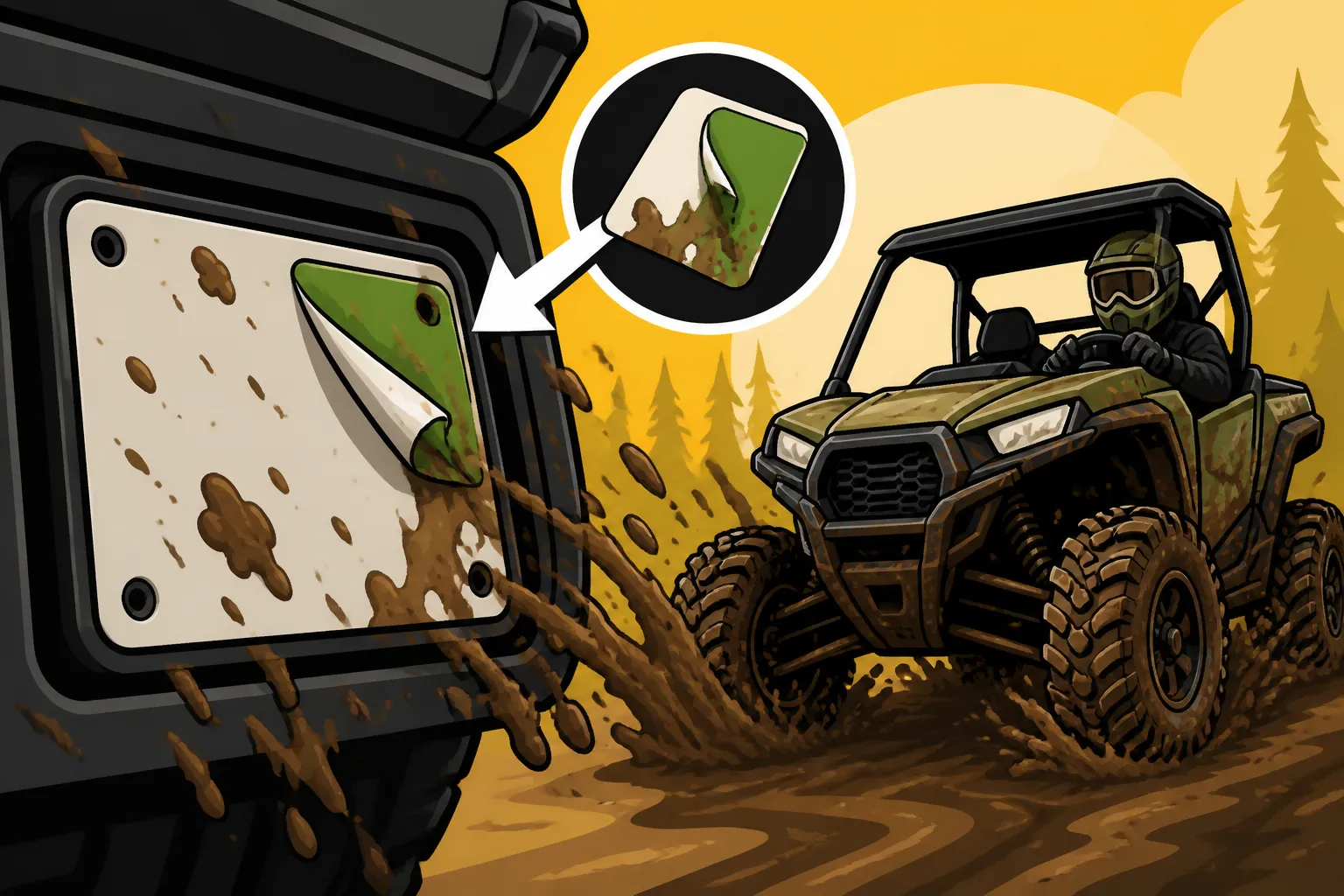
- Mud and Water Immersion: We ride through deep ruts and puddles, submerging parts of our machines in gritty, abrasive mud and water. This relentless exposure can loosen adhesive, peel edges, and simply wear away the decal material over time.
- Branches and Debris: Tight trails mean brushing up against branches, tall grass, and other trailside debris. A stray branch catching the edge of a decal can rip it clean off before you even realize it.
- Pressure Washing: After a long day of caked-on mud, the pressure washer is your best friend. But aim it wrong, or use too high a pressure setting directly on a decal, and it can blast it right off.
- General Wear and Tear: Sunlight, temperature fluctuations, and vibrations from riding all contribute to the degradation of the decal material and its adhesive. Even the best-applied decal has a lifespan, and Indiana's conditions tend to shorten it.
It's just part of the off-road life, but knowing these culprits helps us understand why we need a plan for when it inevitably happens.
The Importance of a Visible Decal
That little square decal, often placed on the forward half of your ORV, isn't just decoration. It's proof that your machine is properly [Registered an ORV in Indiana] and that you’ve paid your dues to help maintain our incredible trail systems. Without it, you could face some unwanted attention from a conservation officer or a local law enforcement deputy.
Think of it like a license plate for your car – it's a quick visual check for authorities to see that you're compliant. If your decal is missing, faded, or completely illegible, it's essentially the same as not having one. This means:
- Potential Fines: Riding without a visible, valid registration decal can lead to a citation. Officers want to see that you're following the rules, and a missing decal makes that impossible. The fines for an unregistered ORV in Indiana can certainly put a dent in your fun fund.
- Delayed Riding: Imagine driving all the way to a state recreation area like Redbird, only to be turned away at the gate because your decal is missing. It happens. Park staff need to verify your registration, and if they can't, you might be denied entry.
- Proof of Compliance: The decal is your primary indicator that you've completed all the necessary steps, including possibly having a valid title if your machine was purchased after 2009. It’s a simple visual confirmation that your ORV belongs on the trails.
So, while a missing decal is annoying, addressing it promptly is key to ensuring your continued, worry-free enjoyment of Indiana's trails. To learn more about what it signifies, you can read up on [The Indiana ORV Decal Explained].
Steps to Replace Your Peeled Indiana Decal
Alright, so the mud monster claimed your decal. Don't panic! Replacing it is a fairly straightforward process, primarily handled through the Indiana Bureau of Motor Vehicles (BMV). You won't be the first, and you certainly won't be the last.
Gathering Your Information
Before you start the replacement process, you’ll need to pull together some key pieces of information. Having these ready will make the application much smoother.
- Your ORV Registration Number: This is typically found on your existing registration certificate. If you keep a copy of your [Indiana ORV Registration Paperwork] in a dry box, you should have it handy.
- Your ORV’s Vehicle Identification Number (VIN): This unique serial number is usually stamped on the frame of your ATV or UTV. It's crucial for identifying your specific machine. Sometimes it's difficult to read due to mud or corrosion, so give it a good clean beforehand. [Tracing a Serial Number on a Frame] can give you more tips on finding it.
- Owner Information: Your full name, address, and contact details will be required. This should match what's currently on file with the BMV.
- Reason for Replacement: You'll typically indicate "lost," "stolen," or "damaged" on the application. In this case, "damaged" or "lost" due to the elements is appropriate.
Having these details at your fingertips will save you a lot of time and potential frustration when you fill out the necessary forms. It’s also a good practice to keep digital copies of your important ORV documents, perhaps in a secure cloud storage, just in case the paper copies meet an untimely end in a puddle. Some riders even use services like LawDepot to generate formal records, like bills of sale, and keep them organized with their other ORV paperwork.
The Application Process
Once you have your information ready, it's time to apply for your replacement decal.
- BMV Branch Visit: The most common way to replace a decal is by visiting an Indiana BMV branch in person. This allows you to speak with a customer service representative, ensure all your paperwork is correct, and often get immediate assistance. Be prepared for potential wait times, especially during peak hours.
- Required Form: You'll typically need to fill out a specific form for duplicate or replacement registration decals. Ask for the correct form when you arrive, or check the Indiana BMV website beforehand if you prefer to fill it out in advance. Make sure you clearly mark that you're requesting a replacement decal and not a full re-registration.
- Fees: There is usually a nominal fee for replacing a lost or damaged decal. While I can't provide specific figures, be prepared for a small charge. This cost is separate from your initial [Indiana ORV Registration Cost] or annual trail permit.
- Online or Mail Options: In some cases, the BMV might offer options for requesting a replacement decal online or via mail, especially if all your information is already up-to-date. Check the official Indiana BMV website for the most current options and forms. While less common for physical decals, it's always worth checking if it saves you a trip.
Remember, the goal is to get that new decal as quickly as possible so you can get back to riding legally. Don’t delay this step, even if you plan a long break from the trails.
Waiting for Your New Decal
After you've submitted your application and paid the fee, the waiting game begins. It's not usually an instant process, especially if you're not getting it directly over the counter.
- Processing Time: Typically, it can take a few weeks for your replacement decal to arrive in the mail. This window can vary depending on the BMV's current processing loads. For instance, [How Long an Indiana Decal Takes to Arrive] is often cited as being around three weeks.
- What to Expect in the Mail: You'll receive a new decal, which will be identical to your original one, along with updated registration paperwork. Make sure to double-check that all the information on the new decal and certificate is correct before applying it.
- Temporary Proof: While you wait, keep a copy of your replacement application or any receipt provided by the BMV. This isn't a guarantee against a citation, but it can serve as temporary proof that you've initiated the replacement process if you happen to be stopped. However, it's generally best to avoid riding on designated ORV trails or roads where the decal is strictly required until the new one is properly affixed.
Patience is a virtue here, but taking the steps to apply promptly is what matters most.
What to Do While You Wait (and What Not To)
The period between applying for your replacement decal and actually receiving it can feel like limbo. You're eager to ride, but you also want to avoid any legal headaches. This is where a little caution goes a long way.
Riding Legally (or Not) While Awaiting Replacement
This is a tricky area, and it's essential to understand the risks. The law generally requires your ORV to display a valid, visible registration decal to be operated on state-managed ORV trails or any county roads that permit ORV use.
- Designated ORV Trails: Riding at places like Redbird or Interlake without a visible decal, even if you have applied for a replacement, is risky. Park rangers and conservation officers are looking for that decal. While showing proof of application might sometimes garner leniency, it's not a guarantee. You could still be denied entry or, worse, cited. To understand potential consequences, read [What Riding Without a BMV Decal Costs You].
- Private Property: If you're riding exclusively on your own private land or private land with explicit permission from the landowner, the missing decal is less of an issue, as state registration laws primarily apply to public access. However, even on private land, if you have any plans to venture onto a public road (even just to cross it), the decal is required.
- Temporary Solutions (Not Recommended): You might be tempted to print out a copy of your old registration certificate or a receipt for the replacement and tape it to your machine. While this shows intent, it is not a legal substitute for the official decal. Law enforcement looks for the official, durable, and uniquely numbered decal provided by the BMV, correctly affixed to your machine. Don't rely on homemade solutions.
The safest bet is to pause your public trail riding until the new decal arrives and is properly mounted. It's a temporary inconvenience that saves a lot of potential hassle and fines.
Avoiding Fines and Frustrations
Nobody wants an unexpected ticket or to have their riding day cut short. Here's how to minimize your risk while you wait:
- Understand the Law: Familiarize yourself with Indiana’s specific ORV registration and decal requirements. This knowledge empowers you to make informed decisions. An unregistered machine on public land can result in [Indiana Fines for an Unregistered ORV].
- Carry Your Paperwork (Safely!): Always carry your registration certificate, even if the decal is missing. Keep it in a waterproof bag or container, like a dry box, on your person or securely attached to your machine. While it doesn't replace the decal, it's proof of registration if you're stopped. For tips on managing your documents, check out [Keeping Paperwork in a Dry Box].
- Communicate, Don't Argue: If you are stopped by law enforcement, be polite and explain the situation. Show them your proof of replacement application if you have it. Your attitude can make a significant difference, but remember, the officer has the discretion to issue a citation regardless.
- Plan Your Rides: If you absolutely must ride, stick to private property where permission has been granted, and avoid any public trails or designated ORV routes until your new decal is securely in place.
- Consider Other Activities: While waiting for your decal, perhaps it’s a good time to do some much-needed maintenance on your machine, plan future trips, or explore riding spots that don’t require a visible decal (like some private riding parks that might have their own permit systems).
It might feel frustrating, but a little patience now can prevent bigger problems down the trail.
Preventing Future Decal Mishaps
Once you get that shiny new decal, you'll want to do everything you can to make sure it sticks around for its full three-year lifespan. A little preventative care goes a long way in protecting your investment and preventing another trip to the BMV.
Proper Decal Placement and Preparation
The way you apply your decal is crucial to its longevity. Don't just slap it on; take a moment to do it right.
- Clean Surface is Key: Before applying the decal, thoroughly clean the area where it will be placed. Use soap and water to remove all dirt, mud, and grime. Then, use rubbing alcohol to remove any oils or residues. Let the area dry completely. A perfectly clean, dry surface ensures maximum adhesion.
- Warmth Helps: Applying decals in warm conditions (not too hot, not too cold) helps the adhesive bond properly. If it's a chilly day, you might gently warm the frame area with a hairdryer (on a low setting!) before application.
- Smooth Application: Peel the backing slowly and carefully apply the decal, pressing firmly from one edge to the other to avoid air bubbles. Use a squeegee or a credit card wrapped in a soft cloth to smooth it out. Trapped air bubbles can create weak points where water or debris can get underneath and start the peeling process.
- Strategic Placement: The Indiana BMV specifies that the decal should be mounted on [The Forward Half of an Indiana Machine]. Choose a flat, visible spot on the frame that is less prone to direct impact from branches, flying mud, or where your boots might rub. [Where the Indiana Decal Mounts] can provide more specifics on official placement. Avoid areas that get excessively hot or are constantly submerged if possible.
Taking these few extra minutes during application can dramatically extend your decal's life.
Protective Measures and Maintenance
Beyond the initial application, ongoing care can help your decal weather the storm (and the mud).
- Gentle Cleaning: When pressure washing your ORV, be mindful of where your decals are. Keep the spray nozzle at a distance and avoid directing a high-pressure stream directly at the edges of the decal. Use a softer setting or switch to a garden hose for areas with decals.
- Clear Protective Film: Some riders choose to apply a clear, heavy-duty protective film over their decals. These films are designed to resist abrasions, UV damage, and moisture, essentially acting as a shield for your decal. It's an extra step and cost, but it can be a worthwhile investment for those who ride aggressively or frequently.
- Regular Inspection: Make it a habit to check your decal regularly, especially after a tough ride. If you notice an edge starting to lift, you might be able to press it back down firmly or use a small amount of super glue (be very careful not to get it on the visible part) to re-secure it before it gets worse. Catching it early can prevent a full peel.
- Document Everything: Keep a clear, legible photograph of your decal and its number on your phone. If your decal ever does go missing again or gets damaged beyond readability, having a photo of [Reading an Indiana Decal Number] can make the replacement process much easier. Additionally, store your physical registration certificate safely, perhaps in a dry, secure spot at home or digitally, as services like LawDepot can help you organize important documents for your ORV.
By being proactive about placement, cleaning, and protection, you can significantly reduce the chances of your Indiana ORV registration decal peeling off, ensuring you spend more time riding and less time dealing with paperwork. And remember, that decal is good for [Why a BMV Decal Lasts Three Years], so you want it to endure!
Disclaimer
This article is for general informational purposes only and does not constitute professional advice. Laws, prices and regulations vary by location and change over time. Consult a qualified professional for guidance on your specific situation.