Registering a Quad That Is Still in Its Crate
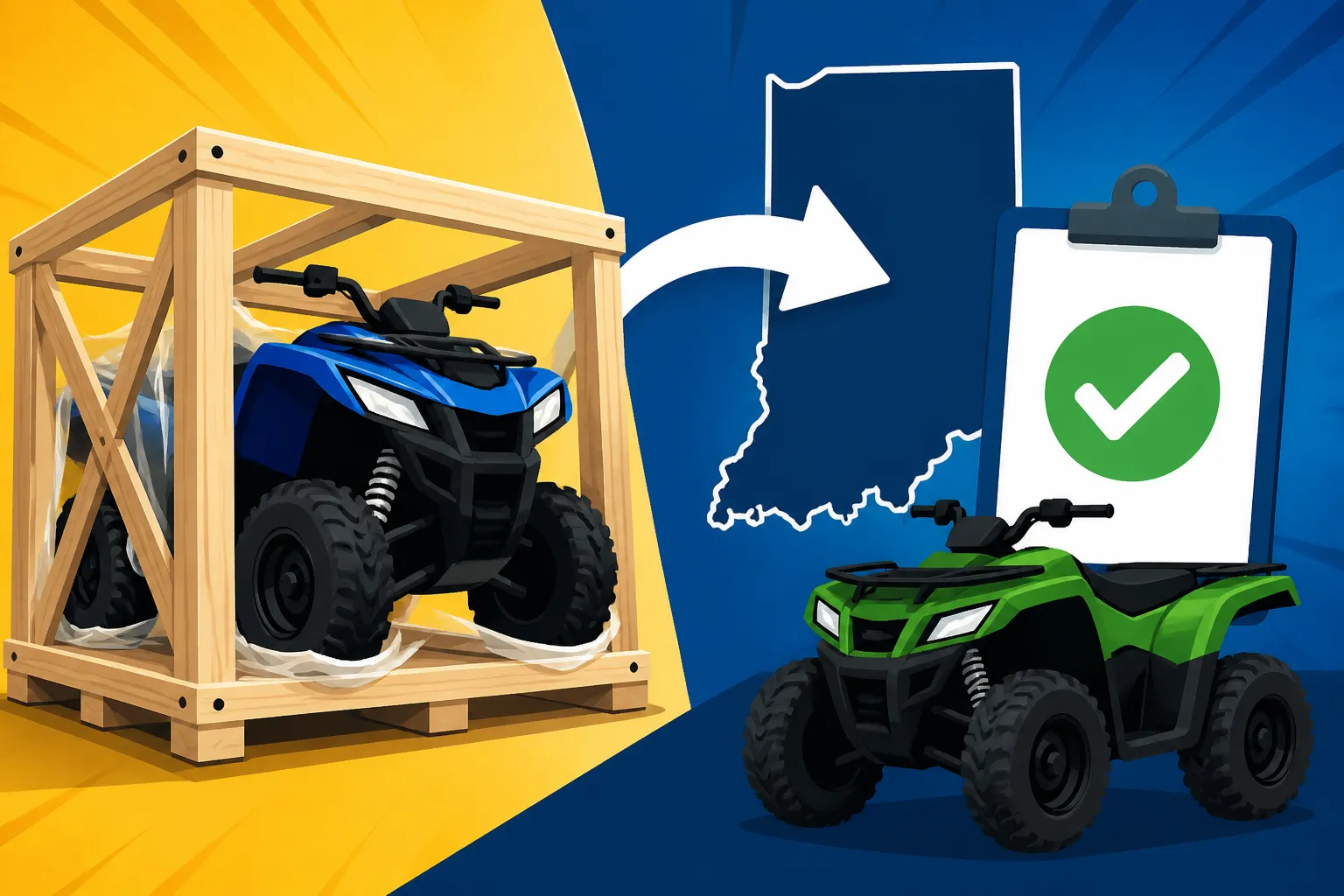
So, you've got a brand-new ORV sitting in its crate, maybe still wrapped in plastic, probably smelling of fresh rubber and anticipation, and you're itching to get it uncrated and ready for the trails. But before you even think about firing up that engine, there's a crucial step many folks overlook: getting it properly registered and titled in Indiana. This guide is going to walk you through exactly what you need to do to register a quad or UTV that's still in its box, making sure you're legal and ready to ride without any unnecessary headaches.
The Reality of Registering Your Crated ORV
It's a common misconception that if an off-road vehicle (ORV) hasn't touched dirt yet, or is literally still in its original shipping crate, it somehow exists in a legal gray area or is exempt from registration requirements. While it might seem logical to some that a machine not yet "in use" doesn't need to be registered, Indiana's laws are pretty clear: if it's going to be operated on public lands or trails, it needs to be registered and titled, regardless of its current state of assembly or use. The moment you take ownership, the clock often starts ticking on your responsibilities.
Why "Still in the Crate" Doesn't Change the Rules
Think of it like buying a new car that's still on the dealer's lot. Even if you haven't driven it off yet, the state wants to know who owns that vehicle. The same principle applies to your crated ORV. Indiana isn't concerned with whether it's assembled, only with ownership and the intent to operate it within the state's jurisdiction. The state's definition of an ORV is broad and covers these machines as soon as they are purchased, not just when they are taken to the trails. This often surprises new owners, especially those who plan to store their machine for a while before riding.
The Indiana Bureau of Motor Vehicles (BMV), which handles ORV registrations, views it simply: you own an ORV, and it needs to be on record. Waiting until you uncrate it, assemble it, or even take it for its first spin, means you're potentially falling behind on important deadlines, particularly the titling deadline. [Indiana's Forty-Five Day Titling Deadline] is something you absolutely need to be aware of, even for a machine still in pieces. This initial period is critical for avoiding potential late fees or other penalties.
The Immediate Need for Titling and Registration
Many owners focus solely on the registration decal for trail use, but titling often comes first and is just as, if not more, important. For machines purchased after December 31, 2009, Indiana law generally requires a title. This title is your proof of legal ownership and is a prerequisite for registration. Without it, you can't get that coveted registration decal that allows you to ride on state-managed trails or designated county roads.
Even if you bought your machine from an out-of-state dealer or a private seller who left it crated, the responsibility for securing an Indiana title and subsequent registration falls squarely on you, the new owner. The longer you wait, the more complicated it can become, especially if you need to track down previous paperwork or if the initial bill of sale expires. It's always best to initiate the process as soon as you complete the purchase.
Gathering Your Essential Paperwork
Getting your crated ORV legally recognized in Indiana hinges on having the right documentation. This process can vary slightly depending on whether you bought your machine from a licensed dealer or through a private sale. But regardless of the source, your goal is to prove ownership, show how and when you acquired the machine, and provide its specific identifying information.
From a Licensed Dealer: Manufacturer's Statement of Origin (MSO)
If you've purchased a brand-new ORV from a licensed Indiana dealer, they typically handle a significant portion of the initial paperwork for you. This is usually the smoothest path. However, even if it's crated, the fundamental documents remain the same. The most critical piece of paper you'll receive from the dealer is the Manufacturer's Statement of Origin (MSO), sometimes called a Manufacturer's Certificate of Origin (MCO). This document is essentially the "birth certificate" for your ORV, proving it's new and has never been titled or registered before.
The MSO will contain vital information about your machine, including its Vehicle Identification Number (VIN), make, model, year, engine size, and other specifications. The dealer will also provide a bill of sale, detailing the purchase price and showing that ownership has transferred to you. In many cases, the dealer will even submit the MSO, bill of sale, and any associated fees directly to the BMV on your behalf to secure the title and registration. This is generally the most convenient route, ensuring you meet deadlines and have all necessary information submitted correctly. Always confirm with your dealer exactly what they will handle and what you are responsible for, especially if they are out-of-state.
From a Private Seller: Bill of Sale and Title (if applicable)
Purchasing a crated ORV from a private seller presents a slightly different scenario, and often requires more proactive involvement from you. This might happen if someone bought a machine and never got around to uncrating or registering it, or if it's an older model that didn't require a title when new but now does due to Indiana's laws changing for machines bought after 2009. The most critical document here will be a comprehensive bill of sale. A good bill of sale, like one you can easily generate using a service like LawDepot, will clearly state the seller's and buyer's information, the ORV's VIN, make, model, year, the purchase price, and the date of sale. It should also declare that the machine is being sold "as is" and include signatures from both parties.
If the machine was purchased new by the private seller after 2009, they should also have the original title in their name. This title, signed over to you, is absolutely essential. If they don't have a title for a post-2009 machine, you'll face additional hurdles. You might need to file an [Indiana ORV Ownership Affidavit] to establish your legal ownership without a title. Remember, a simple handwritten note isn't sufficient; you need something comprehensive and legally sound. A professionally prepared document, perhaps with the help of LawDepot, adds a layer of protection and legitimacy.
Identifying Information: The VIN
Regardless of where you purchase your crated ORV, the Vehicle Identification Number (VIN) is paramount. This unique 17-character code identifies your specific machine. Even though your ORV is in a crate, the VIN should be listed clearly on the MSO or bill of sale. When you eventually uncrate it, you'll find the VIN stamped on the frame, usually in a readily visible location like the front frame rail, under the seat, or near the engine mount.
It's crucial to [Checking a VIN Before an Indiana Purchase] to ensure it matches all documentation and hasn't been tampered with. This quick check can save you a lot of grief down the road. The BMV will use this VIN to create your title record and issue your registration, so accuracy is key. If there's any discrepancy between the VIN on your paperwork and the physical machine once it's uncrated, you'll need to resolve it immediately with the seller or dealer before proceeding with registration.
Navigating the Indiana Registration Process
Once you have all your ducks in a row with the paperwork, the actual registration process at the Indiana BMV isn't overly complicated, but it does require attention to detail. Remember, the goal is to obtain both a title (your proof of ownership) and a registration decal (permission to ride). These steps will ensure you're on the right track.
Step 1: Secure Your Indiana Title
As mentioned, for machines bought after December 31, 2009, an Indiana title is typically required. You can apply for a title at any Indiana BMV branch or authorized license branch. You'll need to bring your MSO (if new from a dealer) or the signed-over previous title and a robust bill of sale (if from a private seller). You'll also need a valid Indiana driver's license or state ID. The BMV will verify all documentation and collect the applicable title fee.
During this step, the BMV will create a permanent record of your ORV under your name. If you bought from a dealer, they might send these documents directly, meaning you'll just receive your title in the mail after it's processed. However, if you're handling it yourself, make sure all forms are filled out completely and accurately. Any missing information or inconsistencies can delay the process. Understanding [Indiana ORV Title Requirements] will help you prepare fully.
Step 2: Register Your ORV for Trail Use
Once your ORV is titled in your name (or if it's an older, title-exempt machine), you can proceed with registration. Often, this can be done simultaneously when applying for the title at the BMV. The registration process is what gets you the physical decal you need to affix to your machine. The BMV will require you to pay the registration fee, which covers a three-year period. You'll then receive a temporary registration permit, and your official decal will be mailed to you.
It's important to understand [How Long an Indiana Decal Takes to Arrive]. While you might get a temporary paper, the actual decal can take a few weeks. Don't plan a big trail trip the day after you register, expecting the decal to magically appear! You'll typically receive it within [Indiana's Twenty-One Day Wait for a Decal]. In the meantime, keep your temporary registration with you when operating your machine.
Step 3: Affixing Your Decal Properly
Once your shiny new Indiana ORV decal arrives in the mail, you'll need to attach it to your machine in the correct location. Indiana law is specific about this. The decal must be prominently displayed on the "forward half" of your ORV. This usually means on the left front fender, on the frame, or on the front fairing, in a spot that is clearly visible and not easily obscured by mud, dirt, or accessories.
Proper placement ensures that law enforcement or park rangers can easily verify your registration. [Where the Indiana Decal Mounts] is not just a suggestion; it's a requirement. If your decal is not visible or improperly placed, you could face fines for an unregistered ORV, even if you've paid all the fees. Make sure the surface is clean and dry before applying the decal for maximum adhesion.
What to Expect at the BMV
Visiting an Indiana BMV branch can sometimes feel like a chore, but going prepared makes a huge difference. You'll want to bring all your original documents: the MSO or signed-over title, your bill of sale, and your personal identification. It’s also wise to have a form of payment ready for the fees. While you're at the BMV, don't hesitate to ask questions if anything is unclear. The staff there process ORV registrations regularly and can clarify any specific concerns you might have about your crated machine.
A table comparing the two primary acquisition methods might be helpful here:
| Feature | New from Licensed Dealer | Used/New-in-Crate from Private Seller |
|---|---|---|
| Primary Document | Manufacturer's Statement of Origin (MSO) | Signed-over Title (if applicable) & Bill of Sale |
| Bill of Sale | Provided by dealer (usually detailed) | Crucial, should be robust (e.g., from LawDepot) |
| Titling Responsibility | Often handled by dealer; may submit on your behalf | Solely your responsibility |
| Registration Timing | Often handled concurrently with titling by dealer | Usually done concurrently with titling, by you |
| VIN Verification | Dealer provides MSO with VIN; typically verified by BMV | Verify VIN on physical machine (once uncrated) matches docs |
| Potential Hurdles | Less common, usually smooth if dealer handles paperwork | Missing title, incomplete bill of sale, expired ownership proof |
Beyond the Crate: Important Considerations
Getting your crated ORV registered and titled is a major step, but it's part of a larger picture of responsible ORV ownership in Indiana. Thinking ahead can save you time, money, and potential legal issues down the trail.
Understanding Costs and Renewals
It's good practice to understand the [Indiana ORV Registration Cost] and [Indiana ORV Title Cost] from the outset. While specific figures can change, there's generally a fee for the title and another for the three-year registration. These aren't one-time costs; registration will need to be renewed. [Renewing Every Three Years in Indiana] is a fixed schedule you'll need to keep in mind. The BMV usually sends out renewal reminders, but it's ultimately your responsibility to ensure your registration stays current.
These fees contribute to maintaining the very trails you'll be riding. [Where Indiana ORV Fees Go] is primarily towards the development and maintenance of Indiana's state-managed ORV riding areas like Redbird and Interlake, ensuring there are places for you to enjoy your machine.
Trail Use and Insurance
Once your machine is registered and titled, you're ready to hit the trails! Remember that in Indiana, while statewide insurance isn't mandated for ORVs on private land, some counties that have opened their roads to ORVs, like Vanderburgh County, might require proof of insurance. Always check local ordinances. Even if not legally required, having ORV insurance is a smart move to protect yourself, your machine, and others in case of an accident.
When riding, always carry a copy of your registration certificate and be prepared to show it if asked by a conservation officer or park ranger. While the decal is visible on your machine, having the paper proof in a dry box or sealed bag on your machine is highly recommended. [Riding Without Your Registration Certificate in Your Pocket] could lead to unnecessary hassle, even if your decal is present.
Long-Term Ownership and Maintenance
Even though your machine arrived in a crate, it will eventually need maintenance and, perhaps one day, you might consider selling it. Keeping meticulous records of your title, registration, and any bills of sale is crucial. If you ever decide to [Selling an ORV in Indiana], having all the proper paperwork readily available will make the transaction smooth and hassle-free for both you and the buyer.
Furthermore, as a new owner, familiarize yourself with your ORV's manual for assembly, break-in procedures, and recommended maintenance schedules. The care you put into your machine from day one, even before it leaves the crate, will significantly impact its performance and longevity on the challenging terrains Indiana has to offer. Don't let the excitement of a new machine overshadow the importance of legal compliance and responsible ownership.
Disclaimer
This article is for general informational purposes only and does not constitute professional advice. Laws, prices and regulations vary by location and change over time. Consult a qualified professional for guidance on your specific situation.