Registering a Side-by-Side in Indiana
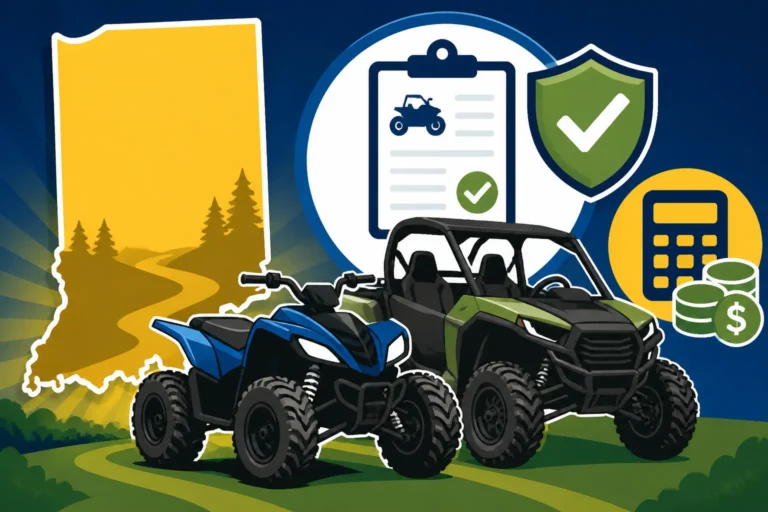
You've just invested in a fantastic side-by-side, ready to tackle trails, manage property, or simply enjoy the great outdoors here in Indiana. But before you fire it up and hit the mud, there's a crucial step many folks overlook or find frustratingly complex: getting it properly registered and titled. This guide is here to untangle Indiana's specific requirements for your side-by-side, walking you through every necessary document and deadline to ensure you're street-legal (where allowed!) and worry-free.
Understanding Indiana's ORV Registration for Side-by-Sides
It can feel a bit counterintuitive, right? You've got this robust off-road machine, designed for fields and trails, and suddenly the state wants it registered like a car. But Indiana has very clear rules about how these powerful vehicles are categorized and regulated, primarily for safety, identification, and funding trail maintenance. Ignoring these steps can lead to unnecessary fines and headaches down the road, so it's worth taking the time to understand why and how.
Why Your Side-by-Side Needs to Be Registered
Many owners initially think, "It's not a car, why do I need to register it?" This is a perfectly understandable thought, especially if you're coming from a state with different rules or if your machine rarely leaves your private property. However, in Indiana, any off-road vehicle (ORV) that is operated on public lands, including DNR-managed trails like Redbird or Interlake, or even on county roads where local ordinances permit, must be registered. This isn't just about collecting fees; it's about accountability. Registration provides a unique identifier for your machine, helping authorities track ownership in case of theft or accidents, and ensuring that those who use public resources contribute to their upkeep. Think of it as your machine's official Hoosier passport for adventure.
What Indiana Considers an Off-Road Vehicle
Indiana defines an ORV quite broadly, encompassing a range of vehicles, and your side-by-side (often referred to as a UTV or Utility Terrain Vehicle) definitely falls under this umbrella. Essentially, if it's designed for off-highway use, has a total width not exceeding 74 inches, an unladen dry weight of no more than 2,000 pounds (though there are exceptions for road-legal use in some counties), and uses a saddle or bench seat, it's an ORV. This definition ensures consistency across various machine types, from traditional ATVs (All-Terrain Vehicles) to the larger, multi-passenger side-by-sides. The key takeaway is that for most recreational or utility purposes off your own land, your side-by-side is indeed an ORV in the eyes of the Indiana Bureau of Motor Vehicles (BMV).
Key Differences for Side-by-Sides vs. ATVs
While Indiana's ORV registration and titling rules are largely uniform for both ATVs and side-by-sides, there are a few subtle differences that often come up in discussion or practice. Side-by-sides, with their steering wheels, foot pedals, and often enclosed cabs, feel more like cars than traditional ATVs do. This can sometimes lead to confusion regarding street-legal status, helmet laws, or passenger rules. For instance, while helmets are generally required for all riders under 18 on public lands, the question of whether a helmet is needed inside an enclosed UTV cab can come up. [Indiana Helmet Law for ORV Riders] covers this in more detail. However, when it comes to the core process of getting your machine registered and titled, the steps are virtually identical. You'll still need to provide proof of ownership, pay the required fees, and get that distinctive Indiana decal placed properly on your machine.
The Step-by-Step Process for Registering Your Side-by-Side
Getting your side-by-side registered might seem daunting, especially if it's your first time navigating the BMV for an ORV. But don't worry, it's a straightforward process once you know what to expect. Think of it like a checklist before a big trail ride: prepare your gear, know your route, and you'll be fine.
Gathering Your Essential Paperwork
This is often where the most anxiety comes in, but having all your ducks in a row before you head to the BMV can save you a lot of time and frustration. For a side-by-side, just like an ATV, you'll generally need the following:
- Manufacturer's Statement of Origin (MSO) or Certificate of Origin (MCO): If your side-by-side is brand new, this is the original document from the manufacturer proving its provenance. It's essentially the birth certificate of your machine.
- Previous Title: If you bought your side-by-side used, the previous owner's Indiana title (or an out-of-state title that can be transferred) is absolutely critical. This proves legal ownership transfer. Without it, you're in for a more complicated process.
- Bill of Sale: Whether new or used, a detailed bill of sale is highly recommended. For new machines, the dealer will provide one. For private sales, this is your proof of purchase and the agreed-upon price. It should include the VIN, buyer's and seller's names and addresses, purchase date, and price. You can find reliable, state-specific templates for a bill of sale through services like LawDepot, which can make the private sale process much smoother and more secure. [An Indiana Bill of Sale for an ORV] offers more details on what this document should contain.
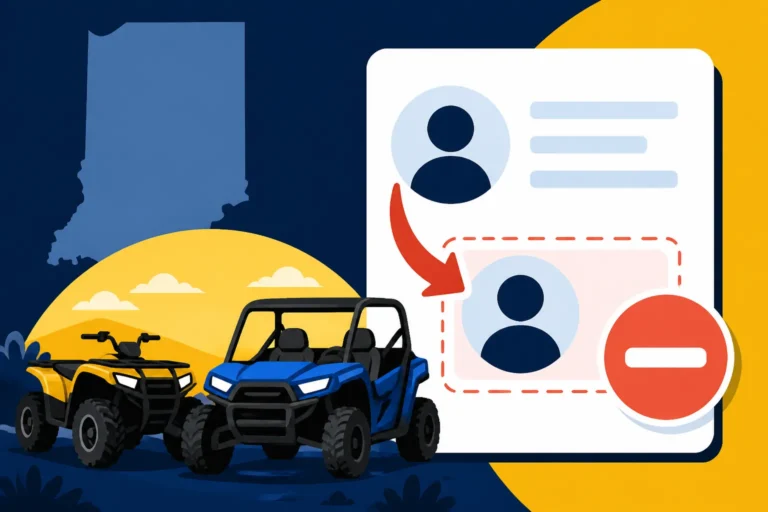
- Proof of Indiana Residency: This could be your Indiana driver's license or state ID.
- Social Security Number: For identification and tax purposes.
- VIN (Vehicle Identification Number): This unique 17-character code identifies your specific machine. Make sure it matches on all your documents.
- Odometer Reading: While ORVs don't have odometers in the traditional sense, some older machines might have hour meters, or for titling purposes, a mileage might be requested.
- Payment for Fees: Be prepared to pay the titling and registration fees.
Gathering these documents ahead of time ensures a smooth transaction. Imagine showing up only to realize you left the MSO at home – that's a wasted trip and a lot of frustration!
Where to Go to Complete the Registration
Unlike cars, ORV registration and titling in Indiana are handled by the Indiana Bureau of Motor Vehicles (BMV), not the Department of Natural Resources (DNR). This is a common point of confusion for many riders. You'll need to visit any full-service Indiana BMV branch to complete the process. It's often a good idea to check their website for current wait times or to see if you can schedule an appointment, especially during peak seasons. While the DNR manages the trails you'll ride, the BMV is the state agency responsible for documenting your machine's legal status. For a full breakdown, check out [How Indiana ORV Registration Works].
Understanding the Fees and What They Cover
There are a few fees involved in getting your side-by-side legally recognized in Indiana, and it's good to understand where your money goes.
- Initial Registration Fee: This is the primary cost for your Indiana ORV registration. This fee covers a three-year registration period, after which you'll need to renew it. [Indiana's Three-Year ORV Registration] explains the duration.
- Title Fee: If your side-by-side requires a title (which most do, as explained below), there will be a separate fee for processing the title application.
- Sales Tax: If you bought your side-by-side from a dealer or privately and haven't already paid sales tax, you'll pay Indiana's 7% sales tax at the BMV based on the purchase price listed on your bill of sale.
- Administrative Fees: There might be small additional fees for things like printing costs or transaction processing.
These fees collectively contribute to the state's ORV fund, which is specifically earmarked for projects like acquiring, maintaining, and improving ORV riding areas and trails across Indiana. So, in a way, your registration fee is directly supporting the very places you love to ride! [Indiana ORV Registration Cost] and [Indiana ORV Title Cost] provide more specific details on the various costs involved.
Titling Your Side-by-Side in Indiana (A Crucial First Step)
Before you can even think about getting that registration decal, for most side-by-sides, you'll need to obtain a title. This is the bedrock of ownership and ensures that your machine is properly documented with the state. Many people get confused about the order of operations, but typically, titling comes first.
When a Title is Required for Your Side-by-Side
Indiana has a specific cutoff date that dictates whether your side-by-side needs a title: January 1, 2010. If your machine was purchased new or originally titled after this date, it must have an Indiana title. This rule was put in place to better track ownership and deter theft. If you bought your side-by-side before this date, or if it was never titled in Indiana prior to that, it might be considered "title-optional." However, even for title-optional machines, obtaining a title is highly recommended as it simplifies future sales and proves clear ownership. When you're buying a used side-by-side, always confirm its titling history. [Why Indiana Titles Machines Bought After 2009] explains this in detail.
The Importance of a Bill of Sale
A bill of sale isn't just a formality; it's a legally binding document that proves the transfer of ownership from seller to buyer. For both new and used side-by-sides, it's indispensable. For new machines, the dealer will provide one. For private sales, it's your responsibility to ensure you get a proper one. This document needs to include the names and addresses of both parties, the date of sale, the purchase price, and most importantly, the VIN of the side-by-side.
Why is it so important?
- Proof of Purchase: It shows you legally acquired the machine.
- Sales Tax Basis: The BMV will use the purchase price on the bill of sale to calculate any sales tax due.
- Title Application: It's a required document for applying for a new title in your name.
- Dispute Resolution: In case of any future disputes, it's your primary legal evidence.
If you're buying privately, consider using a template from a reputable source like LawDepot for your bill of sale. This ensures all the necessary legal information is included and helps prevent issues down the line. Remember, a poorly executed or missing bill of sale can cause significant delays at the BMV, potentially leading to administrative penalties if you miss the 45-day titling deadline. [Why a Bill of Sale Expires After Forty-Five Days] further stresses the importance of this document.
Dealing with a Used Side-by-Side Without a Title
This is one of the most common and frustrating scenarios for prospective side-by-side owners. You find a great deal on a used machine, but the seller claims they "never got a title" or "lost it years ago." Don't despair, but be prepared for extra steps.
- Ownership Affidavit: If the machine is title-optional (i.e., purchased before January 1, 2010, and never titled), or if the seller genuinely can't produce a title, you might be able to file an Ownership Affidavit (BMV Form 39530). This sworn statement, along with a detailed bill of sale and possibly a VIN inspection, can help establish your ownership. However, this process is not guaranteed and requires diligent effort. [Filing an Ownership Affidavit for a Quad With No Paperwork] provides a deeper dive into this alternative.
- VIN Verification: In cases of missing titles or ownership questions, the BMV may require a VIN verification by a police officer or a BMV agent to ensure the machine isn't stolen and the VIN hasn't been tampered with.
- "Branded" Titles: Be aware of titles that might have "salvage" or "rebuilt" brands. While not necessarily a deal-breaker, they indicate the machine has sustained significant damage in the past. Always ask questions and inspect such machines thoroughly.
My best advice: always try to get a clear title from the seller. If they can't provide one and the machine should have a title (purchased after 2010), walk away, or insist they get a replacement title before you complete the purchase. It will save you immense hassle and potential legal issues later.
Common Pitfalls and How to Avoid Them
Even with all the right paperwork, there are a few common mistakes that can trip up side-by-side owners during the registration process. Knowing these ahead of time can help you steer clear of unnecessary delays or penalties.
Missing the 45-Day Deadline
Indiana gives you a specific window to get your side-by-side titled and registered after purchase: 45 days. This deadline starts from the date of purchase indicated on your bill of sale or title transfer. If you miss this deadline, Indiana imposes an administrative penalty. This isn't just a slap on the wrist; it's an additional fee that could have been easily avoided. The best practice is to gather all your documents immediately after purchase and head to the BMV as soon as possible. Don't let that shiny new (or new-to-you) machine sit in the garage unregistered for too long. [Indiana's Forty-Five Day Titling Deadline] and [Forty-Five Days Before the Penalty] emphasize the importance of this timeframe.
Incorrect Decal Placement
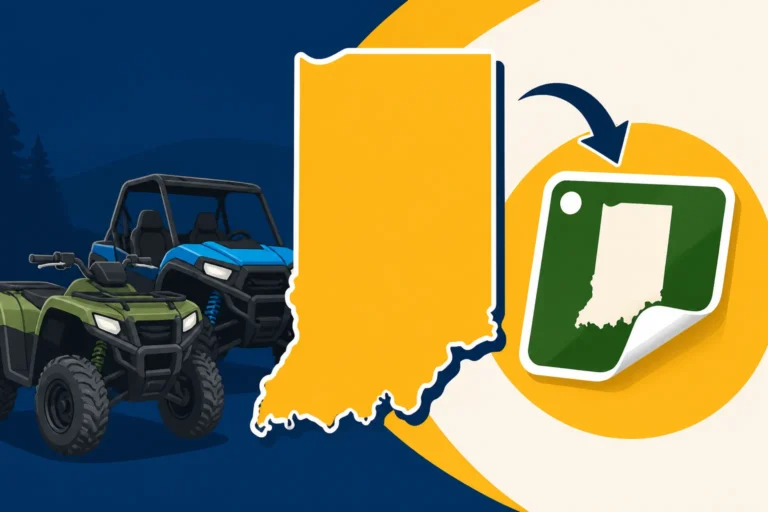
Once your side-by-side is successfully registered, the BMV will issue you a distinctive ORV decal. This isn't a bumper sticker you can put anywhere; there's a specific requirement for its placement. The decal must be mounted on the forward half of the machine, visible on either the left or right side, and typically on a permanent part of the frame or body. It needs to be securely attached and clearly visible to law enforcement or DNR officers. Placing it on a fender that might come off, or tucking it away where it's hard to see, can lead to questions or even a citation. The goal is easy identification. [Where the Indiana Decal Mounts] provides a clear illustration of proper placement.
What to Do If Your Decal or Registration is Lost
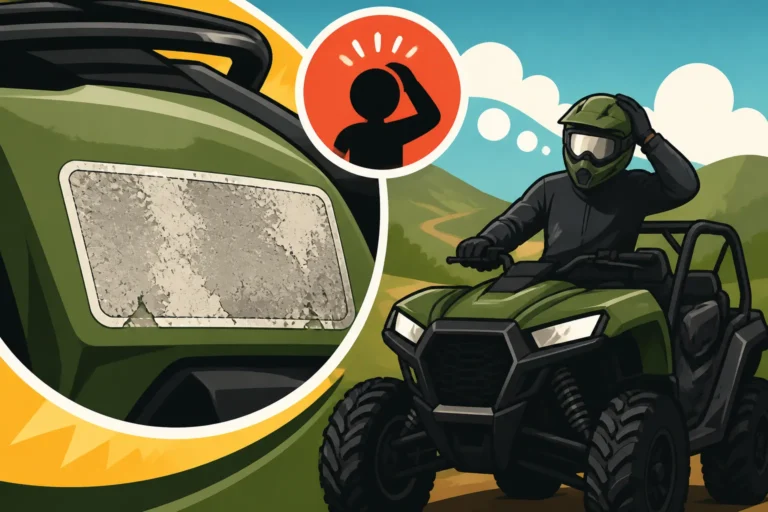
Accidents happen. Mud, brush, or even just regular wear and tear can cause your decal to become damaged, unreadable, or fall off entirely. Similarly, that physical registration certificate you keep in your glove box or dry bag might get lost or damaged. Don't operate your side-by-side on public land without a valid, visible decal and the registration certificate (or a readable copy/photo).
If your decal is lost or damaged:
- Contact the BMV: You'll need to request a replacement decal. There will likely be a small fee.
- Provide Information: Be ready to provide your machine's VIN and your registration information.
- Wait for Arrival: It might take a little time for the new decal to arrive in the mail, so plan accordingly if you have an upcoming trip. [Replacing a Lost Indiana ORV Decal] outlines this process.
If your registration certificate is lost:
You can typically get a duplicate at any BMV branch or sometimes online through the BMV's self-service options. Always carry proof of registration when riding, even if it's a photo on your phone, to avoid issues if you're stopped.
Here's a quick reference table for your side-by-side registration and titling in Indiana:
| Document/Requirement | Description | Where to Obtain/Check | Key Details |
|---|---|---|---|
| Title/MSO | Proof of legal ownership, required for machines bought after Jan 1, 2010. | Previous owner, dealer, or BMV for new title application. | Critical for establishing ownership. If used, ensure previous owner signs off. |
| Bill of Sale | Document outlining purchase details (buyer, seller, price, VIN, date). | Seller (dealer or private), or use a template (e.g., LawDepot) for private sales. | Essential for all purchases, especially for calculating sales tax and titling. |
| Indiana BMV Form | Application for Certificate of Title/Registration. | BMV branch or download from Indiana BMV website. | Staff will guide you, but knowing it exists helps. |
| Indiana Residency Proof | Driver's license or state ID showing your Indiana address. | Your personal identification. | Confirms you're an Indiana resident for state registration. |
| VIN | Vehicle Identification Number. | Stamped on the frame (often front right), on MSO/Title/Bill of Sale. | Ensure consistency across all documents. |
| 45-Day Deadline | Timeframe to title/register after purchase. | Start counting from purchase date on Bill of Sale. | Missing this incurs administrative penalties. |
| ORV Decal Placement | Specific location for the registration decal. | Forward half of the machine, visible on left or right frame/body. | Must be securely affixed and easily seen. |
| Fees | Costs for title, registration (3-year), and sales tax. | Payable at the BMV. | Contributes to ORV trail maintenance and state fund. |
Getting your side-by-side properly registered and titled in Indiana is a non-negotiable step before you hit the trails or put it to work. While the paperwork might seem a bit cumbersome, understanding the process and gathering your documents ahead of time will make your trip to the BMV smooth and efficient. By following these steps, you'll ensure your machine is fully compliant with state law, letting you focus on the fun and utility of your side-by-side without any legal worries.
Disclaimer
This article is for general informational purposes only and does not constitute professional advice. Laws, prices and regulations vary by location and change over time. Consult a qualified professional for guidance on your specific situation.